 fb2
fb2
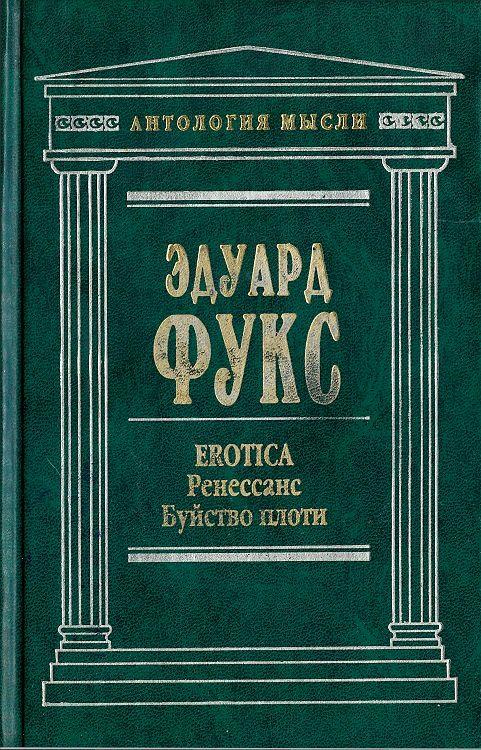
В начале XX века немецкий исследователь и литератор Эдуард Фукс 1870–1940 создал труд по истории европейских нравов, охватывающий три периода: Ренессанс (эпоха Возрождения), галантный век и буржуазный век.
Эпоха Возрождения оказалась необыкновенно плодовитой не только на художников, поэтов и бесстрашных первооткрывателей. Именно в это время европейцы порвали с бледной аскетической немочью Средневековья, осознали естественность своих желаний и дали волю своим так долго усмирявшимся плотским инстинктам. Настоящее издание глубоко исследует интимный мир эпохи Возрождения.
В оформлении книги использованы декоративно-орнаментальные элементы графики С. Чехонина
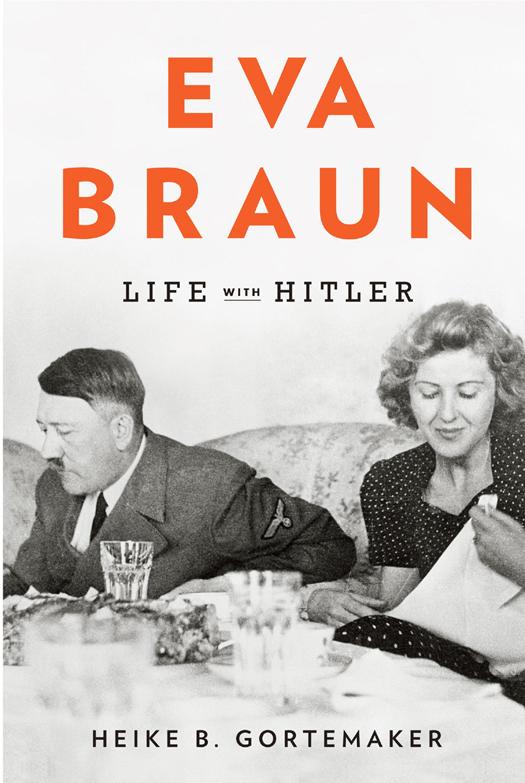
In this groundbreaking biography of Eva Braun, German historian Heike B. Görtemaker delves into the startlingly neglected historical truth about Adolf Hitler’s mistress. More than just the vapid blonde of popular cliché, Eva Braun was a capricious but uncompromising, fiercely loyal companion to Hitler; theirs was a relationship that flew in the face of the Führer’s proclamations that Germany was his only bride. Görtemaker paints a portrait of Hitler and Braun’s life together with unnerving quotidian detail—Braun chose the movies screened at their mountaintop retreat (propaganda, of course); he dreamed of retiring with her to Linz one day after relinquishing his leadership to a younger man—while weaving their personal relationship throughout the fabric of one of history’s most devastating regimes. Though Braun gradually gained an unrivaled power within Hitler’s inner circle, her identity was kept a secret during the Third Reich, until the final days of the war. Faithful to the end, Braun committed suicide with Hitler in 1945, two days after their marriage.
Through exhaustive research, newly discovered documentation, and anecdotal accounts, Görtemaker has meticulously built a surprising portrait of Hitler’s bourgeois existence outside of the public eye. Though Eva Braun had no role in Hitler’s policies, she was never as banal as she was previously painted; she was privy to his thoughts, ruled life within his entourage, and held his trust. As horrifying as it is astonishing, Eva Braun will undoubtedly be referenced in all future accounts of this period.

The book explains how nothingness turns into everything, remaining nothingness.
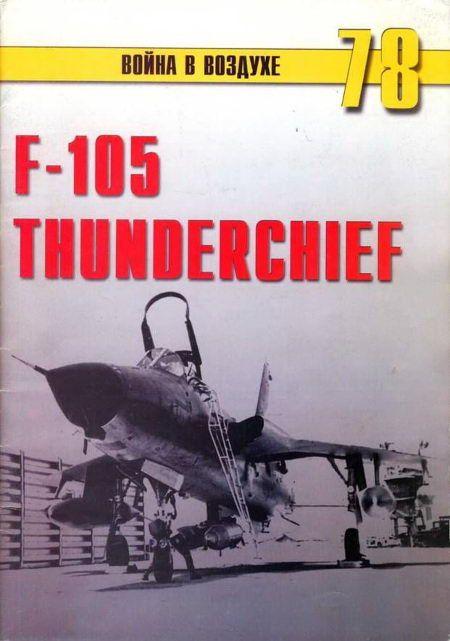
Очень немногие самолеты в истории авиации смогли переломить на протяжении срока своей службы репутацию неудачника, «Тандерчиф» из их числа. Самолет был спроектирован отделением Рипаблик Эвиэйшн Дивижн фирмы Фэйрчайлд Хиллер Корпорейшн. Поправил свою репутацию «Тандерчиф» в ходе первых четырех лет войны во Вьетнаме. Символом «грязной» войны по праву стал «Фантом», но в первые годы конфликта 70 % бомбардировок Северного Вьетнама выполняли бомбардировщики с маркой Рипаблик.
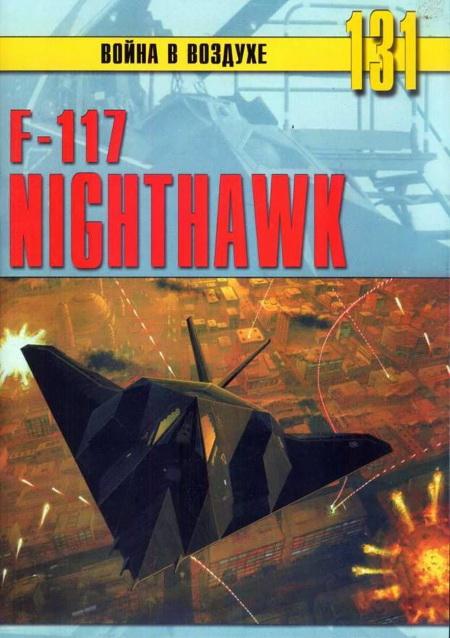
Президент отделения перспективных проектов («Сканк Уоркс») фирмы Локхид Бен Рич лично возил в больницу Келли Джонсону видеозаписи, по которым основатель «Сканк Уоркс» мог увидеть как обретает форму один из самых необычных самолетов XX века. Джонсон никогда не доверял электронике, поговаривая, что скорее поверит в «гидравлическое радио». Видеофильмы, показанные Ричем фильмы сильно удивили Джонсона. Еще больше Джонсон удивился, когда узнал, что самолет не только оснащен электродистанционной системой управления, но и проектируется с использованием компьютерной программы. Джонсон всегда оставался поклонником европроектирования: кульмана, ватмана и рейсфедера. Ветеран фирмы Локхид вяло спросил: «Надеюсь это безобразие вы не будете строить на моем «Сканкуорксе»?»
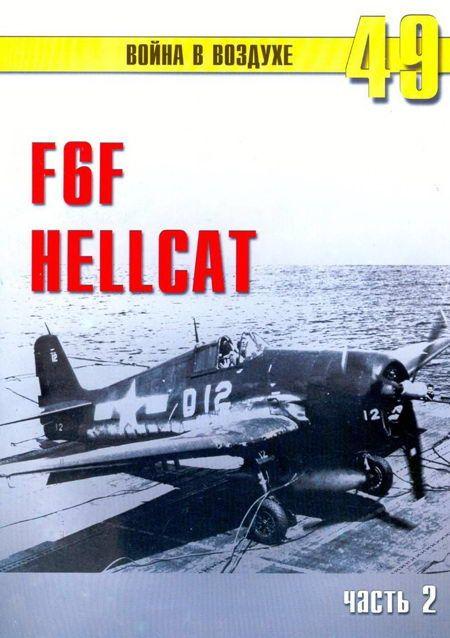
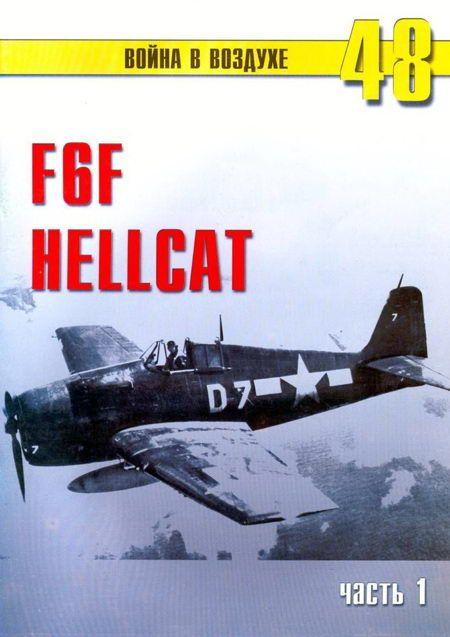
История появления истребителя F6F была необычной. ВМФ США заказали на фирме Chance Vought палубный истребитель, призванный заменить в будущем только что принятый на вооружение истребитель Grumman F4F-3. получивший позднее название «Wildcat». Предложенная конструкция фирмы Chance Vought была во многом новаторской. В частности, самолет предполагалось оснастить существовавшим в то время лишь в виде прототипа двигателем Pratt & Whiney R-2800 Double Wasp мощностью 2028 л.с.

В 1943 году производственные мощности фирмы «Грумман» были заняты производством большого количества F6F-3 «Хеллкэт» для войны на Тихом океане. Однако одновременно начались разработки нового истребителя с лучшими характеристиками. Компании конкуренты – «Боинг» и «Кертисс» предложили проекты более тяжелых чем «Хеллкет» истребителей. В то же время пилот испытатель «Грумман» Боб Холл был отправлен в Англию, где провел всесторонние испытания трофейного «Фокке- Вульфа» ФВ-190. Результаты испытаний были сразу доложены Лерою Грумману – президенту компании. В итоге было решено делать проект легкого самолета с оптимальными характеристиками. По словам президента он должен быть небольшим, очень маневренным. А 28 июля 1943 года была подписана спецификация на новый палубный истребитель. В итоге появился «Проект 58» с двигателем Pratt & Whilney R-2800 «Double Wasp», профилем крыла NACA 230. Впервые для палубных истребителей был применен революционный фонарь, который обеспечивал летчику прекрасный обзор на всех направлениях. Работу над «Проектом 58» возглавил Уильям Т. Швендлер, в активе которого была уже работа над «Уайлдкэтом» и «Хэллкэтом».
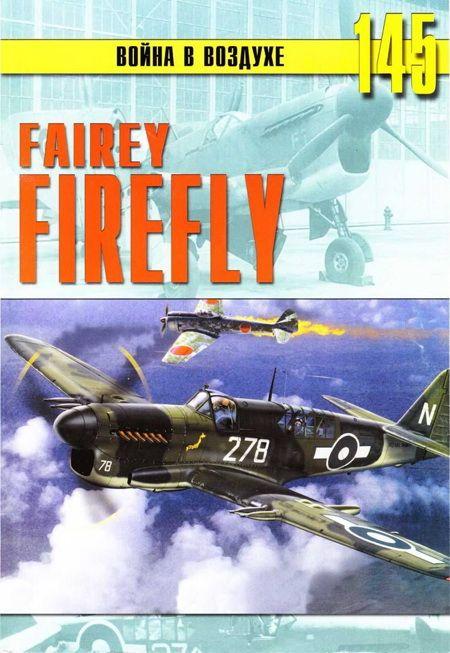
Фэйри «Файрфлай» – не оцененный по достоинству истребитель-бомбардировщик Второй Мировой войны – появился на свет благодаря тому, что в ходе его создания в первоначальное техническое задание вносились многочисленные изменения. Длительный период разработки самолетов в то время был характерным для отношений, которые сложились между авиастроительными фирмами и правительством Великобритании. В те дни Министерство Авиации (Air Ministry) контролировало все заказы по созданию новых самолетов, в том числе и для авиации военно-морского флота (FAA, Fleet Air Arm), выпуская спецификации (технические задания) в соответствии с требованиями военных и передавая их авиастроителям. В ответ до полудюжины фирм, надеявшихся получить заказ, представляли свои решения, и Министерство Авиации могло позволить себе роскошь выбирать победителя среди двух и более прототипов самолетов, в наибольшей степени отвечавших требованиям спецификации. Так произошло и с Фэйри «Файрфлайем».
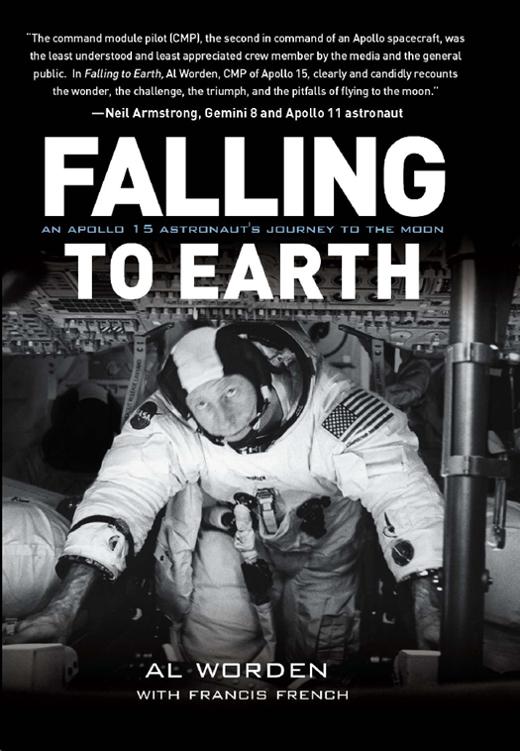
As command module pilot for the Apollo 15 mission to the moon in 1971, Al Worden flew on what is widely regarded as the greatest exploration mission that humans have ever attempted. He spent six days orbiting the moon, including three days completely alone, the most isolated human in existence. During the return from the moon to earth he also conducted the first spacewalk in deep space, becoming the first human ever to see both the entire earth and moon simply by turning his head. The Apollo 15 flight capped an already-impressive career as an astronaut, including important work on the pioneering Apollo 9 and Apollo 12 missions, as well as the perilous flight of Apollo 13.
Nine months after his return from the moon, Worden received a phone call telling him he was fired and ordering him out of his office by the end of the week. He refused to leave. What happened in those nine months, from being honored with parades and meetings with world leaders to being unceremoniously fired, has been a source of much speculation for four decades. Worden has never before told the full story around the dramatic events that shook NASA and ended his spaceflight career. Readers will learn them here for the first time, along with the exhilarating account of what it is like to journey to the moon and back. It's an unprecedentedly candid account of what it was like to be an Apollo astronaut, with all its glory but also its pitfalls.

The series of historical stories to which this volume belongs was prepared in conformity with the foregoing recommendations and with the best practice of leading schools. It has been the aim of the authors to make an interesting story of each man's life and to tell these stories in a style so simple that pupils in the lower grades will read them with pleasure, and so dignif...
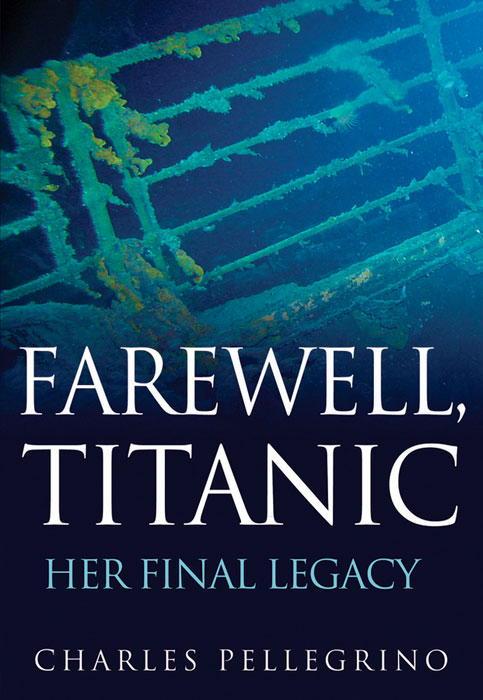
On the 100th anniversary of the Titanic’s sinking, a prominent Titanic researcher offers a final chance to see the ship before it disappears forever
The Titanic was the biggest, most luxurious passenger ship the world had ever seen; the ads proclaimed it to be unsinkable. When it sank in April 1912 after hitting an iceberg, killing more than 1,500 people, the world was forever changed and the public has been spellbound ever since. Now, a century later, the Titanic is about to disappear again: its infrastructure is set to collapse in the next few years. In this book, scientist Charles Pellegrino offers what may be the last opportunity to see the ship before it is lost to the seas for eternity. The last book to be written while survivors were still alive and able to contribute details, Farewell, Titanic includes many untold stories about the sinking and exploration of the unsinkable ship.
• Author Charles Pellegrino provided source material for James Cameron’s Oscar-winning Titanic film, which is being re-released in 3D at the same time as the book
• Includes 16 pages of never-before-published full-color photographs of the sunken vessel
• Includes all-new information about the Titanic research that has been carried out in the last decade
• Written by a New York Times bestselling author who participated in the post-discovery analysis of the Titanic’s remains during the expedition that immediately followed Robert Ballard’s Titanic discovery in 1985
A personal and urgent examination of Fascism in the twentieth century and how its legacy shapes today’s world, written by one of America’s most admired public servants, the first woman to serve as U.S. secretary of state
A Fascist, observes Madeleine Albright, “is someone who claims to speak for a whole nation or group, is utterly unconcerned with the rights of others, and is willing to use violence and whatever other means are necessary to achieve the goals he or she might have.”
The twentieth century was defined by the clash between democracy and Fascism, a struggle that created uncertainty about the survival of human freedom and left millions dead. Given the horrors of that experience, one might expect the world to reject the spiritual successors to Hitler and Mussolini should they arise in our era. In Fascism: A Warning, Madeleine Albright draws on her experiences as a child in war-torn Europe and her distinguished career as a diplomat to question that assumption.
Fascism, as she shows, not only endured through the twentieth century but now presents a more virulent threat to peace and justice than at any time since the end of World War II. The momentum toward democracy that swept the world when the Berlin Wall fell has gone into reverse. The United States, which historically championed the free world, is led by a president who exacerbates division and heaps scorn on democratic institutions. In many countries, economic, technological, and cultural factors are weakening the political center and empowering the extremes of right and left. Contemporary leaders such as Vladimir Putin and Kim Jong-un are employing many of the tactics used by Fascists in the 1920s and 30s.
Fascism: A Warning is a book for our times that is relevant to all times. Written by someone who has not only studied history but helped to shape it, this call to arms teaches us the lessons we must understand and the questions we must answer if we are to save ourselves from repeating the tragic errors of the past.
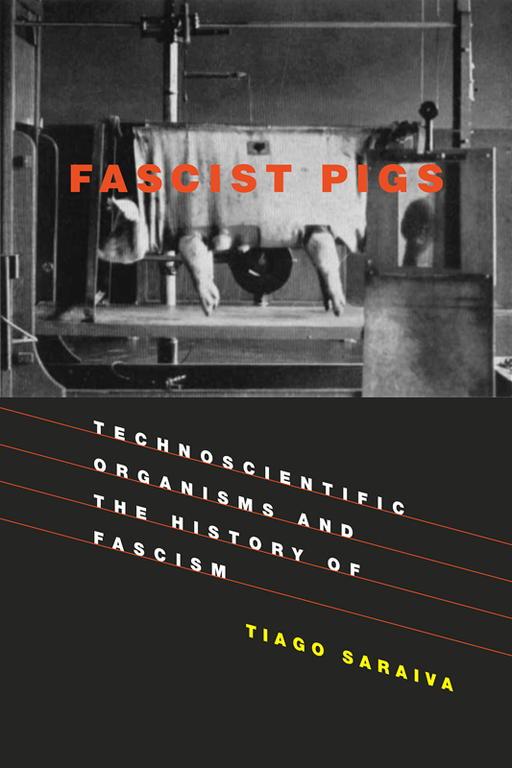
In the fascist regimes of Mussolini’s Italy, Salazar’s Portugal, and Hitler’s Germany, the first mass mobilizations involved wheat engineered to take advantage of chemical fertilizers, potatoes resistant to late blight, and pigs that thrived on national produce. Food independence was an early goal of fascism; indeed, as Tiago Saraiva writes in Fascist Pigs, fascists were obsessed with projects to feed the national body from the national soil. Saraiva shows how such technoscientific organisms as specially bred wheat and pigs became important elements in the institutionalization and expansion of fascist regimes. The pigs, the potatoes, and the wheat embodied fascism. In Nazi Germany, only plants and animals conforming to the new national standards would be allowed to reproduce. Pigs that didn’t efficiently convert German-grown potatoes into pork and lard were eliminated.
Saraiva describes national campaigns that intertwined the work of geneticists with new state bureaucracies; discusses fascist empires, considering forced labor on coffee, rubber, and cotton in Ethiopia, Mozambique, and Eastern Europe; and explores fascist genocides, following Karakul sheep from a laboratory in Germany to Eastern Europe, Libya, Ethiopia, and Angola.
Saraiva’s highly original account — the first systematic study of the relation between science and fascism — argues that the “back to the land” aspect of fascism should be understood as a modernist experiment involving geneticists and their organisms, mass propaganda, overgrown bureaucracy, and violent colonialism.
A list of the series appears at the back of the book.

Eric Schlosser has visited the state of the art labs where scientists recreate the flavours and smells of everything from cooked chicken to fresh strawberries in the test tube and he has spoken to workers at meatpacking plants with some of the worst safety records in the world. He explores the links between Hollywood and the fast food trade, and the tactics used to target ever younger consumers. In a meticulously researched and powerfully argued account, Fast Food Nation reveals the full price of our appetite for instant gratification.
Vasilijs Jans
Feniķiešu kuģis
Stāsti par vēsturi. Rakstnieka fantāzija radījusi «Feniķiešu kuģa» varoņus, saistījusi viņu likteņus, bet apstākļi, kuros šie varoņi darbojas, viņu kuģojuma maršruts un ceļā sastaptās briesmas— viss uzrakstīts, dziļi pazīstot vēsturi, uz vēsturisku dokumentu pamata. Izdoma un vēstures fakti V. Jana stāstā viens otru neizslēdz, bet papildina.
Tulkojis Oskars Kalnciems vāku zīmējis A. Stankevičs ilustrējusi V, Vahtejeva un L. Hailova
Noskanējis grāmatu un FB2 failu izveidojis Imants Ločmelis
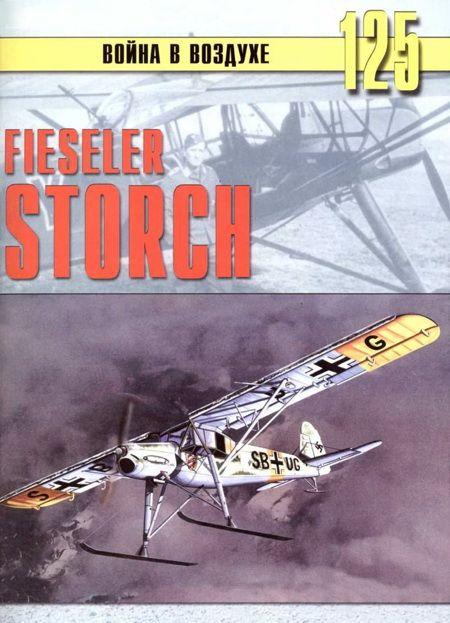
Физелер Fi-156 «Шторьх» в период Второй мировой войны был основным немецким легким многоцелевым самолетом. Известный английский историк авиации Уильям Грин так описал Физелер Fi 156 «Шторьх» (Storch- аист): «…непритязательный, несколько причудливый подкосный моноплан с развитой механизацией крыла, с просто бросающимся в глаза «консерватизмом» внешнего вида и с торчащими длинными стойками шасси, призванными гасить большие вертикальные скорости при посадке, тем не менее, пожалуй, наиболее полно удовлетворял задачам связного армейского и легкого разведывательного самолёта середины тридцатых годов».

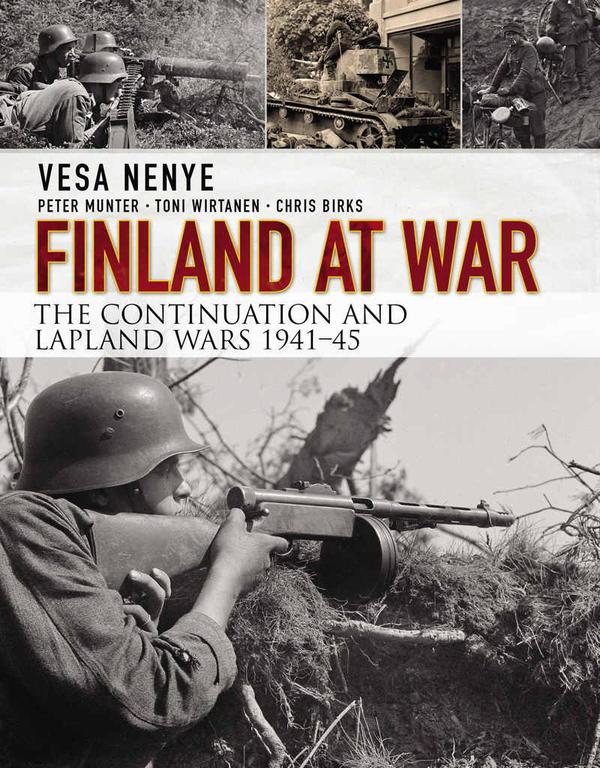
In the aftermath of the Winter War Finland found itself drawing ever closer to Nazi Germany and eventually took part in Operation Barbarossa in 1941. For the Finns this was a chance to right the wrongs of the Winter War, and having reached suitable defensive positions, the army was ordered to halt. Years of uneasy trench warfare followed, known as the Continuation War, during which Finland desperately sought a way out, German dreams of victory were dashed and the Soviet Union built the strongest army in the world. In the summer of 1944, the whole might of the Red Army was launched against the Finnish defences on the narrow Karelian Isthmus. Over several weeks of fierce fighting, the Finns managed to halt the Soviet assault. With Stalin forced to divert his armies to the race to Berlin an armistice agreement was reached, the harsh terms of which forced the Finns to take on their erstwhile German allies in Lapland. Featuring never-before-seen photographs and first-hand accounts, this second volume of a two-part study details the high price Finland had to pay to retain its independence and freedom.
Vesa Nenye spent summers in the wilderness of Lapland and Karelia where he uncovered many remnants from World War II and a passion for Finnish military history. Vesa went on to serve as a Tank Commander and an Arms & Munitions NCO and became a member of the Panssarikilta, Finland's armored core heritage society. He now works in the war gaming industry and international sales and is restoring an old Methodist chapel. He lives in Nottingham with his wife and their dog.
Peter Munter is a true veteran of historical- and strategy-games in Finland. He founded a play-by-mail business in the times before internet and worked extensively as writer and translator of roleplaying supplements in the late 80s. Peter has also won a Finnish Sci-Fi writing award. He currently works as a Managing Director in a games retail chain that he established with Vesa in 1997 and lives in Lahti, Finland with his three children.
Toni Wirtanen got involved with the many activities the army has to offer to volunteer civilians and reservists in Finland at a young age, which led him to serve in the Kymi Jäger Battalion/Karelian Brigade as an infantry anti-tank specialist. Toni is best known for his work as the singer/guitarist/songwriter in the Finnish rock band Apulanta.
While studying geology at the University of Bergen, Chris Birks also worked at building the Norwegian hobby scene for miniature strategy war-gaming. Chris now works as a teacher of mathematics and natural sciences.
A selection of the Military Book Club.
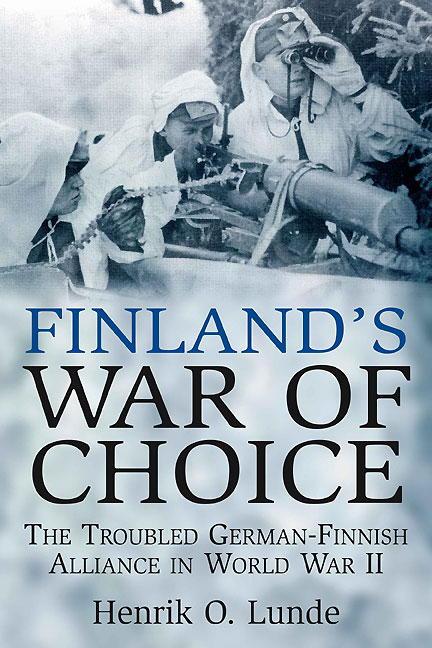
This book describes the odd coalition between Germany and Finland in World War II, and their joint military operations from 1941 to 1945. This is a topic often missing in English, though in stark contrast to the numerous books on the shorter and less bloody Winter War. That conflict represented a gallant fight of a democratic “David” against a totalitarian “Goliath” that caught the imagination of the world. The story of Finland fighting alongside a “Goliath” of its own has not brought pride to that nation and was a period many Finns would rather forget.
The prologue of this book brings the reader up to speed by briefly examining the difficult history of Finland, from its separation from the Soviet Union in 1917 to its isolation after being bludgeoned in 1939–40. It then examines both Finnish and German motives for forming a coalition against the USSR, and how—as logical as a common enemy would seem—the lack of true planning and preparation would doom the alliance.
This book posits that it was mind-boggling how the highly professional German General Staff allowed itself to accept the militarily unsound and shaky coalition that resulted. The war aims were not discussed or harmonized, there were no campaign plans with tasks and missions spelled out past the initial assault, no effective main effort established, inadequate force levels, and an unsound command structure with various headquarters. Practically every rule in the book was broken. The objective of linking up with the Finns in the Leningrad area was an important factor in Hitler opting for three main drives into the Soviet Union rather than an earlier OKH plan that called for only two.
After describing the operations during and after Barbarossa, this book describes how the Finnish theater became a blind ally for the Germans. Their strongest and best army was trapped both operationally and geographically in central and northern Finland, making virtually no contribution to the war effort. The Germans could not bring to bear enough forces to accomplish their objectives without substantial Finnish assistance, and that was not forthcoming.
The final chapters deal with the Soviet counteroffensive against the Finns in 1944. The Finns lost all their gains and quickly concluded a separate armistice. This left the German forces in Finland to simply vacate the territory, fighting between the Finns and Soviets alike as they tried to return to the main war. Jointly suffering 291,000 casualties, the only consolation was that the coalition had inflicted some 830,000 on the Soviets.
In this book, Henrik Lunde, a former US Special Operations colonel, and the renowned author of Hitler’s Pre-emptive War: The Battle for Norway, 1940, once again fills a profound gap in our understanding of World War II.
[This book contains a tables.]