 fb2
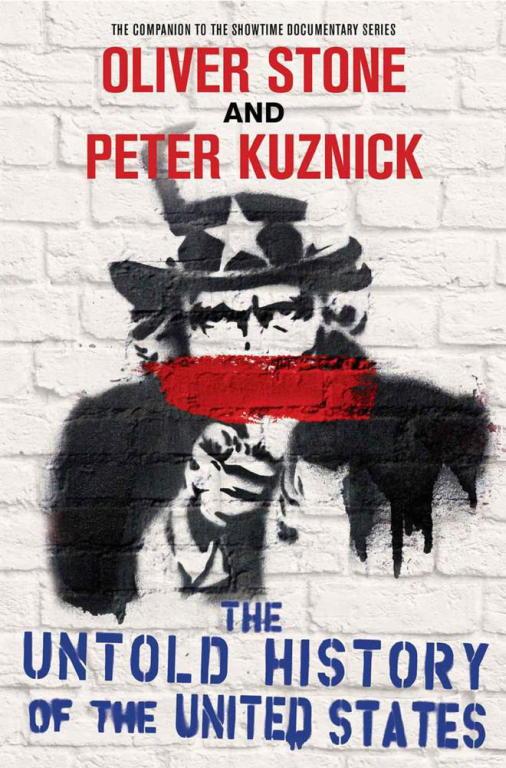
fb2The companion to the Showtime documentary series, director Oliver Stone and historian Peter Kuznick challenge the prevailing orthodoxies of traditional history books in this thoroughly researched and rigorously analyzed look at the dark side of American history.
The notion of American exceptionalism, dating back to John Winthrop’s 1630 sermon aboard the Arbella, still warps Americans’ understanding of their nation’s role in the world. Most are loathe to admit that the United States has any imperial pretensions. But history tells a different story as filmmaker Oliver Stone and historian Peter Kuznick reveal in this riveting account of the rise and decline of the American empire.
Aided by the latest archival findings and recently declassified documents and building on the research of the world’s best scholars, Stone and Kuznick construct an often shocking but meticulously documented “People’s History of the American Empire” that offers startling context to the Bush-Cheney policies that put us at war in two Muslim countries and show us why the Obama administration has had such a difficult time cleaving a new path.
Stone and Kuznick will introduce readers to a pantheon of heroes and villains as they show not only how far the United States has drifted from its democratic traditions, but the powerful forces that have struggled to get us back on track.
The authors reveal that:
• The atomic bombings of Hiroshima and Nagasaki were militarily unnecessary and morally indefensible.
• The United States, not the Soviet Union, bore the lion’s share of responsibility for perpetuating the Cold War.
• The U.S. love affair with right-wing dictators has gone as far as overthrowing elected leaders, arming and training murderous military officers, and forcing millions of people into poverty.
• U.S.-funded Islamist fundamentalists, who fought against the Soviets in Afghanistan, have blown back to threaten the interests of the U.S. and its allies.
• U.S. presidents, especially in wartime, have frequently trampled on the constitution and international law.
• The United States has brandished nuclear threats repeatedly and come terrifyingly close to nuclear war.
American leaders often believe they are unbound by history, yet Stone and Kuznick argue that we must face our troubling history honestly and forthrightly in order to set a new course for the twenty-first century. Their conclusions will challenge even experts, but there is one question only readers can answer: Is it too late for America to change?
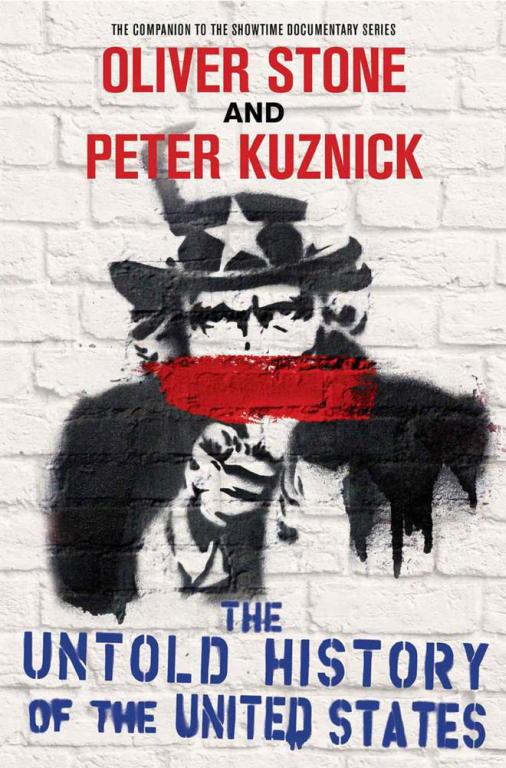
The companion to the Showtime documentary series, director Oliver Stone and historian Peter Kuznick challenge the prevailing orthodoxies of traditional history books in this thoroughly researched and rigorously analyzed look at the dark side of American history.
The notion of American exceptionalism, dating back to John Winthrop’s 1630 sermon aboard the Arbella, still warps Americans’ understanding of their nation’s role in the world. Most are loathe to admit that the United States has any imperial pretensions. But history tells a different story as filmmaker Oliver Stone and historian Peter Kuznick reveal in this riveting account of the rise and decline of the American empire.
Aided by the latest archival findings and recently declassified documents and building on the research of the world’s best scholars, Stone and Kuznick construct an often shocking but meticulously documented “People’s History of the American Empire” that offers startling context to the Bush-Cheney policies that put us at war in two Muslim countries and show us why the Obama administration has had such a difficult time cleaving a new path.
Stone and Kuznick will introduce readers to a pantheon of heroes and villains as they show not only how far the United States has drifted from its democratic traditions, but the powerful forces that have struggled to get us back on track.
The authors reveal that:
• The atomic bombings of Hiroshima and Nagasaki were militarily unnecessary and morally indefensible.
• The United States, not the Soviet Union, bore the lion’s share of responsibility for perpetuating the Cold War.
• The U.S. love affair with right-wing dictators has gone as far as overthrowing elected leaders, arming and training murderous military officers, and forcing millions of people into poverty.
• U.S.-funded Islamist fundamentalists, who fought against the Soviets in Afghanistan, have blown back to threaten the interests of the U.S. and its allies.
• U.S. presidents, especially in wartime, have frequently trampled on the constitution and international law.
• The United States has brandished nuclear threats repeatedly and come terrifyingly close to nuclear war.
American leaders often believe they are unbound by history, yet Stone and Kuznick argue that we must face our troubling history honestly and forthrightly in order to set a new course for the twenty-first century. Their conclusions will challenge even experts, but there is one question only readers can answer: Is it too late for America to change?
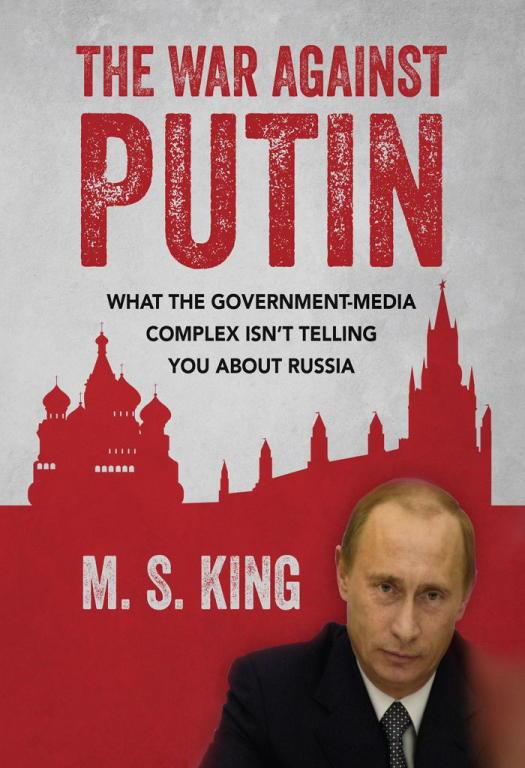
In the West, politicians and journalists of all stripes have referred to Russian President Vladimir Putin as a “thug”, a “tyrant”, a “murderer”, a “Communist”, a “Nazi”, the next “Hitler” and more. But amongst the Russian people, his popularity rating has reached levels as high as 85%. There is even a very popular hit ‘disco’ song about him — ‘A Man Like Putin’.
So, who’s right? Why such hatred for Vladimir Putin? Is it justified? Or has Putin been targeted merely for standing up the US-EU Axis of Internationalism? In clear, simple, powerful and concise language — supported by more than 100 illustrations — ‘The War Against Putin’ takes readers on an exciting ‘crash course’ journey from Russia’s Medieval founding, through the days of the Czars, through the Communist Revolution and bloody Civil War, through Stalin & World War II, through the Cold War, through the Soviet collapse, through the Yeltsin disaster, and finally the Putin-led rebirth of the Russian nation.
It is one of the “greatest stories never told”, and will shed badly needed light on the new Russia, its dynamic leader, the dark forces aiming to bring about its demise, and maybe even World War III.
Says Dr. William Carlucci: “I was glued to the edge of my seat with jaw wide open as I read this gem of a book from start to finish, in a single sitting. The clarity and simplicity with which King’s masterpiece demystifies current events represents a rare ability to speak to the reader with entertaining and understandable prose. This piece really needs to go viral, and fast. 5 Huge Stars!”
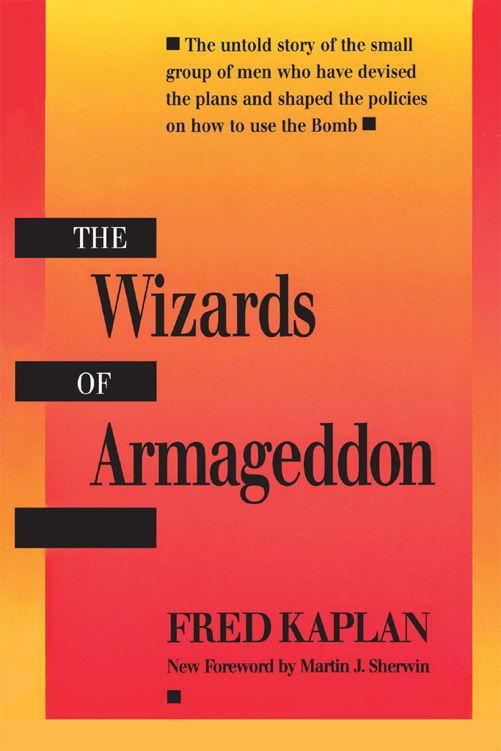
This is the untold story of the small group of men who have devised the plans and shaped the policies on how to use the Bomb. The book (first published in 1983) explores the secret world of these strategists of the nuclear age and brings to light a chapter in American political and military history never before revealed.
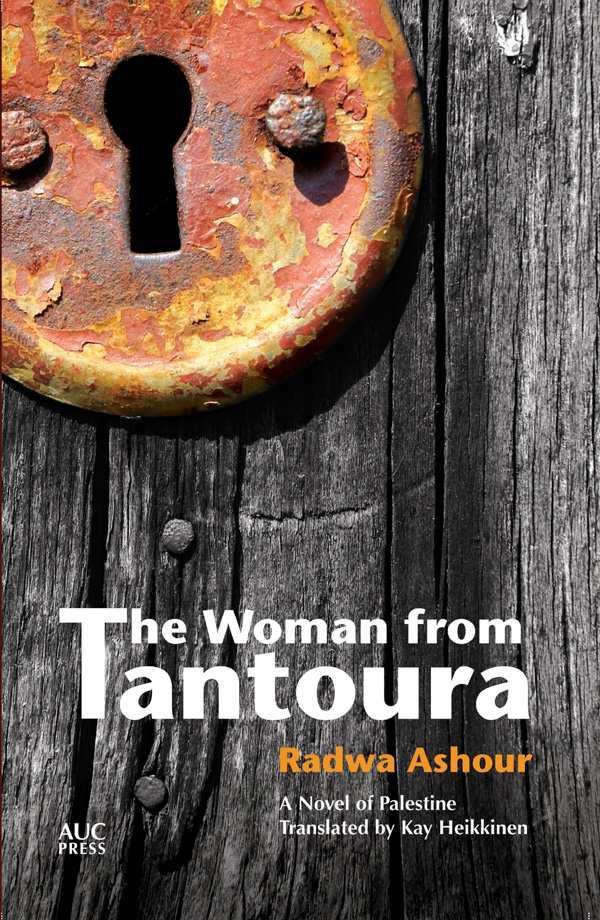
Palestine. For most of us, the word brings to mind a series of confused images and disjointed associations-massacres, refugee camps, UN resolutions, settlements, terrorist attacks, war, occupation, checkered *kouffiyehs* and suicide bombers, a seemingly endless cycle of death and destruction. This novel does not shy away from such painful images, but it is first and foremost a powerful human story, following the life of a young girl from her days in the village of al-Tantoura in Palestine up to the dawn of the new century. We participate in events as they unfold, seeing them through the uneducated but sharply intelligent mind of Ruqayya, as she tries to make sense of all that has happened to her and her family. With her, we live her love of her land and of her people; we feel the repeated pain of loss, of diaspora and of cross-generational misunderstanding; and above all, we come to know her indomitable human spirit. As we read we discover that we have become part of Ruqayya's family, and her voice will remain with us long after we have closed the book.
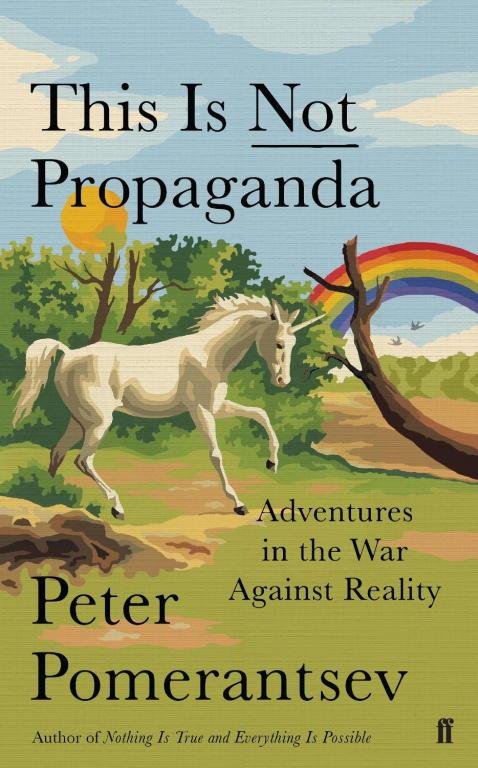
When information is a weapon, everyone is at war.
We live in a world of influence operations run amok, a world of dark ads, psy-ops, hacks, bots, soft facts, ISIS, Putin, trolls, Trump. We’ve lost not only our sense of peace and democracy – but our sense of what those words even mean.
As Peter Pomerantsev seeks to make sense of the disinformation age, he meets Twitter revolutionaries and pop-up populists, ‘behavioural change’ salesmen, Jihadi fan-boys, Identitarians, truth cops, and many others. Forty years after his dissident parents were pursued by the KGB, Pomerantsev finds the Kremlin re-emerging as a great propaganda power. His research takes him back to Russia – but the answers he finds there are not what he expected.
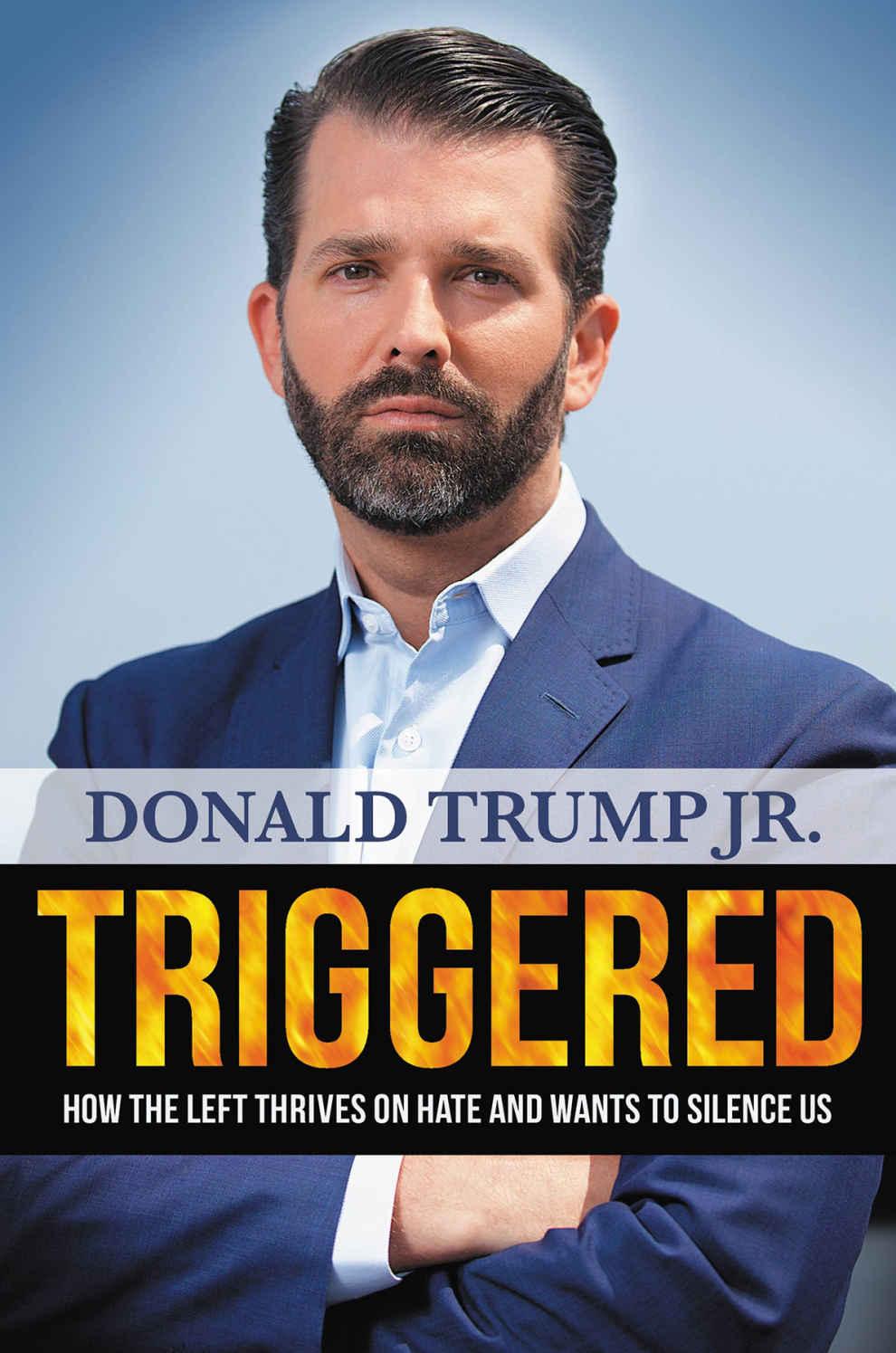
Donald Trump, Jr. is the eldest son of President Donald J. Trump. He is Executive Vice President at Trump Organization, where he has overseen major ...
This is the book that the leftist elites don't want you to read -- Donald Trump, Jr., exposes all the tricks that the left uses to smear conservatives and push them out of the public square, from online "shadow banning" to rampant "political correctness." In Triggered, Donald Trump, Jr. will expose all the tricks that the left uses to smear conservatives and push them out of the public square, from online "shadow banning" to fake accusations of "hate speech." No topic is spared from political correctness. This is the book that the leftist elites don't want you to read! Trump, Jr. will write about the importance of fighting back and standing up for what you believe in. From his childhood summers in Communist Czechoslovakia that began his political thought process, to working on construction sites with his father, to the major achievements of President Trump's administration, Donald Trump, Jr. spares no details and delivers a book that focuses on success and perseverance, and proves offense is the best defense.
One of the most influential books in the Western philosophical and literary tradition, Sir Thomas More’s Utopia appeared in 1516. The formidable Henry VIII had recently assumed the throne in England, and conflicting ideas about religion were fuelling the Reformation throughout Europe. A scathing satire, Utopia was hugely successful and vaulted More to the forefront of the growing humanist movement. The story of Utopia is told by a mysterious sailor named Raphael Hythloday, who travels to the New World with the Italian explorer Vespucci and remains at a fort built at the farthest point reached. From there, he discovers a strange island kingdom named Utopia, a pagan and communist city-state in which language, social customs, dress, architecture, and education are identical throughout the country’s fifty-four cities. The Utopians have eliminated wealth, the nobility, and currency. Labour and goods are distributed equally and property is held in common. And there are no monasteries, alehouses, or academies to tempt a person to withdraw from society. Given More’s satiric leanings and eventual execution, is Utopia simply an attack on Europe’s wickedness? Or is it a philosophical tract extolling the ideal way to live? Ultimately, Utopia navigates a course between the desire to create perfection and the pragmatic understanding that perfection, given the fallibility of mankind, is impossible.
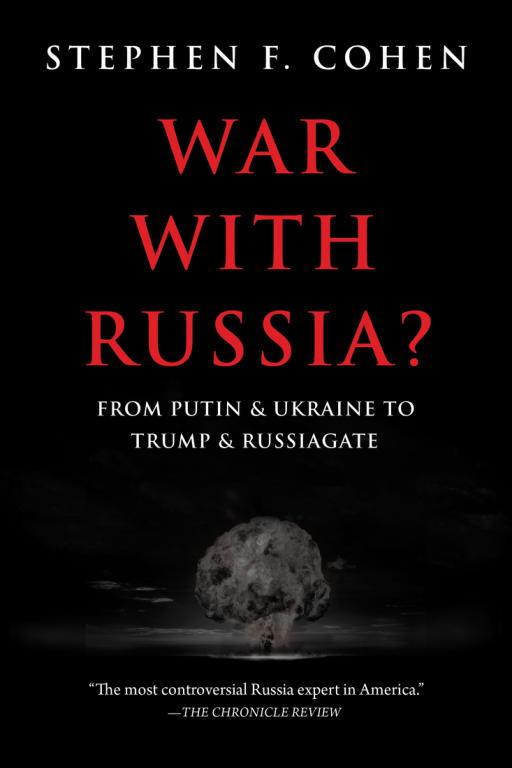
An Alternative Narrative of Donald Trump’s US and Putin’s Russia, from America’s Most Prominent Russian Scholar
Are we in a new Cold War with Russia? How does a new Cold War affect the safety and security of the United States? Does Vladimir Putin really want to destabilize the West?
America is in a new Cold War with Russia even more dangerous than the one the world barely survived in the twentieth century. The Soviet Union is gone, but the two nuclear superpowers are again locked in political and military confrontations, now from Ukraine to Syria. All of this is exacerbated by Washington’s war-like demonizing of the Kremlin leadership and by Russiagate’s unprecedented allegations. US mainstream media accounts are highly selective and seriously misleading. American “disinformation,” not only Russian, is a growing peril.
In War With Russia?, Stephen F. Cohen—the widely acclaimed historian of Soviet and post-Soviet Russia—gives readers a very different, dissenting narrative of this more dangerous new Cold War from its origins in the 1990s, the actual role of Vladimir Putin, and the 2014 Ukrainian crisis to Donald Trump’s election and today’s unprecedented Russiagate allegations.
Cohen’s views have made him, it is said, “America’s most controversial Russia expert.” Some say this to denounce him, others to laud him as a bold, highly informed critic of US policies and the dangers they have helped to create.
War With Russia? gives readers a chance to decide for themselves who is right: are we living, as Cohen argues, in a time of unprecedented perils at home and abroad?
A The Times best book of 2019
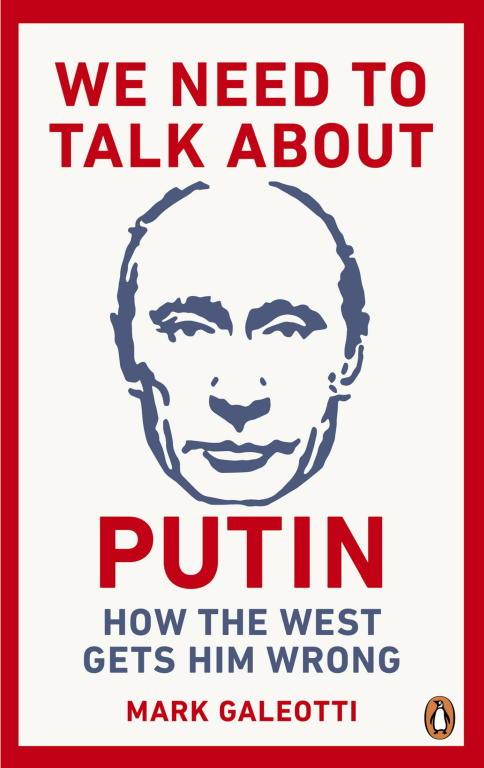
Meet the world’s most dangerous man. Or is he?
Who is the real Vladimir Putin? What does he want? And what will he do next?
Despite the millions of words written on Putin’s Russia, the West still fails to truly understand one of the world’s most powerful politicians, whose influence spans the globe and whose networks of power reach into the very heart of our daily lives.
In this essential primer, Professor Mark Galeotti uncovers the man behind the myth, addressing the key misperceptions of Putin and explaining how we can decipher his motivations and next moves. From Putin’s early life in the KGB and his real relationship with the USA to his vision for the future of Russia – and the world – Galeotti draws on new Russian sources and explosive unpublished accounts to give unparalleled insight into the man at the heart of global politics.
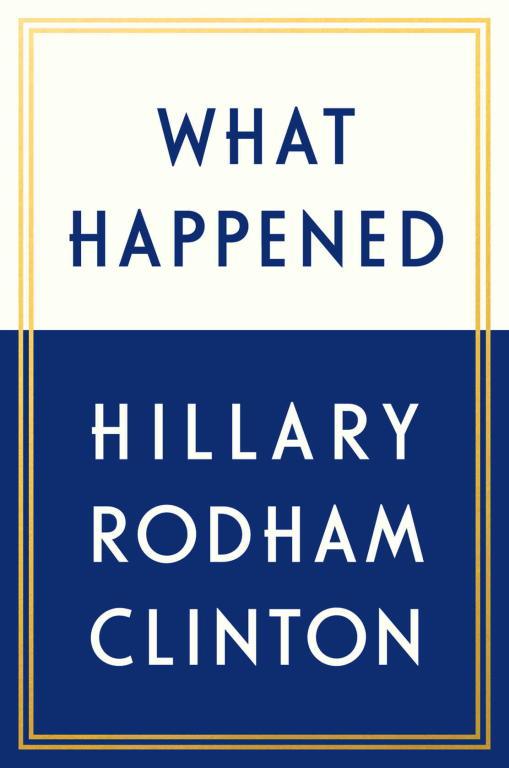
For the first time, Hillary Rodham Clinton reveals what she was thinking and feeling during one of the most controversial and unpredictable presidential elections in history. Now free from the constraints of running, Hillary takes you inside the intense personal experience of becoming the first woman nominated for president by a major party in an election marked by rage, sexism, exhilarating highs and infuriating lows, stranger-than-fiction twists, Russian interference, and an opponent who broke all the rules. This is her most personal memoir yet.
In these pages, she describes what it was like to run against Donald Trump, the mistakes she made, how she has coped with a shocking and devastating loss, and how she found the strength to pick herself back up afterward. With humor and candor, she tells readers what it took to get back on her feet—the rituals, relationships, and reading that got her through, and what the experience has taught her about life. She speaks about the challenges of being a strong woman in the public eye, the criticism over her voice, age, and appearance, and the double standard confronting women in politics.
She lays out how the 2016 election was marked by an unprecedented assault on our democracy by a foreign adversary. By analyzing the evidence and connecting the dots, Hillary shows just how dangerous the forces are that shaped the outcome, and why Americans need to understand them to protect our values and our democracy in the future.
The election of 2016 was unprecedented and historic. What Happened is the story of that campaign and its aftermath—both a deeply intimate account and a cautionary tale for the nation.
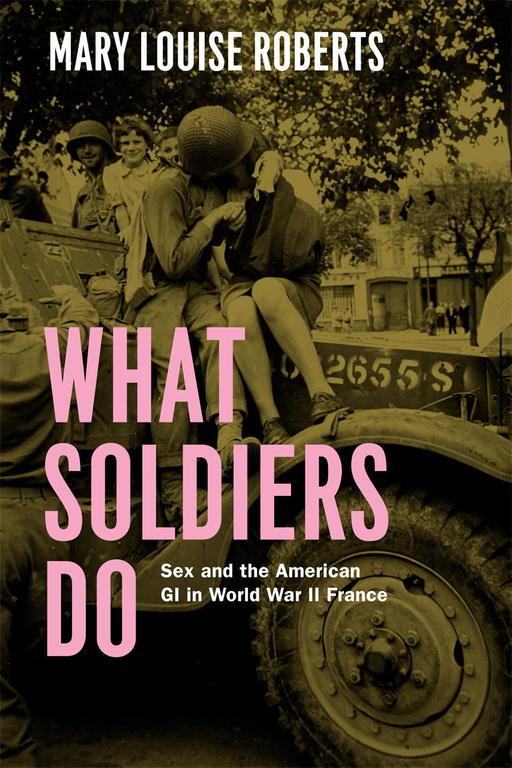
How do you convince men to charge across heavily mined beaches into deadly machine-gun fire? Do you appeal to their bonds with their fellow soldiers, their patriotism, their desire to end tyranny and mass murder? Certainly—but if you’re the US Army in 1944, you also try another tack: you dangle the lure of beautiful French women, waiting just on the other side of the wire, ready to reward their liberators in oh so many ways.
That’s not the picture of the Greatest Generation that we’ve been given, but it’s the one Mary Louise Roberts paints to devastating effect in What Soldiers Do. Drawing on an incredible range of sources, including news reports, propaganda and training materials, official planning documents, wartime diaries, and memoirs, Roberts tells the fascinating and troubling story of how the US military command systematically spread—and then exploited—the myth of French women as sexually experienced and available. The resulting chaos—ranging from flagrant public sex with prostitutes to outright rape and rampant venereal disease—horrified the war-weary and demoralized French population. The sexual predation, and the blithe response of the American military leadership, also caused serious friction between the two nations just as they were attempting to settle questions of long-term control over the liberated territories and the restoration of French sovereignty.
While never denying the achievement of D-Day, or the bravery of the soldiers who took part, What Soldiers Do reminds us that history is always more useful—and more interesting—when it is most honest, and when it goes beyond the burnished beauty of nostalgia to grapple with the real lives and real mistakes of the people who lived it.
For well over two hundred years we have lived in a western-made world, one where the very notion of being modern is inextricably bound up with being western. The twenty-first century will be different. The rise of China, India and the Asian tigers means that, for the first time, modernity will no longer be exclusively western. The west will be confronted with the fact that its systems, institutions and values are no longer the only ones on offer. The key idea of Martin Jacques's ground-breaking new book is that we are moving into an era of contested modernity. The central player in this new world will be China. Continental in size and mentality, China is a 'civilisation-state' whose characteristics, attitudes and values long predate its existence as a nation-state. Although clearly influenced by the west, its extraordinary size and history mean that it will remain highly distinct, and as it exercises its rapidly growing power it will change much more than the world's geo-politics. The nation-state as we understand it will no longer be globally dominant, and the Westphalian state-system will be transformed; ideas of race will be redrawn. This profound and far-sighted book explains for the first time the deeper meaning of the rise of China.
***
China Digital Times
Book Review: When China Rules the World
“When you’re alone and life is making you lonely, you can always go: downtown.” So warbled the British singer, Petula Clark in the 1960s. However, today if solitude is your constant companion, I would suggest that you purchase a copy of this riveting book and read it on the bus and in airports – as I have been doing in recent days, with the dramatic words on the bright red cover of this weighty tome blaring insistently – and no doubt you will find, as I have, that your reading reverie will be constantly interrupted by a stream of anxious interlopers curious to know what the future may hold.
For like Petula Clark, the author too hails from London, though the startling message he brings decidedly differs from her melancholy intervention. For it is the author’s conclusion that sooner rather than later, China – a nation ruled by a Communist Party – will have the most sizeable and powerful economy in the world and that this will have manifold economic, cultural, psychological (and racial) consequences. Strangely enough, Jacques – one of the better respected intellectuals in the North Atlantic community – does not dwell upon how this monumental turn of events occurred. To be sure, he pays obeisance to the leadership of Comrade Deng Xiaoping, who in 1978, opened China’s economy to massive inward foreign direct investment, which set the stage for the 21st Century emergence of the planet’s most populous nation. Yet, for whatever reason, Jacques – who once was a leading figure in the British Communist Party – does not deign to detail to the gentle reader how Beijing brokered an alliance with US imperialism, that helped to destabilize their mutual foe in Moscow, which prepared the path for the gargantuan capital infusion that has transformed China and bids fair to do the same for the world as a whole.
Still, it is noteworthy that this book’s back-cover carries blurbs from the conservative economic historian, Niall Ferguson of Harvard (Henry Kissinger’s authorized biographer); the leading historian, Eric Hobsbawm; the well-known Singaporean intellectual and leader, Kishore Mahbubani (who has written a book that mirrors Jacques’ earthshaking conclusions); and a raft of Chinese thinkers who do not seem displeased nor surprised by his findings.
For well over two hundred years we have lived in a western-made world, one where the very notion of being modern is inextricably bound up with being western. The twenty-first century will be different. The rise of China, India and the Asian tigers means that, for the first time, modernity will no longer be exclusively western. The west will be confronted with the fact that its systems, institutions and values are no longer the only ones on offer. The key idea of Martin Jacques's ground-breaking new book is that we are moving into an era of contested modernity. The central player in this new world will be China. Continental in size and mentality, China is a 'civilisation-state' whose characteristics, attitudes and values long predate its existence as a nation-state. Although clearly influenced by the west, its extraordinary size and history mean that it will remain highly distinct, and as it exercises its rapidly growing power it will change much more than the world's geo-politics. The nation-state as we understand it will no longer be globally dominant, and the Westphalian state-system will be transformed; ideas of race will be redrawn. This profound and far-sighted book explains for the first time the deeper meaning of the rise of China.
***
China Digital Times
Book Review: When China Rules the World
“When you’re alone and life is making you lonely, you can always go: downtown.” So warbled the British singer, Petula Clark in the 1960s. However, today if solitude is your constant companion, I would suggest that you purchase a copy of this riveting book and read it on the bus and in airports — as I have been doing in recent days, with the dramatic words on the bright red cover of this weighty tome blaring insistently — and no doubt you will find, as I have, that your reading reverie will be constantly interrupted by a stream of anxious interlopers curious to know what the future may hold.
For like Petula Clark, the author too hails from London, though the startling message he brings decidedly differs from her melancholy intervention. For it is the author’s conclusion that sooner rather than later, China — a nation ruled by a Communist Party — will have the most sizeable and powerful economy in the world and that this will have manifold economic, cultural, psychological (and racial) consequences. Strangely enough, Jacques — one of the better respected intellectuals in the North Atlantic community — does not dwell upon how this monumental turn of events occurred. To be sure, he pays obeisance to the leadership of Comrade Deng Xiaoping, who in 1978, opened China’s economy to massive inward foreign direct investment, which set the stage for the 21st Century emergence of the planet’s most populous nation. Yet, for whatever reason, Jacques — who once was a leading figure in the British Communist Party — does not deign to detail to the gentle reader how Beijing brokered an alliance with US imperialism, that helped to destabilize their mutual foe in Moscow, which prepared the path for the gargantuan capital infusion that has transformed China and bids fair to do the same for the world as a whole.
Still, it is noteworthy that this book’s back-cover carries blurbs from the conservative economic historian, Niall Ferguson of Harvard (Henry Kissinger’s authorized biographer); the leading historian, Eric Hobsbawm; the well-known Singaporean intellectual and leader, Kishore Mahbubani (who has written a book that mirrors Jacques’ earthshaking conclusions); and a raft of Chinese thinkers who do not seem displeased nor surprised by his findings.
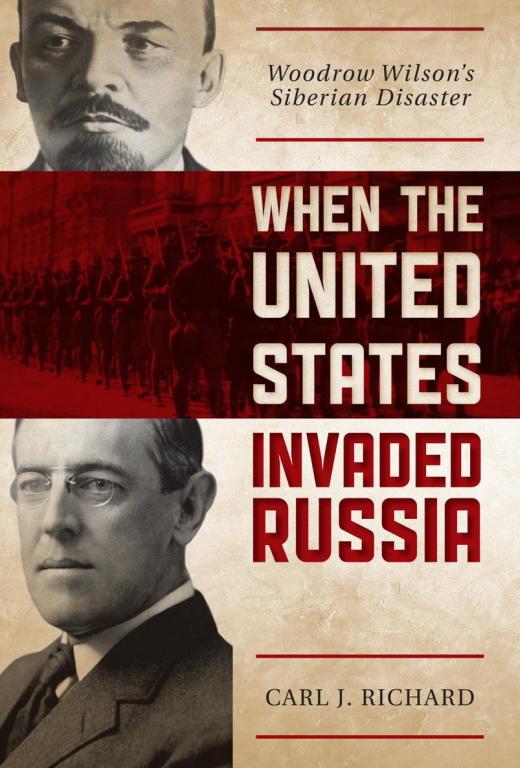
In a little-known episode at the height of World War I, President Woodrow Wilson dispatched thousands of American soldiers to Siberia. Carl J. Richard convincingly shows that Wilson’s original intent was to enable Czechs and anti-Bolshevik Russians to rebuild the Eastern Front against the Central Powers. But Wilson continued the intervention for a year and a half after the armistice in order to overthrow the Bolsheviks and to prevent the Japanese from absorbing eastern Siberia. As Wilson and the Allies failed to formulate a successful Russian policy at the Paris Peace Conference, American doughboys suffered great hardships on the bleak plains of Siberia.
Richard argues that Wilson’s Siberian intervention ironically strengthened the Bolshevik regime it was intended to topple. Its tragic legacy can be found in the seeds of World War II—which began with an alliance between Germany and the Soviet Union, the two nations most aggrieved by Allied treatment after World War I—and in the Cold War, a forty-five year period in which the world held its collective breath over the possibility of nuclear annihilation.
One of the earliest U.S. counterinsurgency campaigns outside the Western Hemisphere, the Siberian intervention was a harbinger of policies to come. Richard notes that it teaches invaluable lessons about the extreme difficulties inherent in interventions and about the absolute need to secure widespread support on the ground if such campaigns are to achieve success, knowledge that U.S. policymakers tragically ignored in Vietnam and have later struggled to implement in Iraq and Afghanistan.
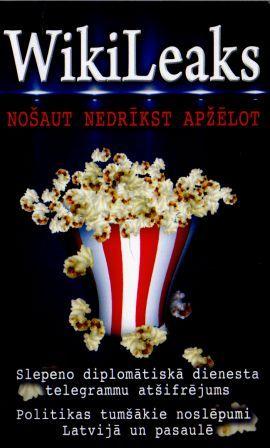
Sastādītājs un Prologa autors Jānis Bērziņš
WikiLeaks - Nošaut nedrīkst apžēlot
WikiLeaks (organizācija)
Mēs esam pieraduši lepoties, ka dzīvojam demokrātiskā sabiedrībā. Mēs uzskatām, ka visi esam vienlīdzīgi un dzīvojam pēc likuma, kas visiem ir viens. Mēs esam pārliecināti, ka esam brīvi, un allaž lepojamies ar dāvātajām vai iekarotajām brīvībām gribas brīvību, sapulču brīvību un vārda brīvību. Pie tā esam pieraduši un ka gan ne, ja par to nepārtraukti atgādina Eiropas, Amerikas un ANO politiskie līderi. Un tikai pa retam šo lepnumu saēd šaubu tārpiņš. Varbūt tādēļ, ka vārda un preses brīvība bez pieejas informācijai, kas attiecas uz visu sabiedrību, zaudē jēgu.
No angļu valodas tulkojušas Liene Akmens un Dina Karkliņa
Noskanējis grāmatu un failu izveidojis Imants Ločmelis. imantslochmelis@inbox.lv
Vajadzētu izsludināt balvu par asānža galvu vai izmantot bezpilota lidmašīnu viņa likvidēšanai.
Toms Flenegens, Kanādas premjerministra padomnieks
„Pats bīstamākais cilvēks pasaulē" tā sauksies jaunā asa sižeta filma, ko uzņem Holivudā par slavenāko cilvēku 2010. gadā, proti, par KikiLeaks dibinātāju Džūliānu Asānžu.
studi pagaidām neplāno uzņemt filmu par bīstamāko cilvēku Latvijā par hakeri Neo. Viņš ieguva no Latvijas Valsts Ieņēmumu dienesta datubāzēm 7,4 miljonus dokumentu un publicēja tos, panākot, ka tiek mainīta valsts politika.
Tikai pēc 2010. gada notikumi, kuros iesaistīti slavenie hakeri
Neo (Ilmārs Poikāns) un Džūliāns Asānžs, mēs varam apgalvot, ka reālā informācija kļuvusi pieejama. Tas nozīmē, ka vecā kārtība pamazām sabrūk un sākas jauna ēra.
Protams, pārmaiņas nekad nenotiek bez sāpēm. Par šiem jaunās ēras varoņiem un viņu publiskoto informāciju, kas skar Latviju un mūsu tuvākos kaimiņus, stāstīts šajā grāmatā.
Lasiet par to, kā izklaidējas un ko viens par otru runā augstākās varas pārstāvji un diplomātiskā elite! _
Kontinents Rīga 2011
UDK 323(100X08) Wi 330
Vāka dizains Artūrs Zariņš
© Tulkojums latviešu valoda, mākslinieciskais noformējums, ISBN 978-9984-35-554-2 "Apgāds "Kontinents""
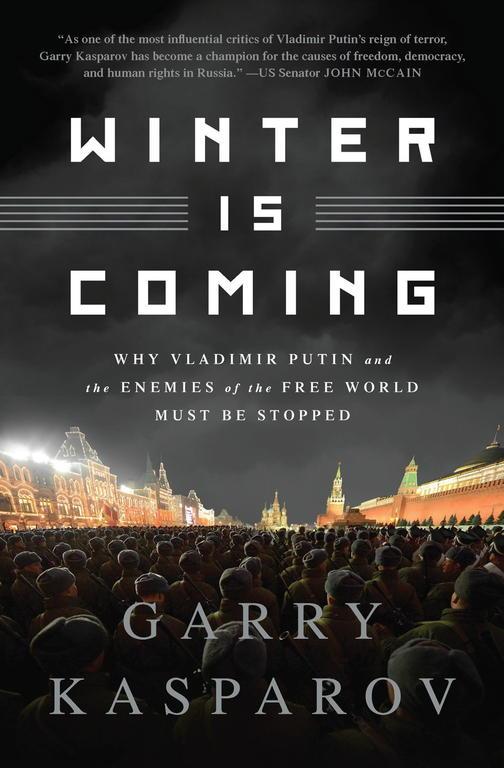
The ascension of Vladimir Putin—a former lieutenant colonel of the KGB—to the presidency of Russia in 1999 should have been a signal that the country was headed away from democracy. Yet in the intervening years—as America and the world’s other leading powers have continued to appease him—Putin has grown not only into a dictator but a global threat. With his vast resources and nuclear weapons, Putin is at the center of a worldwide assault on political liberty.
For Garry Kasparov, none of this is news. He has been a vocal critic of Putin for over a decade, even leading the pro-democracy opposition to him in the farcical 2008 Presidential election. Yet years of seeing his Cassandra-like prophecies about Putin’s intentions fulfilled have left Kasparov with the realization of a darker truth: Putin’s Russia, like ISIS or Al Qaeda, defines itself in opposition to the free countries of the world. He is still fighting the Cold War, even as Americans have first moved beyond it, and over time, forgotten its lessons.
Lest we be drawn into another prolonged conflict, Kasparov now urges a forceful stand—diplomatic and economic—against him. For as long as the world’s powerful democracies continue to recognize and negotiate with Putin, he can maintain credibility in his home country. He faces few strong enemies within his country, so meaningful opposition must come from abroad.
Argued with the force of Kasparov’s world-class intelligence, conviction, and hopes for his home country, Winter is Coming is an unmistakable call to action against a threat we’ve ignored for too long.