 fb2
fb2
The Open Conspiracy: Blue Prints for a World Revolution was published in 1928 by H. G. Wells, when he was 62 years old. It was revised and expanded in 1930 with the additional subtitle A Second Version of This Faith of a Modern Man Made More Explicit and Plain. In 1931 a further revised edition appeared titled What Are We to To with Our Lives? The final version appeared in 1933 under its original title. Many of its ideas are anticipated in Wells's 1926 novel The World of William Clissold.
The book is, in Wells's words, a "scheme to thrust forward and establish a human control over the destinies of life and liberate it from its present dangers, uncertainties and miseries." It proposes that largely as the result of scientific progress, a common vision of a world "politically, socially and economically unified" is emerging among educated and influential people, and that this can be the basis of "a world revolution aiming at universal peace, welfare and happy activity" that can result in the establishment of a "world commonweal." This is to be achieved by "drawing together a proportion of all or nearly all the functional classes in contemporary communities in order to weave the beginnings of a world community out of their selection." This will ultimately "be a world religion." — Wikipedia
In April 2016, computer technicians at the Democratic National Committee discovered that someone had accessed the organization’s computer servers and conducted a theft that is best described as Watergate 2.0. In the weeks that followed, the nation’s top computer security experts discovered that the cyber thieves had helped themselves to everything: sensitive documents, emails, donor information, even voice mails.
Soon after, the remainder of the Democratic Party machine, the congressional campaign, the Clinton campaign, and their friends and allies in the media were also hacked. Credit cards numbers, phone numbers, and contacts were stolen. In short order, the FBI found that more than twenty-five state election offices had their voter registration systems probed or attacked by the same hackers.
Western intelligence agencies tracked the hack to Russian spy agencies and dubbed them the CYBER BEARS. The media was soon flooded with the stolen information channeled through Julian Assange, the founder of WikiLeaks. It was a massive attack on America but the Russian hacks appeared to have a singular goal—elect Donald J. Trump as president of the United States.
New York Times bestselling author and career intelligence officer Malcolm Nance’s fast paced real-life spy thriller takes you from Vladimir Putin’s rise through the KGB from junior officer to spymaster-in-chief and spells out the story of how he performed the ultimate political manipulation—convincing Donald Trump to abandon seventy years of American foreign policy including the destruction of NATO, cheering the end of the European Union, allowing Russian domination of Eastern Europe, and destroying the existing global order with America at its lead.
The Plot to Hack America is the thrilling true story of how Putin’s spy agency, run by the Russian billionaire class, used the promise of power and influence to cultivate Trump as well as his closest aides, the Kremlin Crew, to become unwitting assets of the Russian government. The goal? To put an end to 240 years of free and fair American democratic elections.
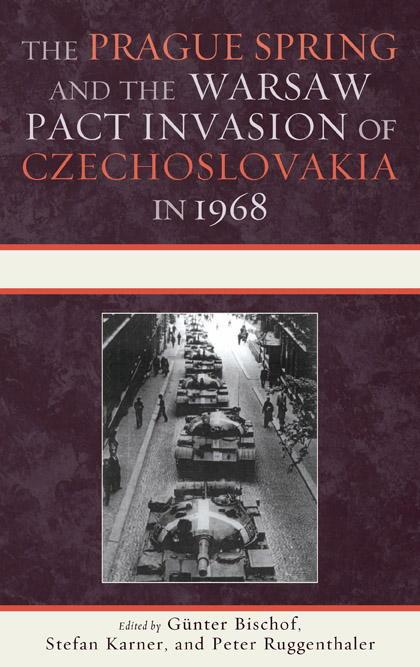
On August 20, 1968, tens of thousands of Soviet and East European ground and air forces moved into Czechoslovakia and occupied the country in an attempt to end the “Prague Spring” reforms and restore an orthodox Communist regime. The leader of the Soviet Communist Party, Leonid Brezhnev, was initially reluctant to use military force and tried to pressure his counterpart in Czechoslovakia, Alexander Dubcek, to crack down. But during the summer of 1968, after several months of careful deliberations, the Soviet Politburo finally decided that military force was the only option left. A large invading force of Soviet, Polish, Hungarian, and Bulgarian troops received final orders to move into Czechoslovakia; within 24 hours they had established complete military control of Czechoslovakia, bringing an end to hopes for “socialism with a human face.”
Dubcek and most of the other Czechoslovak reformers were temporarily restored to power, but their role from late August 1968 through April 1969 was to reverse many of the reforms that had been adopted. In April 1969, Dubchek was forced to step down for good, bringing a final end to the Prague Spring. Soviet leaders justified the invasion of Czechoslovakia by claiming that “the fate of any socialist country is the common affair of all socialist countries” and that the Soviet Union had both a “right” and a “sacred duty” to “defend socialism” in Czechoslovakia. The invasion caused some divisions within the Communist world, but overall the use of large-scale force proved remarkably successful in achieving Soviet goals. The United States and its NATO allies protested but refrained from direct military action and covert operations to counter the Soviet-led incursion into Czechoslovakia.
The essays of a dozen leading European and American Cold War historians analyze this turning point in the Cold War in light of new documentary evidence from the archives of two dozen countries and explain what happened behind the scenes. They also reassess the weak response of the United States and consider whether Washington might have given a “green light,” if only inadvertently, to the Soviet Union prior to the invasion.
When Lorenzo de’ Medici seized control of the Florentine Republic in 1512, he summarily fired the Secretary to the Second Chancery of the Signoria and set in motion a fundamental change in the way we think about politics. The person who held the aforementioned office with the tongue-twisting title was none other than Niccolò Machiavelli, who, suddenly finding himself out of a job after 14 years of patriotic service, followed the career trajectory of many modern politicians into punditry. Unable to become an on-air political analyst for a television network, he only wrote a book. But what a book The Prince is. Its essential contribution to modern political thought lies in Machiavelli’s assertion of the then revolutionary idea that theological and moral imperatives have no place in the political arena. “It must be understood,” Machiavelli avers, “that a prince … cannot observe all of those virtues for which men are reputed good, because it is often necessary to act against mercy, against faith, against humanity, against frankness, against religion, in order to preserve the state.” With just a little imagination, readers can discern parallels between a 16th-century principality and a 20th-century presidency.
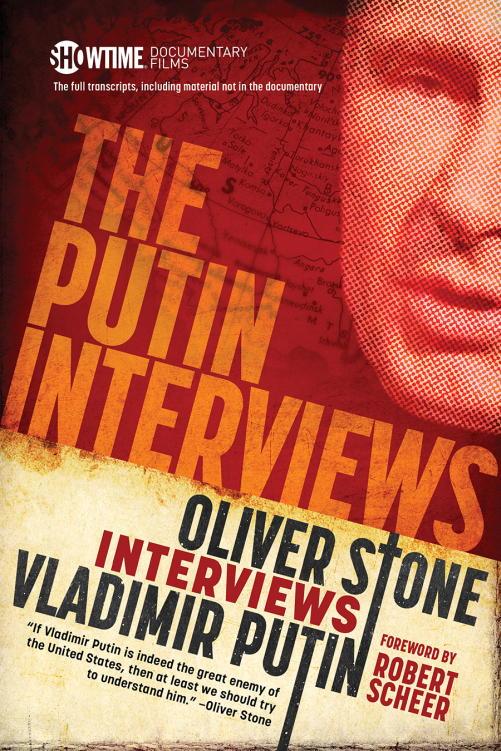
WITH SUBSTANTIAL MATERIAL NOT INCLUDED IN THE DOCUMENTARY
Academy Award winner Oliver Stone was able to secure what journalists, news organizations, and even other world leaders have long coveted: extended, unprecedented access to Russian President Vladimir Putin.
The Putin Interviews are culled from more than a dozen interviews with Putin over a two-year span—never before has the Russian leader spoken in such depth or at such length with a Western interviewer. No topics are off limits in the interviews, which first occurred during Stone’s trips to meet with NSA whistleblower Edward Snowden in Moscow and most recently after the election of President Donald Trump.
Prodded by Stone, Putin discusses relations between the United States and Russia, allegations of interference in the US election, and Russia’s involvement with conflicts in Syria, Ukraine, and elsewhere across the globe. Putin speaks about his rise to power and details his relationships with Presidents Clinton, George W. Bush, Obama, and Trump. The exchanges are personal, provocative, and at times surreal. At one point, Stone asks, “Why did Russia hack the election?”; at another, Stone introduces him to Stanley Kubrick’s 1964 Cold War satire “Dr. Strangelove,” which the two watch together.
Stone has interviewed controversial world leaders before, including Hugo Chavez, Fidel Castro, and Benjamin Netanyahu. But The Putin Interviews, in its unmediated access to one of the most enigmatic and powerful men in the world, can only be compared to the series of conversations between David Frost and Richard Nixon we now refer to as “The Nixon Interviews” of 1977.
The book will also contain references and sources that give readers a deeper understanding of the topics covered in the interviews and make for a more robust reading experience.
A quarter century after the fall of the Soviet Union, Russia once again looms large over world affairs, from Ukraine to Syria to the 2016 U.S. election. Yet how power works in present-day Russia―how Vladimir Putin came to power and maintains his rule―remains opaque and often misunderstood. In The Putin System, Russian economist and opposition leader Grigory Yavlinsky explains his country’s politics from a unique perspective, voicing a Russian liberal critique of the post-Soviet system that is vital for the West to hear.
Combining the firsthand experience of a practicing politician with academic expertise, Yavlinsky gives unparalleled insights into the sources of Putin’s power and what might be next. He argues that Russia’s dysfunction is neither the outcome of one man’s iron-fisted rule nor a deviation from the supposedly natural development of Western-style political institutions. Instead, Russia’s peripheral position in the global economy has fundamentally shaped the regime’s domestic and foreign policy, nourishing authoritarianism while undermining its opponents. The quasi-market reforms of the 1990s, the bureaucracy’s self-perpetuating grip on power, and the Russian elite’s frustration with its secondary status have all combined to enable personalized authoritarian rule and corruption. Ultimately, Putin is as much a product of the system as its creator. In a time of sensationalism and fear, The Putin System is essential reading for anyone seeking to understand how power is wielded in Russia.
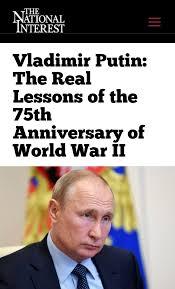
The Russian president offers a comprehensive assessment of the legacy of World War II, arguing that “Today, European politicians, and Polish leaders in particular, wish to sweep the Munich Betrayal under the carpet. The Munich Betrayal showed to the Soviet Union that the Western countries would deal with security issues without taking its interests into account.”
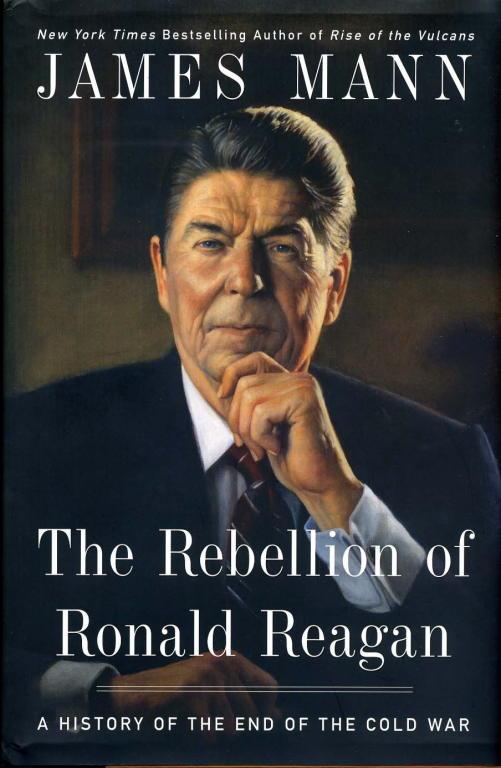
A controversial look at Reagan’s role in ending the Cold War—from the author of The New York Times bestseller Rise of the Vulcans
In “The Rebellion of Ronald Reagan”, “New York Times” bestselling author James Mann directs his keen analysis to Ronald Reagan’s role in ending the Cold War. Drawing on new interviews and previously unavailable documents, Mann offers a fresh and compelling narrative—a new history assessing what Reagan did, and did not do, to help bring America’s four-decade conflict with the Soviet Union to a close.
As he did so masterfully in “Rise of the Vulcans”, Mann sheds new light on the hidden aspects of American foreign policy. He reveals previously undisclosed secret messages between Reagan and Moscow; internal White House intrigues; and battles with leading figures such as Nixon and Kissinger, who repeatedly questioned Reagan’s unfolding diplomacy with Mikhail Gorbachev. He details the background and fierce debate over Reagan’s famous Berlin Wall speech and shows how it fitted into Reagan’s policies.
This book finally answers the troubling questions about Reagan’s actual role in the crumbling of Soviet power; and concludes that by recognising the significance of Gorbachev, Reagan helped bring the Cold War to a close.
With important new revelations into the Russian hacking of the 2016 Presidential campaigns
Russia’s relationship with its neighbours and with the West has worsened dramatically in recent years. Under Vladimir Putin’s leadership, the country has annexed Crimea, begun a war in Eastern Ukraine, used chemical weapons on the streets of the UK and created an army of Internet trolls to meddle in the US presidential elections. How should we understand this apparent relapse into aggressive imperialism and militarism?
In this book, Sergei Medvedev argues that this new wave of Russian nationalism is the result of mentalities that have long been embedded within the Russian psyche. Whereas in the West, the turbulent social changes of the 1960s and a rising awareness of the legacy of colonialism have modernized attitudes, Russia has been stymied by an enduring sense of superiority over its neighbours alongside a painful nostalgia for empire. It is this infantilized and irrational worldview that Putin and others have exploited, as seen most clearly in Russia’s recent foreign policy decisions, including the annexation of Crimea.
This sharp and insightful book, full of irony and humour, shows how the archaic forces of imperial revanchism have been brought back to life, shaking Russian society and threatening the outside world. It will be of great interest to anyone trying to understand the forces shaping Russian politics and society today.
The pocket in question is a small pocket of resistance. A pocket is formed when two or more people come together in agreement. The resistance is against the inhumanity of the New World Economic Order. The people coming together are the reader, me, and those the essays are about — Rembrandt, Paleolithic cave painters, a Romanian peasant, ancient Egyptians, an expert in the loneliness of a certain hotel bedroom, dogs at dusk, a man in a radio station. And unexpectedly, our exchanges strengthen each of us in our conviction that what is happening in the world today is wrong, and that what is often said about it is a lie. I’ve never written a book with a greater sense of urgency.
— John Berger
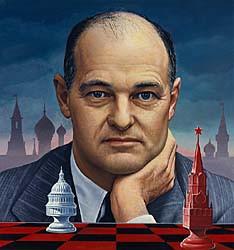
The single document that best illustrated American anti-communism and general suspicion of Soviet aspirations, was George Kennan’s famous Long Telegram of 1946. The Long Telegram was perhaps the most cited and most influential statement of the early years of the Cold War.
George Kennan had been a American diplomat on the Soviet front, beginning his career as an observer of the aftermath of the Russian Civil War. He witnessed collectivization and the terror from close range and sent his telegram after another two years’ service in Moscow from 1944 to 1946 as chief of mission and Ambassador Averell Harriman’s consultant. In 1946, Kennan was 44 years old, fluent in the Russian language and its affairs, and decidedly anti-communist.
The essence of Kennan’s telegram was published in Foreign Affairs in 1947 as The Sources of Soviet Conduct and circulated everywhere. The article was signed by “X” although everyone in the know knew that authorship was Kennan’s. For Kennan, the Cold War gave the United States its historic opportunity to assume leadership of what would eventually be described as the “free world.”
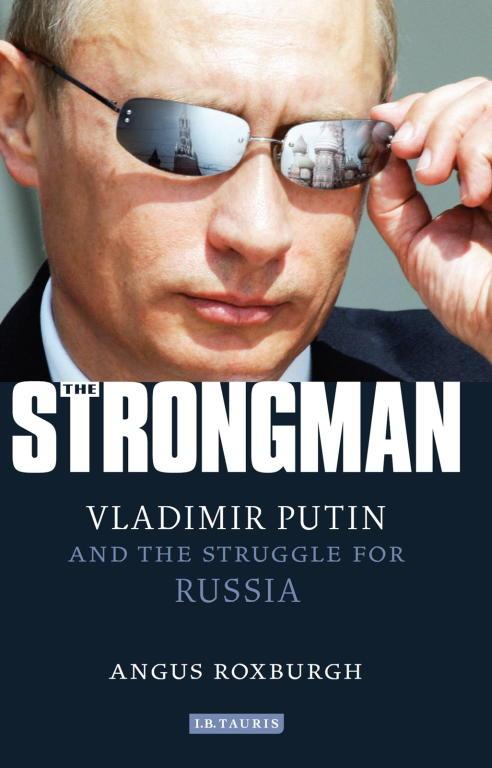
Russia under Vladimir Putin has proved a prickly partner for the West, a far cry from the democratic ally many hoped for when the Soviet Union collapsed. Abroad, Putin has used Russia’s energy strength as a foreign policy weapon, while at home he has cracked down on opponents, adamant that only he has the right vision for his country’s future.
Former BBC Moscow correspondent Angus Roxburgh charts the dramatic fight for Russia’s future under Vladimir Putin – how the former KGB man changed from reformer to autocrat; how he sought the West’s respect but earned its fear; how he cracked down on his rivals at home and burnished a flamboyant personality cult, one day saving snow leopards or horseback riding bare-chested, the next tongue-lashing Western audiences. Drawing on dozens of exclusive interviews in Russia, where he worked as a Kremlin insider advising Putin on press relations, Roxburgh also argues that the West threw away chances to bring Russia in from the cold by failing to understand its fears and aspirations following the collapse of communism.
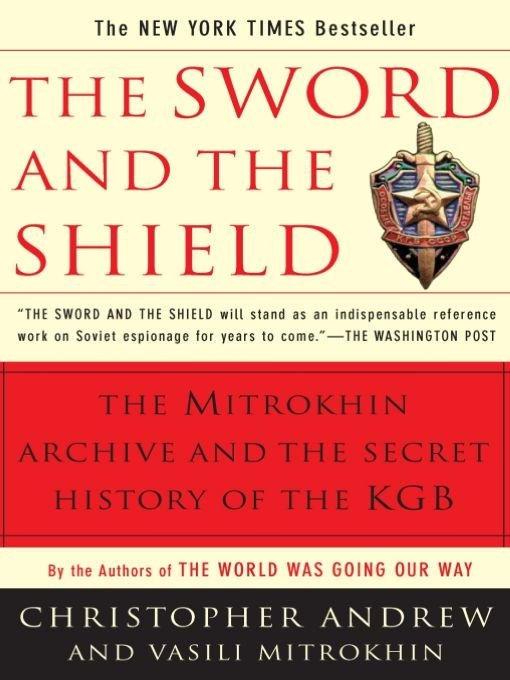
The Sword and the Shield is based on one of the most extraordinary intelligence coups of recent times: a secret archive of top-level KGB documents smuggled out of the Soviet Union which the FBI has described, after close examination, as the “most complete and extensive intelligence ever received from any source.” Its presence in the West represents a catastrophic hemorrhage of the KGB’s secrets and reveals for the first time the full extent of its worldwide network.
Vasili Mitrokhin, a secret dissident who worked in the KGB archive, smuggled out copies of its most highly classified files every day for twelve years. In 1992, a U.S. ally succeeded in exfiltrating the KGB officer and his entire archive out of Moscow. The archive covers the entire period from the Bolshevik Revolution to the 1980s and includes revelations concerning almost every country in the world. But the KGB’s main target, of course, was the United States.
Though there is top-secret material on almost every country in the world, the United States is at the top of the list. As well as containing many fascinating revelations, this is a major contribution to the secret history of the twentieth century.
Among the topics and revelations explored are:
• The KGB’s covert operations in the United States and throughout the West, some of which remain dangerous today.
• KGB files on Oswald and the JFK assassination that Boris Yeltsin almost certainly has no intention of showing President Clinton.
• The KGB’s attempts to discredit civil rights leader in the 1960s, including its infiltration of the inner circle of a key leader.
• The KGB’s use of radio intercept posts in New York and Washington, D.C., in the 1970s to intercept high-level U.S. government communications.
• The KGB’s attempts to steal technological secrets from major U.S. aerospace and technology corporations.
• KGB covert operations against former President Ronald Reagan, which began five years before he became president.
• KGB spies who successfully posed as U.S. citizens under a series of ingenious disguises, including several who attained access to the upper echelons of New York society.
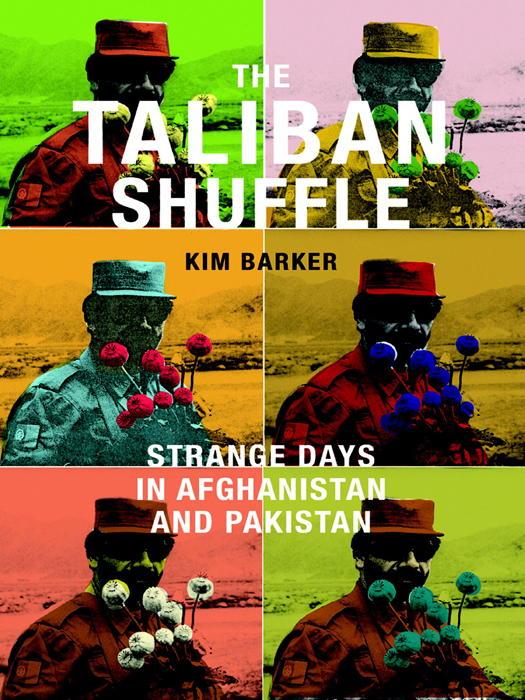
A true-life Catch-22 set in the deeply dysfunctional countries of Afghanistan and Pakistan, by one of the region’s longest-serving correspondents.
Kim Barker is not your typical, impassive foreign correspondent--she is candid, self-deprecating, laugh-out-loud funny. At first an awkward newbie in Afghanistan, she grows into a wisecracking, seasoned reporter with grave concerns about our ability to win hearts and minds in the region. In The Taliban Shuffle, Barker offers an insider’s account of the “forgotten war” in Afghanistan and Pakistan, chronicling the years after America’s initial routing of the Taliban, when we failed to finish the job.
When Barker arrives in Kabul, foreign aid is at a record low, electricity is a pipe dream, and of the few remaining foreign troops, some aren’t allowed out after dark. Meanwhile, in the vacuum left by the U.S. and NATO, the Taliban is regrouping as the Afghan and Pakistani governments flounder. Barker watches Afghan police recruits make a travesty of practice drills and observes the disorienting turnover of diplomatic staff. She is pursued romantically by the former prime minister of Pakistan and sees adrenaline-fueled colleagues disappear into the clutches of the Taliban. And as her love for these hapless countries grows, her hopes for their stability and security fade.
Swift, funny, and wholly original, The Taliban Shuffle unforgettably captures the absurdities and tragedies of life in a war zone.
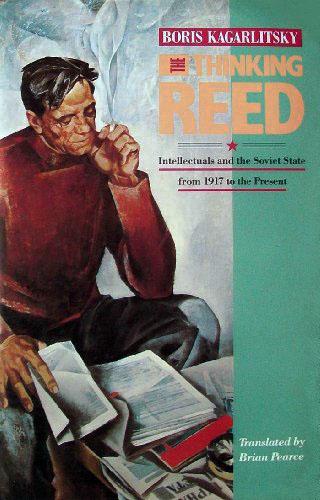
This panoramic account of political culture in the Soviet Union, by one of the leading voices of unofficial radical socialism, examines the way in which cultural life in the arts, philosophy and historiography has been able to withstand the persistent efforts of the "statocracy" to extinguish independent thought.

This book is dedicated to the memory of Yakov Aminov murdered in cold blood by Arab terrorist in the international airport of Los Angeles.
«This dreadful act took place on July 4, 2002, on Independence Day of the United States».
After the bloody incident his sister – the Liza Aminova until the present time can’t become a U.S. citizen.
Because one of the supervisors of the U.S. Citizenship and Immigration Services in the Denver city learned
that the Liza Aminova is a Jewish.
Therefore the supervisor firmly decided: Anyway refuse her request to become a U.S. citizen.
Repentance of the Pope of Rome to the people of God
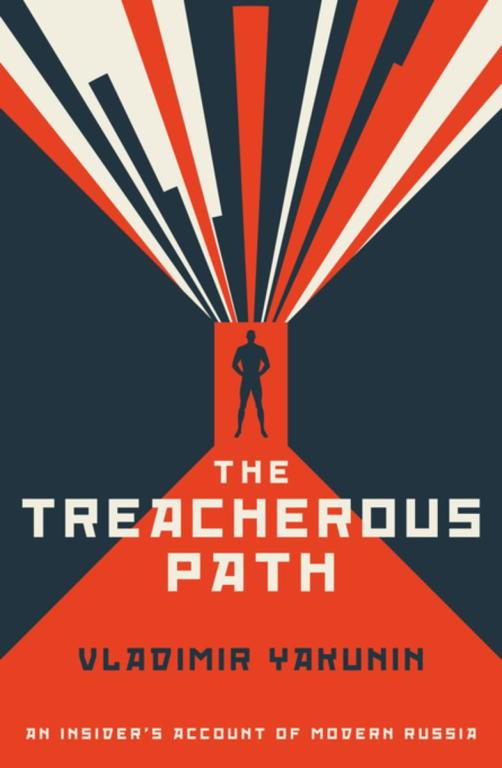
In 1991, Vladimir Yakunin, a Soviet diplomat and KGB officer, returned from his posting in New York to a country that no longer existed.
The state that he had served for all his adult life had been dissolved, the values he knew abandoned. Millions of his compatriots suffered as their savings disappeared and their previously secure existences were threatened by an unholy combination of criminality, corruption and chaos. Others thrived amid the opportunities offered in the new polity, and a battle began over the direction the fledgling state should take.
While something resembling stability was won in the early 2000s, today Russia’s future remains unresolved; its governing class divided.
The Treacherous Path is Yakunin’s account of his own experiences on the front line of Russia’s implosion and eventual resurgence, and of a career – as an intelligence officer, a government minister and for ten years the CEO of Russia’s largest company – that has taken him from the furthest corners of this incomprehensibly vast and complex nation to the Kremlin’s corridors.
Tackling topics as diverse as terrorism, government intrigue and the reality of doing business in Russia, and offering unparalleled insights into the post-Soviet mindset, this is the first time that a figure with Yakunin’s background has talked so openly and frankly about his country.
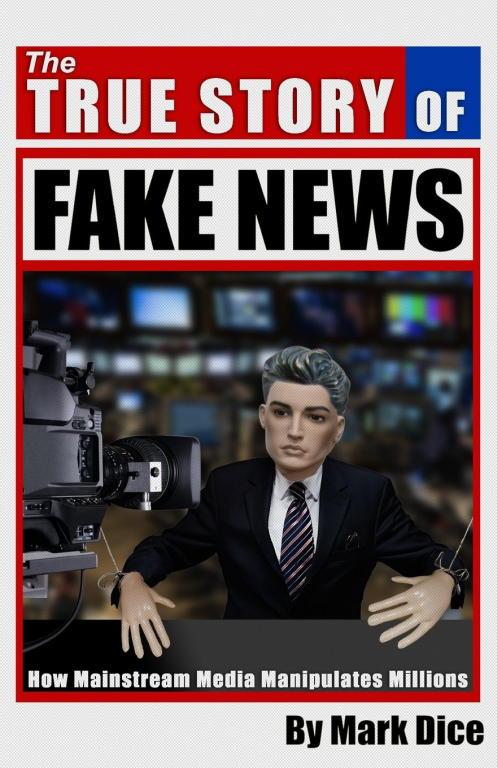
Is fake news being spread through social media as part of an information war? Are political operatives publishing disinformation to smear the opposition and help their own agendas? Who creates fake news, how does it spread, and can it be stopped?
What are the real world effects of fake news stories that go viral? Did it affect the outcome of the 2016 presidential election? Or is ‘fake news’ a fake problem, designed to justify tighter control over the mechanisms of sharing information online to drive audiences back to brand name media outlets because their audiences and influence are dwindling?
Media analyst Mark Dice takes a close look at the fake news phenomenon and the implications of mega-corporations like Facebook, Google, and Twitter becoming the ultimate gatekeepers and distributors of news and information.
You will see the powerful and deceptive methods of manipulation that affect us all, as numerous organizations and political activists cunningly plot to have their stories seen, heard, and believed by as many people as possible.
The depths of lies, distortions, and omissions from traditional mainstream media will shock you; and now they’re colluding with the top tech companies trying to maintain their information monopolies. This is The True Story of Fake News.