 fb2
fb2The History of Rome by Theodor Mommsen, translated by William Purdie Dickson
The History of Rome by Theodor Mommsen, translated by William Purdie Dickson

The History of Rome by Theodor Mommsen, translated by William Purdie Dickson
The History of Rome by Theodor Mommsen, translated by William Purdie Dickson
The History of Rome by Theodor Mommsen, translated by William Purdie Dickson
The History of Rome by Theodor Mommsen, translated by William Purdie Dickson
The History of Rome by Theodor Mommsen, translated by William Purdie Dickson
The History of Rome by Theodor Mommsen, translated by William Purdie Dickson
The History of Rome by Theodor Mommsen, translated by William Purdie Dickson
The Hotel Years gathers sixty-four feuilletons: on hotels; pains and pleasures; personalities; and the deteriorating international situation of the 1930s. Never before translated into English, these pieces begin in Vienna just at the end of the First World War, and end in Paris near the outbreak of the Second World War. Roth, the great journalist of his day, needed journalism to survive: in his six-volume collected works in German, there are three of fiction and three of journalism. Beginning in 1921, Roth wrote mostly for the liberal Frankfurter Zeitung who sent him on assignments throughout Germany — the inflation, the occupation, political assassinations — and abroad, to the USSR, Italy, Poland and Albania. And always: “I celebrate my return to lobby and chandelier, porter and chambermaid.”

Chagas’ disease has become one of the major public-health problems in Latin America. Current estimates are that sixteen to eighteen million people are infected. Caused by a flagellate protozoa carried to humans via the bite of the triatomine or vinchuca bug, it is locally referred to as the “kissing bug” because of its tendency to lodge on victims’ faces during sleep. The protozoa enters neuron tissues in the heart and other organs and causes death by irreversible cardiac and gastrointestinal lesions in thirty to forty percent of all cases, usually lying “dormant” until the debilitating chronic phase during the human host’s mid-life. Because of the long dormant phase, it has generally gone unrecognized, with chronic symptoms often attributed to other causes. Originally preying on forest animals, the vinchuca bug has infested the impoverished housing of displaced Andean migrants as forest lands and animals have been destroyed in South America. Although there is no cure for the chronic stage, the disease vectors can be controlled and possibly eliminated through improved hygiene and living conditions. No longer exclusive to Latin America, Chagas’ disease is spreading to North America and Europe with the migration of infected bugs, hosts, transfusions, and transplant organs.
The Kiss of Death is a thorough study of Chagas’ disease with analysis of research involving epidemiology, entomology, parasitology, pathology, and immunology. It emphasizes how humans have created environmental and social conditions for its spread; how Andeans have adapted culturally to the disease with changing conceptions of the body, adaptations to rituals, and herbal medicines; what factors are necessary to design a successful intervention project; and why understanding cultural belief systems is critical to prevention programs. The Kiss of Death also shows that traditional cultural forms can provide valuable strategies for dealing with disease prevention and treatment. This first book-length treatment in English reveals that an examination of Chagas’ disease is a warning of what happens as a result of environmental destruction and is an example of what might be done to prevent such tragedies in other parts of the world.
[Contain tables. Best viewed with CoolReader.]
Why, asks Daniel Rancour-Laferriere in this controversial book, has Russia been a country of suffering? Russian history, religion, folklore, and literature are rife with suffering. The plight of Anna Karenina, the submissiveness of serfs in the 16th and 17th centuries, ancient religious tracts emphasizing humility as the mother of virtues, the trauma of the Bolshevik revolution, the current economic upheavals wracking the country—these are only a few of the symptoms of what The Slave Soul of Russia identifies as a veritable cult of suffering that has been centuries in the making.
Bringing to light dozens of examples of self-defeating activities and behaviors that have become an integral component of the Russian psyche, Rancour-Laferriere convincingly illustrates how masochism has become a fact of everyday life in Russia. Until now, much attention has been paid to the psychology of Russia’s leaders and their impact on the country’s condition. Here, for the first time, is a compelling portrait of the Russian people’s psychology.
Jodorowsky’s memoirs of his experiences with Master Takata and the group of wisewomen-magiciennes-who influenced his spiritual growth
• Reveals Jodorowsky turning the same unsparing spiritual vision seen in El Topo to his own spiritual quest
• Shows how the author’s spiritual insight and progress was catalyzed repeatedly by wisewoman shamans and healers
In 1970, John Lennon introduced to the world Alejandro Jodorowsky and the movie, El Topo, that he wrote, starred in, and directed. The movie and its author instantly became a counterculture icon. The New York Times said the film “demands to be seen,” and Newsweek called it “An Extraordinary Movie!” But that was only the beginning of the story and the controversy of El Topo, and the journey of its brilliant creator. His spiritual quest began with the Japanese master Ejo Takata, the man who introduced him to the practice of meditation, Zen Buddhism, and the wisdom of the koans. Yet in this autobiographical account of his spiritual journey, Jodorowsky reveals that it was a small group of wisewomen, far removed from the world of Buddhism, who initiated him and taught him how to put the wisdom he had learned from his master into practice.
At the direction of Takata, Jodorowsky became a student of the surrealist painter Leonora Carrington, thus beginning a journey in which vital spiritual lessons were transmitted to him by various women who were masters of their particular crafts. These women included Doña Magdalena, who taught him “initiatic” or spiritual massage; the powerful Mexican actress known as La Tigresa (the “tigress”); and Reyna D’Assia, daughter of the famed spiritual teacher G. I. Gurdjieff. Other important wisewomen on Jodorowsky’s spiritual path include María Sabina, the priestess of the sacred mushrooms; the healer Pachita; and the Chilean singer Violeta Parra. The teachings of these women enabled him to discard the emotional armor that was hindering his advancement on the path of spiritual awareness and enlightenment.
At the height of his powers, Pablo Picasso was the artist as revolutionary, breaking through the niceties of form in order to mount a direct challenge to the values of his time. At the height of his fame, he was the artist as royalty: incalculably wealthy, universally idolized−and wholly isolated.
In this stunning critical assessment, John Berger−one of this century's most insightful cultural historians−trains his penetrating gaze upon this most prodigious and enigmatic painter and on the Spanish landscape and very particular culture that shpaed his life and work. Writing with a novelist's sensuous evocation of character and detail, and drawing on an erudition that embraces history, politics, and art, Berger follows Picasso from his childhood in Malaga to the Blue Period and Cubism, from the creation of Guernica to the pained etchings of his final years. He gives us the full measure of Picasso's triumphs and an unsparing reckoning of their cost−in exile, in loneliness, and in a desolation that drove him, in his last works, into an old man's furious and desperate frenzy at the beauty of what he could no longer create.
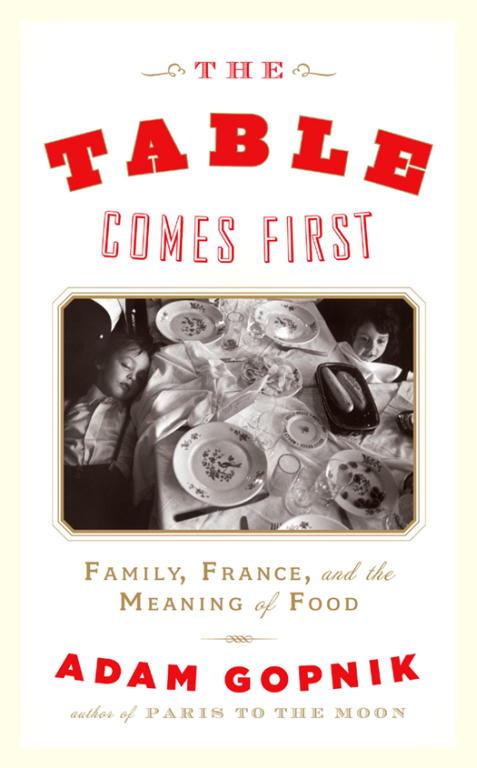
From the author of Paris to the Moon, a beguiling tour of the morals and manners of our present food mania, in search of eating’s deeper truths.
Never before have we cared so much about food. It preoccupies our popular culture, our fantasies, and even our moralizing. With our top chefs as deities and finest restaurants as places of pilgrimage, we have made food the stuff of secular seeking and transcendence, finding heaven in a mouthful. But have we come any closer to discovering the true meaning of food in our lives? With inimitable charm and learning, Adam Gopnik takes us on a beguiling journey in search of that meaning as he charts America’s recent and rapid evolution from commendably aware eaters to manic, compulsive gastronomes.

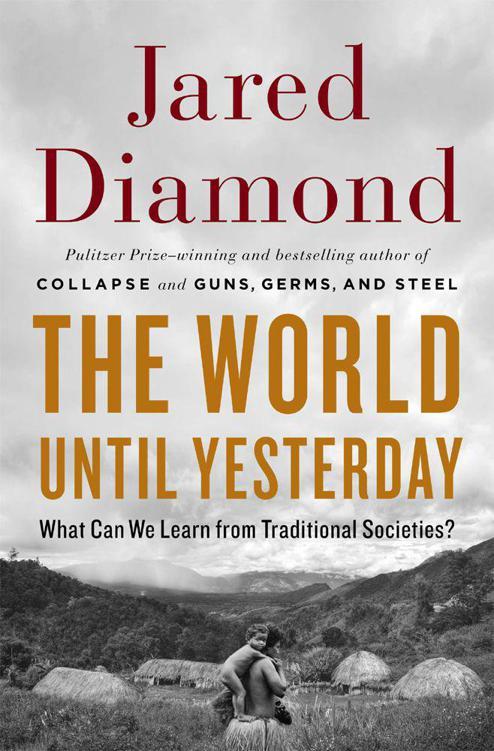
Most of us take for granted the features of our modern society, from air travel and telecommunications to literacy and obesity. Yet for nearly all of its six million years of existence, human society had none of these things. While the gulf that divides us from our primitive ancestors may seem unbridgeably wide, we can glimpse much of our former lifestyle in those largely traditional societies still or recently in existence. Societies like those of the New Guinea Highlanders remind us that it was only yesterday—in evolutionary time—when everything changed and that we moderns still possess bodies and social practices often better adapted to traditional than to modern conditions.
The World Until Yesterday provides a mesmerizing firsthand picture of the human past as it had been for millions of years—a past that has mostly vanished—and considers what the differences between that past and our present mean for our lives today.
This is Jared Diamond’s most personal book to date, as he draws extensively from his decades of field work in the Pacific islands, as well as evidence from Inuit, Amazonian Indians, Kalahari San people, and others. Diamond doesn’t romanticize traditional societies—after all, we are shocked by some of their practices—but he finds that their solutions to universal human problems such as child rearing, elder care, dispute resolution, risk, and physical fitness have much to teach us. A characteristically provocative, enlightening, and entertaining book, The World Until Yesterday will be essential and delightful reading.
Contain tables! Best viewed with CoolReader.
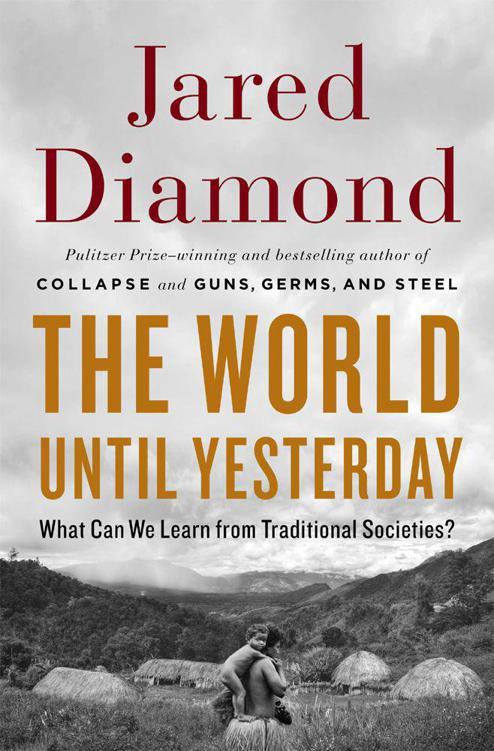
Most of us take for granted the features of our modern society, from air travel and telecommunications to literacy and obesity. Yet for nearly all of its six million years of existence, human society had none of these things. While the gulf that divides us from our primitive ancestors may seem unbridgeably wide, we can glimpse much of our former lifestyle in those largely traditional societies still or recently in existence. Societies like those of the New Guinea Highlanders remind us that it was only yesterday—in evolutionary time—when everything changed and that we moderns still possess bodies and social practices often better adapted to traditional than to modern conditions.
The World Until Yesterday provides a mesmerizing firsthand picture of the human past as it had been for millions of years—a past that has mostly vanished—and considers what the differences between that past and our present mean for our lives today.
This is Jared Diamond’s most personal book to date, as he draws extensively from his decades of field work in the Pacific islands, as well as evidence from Inuit, Amazonian Indians, Kalahari San people, and others. Diamond doesn’t romanticize traditional societies—after all, we are shocked by some of their practices—but he finds that their solutions to universal human problems such as child rearing, elder care, dispute resolution, risk, and physical fitness have much to teach us. A characteristically provocative, enlightening, and entertaining book, The World Until Yesterday will be essential and delightful reading.
Contain tables! Best viewed with CoolReader.
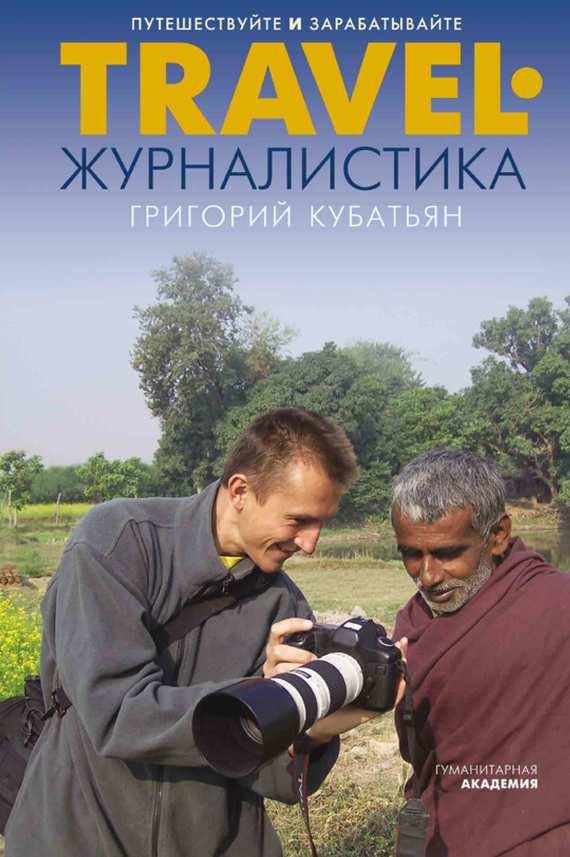
Прочитав эту книгу, вы поймёте, что быть travel-журналистом – это интересно и весело. Решите ли вы зарабатывать таким образом деньги или сделаете рассказы о путешествиях своим хобби, вы не потратите время впустую. Ведь вы своими глазами увидите извержение вулкана и рассвет в саванне, сфотографируете гигантскую раффлезию и погладите ездового носорога. Познакомитесь с людьми, которые никогда не видели метро и живут без электричества, услышите невероятные истории, попробуете кухню экзотических племён. Но главное, вы сможете рассказать об этом другим, поделиться красотой, которую видели. И этот удивительный опыт навсегда останется с вами.
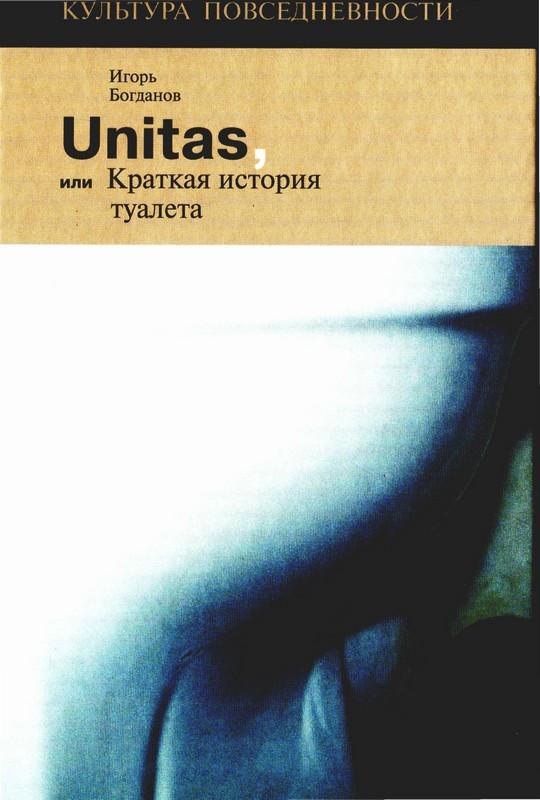
В книге петербургского литератора и историка Игоря Богданова рассказывается история туалета. Сам предмет уже давно не вызывает в обществе чувства стыда или неловкости, однако исследования этой темы в нашей стране, по существу, еще не было. Между тем история вопроса уходит корнями в глубокую древность, когда первобытный человек предпринимал попытки соорудить что-то вроде унитаза. Автор повествует о том, где и как в разные эпохи и в разных странах устраивались отхожие места, пока, наконец, в Англии не изобрели ватерклозет. С тех пор человек продолжает эксперименты с пространством и материалом, так что некоторые нынешние туалеты являют собою чудеса дизайнерского искусства. Читатель узнает о том, с какими трудностями сталкивались в известных обстоятельствах классики русской литературы, что стало с налаженной туалетной системой в России после 1917 года и какие надписи в туалетах попали в разряд вечных истин. Не забыта, разумеется, и история туалетной бумаги.