 fb2
fb2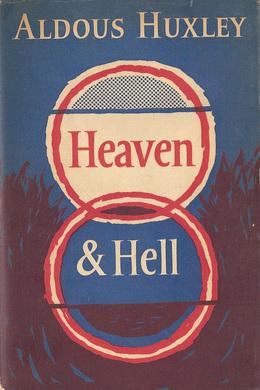
In 1953, in the presence of an investigator, Aldous Huxley took four-tenths of a gramme of mescalin, sat down and waited to see what would happen. When he opened his eyes everything, from the flowers in a vase to the creases in his trousers, was transformed. Huxley described his experience with breathtaking immediacy in The Doors of Perception. In its sequel Heaven and Hell, he goes on to explore the history and nature of mysticism. Focusing on how science, art, religion, literature, and psychoactive drugs can expand the everyday view of reality and offer a more profound grasp of the human experience.\n\nHuxley’s essays The Doors of Perception and Heaven and Hell ushered in a whole new generation of counter-culture icons such as Jackson Pollock, John Cage, Timothy Leary and Jim Morrison.
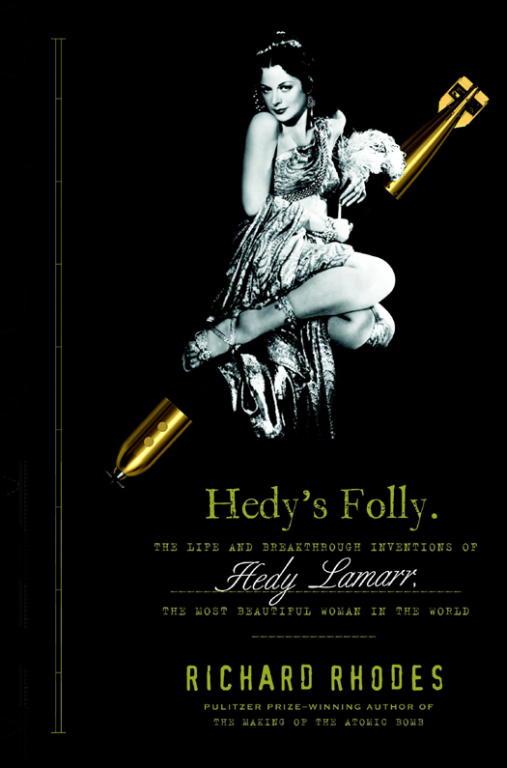
What do Hedy Lamarr, avant-garde composer George Antheil, and your cell phone have in common? The answer is spread-spectrum radio: a revolutionary invention based on the rapid switching of communications signals among a spread of different frequencies. Without this technology, we would not have the digital comforts that we take for granted today.
Only a writer of Richard Rhodes’s caliber could do justice to this remarkable story. Unhappily married to a Nazi arms dealer, Lamarr fled to America at the start of World War II; she brought with her not only her theatrical talent but also a gift for technical innovation. An introduction to Antheil at a Hollywood dinner table culminated in a U.S. patent for a jam-proof radio guidance system for torpedoes—the unlikely duo’s gift to the U.S. war effort.
What other book brings together 1920s Paris, player pianos, Nazi weaponry, and digital wireless into one satisfying whole? In its juxtaposition of Hollywood glamour with the reality of a brutal war, Hedy’s Folly is a riveting book about unlikely amateur inventors collaborating to change the world.
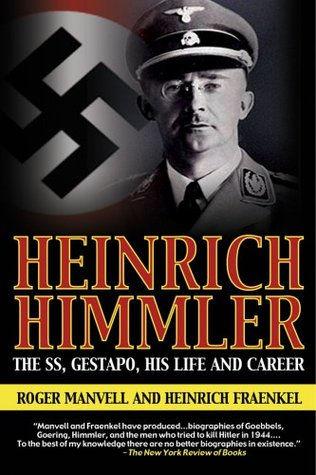
Authors Roger Manvell and Heinrich Fraenkel, notable biographers of the World War II German leaders Joseph Goebbels and Herman Goring, delve into the life of one of the most sinister, clever, and successful of all the Nazi leaders: Heinrich Himmler. As the head of the feared SS, Himler supervised the extermination of millions. Here is the story of how a seemingly ordinary boy grew into an obsessive and superstitious man who ventured into herbalism, astrology, and homeopathic medicine before finally turning to the “science” of racial purity and the belief in the superiority of the Aryan people.
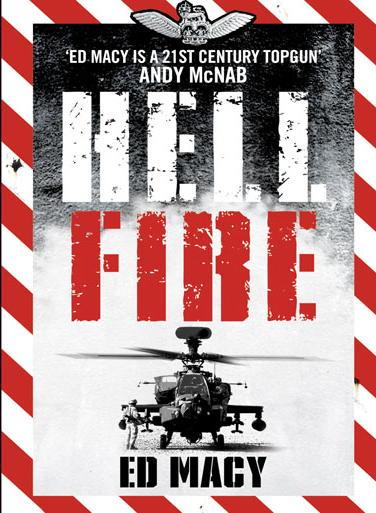
The true story of one man’s determination to master the world’s deadliest helicopter and of a split-second decision that changed the face of modern warfare.
Ed Macy bent every rule in the book to get to where he wanted to be: on Ops in the stinking heat of the Afghan summer, with the world’s greatest weapons system at his fingertips. It’s 2006 and he is part of an elite group of pilots assigned to the controversial Apache AH Mk1 gunship programme. So far, though, the monstrously expensive Apache has done little to disprove its detractors. For the first month ‘in action’ Ed sees little more from his cockpit than the back end of a Chinook.
But everything changes in the skies over Now Zad. Under fire and out of options, Ed has one chance to save his own skin and those of the men on the ground. Though the Apache bristles with awesome weaponry, its fearsome Hellfire missile has never been fired in combat. Then, in the blistering heat of the firefight, the trigger is pulled.
It’s a split-second decision that forever changes the course of the Afghan war, as overnight the gunship is transformed from being an expensive liability to the British Army’s greatest asset. From that moment on, Ed and his squadron mates will face the steepest learning curve of their lives – fighting an endless series of high-octane missions against a cunning and constantly evolving enemy. Ed himself will have to risk everything to fly, fight and survive in the most hostile place on earth.
http://www.youtube.com/watch?v=LNP1lbLNKqA
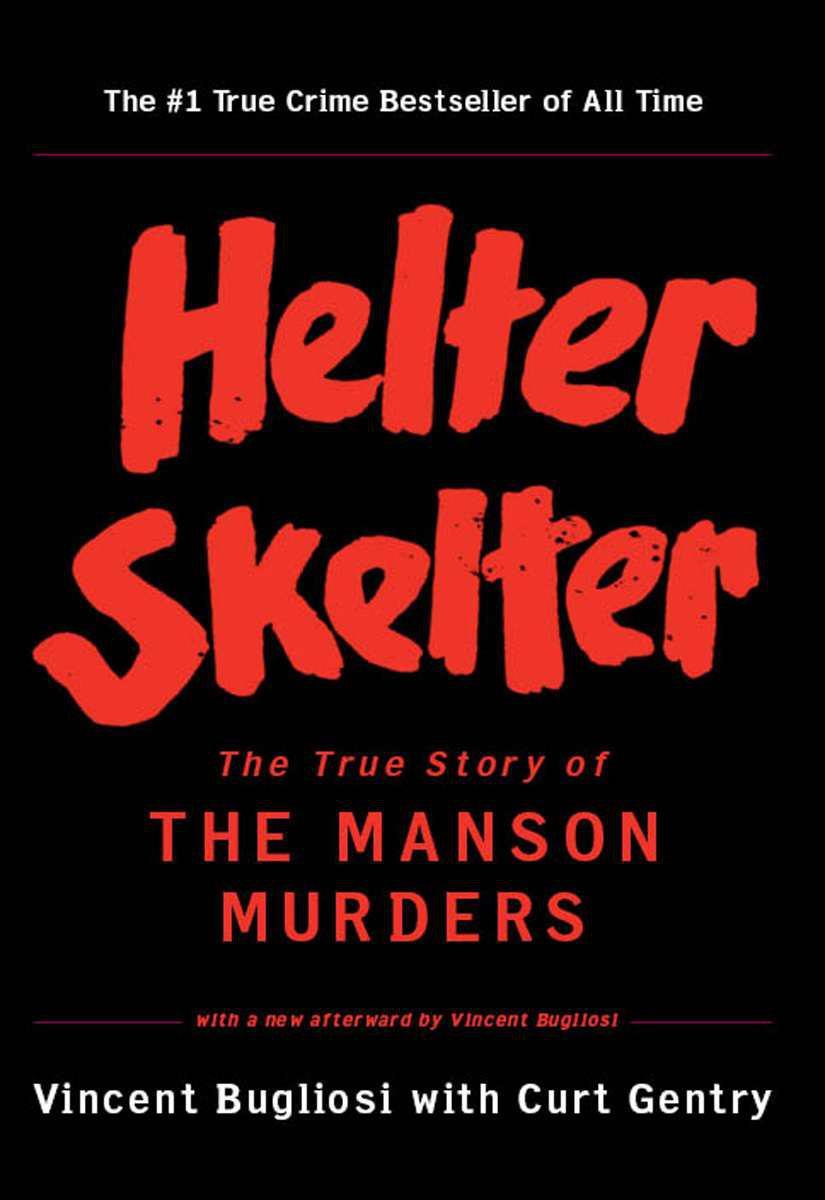
Prosecuting attorney in the Manson trial, Vincent Bugliosi held a unique insider’s position in one of the most baffling and horrifying cases of the twentieth century: the cold-blooded Tate-LaBianca murders carried out by Charles Manson and four of his followers. What motivated Manson in his seemingly mindless selection of victims, and what was his hold over the young women who obeyed his orders? Here is the gripping story of this famous and haunting crime.
Both Helter Skelter and Vincent Bugliosi’s subsequent Till Death Us Do Part won Edgar Allan Poe Awards for best true-crime book of the year.
The story behind the Manson killings explains how Charles Manson was able to make his “family” murder for him, chronicles the investigation and court trial that brought him to justice, and provides a new afterword that looks at where the killers are today. Reprint.
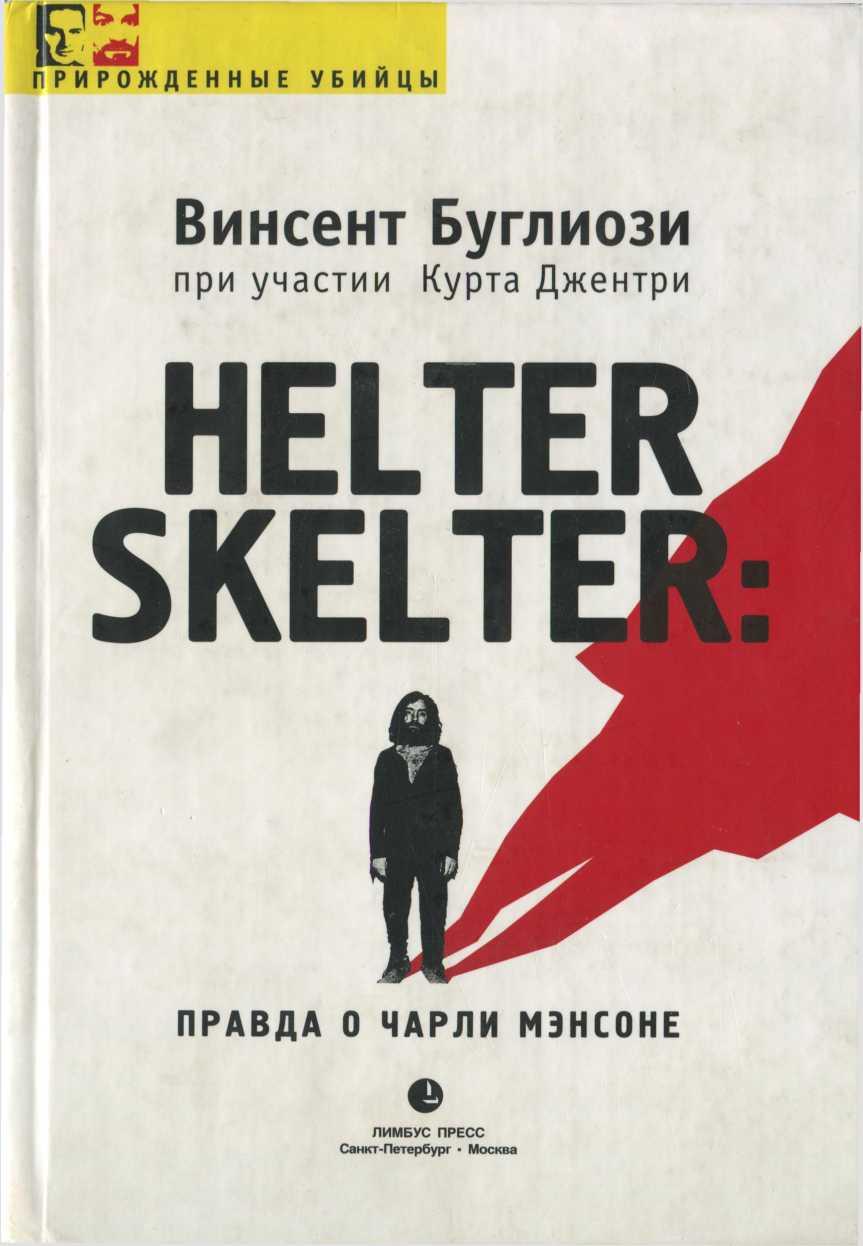
Подлинная история одного из самых громких судебных дел XX в. — группового убийства “Семьей" Мэнсона актрисы Шарон Тейт и ее друзей. Леденящие кровь подробности, религия и мистика, психологический портрет “калифорнийского потрошителя" и документальный отчет о судебном процессе по делу Чарли Мэнсона. Разыгравшаяся в Голливуде конца 1960-х годов трагедия, о которой идет речь в этой книге, не имеет срока давности; имена её участников всё ещё на слуху, а главные действующие лица за минувшие годы приобрели статус культовых личностей.
Книга построена на подлинных материалах по делу Чарльза Мэнсона. Пунктуация издания подчеркивает документальный характер текста.
Подлинная история одного из самых громких судебных дел XX в. — группового убийства “Семьей" Мэнсона актрисы Шарон Тейт и ее друзей. Леденящие кровь подробности, религия и мистика, психологический портрет “калифорнийского потрошителя" и документальный отчет о судебном процессе по делу Чарли Мэнсона. Разыгравшаяся в Голливуде конца 1960-х годов трагедия, о которой идет речь в этой книге, не имеет срока давности; имена её участников всё ещё на слуху, а главные действующие лица за минувшие годы приобрели статус культовых личностей.
Книга построена на подлинных материалах по делу Чарльза Мэнсона. Пунктуация издания подчеркивает документальный характер текста.
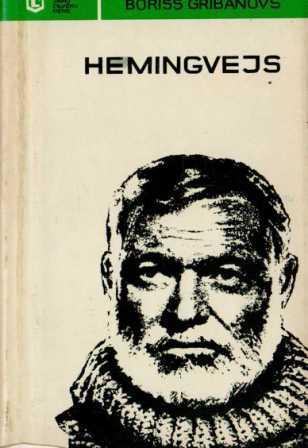
Boriss Gribanovs
Hemingvejs
Viņa dzīves stāsts aizsākās ievērojamos laikmetu griežos — beidzās deviņpadsmitais gadsimts, un tuvojās divdesmitais. Neviens toreiz īsti nespēja iedomāties, ko nesis šis jaunais gadsimts
Ievērojamu cilvēku dzīve
Izdevniecība «Liesma» Rīga 1973
8Л (Лтег) Сг 470
Ь. Грибанов ХЕМИНГУЭЙ
Издательство ЦК 13ЛКСМ «Молодая гвардия»
Москва 1970
Издательство «Лиесма»
Рига 1973
Серия «Жизнь замечательных людей* На латышском языке Перевод с русского В Викане Художник А. Юнкер
N о кrievu\alodas tulkojusi Vanda Vikāne Mākslinieks Aleksandrs Junkers
Ivana Aleksandroviča Kaškina piemiņai

I am beginning to realize that taking the self out of our essays is a form of repression. Taking the self out feels like obeying a gag order-pretending an objectivity where there is nothing objective about the experience of confronting and engaging with and swooning over literature." — from Heroines
On the last day of December, 2009 Kate Zambreno began a blog called Frances Farmer Is My Sister, arising from her obsession with the female modernists and her recent transplantation to Akron, Ohio, where her husband held a university job. Widely reposted, Zambreno's blog became an outlet for her highly informed and passionate rants about the fates of the modernist "wives and mistresses." In her blog entries, Zambreno reclaimed the traditionally pathologized biographies of Vivienne Eliot, Jane Bowles, Jean Rhys, and Zelda Fitzgerald: writers and artists themselves who served as male writers' muses only to end their lives silenced, erased, and institutionalized. Over the course of two years, Frances Farmer Is My Sister helped create a community where today's "toxic girls" could devise a new feminist discourse, writing in the margins and developing an alternative canon.
In Heroines, Zambreno extends the polemic begun on her blog into a dazzling, original work of literary scholarship. Combing theories that have dictated what literature should be and who is allowed to write it-from T. S. Eliot's New Criticism to the writings of such mid-century intellectuals as Elizabeth Hardwick and Mary McCarthy to the occasional "girl-on-girl crime" of the Second Wave of feminism-she traces the genesis of a cultural template that consistently exiles female experience to the realm of the "minor," and diagnoses women for transgressing social bounds. "ANXIETY: When she experiences it, it's pathological," writes Zambreno. "When he does, it's existential." By advancing the Girl-As-Philosopher, Zambreno reinvents feminism for her generation while providing a model for a newly subjectivized criticism.
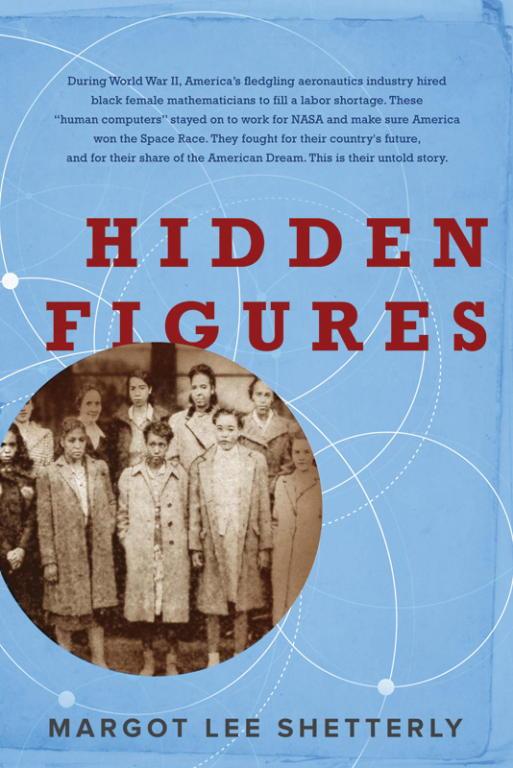
The phenomenal true story of the black female mathematicians at NASA whose calculations helped fuel some of America’s greatest achievements in space. Soon to be a major motion picture starring Taraji P. Henson, Octavia Spencer, Janelle Monae, Kirsten Dunst, and Kevin Costner.
Before John Glenn orbited the earth, or Neil Armstrong walked on the moon, a group of dedicated female mathematicians known as “human computers” used pencils, slide rules and adding machines to calculate the numbers that would launch rockets, and astronauts, into space.
Among these problem-solvers were a group of exceptionally talented African American women, some of the brightest minds of their generation. Originally relegated to teaching math in the South’s segregated public schools, they were called into service during the labor shortages of World War II, when America’s aeronautics industry was in dire need of anyone who had the right stuff. Suddenly, these overlooked math whizzes had a shot at jobs worthy of their skills, and they answered Uncle Sam’s call, moving to Hampton, Virginia and the fascinating, high-energy world of the Langley Memorial Aeronautical Laboratory.
Even as Virginia’s Jim Crow laws required them to be segregated from their white counterparts, the women of Langley’s all-black “West Computing” group helped America achieve one of the things it desired most: a decisive victory over the Soviet Union in the Cold War, and complete domination of the heavens.
Starting in World War II and moving through to the Cold War, the Civil Rights Movement and the Space Race, Hidden Figures follows the interwoven accounts of Dorothy Vaughan, Mary Jackson, Katherine Johnson and Christine Darden, four African American women who participated in some of NASA’s greatest successes. It chronicles their careers over nearly three decades they faced challenges, forged alliances and used their intellect to change their own lives, and their country’s future.
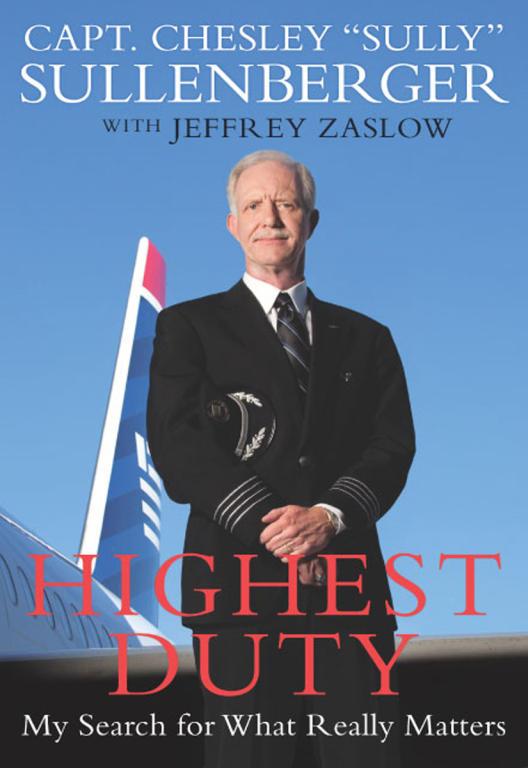
On January 15, 2009, the world witnessed one of the most remarkable emergency landings in aviation history when Captain Chesley “Sully” Sullenberger skillfully glided US Airways Flight 1549 onto the surface of the Hudson River, saving the lives of all 155 aboard. His cool actions not only averted tragedy but made him a hero and an inspiration worldwide. To Sullenberger, a calm, steady pilot with forty years of flying experience who is also a safety consulting expert, the landing was not a miracle but rather the result of years of practice and training—wisdom he gained in the cockpit of U.S. Air Force jets and in his Texas boyhood.
Born to a World War II veteran and dentist father and an elementary school teacher mother, Sully fell in love with planes early. He learned to fly as an eager 16-year-old from a crop duster, an older neighbor in north Texas, who took off and landed his fragile plane on the grass field behind his house. While Sully’s father encouraged his interest in flying, he also imparted stern advice he’d learned from his Navy service during World War II: a commander is responsible for everyone in his care—and those words have shaped Sully’s life and work and continue to guide him today.
HIGHEST DUTY reveals the important lessons Sully learned through childhood, in his military service, and in his work as a commercial airline pilot. At heart, it is a story of hope and preparedness—that life’s challenges can be met if we’re ready for them—reminding us that, even in these days filled with war, tragedy, and economic uncertainty, there are values still worth fighting for.
A few weeks after the crash, Sully discovered that he’d lost a library book about professional ethics, Just Culture: Balancing Safety and Accountability, in the downed plane’s cargo hold. When he called the library to notify them, they waived the usual fees. Mayor Michael Bloomberg replaced the book when he gave Sully the Key to the City in a New York ceremony.

Winner, 2017 APA Audie Awards — Nonfiction
From a former marine and Yale Law School graduate, a powerful account of growing up in a poor Rust Belt town that offers a broader, probing look at the struggles of America’s white working class
Hillbilly Elegy is a passionate and personal analysis of a culture in crisis—that of white working-class Americans. The decline of this group, a demographic of our country that has been slowly disintegrating over forty years, has been reported on with growing frequency and alarm, but has never before been written about as searingly from the inside. J. D. Vance tells the true story of what a social, regional, and class decline feels like when you were born with it hung around your neck.
The Vance family story begins hopefully in postwar America. J. D.’s grandparents were “dirt poor and in love,” and moved north from Kentucky’s Appalachia region to Ohio in the hopes of escaping the dreadful poverty around them. They raised a middle-class family, and eventually their grandchild (the author) would graduate from Yale Law School, a conventional marker of their success in achieving generational upward mobility.
But as the family saga of Hillbilly Elegy plays out, we learn that this is only the short, superficial version. Vance’s grandparents, his aunt, his uncle, his sister, and most of all his mother struggled profoundly with the demands of their new middle-class life and were never able to fully escape the legacy of abuse, alcoholism, poverty, and trauma so characteristic of their part of America. Vance piercingly shows how he himself still carries around the demons of their chaotic family history.
A deeply moving memoir with its share of humor and vividly colorful figures, Hillbilly Elegy is the story of how upward mobility really feels. And it is an urgent and troubling meditation on the loss of the American dream for a large segment of this country.https://www.youtube.com/watch?v=KW_3aaoSOYg

Over the course of his 60 years, Christopher Hitchens has been a citizen of both the United States and the United Kingdom. He has been both a socialist opposed to the war in Vietnam and a supporter of the U.S. war against Islamic extremism in Iraq. He has been both a foreign correspondent in some of the world's most dangerous places and a legendary bon vivant with an unquenchable thirst for alcohol and literature. He is a fervent atheist, raised as a Christian, by a mother whose Jewish heritage was not revealed to him until her suicide.
In other words, Christopher Hitchens contains multitudes. He sees all sides of an argument. And he believes the personal is political.
This is the story of his life, lived large.
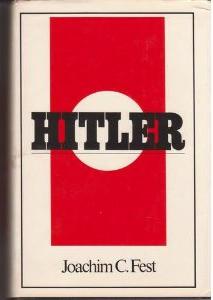
A bestseller in its original German edition and subsequently translated into more than a dozen languages, this book has become a classic portrait of a man, a nation, and an era.
Index. Translated by Richard and Clara Winston. A Helen and Kurt Wolff Book
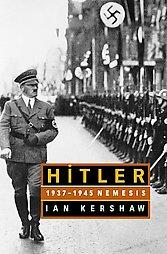
The climax and conclusion of one of the best-selling biographies of our time.
The New Yorker declared the first volume of Ian Kershaw’s two-volume masterpiece “as close to definitive as anything we are likely to see,” and that promise is fulfilled in this stunning second volume. As Nemesis opens, Adolf Hitler has achieved absolute power within Germany and triumphed in his first challenge to the European powers. Idolized by large segments of the population and firmly supported by the Nazi regime, Hitler is poised to subjugate Europe. Nine years later, his vaunted war machine destroyed, Allied forces sweeping across Germany, Hitler will end his life with a pistol shot to his head.
Following the enormous success of HITLER: HUBRIS this book triumphantly completes one of the great modern biographies. No figure in twentieth century history more clearly demands a close biographical understanding than Adolf Hitler; and no period is more important than the Second World War. Beginning with Hitler’s startling European successes in the aftermath of the Rhinelland occupation and ending nine years later with the suicide in the Berlin bunker, Kershaw allows us as never before to understand the motivation and the impact of this bizarre misfit. He addresses the crucial questions about the unique nature of Nazi radicalism, about the Holocaust and about the poisoned European world that allowed Hitler to operate so effectively.
George VI thought him a “damnable villain,” and Neville Chamberlain found him not quite a gentleman; but, to the rest of the world, Adolf Hitler has come to personify modern evil to such an extent that his biographers always have faced an unenviable task. The two more renowned biographies of Hitler—by Joachim C. Fest (Hitler) and by Alan Bullock (Hitler: A Study in Tyranny)—painted a picture of individual tyranny which, in the words of A. J. P. Taylor, left Hitler guilty and every other German innocent. Decades of scholarship on German society under the Nazis have made that verdict look dubious; so, the modern biographer of Hitler must account both for his terrible mindset and his charismatic appeal. In the second and final volume of his mammoth biography of Hitler—which covers the climax of Nazi power, the reclamation of German-speaking Europe, and the horrific unfolding of the final solution in Poland and Russia—Ian Kershaw manages to achieve both of these tasks. Continuing where Hitler: Hubris 1889–1936 left off, the epic Hitler: Nemesis 1937–1945 takes the reader from the adulation and hysteria of Hitler's electoral victory in 1936 to the obsessive and remote “bunker” mentality that enveloped the Führer as Operation Barbarossa (the attack on Russia in 1942) proved the beginning of the end. Chilling, yet objective. A definitive work.
—Miles Taylor
At the conclusion of Kershaw’s Hitler, 1889–1936: Hubris (1999), the Rhineland had been remilitarized, domestic opposition crushed, and Jews virtually outlawed. What the genuinely popular leader of Germany would do with his unchallenged power, the world knows and recoils from. The historian's duty, superbly discharged by Kershaw, is to analyze how and why Hitler was able to ignite a world war, commit the most heinous crime in history, and throw his country into the abyss of total destruction. He didn't do it alone. Although Hitler's twin goals of expelling Jews and acquiring “living space" for other Germans were hardly secret, “achieving” them did not proceed according to a blueprint, as near as Kershaw can ascertain. However long Hitler had cherished launching an all-out war against the Jews and against Soviet Russia, as he did in 1941, it was only conceivable as reality following a tortuous series of events of increasing radicality, in both foreign and domestic politics. At each point, whether haranguing a mass audience or a small meeting of military officers, the demagogue had to and did persuade his listeners that his course of action was the only one possible. Acquiescence to aggression and genocide was further abetted by the narcotic effect of the “Hitler myth,” the propagandized image of the infallible leader as national savior, which produced a force for radicalization parallel to Hitler’s personal murderous fanaticism; the motto of the time called it “working towards the Fuhrer.” Underlings in competition with each other would do what they thought Hitler wanted, as occurred with aspects of organizing the Final Solution. Kershaw’s narrative connecting this analysis gives outstanding evidence that he commands and understands the source material, producing this magisterial scholarship that will endure for decades.
—Gilbert Taylor
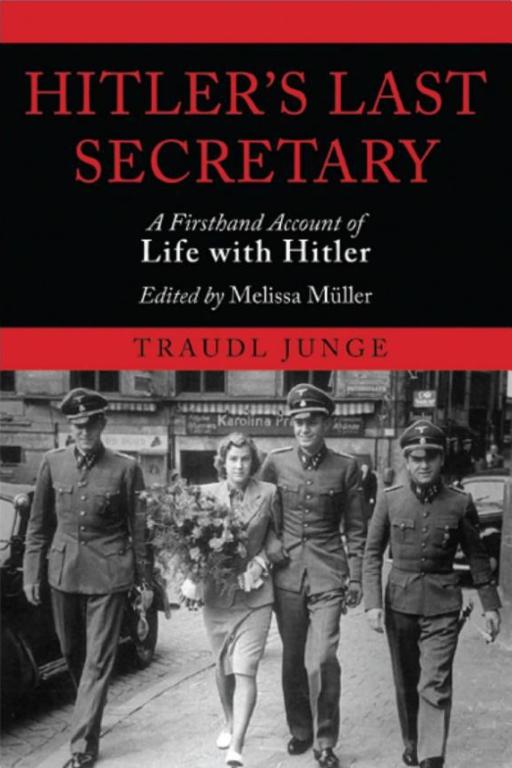
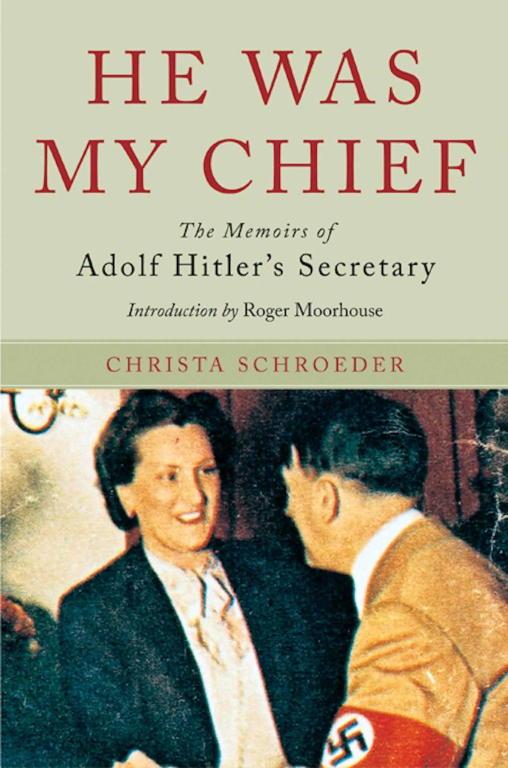
In 1942 Germany, Traudl Junge was a young woman with dreams of becoming a ballerina when she was offered the chance of a lifetime. At the age of twenty-two she became private secretary to Adolf Hitler and served him for two and a half years, right up to the bitter end. Junge observed the intimate workings of Hitler’s administration, she typed correspondence and speeches, including Hitler’s public and private last will and testament; she ate her meals and spent evenings with him; and she was close enough to hear the bomb that was intended to assassinate Hitler in the Wolf’s Lair, close enough to smell the bitter almond odor of Eva Braun’s cyanide pill. In her intimate, detailed memoir, Junge invites readers to experience day-to-day life with the most horrible dictator of the twentieth century.
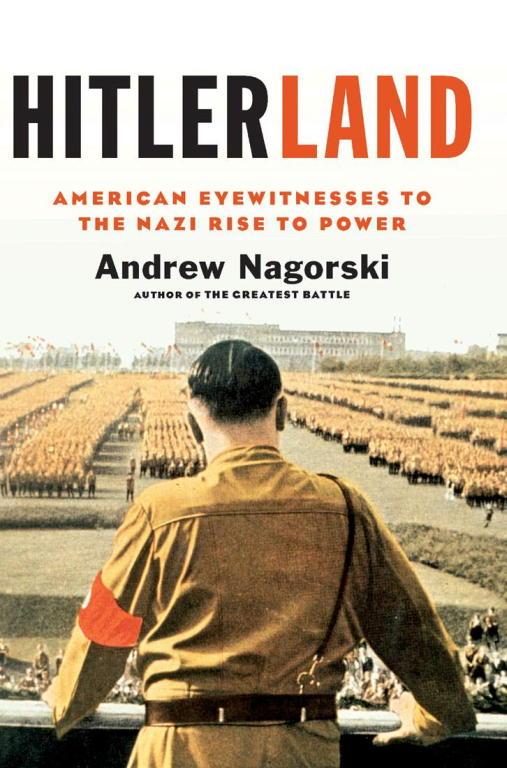
Hitler’s rise to power, Germany’s march to the abyss, as seen through the eyes of Americans—diplomats, military, expats, visiting authors, Olympic athletes—who watched horrified and up close. By tapping a rich vein of personal testimonies, Hitlerland offers a gripping narrative full of surprising twists—and a startlingly fresh perspective on this heavily dissected era.
Some of the Americans in Weimar and then Hitler’s Germany were merely casual observers, others deliberately blind; a few were Nazi apologists. But most slowly began to understand the horror of what was unfolding, even when they found it difficult to grasp the breadth of the catastrophe.
Among the journalists, William Shirer, Edgar Mowrer, and Dorothy Thompson were increasingly alarmed. Consul General George Messersmith stood out among the American diplomats because of his passion and courage. Truman Smith, the first American official to meet Hitler, was an astute political observer and a remarkably resourceful military attaché. Historian William Dodd, whom FDR tapped as ambassador in Hitler’s Berlin, left disillusioned; his daughter Martha scandalized the embassy with her procession of lovers from her initial infatuation with Nazis she took up with. She ended as a Soviet spy.
On the scene were George Kennan, who would become famous as the architect of containment; Richard Helms, who rose to the top of the CIA; Howard K. Smith, who would coanchor the ABC Evening News. The list of prominent visitors included writers Sinclair Lewis and Thomas Wolfe, famed aviator Charles Lindbergh, the great athlete Jesse Owens, newspaper publisher William Randolph Hearst, and black sociologist and historian W.E.B. Dubois.
Observing Hitler and his movement up close, the most perceptive of these Americans helped their reluctant countrymen begin to understand the nature of Nazi Germany as it ruthlessly eliminated political opponents, instilled hatred of Jews and anyone deemed a member of an inferior race, and readied its military and its people for a war for global domination. They helped prepare Americans for the years of struggle ahead.
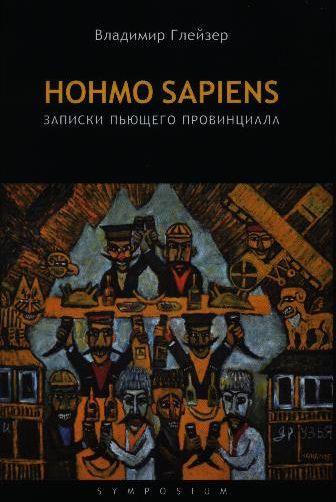
Эта книга — рассказы о веселых перепитиях чисто конкретного провинциала в Стране Чудес — Союзе Советских Социалистических Республик. В книге жизнеутверждается главный авторский принцип: только законченный пессимист с оптимизмом смотрит в будущее.