 fb2
fb2
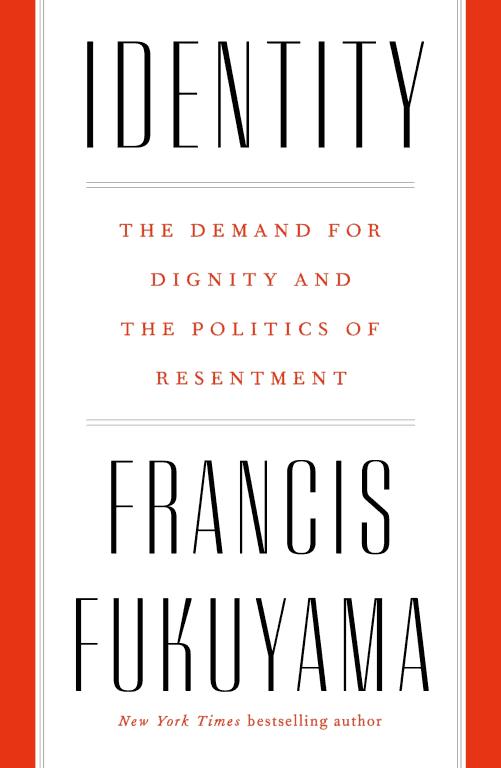
The New York Times bestselling author of The Origins of Political Order offers a provocative examination of modern identity politics: its origins, its effects, and what it means for domestic and international affairs of state
In 2014, Francis Fukuyama wrote that American institutions were in decay, as the state was progressively captured by powerful interest groups. Two years later, his predictions were borne out by the rise to power of a series of political outsiders whose economic nationalism and authoritarian tendencies threatened to destabilize the entire international order. These populist nationalists seek direct charismatic connection to “the people,” who are usually defined in narrow identity terms that offer an irresistible call to an in-group and exclude large parts of the population as a whole.
Demand for recognition of one’s identity is a master concept that unifies much of what is going on in world politics today. The universal recognition on which liberal democracy is based has been increasingly challenged by narrower forms of recognition based on nation, religion, sect, race, ethnicity, or gender, which have resulted in anti-immigrant populism, the upsurge of politicized Islam, the fractious “identity liberalism” of college campuses, and the emergence of white nationalism. Populist nationalism, said to be rooted in economic motivation, actually springs from the demand for recognition and therefore cannot simply be satisfied by economic means. The demand for identity cannot be transcended; we must begin to shape identity in a way that supports rather than undermines democracy.
Identity is an urgent and necessary book―a sharp warning that unless we forge a universal understanding of human dignity, we will doom ourselves to continuing conflict.
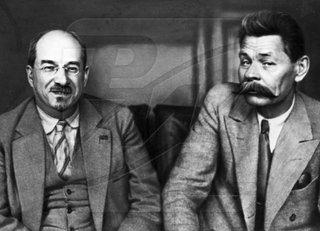
Рецензия А.В.Луначарского на повесть «Исповедь» М.Горького опубликованная в 23-ем сборнике «Знания»
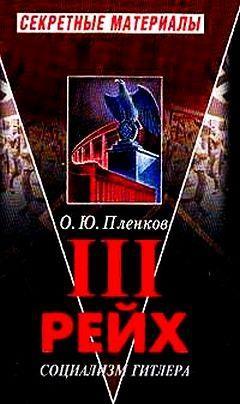
Первый том планируемого к изданию четырехтомника доктора исторических наук О. Ю. Пленкова посвящен социальной истории Третьего Рейха.
За двенадцать лет существования нацистского государства были достигнуты высокие темпы роста в промышленности и сельском хозяйстве, ликвидирована безработица, введены существенные налоговые льготы, что позволило создать весьма благоприятные условия жизни для населения Германии.
Но почему не удалось достичь полного социального благополучия? Почему позитивные при декларировании принципы в момент их реализации дали обратный эффект? Действительно ли за годы нацистского режима произошла модернизация немецкого общества? Как удалось Гитлеру путем улучшения условий жизни склонить немецкую общественность к принятию и оправданию насильственных действий против своих мнимых или настоящих противников?
Используя огромное количество опубликованных (в первую очередь, в Германии) источников и архивных материалов, автор пытается ответить на все эти вопросы.
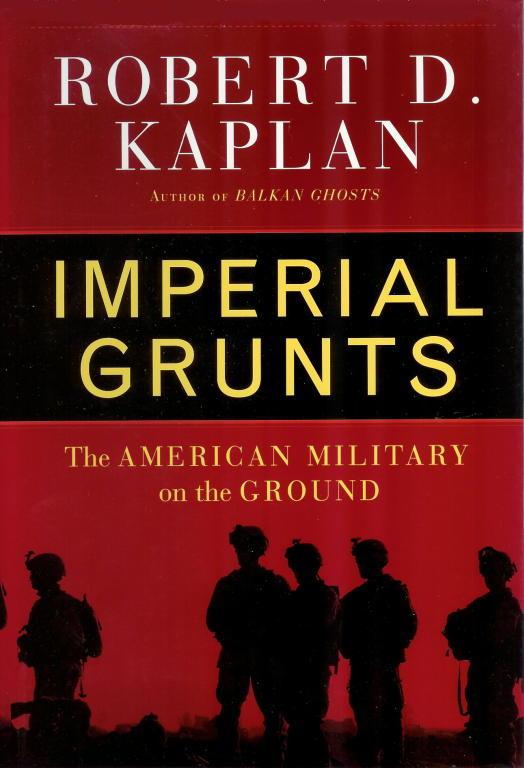
A fascinating, unprecedented first-hand look at the soldiers on the front lines on the Global War on Terror. Plunging deep into midst of some of the hottest conflicts on the globe, Robert D. Kaplan takes us through mud and jungle, desert and dirt to the men and women on the ground who are leading the charge against threats to American security. These soldiers, fighting in thick Colombian jungles or on dusty Afghani plains, are the forefront of the new American foreign policy, a policy being implemented one soldier at a time. As Kaplan brings us inside their thoughts, feelings, and operations, these modern grunts provide insight and understanding into the War on Terror, bringing the war, which sometimes seems so distant, vividly to life.
Ryszard Kapuscinski's last book, The Soccer War — a revelation of the contemporary experience of war — prompted John le Carre to call the author "the conjurer extraordinary of modern reportage." Now, in Imperium, Kapuscinski gives us a work of equal emotional force and evocative power: a personal, brilliantly detailed exploration of the almost unfathomably complex Soviet empire in our time.
He begins with his own childhood memories of the postwar Soviet occupation of Pinsk, in what was then Poland's eastern frontier ("something dreadful and incomprehensible…in this world that I enter at seven years of age"), and takes us up to 1967, when, as a journalist just starting out, he traveled across a snow-covered and desolate Siberia, and through the Soviet Union's seven southern and Central Asian republics, territories whose individual histories, cultures, and religions he found thriving even within the "stiff, rigorous corset of Soviet power."
Between 1989 and 1991, Kapuscinski made a series of extended journeys through the disintegrating Soviet empire, and his account of these forms the heart of the book. Bypassing official institutions and itineraries, he traversed the Soviet territory alone, from the border of Poland to the site of the most infamous gulags in far-eastern Siberia (where "nature pals it up with the executioner"), from above the Arctic Circle to the edge of Afghanistan, visiting dozens of cities and towns and outposts, traveling more than 40,000 miles, venturing into the individual lives of men, women, and children in order to Understand the collapsing but still various larger life of the empire.
Bringing the book to a close is a collection of notes which, Kapuscinski writes, "arose in the margins of my journeys" — reflections on the state of the ex-USSR and on his experience of having watched its fate unfold "on the screen of a television set…as well as on the screen of the country's ordinary, daily reality, which surrounded me during my travels." It is this "schizophrenic perception in two different dimensions" that enabled Kapuscinski to discover and illuminate the most telling features of a society in dire turmoil.
Imperium is a remarkable work from one of the most original and sharply perceptive interpreters of our world — galvanizing narrative deeply informed by Kapuscinski's limitless curiosity and his passion for truth, and suffused with his vivid sense of the overwhelming importance of history as it is lived, and of our constantly shifting places within it.
Данное произведение создано в русле цивилизационного подхода к истории, хотя вслед за О. Шпенглером Фрэнсис Паркер Йоки считал цивилизацию поздним этапом развития любой культуры как высшей органической формы, приуроченной своим происхождением и развитием к определенному географическому ландшафту. Динамичное развитие идей Шпенглера, подкрепленное остротой политической ситуации (Вторая мировая война), по свежим следам которой была написана книга, делает ее чтение драматическим переживанием. Резко полемический характер текста, как и интерес, которого он заслуживает, отчасти объясняется тем, что его автор представлял проигравшую сторону в глобальном политическом и культурном противостоянии XX века.
Независимо от того факта, что книга постулирует неизбежность дальнейшей политической конфронтации существующих культурных сообществ, а также сообществ, пребывающих, по мнению автора, вне культуры, ее политологические и мировоззренческие прозрения чрезвычайно актуальны с исторической перспективы текущего, XXI столетия.
С научной точки зрения эту книгу критиковать бессмысленно. И не потому, что она ненаучна, а в силу того, что поднимаемые в ней вопросы, например патология культуры как живого сверхорганизма, по меньшей мере, недостаточно исследованы или замалчиваются из либеральных соображений.
Книга адресована самому широкому кругу читателей, небезразличных к политике, а также к судьбе человечества в целом.
Once upon a time an Indian writer named Amitav Ghosh set out to find an Indian slave, name unknown, who some seven hundred years before had traveled to the Middle East. The journey took him to a small village in Egypt, where medieval customs coexist with twentieth-century desires and discontents. But even as Ghosh sought to re-create the life of his Indian predecessor, he found himself immersed in those of his modern Egyptian neighbors.
Combining shrewd observations with painstaking historical research, Ghosh serves up skeptics and holy men, merchants and sorcerers. Some of these figures are real, some only imagined, but all emerge as vividly as the characters in a great novel. In an Antique Land is an inspired work that transcends genres as deftly as it does eras, weaving an entrancing and intoxicating spell.
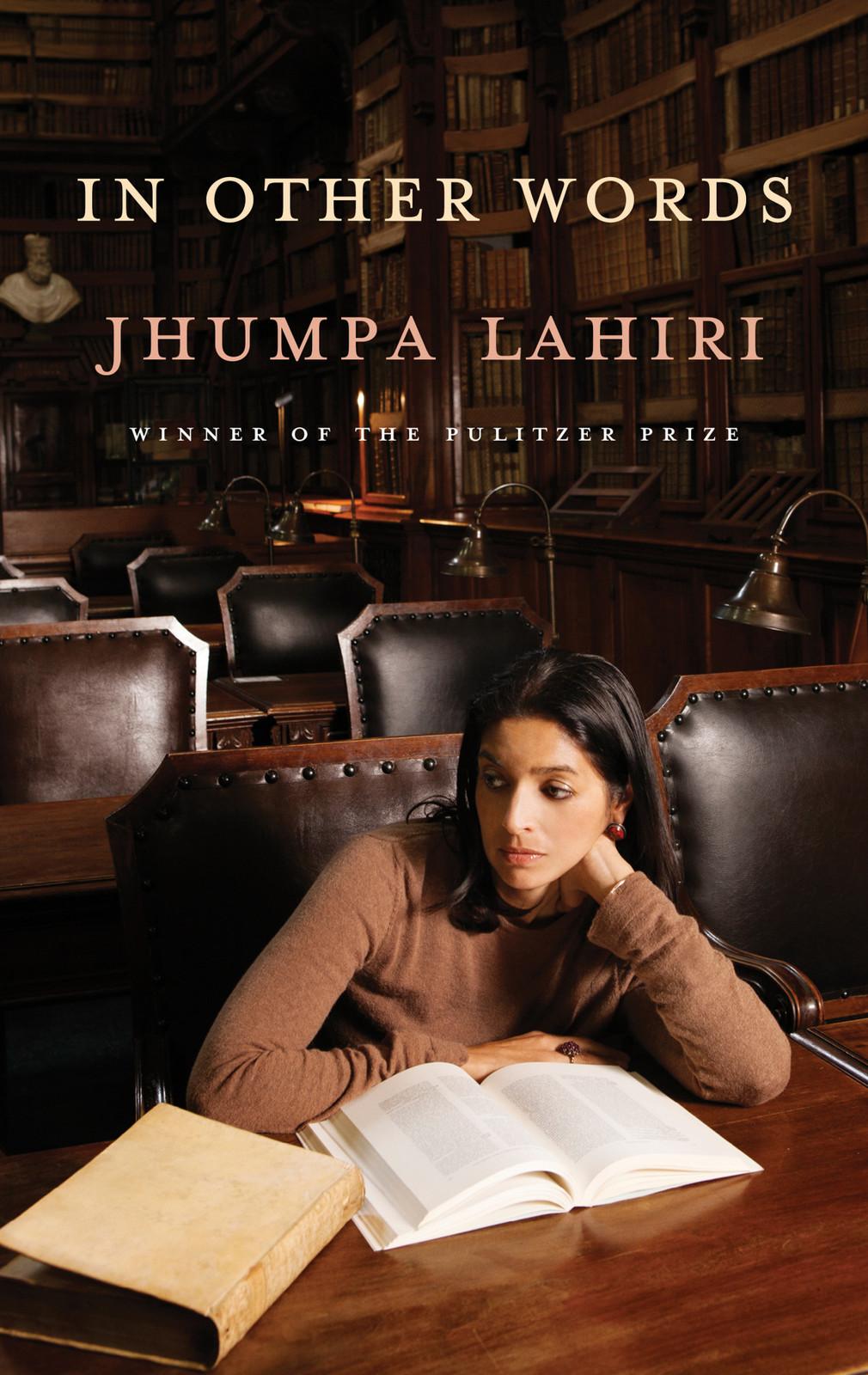
From the Pulitzer Prize winner, a surprising, powerful, and eloquent nonfiction debut.
In Other Words is at heart a love story — of a long and sometimes difficult courtship, and a passion that verges on obsession: that of a writer for another language. For Jhumpa Lahiri, that love was for Italian, which first captivated and capsized her during a trip to Florence after college. And although Lahiri studied Italian for many years afterward, true mastery had always eluded her. So in 2012, seeking full immersion, she decided to move to Rome with her family, for “a trial by fire, a sort of baptism” into a new language and world.
In Rome, Lahiri began to read, and to write — initially in her journal — solely in Italian. In Other Words, an autobiographical work written in Italian, investigates the process of learning to express oneself in another language, and describes the journey of a writer seeking a new voice. Presented in a dual-language format, it is a book about exile, linguistic and otherwise, written with an intensity and clarity not seen since Nabokov. A startling act of self-reflection and a provocative exploration of belonging and reinvention.
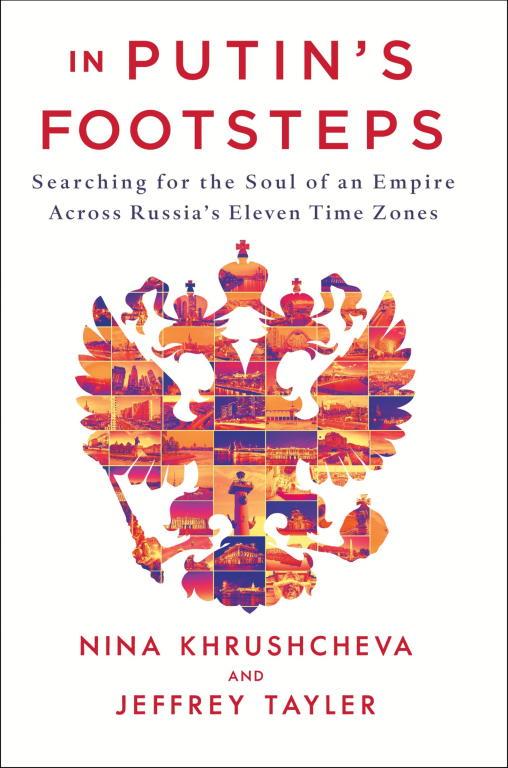
In Putin’s Footsteps is Nina Khrushcheva and Jeffrey Tayler’s unique combination of travelogue, current affairs, and history, showing how Russia’s dimensions have shaped its identity and culture through the decades.
With exclusive insider status as Nikita Khrushchev’s great grand-daughter, and an ex-pat living and reporting on Russia and the Soviet Union since 1993, Nina Khrushcheva and Jeffrey Tayler offer a poignant exploration of the largest country on earth through their recreation of Vladimir Putin’s fabled New Year’s Eve speech planned across all eleven time zones.
After taking over from Yeltsin in 1999, and then being elected president in a landslide, Putin traveled to almost two dozen countries and a quarter of Russia’s eighty-nine regions to connect with ordinary Russians. His travels inspired the idea of a rousing New Year’s Eve address delivered every hour at midnight throughout Russia’s eleven time zones. The idea was beautiful, but quickly abandoned as an impossible feat. He correctly intuited, however, that the success of his presidency would rest on how the country’s outback citizens viewed their place on the world stage.
Today more than ever, Putin is even more determined to present Russia as a formidable nation. We need to understand why Russia has for centuries been an adversary of the West. Its size, nuclear arsenal, arms industry, and scientific community (including cyber-experts), guarantees its influence.

Never before has a journalist penetrated the wall of secrecy that surrounds the U.S. Secret Service. After conducting exclusive interviews with more than one hundred current and former Secret Service agents, bestselling author and award-winning reporter Ronald Kessler reveals their secrets for the first time.
• George W. Bush’s daughters would try to lose their agents.
• Based on a psychic’s vision that a sniper would assassinate President George H. W. Bush, the Secret Service changed his motorcade route.
• To make the press think he came to work early, Jimmy Carter would walk into the Oval Office at 5 a.m., then nod off to sleep.
• Lyndon Johnson gave dangerous instructions to his Secret Service agents and engaged in extensive philandering at the White House.
From one of the finest journalists of our time comes a definitive, boots-on-the-ground dispatch from the front lines of the conflict in Ukraine.
Ever since Ukraine’s violent 2014 revolution, followed by Russia’s annexation of Crimea, the country has been at war. Misinformation reigns, more than two million people have been displaced, and Ukrainians fight one another on a second front—the crucial war against corruption.
With In Wartime, Tim Judah lays bare the events that have turned neighbors against one another and mired Europe’s second-largest country in a conflict seemingly without end.
In Lviv, Ukraine’s western cultural capital, mothers tend the graves of sons killed on the other side of the country. On the Maidan, the square where the protests that deposed President Yanukovych began, pamphleteers, recruiters, buskers, and mascots compete for attention. In Donetsk, civilians who cheered Russia’s President Putin find their hopes crushed as they realize they have been trapped in the twilight zone of a frozen conflict.
Judah talks to everyone from politicians to poets, pensioners, and historians. Listening to their clashing explanations, he interweaves their stories to create a sweeping, tragic portrait of a country fighting a war of independence from Russia—twenty-five years after the collapse of the USSR.
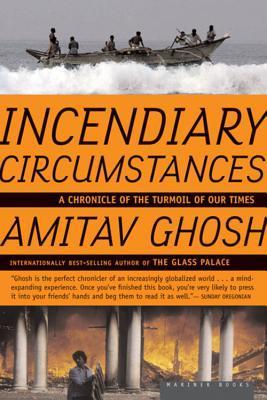
"An uncannily honest writer." — New York Times Book ReviewThe novelist and journalist Amitav Ghosh has offered extraordinary firsthand accounts of pivotal world events over the past twenty years. He is an essential voice in forums like The Nation, the New York Times, the New Republic, Granta, and The New Yorker, Incendiary Circumstances brings together the finest of these pieces for the first time — including many never before published in the States — in a compelling chronicle of the turmoil of our times. Incendiary Circumstances begins with Ghosh’s arrival in the Andaman and Nicobar islands just days after the devastation of the 2005 tsunami. We then travel back to September 11, 2001, as Ghosh retrieves his young daughter from school, sick with the knowledge that she must witness the kind of firestorm that has been in the background of his everyday life since childhood. With a prescience born of experience, Ghosh warned decades ago of the dangerous rise of religious extremism. In his travels he has stood on an icy mountaintop on the contested border between India and Pakistan, interviewed Pol Pot’s sister-in-law in Cambodia, shared the elation of Egyptians when Naguib Mahfouz won the Nobel Prize, and stood with his threatened Sikh neighbors through the riots following Indira Gandhi's assassination. With intelligence and authentic sympathy, he "illuminates the human drama behind the headlines" (Publishers Weekly). Incendiary Circumstances is unparalleled testimony of an era defined by the ravages of politics and nature.
Amitav Ghosh is acclaimed for his political journalism and his travel writing. The New York Times Book Review called his travelogue, In An Antique Land, "remarkable. . rivals anything by the masters of social realism in modern Egyptian literature." He is also the best-selling author of four novels, including The Hungry Tide and The Glass Palace, which has been published in eighteen foreign editions. Ghosh has won France's prestigious Prix Medici Etranger, India's Sahitya Akademi Award, the Arthur C. Clarke Award, and a Pushcart Prize. Educated in South Asia, the Middle East, and the United Kingdom, Ghosh holds a doctorate in social anthropology from Oxford. He divides his time between Harvard University, where he is a visiting professor, and his homes in Kolkata, India, and Brooklyn, New York.
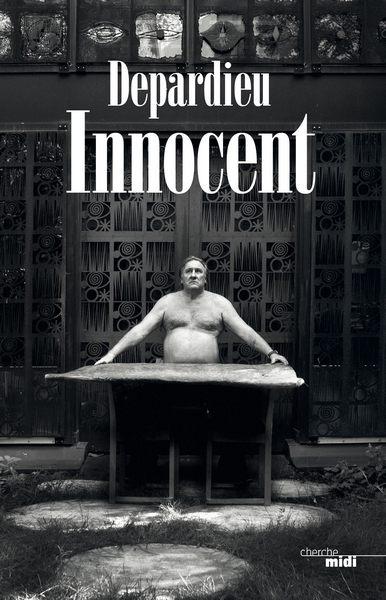
Je revendique complètement ma connerie et mes dérapages. Parce qu'il y a là quelque chose de vrai. Et si on ne dérape jamais, c'est souvent qu'on est un peu con.
Je ne maîtrise rien, je ne fais que suivre, et parfois supporter mon amour de la vie et des autres. Un amour qui, comme disait François Truffaut, est à la fois une joie et une souffrance.
Je ne cherche pas à être un saint. Je ne suis pas contre, mais être un saint, c'est dur. La vie d'un saint est chiante. Je préfère être ce que je suis. Continuer à être ce que je suis.
Un innocent.
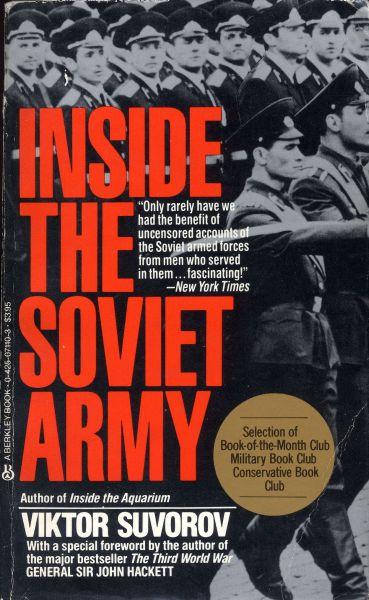
The first high-level Red Army defector to tell us —
— How many fighting men the Soviet Union can actually mobilize into its army within days rather than official published figures.
— The ways in which Soviet weaponry is decisively superior to the West, despite the Free World's vaunted technological superiority.
— Why the concept of “defense” is forbidden in Red Army ruling circles, and how this affects the possibility of Soviet nuclear first strike.
— The one great weakness of the Soviet armed forces the West has so far failed to exploit.
“Authentic and of great significance. One hopes that the book is being studied by the Pentagon and NATO.”
— John Barkham Reviews