
 fb2
fb2
One of Eastern Europe’s most important writers, Croatian journalist and novelist Drakulic takes readers into the violent and bitter maelstrom that is the Yugoslavian conflict. In a series of brilliant and poignant personal essays, she describes how ordinary people respond to this gruesome situation.
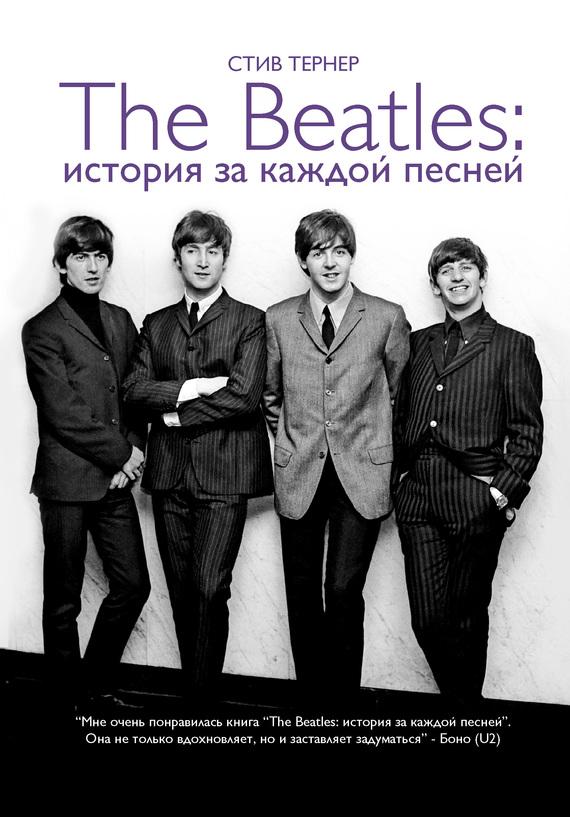
Кому было «всего семнадцать», и кто заставлял сердце Пола биться сильнее? Кем на самом деле была Элеанор Ригби? Что послужило вдохновением для песни «Lucy In The Sky With Diamonds»? Стив Тернер тщательно исследовал истории и события, которые нашли свое отражение в ставших бессмертными и покоривших многие музыкальные чарты песнях, написанных четырьмя простыми парнями из Ливерпуля. Начиная с первого хита «Love Me Do» и первого альбома «Please Please Me» и заканчивая «Live At The ВВС» в трех частях, Стив Тернер подробно рассказывает истории всех песен самой известной и влиятельной музыкальной группы в мире.
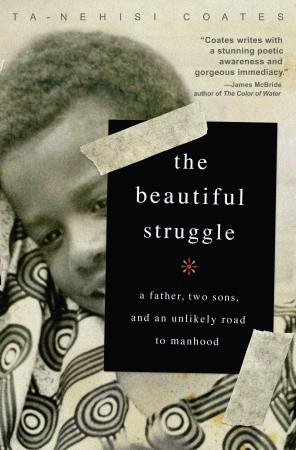
An exceptional father-son story about the reality that tests us, the myths that sustain us, and the love that saves us. Paul Coates was an enigmatic god to his sons: a Vietnam vet who rolled with the Black Panthers, an old-school disciplinarian and new-age believer in free love, an autodidact who launched a publishing company in his basement dedicated to telling the true history of African civilization. Most of all, he was a wily tactician whose mission was to carry his sons across the shoals of inner-city adolescence and through the collapsing civilization of Baltimore in the Age of Crack, and into the safe arms of Howard University, where he worked so his children could attend for free. Among his brood of seven, his main challenges were Ta-Nehisi, spacey and sensitive and almost comically miscalibrated for his environment, and Big Bill, charismatic and all-too-ready for the challenges of the streets. The Beautiful Struggle follows their divergent paths through this turbulent period, and their fathers steadfast efforts assisted by mothers, teachers, and a body of myths, histories, and rituals conjured from the past to meet the needs of a troubled present to keep them whole in a world that seemed bent on their destruction. With a remarkable ability to reimagine both the lost world of his fathers generation and the terrors and wonders of his own youth, Coates offers readers a small and beautiful epic about boys trying to become men in black America and beyond.
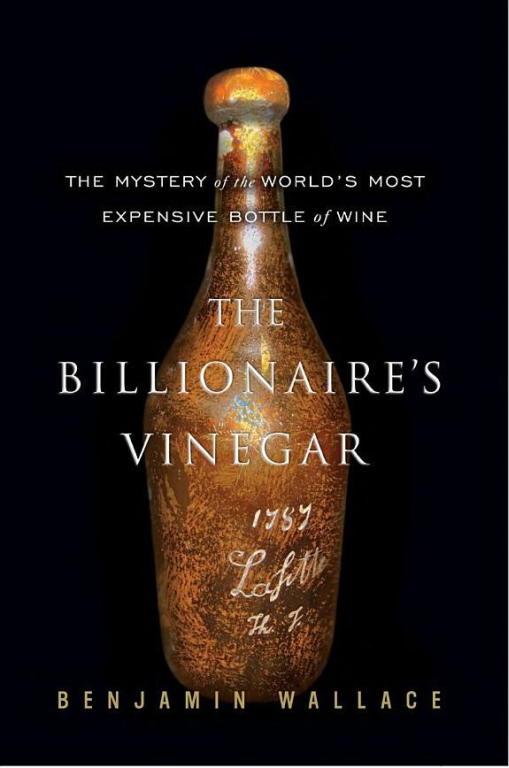
It was the most expensive bottle of wine ever sold.
In 1985, at a heated auction by Christie’s of London, a 1787 bottle of Château Lafite Bordeaux—one of a cache of bottles unearthed in a bricked-up Paris cellar and supposedly owned by Thomas Jefferson—went for $156,000 to a member of the Forbes family. The discoverer of the bottle was pop-band manager turned wine collector Hardy Rodenstock, who had a knack for finding extremely old and exquisite wines. But rumors about the bottle soon arose. Why wouldn’t Rodenstock reveal the exact location where it had been found? Was it part of a smuggled Nazi hoard? Or did his reticence conceal an even darker secret?
It would take more than two decades for those questions to be answered and involve a gallery of intriguing players—among them Michael Broadbent, the bicycle-riding British auctioneer who speaks of wines as if they are women and staked his reputation on the record-setting sale; Serena Sutcliffe, Broadbent’s elegant archrival, whose palate is covered by a hefty insurance policy; and Bill Koch, the extravagant Florida tycoon bent on exposing the truth about Rodenstock.
Pursuing the story from Monticello to London to Zurich to Munich and beyond, Benjamin Wallace also offers a mesmerizing history of wine, complete with vivid accounts of subterranean European laboratories where old vintages are dated and of Jefferson’s colorful, wine-soaked days in France, where he literally drank up the culture.
Suspenseful, witty, and thrillingly strange, The Billionaire’s Vinegar is the vintage tale of what could be the most elaborate con since the Hitler diaries. It is also the debut of an exceptionally powerful new voice in narrative non-fiction.
A black swan is a highly improbable event with three principal characteristics: It is unpredictable; it carries a massive impact; and, after the fact, we concoct an explanation that makes it appear less random, and more predictable, than it was.
The astonishing success of Google was a black swan; so was 9/11. For Nassim Nicholas Taleb, black swans underlie almost everything about our world, from the rise of religions to events in our own personal lives.
Why do we not acknowledge the phenomenon of black swans until after they occur? Part of the answer, according to Taleb, is that humans are hardwired to learn specifics when they should be focused on generalities.
We concentrate on things we already know and time and time again fail to take into consideration what we don’t know. We are, therefore, unable to truly estimate opportunities, too vulnerable to the impulse to simplify, narrate, and categorize, and not open enough to rewarding those who can imagine the “impossible.”
For years, Taleb has studied how we fool ourselves into thinking we know more than we actually do. We restrict our thinking to the irrelevant and inconsequential, while large events continue to surprise us and shape our world. Now, in this revelatory book, Taleb explains everything we know about what we don’t know. He offers surprisingly simple tricks for dealing with black swans and benefiting from them.
Elegant, startling, and universal in its applications The Black Swan will change the way you look at the world. Taleb is a vastly entertaining writer, with wit, irreverence, and unusual stories to tell. He has a polymathic command of subjects ranging from cognitive science to business to probability theory.
The Black Swan is a landmark book – itself a black swan.
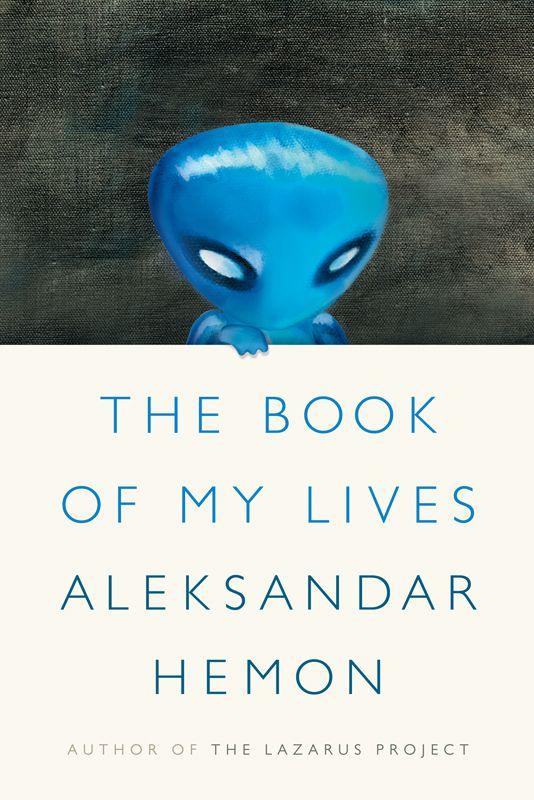
Aleksandar Hemon’s lives begin in Sarajevo, a small, blissful city where a young boy’s life is consumed with street soccer with the neighborhood kids, resentment of his younger sister, and trips abroad with his engineer-cum-beekeeper father. Here, a young man’s life is about poking at the pretensions of the city’s elders with American music, bad poetry, and slightly better journalism. And then, his life in Chicago: watching from afar as war breaks out in Sarajevo and the city comes under siege, no way to return home; his parents and sister fleeing Sarajevo with the family dog, leaving behind all else they had ever known; and Hemon himself starting a new life, his own family, in this new city.
And yet this is not really a memoir. The Book of My Lives, Hemon’s first book of nonfiction, defies convention and expectation. It is a love song to two different cities; it is a heartbreaking paean to the bonds of family; it is a stirring exhortation to go out and play soccer — and not for the exercise. It is a book driven by passions but built on fierce intelligence, devastating experience, and sharp insight. And like the best narratives, it is a book that will leave you a different reader — a different person, with a new way of looking at the world — when you’ve finished. For fans of Hemon’s fiction, The Book of My Lives is simply indispensable; for the uninitiated, it is the perfect introduction to one of the great writers of our time.
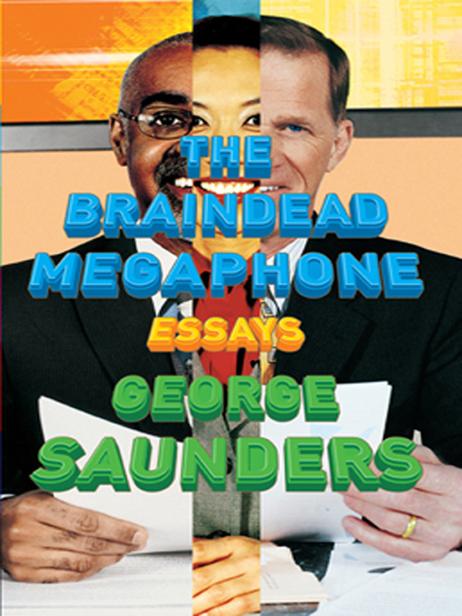
The breakout book from "the funniest writer in America" — not to mention an official Genius — a trade paperback original and his first nonfiction collection ever.
George Saunders's first foray into nonfiction is composed of essays on literature, travel, and politics. At the core of this unique collection are Saunders's travel essays based on his trips to seek out the mysteries of the "Buddha Boy" of Nepal; to attempt to indulge in the extravagant pleasures of Dubai; and to join the exploits of the minutemen at the Mexican border. Saunders expertly navigates the works of Mark Twain, Kurt Vonnegut, and Esther Forbes, and leads the reader across the rocky political landscape of modern America. Emblazoned with his trademark wit and singular vision, Saunders's endeavor into the art of the essay is testament to his exceptional range and ability as a writer and thinker.
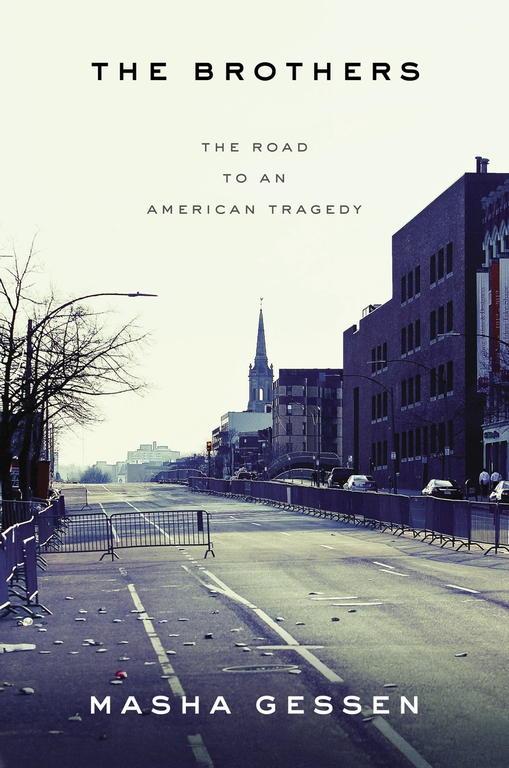
An important story for our era: How the American Dream went wrong for two immigrants, and the nightmare that resulted.
On April 15, 2013, two homemade bombs exploded near the finish line of the Boston marathon, killing three people and wounding more than 264 others. In the ensuing manhunt, Tamerlan Tsarnaev died, and his younger brother, Dzhokhar, was captured and ultimately charged on thirty federal counts. Yet long after the bombings and the terror they sowed, after all the testimony and debate, what we still haven’t learned is why. Why did the American Dream go so wrong for two immigrants? How did such a nightmare come to pass?
Acclaimed Russian-American journalist Masha Gessen is uniquely endowed with the background, access, and talents to tell the full story. An immigrant herself, who came to the Boston area with her family as a teenager, she returned to the former Soviet Union in her early twenties and covered firsthand the transformations that were wracking her homeland and its neighboring regions. It is there that the history of the Tsarnaev brothers truly begins, as descendants of ethnic Chechens deported to Central Asia in the Stalin era. Gessen follows the family in their futile attempts to make a life for themselves in one war-torn locale after another and then, as new émigrés, in the looking-glass, utterly disorienting world of Cambridge, Massachusetts. Most crucially, she reconstructs the struggle between assimilation and alienation that ensued for each of the brothers, incubating a deadly sense of mission. And she traces how such a split in identity can fuel the metamorphosis into a new breed of homegrown terrorist, with feet on American soil but sense of self elsewhere.

The Case Against Wagner was one Nietzsche’s last books, and his wittiest. In Wagner’s music, in his doctrine, in his whole concept of art, Nietzsche saw the confirmation, the promotion, even the encouragement, of that decadence and degeneration which is now rampant in Europe; and it is for this reason, although to the end of his life he still loved Wagner, the man and the friend, that we find him, on the very eve of his spiritual death, exhorting us to abjure Wagner the musician and the artist.
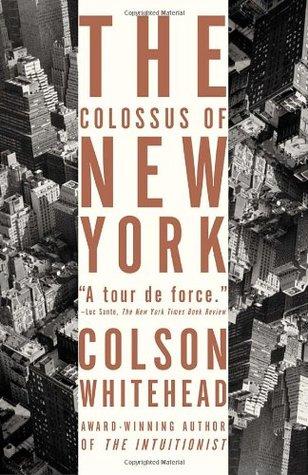
In a dazzlingly original work of nonfiction, the award-winning novelist Colson Whitehead re-creates the exuberance, the chaos, the promise, and the heartbreak of New York. Here is a literary love song that will entrance anyone who has lived in-or spent time-in the greatest of American cities.
A masterful evocation of the city that never sleeps, "The Colossus of New York" captures the city's inner and outer landscapes in a series of vignettes, meditations, and personal memories. Colson Whitehead conveys with almost uncanny immediacy the feelings and thoughts of longtime residents and of newcomers who dream of making it their home; of those who have conquered its challenges; and of those who struggle against its cruelties.
Whitehead's style is as multilayered and multifarious as New York itself: Switching from third person, to first person, to second person, he weaves individual voices into a jazzy musical composition that perfectly reflects the way we experience the city. There is a funny, knowing riff on what it feels like to arrive in New York for the first time; a lyrical meditation on how the city is transformed by an unexpected rain shower; and a wry look at the ferocious battle that is commuting. The plaintive notes of the lonely and dispossessed resound in one passage, while another captures those magical moments when the city seems to be talking directly to you, inviting you to become one with its rhythms.
"The Colossus of New York" is a remarkable portrait of life in the big city. Ambitious in scope, gemlike in its details, it is at once an unparalleled tribute to New York and the ideal introduction to one of the most exciting writers working today. "From the Hardcover edition."
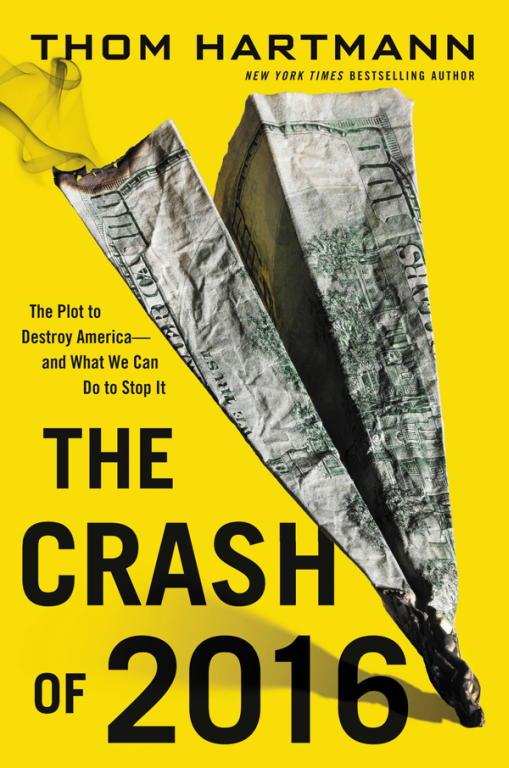
The United States is more vulnerable today than ever before—including during the Great Depression and the Civil War—because the pillars of democracy that once supported a booming middle class have been corrupted, and without them, America teeters on the verge of the next Great Crash.
The United States is in the midst of an economic implosion that could make the Great Depression look like child's play. In THE CRASH OF 2016, Thom Hartmann argues that the facade of our once-great United States will soon disintegrate to reveal the rotting core where corporate and billionaire power and greed have replaced democratic infrastructure and governance. Our once-enlightened political and economic systems have been manipulated to ensure the success of only a fraction of the population at the expense of the rest of us.
The result is a “for the rich, by the rich” scheme leading to policies that only benefit the highest bidders. Hartmann outlines the destructive forces-planted by Lewis Powell in 1971 and come to fruition with the “Reagan Revolution”—that have looted our nation over the past decade, and how their actions fit into a cycle of American history that lets such forces rise to power every four generations.
However, a backlash is now palpable against the “economic royalists”—a term coined by FDR to describe those hoarding power and wealth-including the banksters, oligarchs, and politicians who have plunged our nation into economic chaos and social instability.
Although we are in the midst of what could become the most catastrophic economic crash in American History, a way forward is emerging, just as it did in the previous great crashes of the 1760s, 1856, and 1929. The choices we make now will redefine American culture. Before us stands a genuine opportunity to embrace the moral motive over the profit motive—and to rebuild the American economic model that once yielded great success.
Thoroughly researched and passionately argued, THE CRASH OF 2016 is not just a roadmap to redemption in post-Crash America, but a critical wake-up call, challenging us to act. Only if the right reforms are enacted and the moral choices are made, can we avert disaster and make our nation whole again.
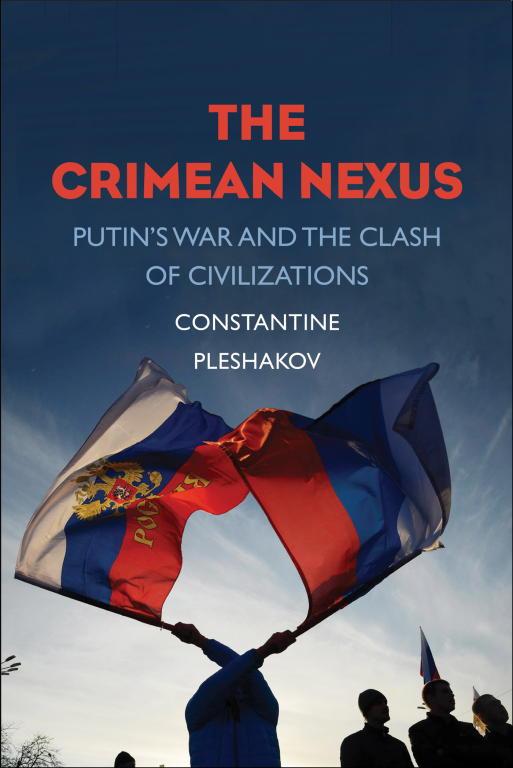
How the West sleepwalked into another Cold War
A native of Yalta, Constantine Pleshakov is intimately familiar with Crimea’s ethnic tensions and complex political history. Now, he offers a much-needed look at one of the most urgent flash points in current international relations: the first occupation and annexation of one European nation’s territory by another since World War II.
Pleshakov illustrates how the proxy war unfolding in Ukraine is a clash of incompatible world views. To the U.S. and Europe, Ukraine is a country struggling for self-determination in the face of Russia’s imperial nostalgia. To Russia, Ukraine is a “sister nation,” where NATO expansionism threatens its own borders. In Crimea itself, the native Tatars are Muslims who are vehemently opposed to Russian rule. Engagingly written and bracingly nonpartisan, Pleshakov’s book explains the missteps made on all sides to provide a clear, even-handed account of a major international crisis.

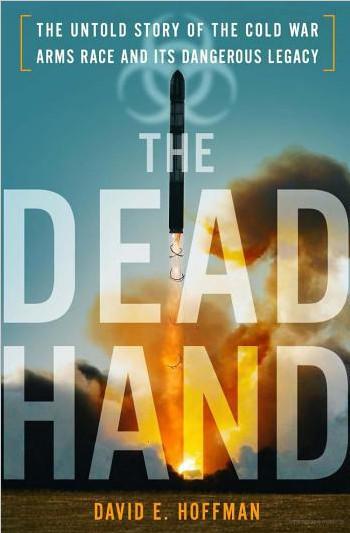
WINNER OF THE PULITZER PRIZE
The first full account of how the Cold War arms race finally came to a close, this riveting narrative history sheds new light on the people who struggled to end this era of massive overkill, and examines the legacy of the nuclear, chemical, and biological weapons that remain a threat today.
Drawing on memoirs, interviews in both Russia and the US, and classified documents from deep inside the Kremlin, David E. Hoffman examines the inner motives and secret decisions of each side and details the deadly stockpiles that remained unsecured as the Soviet Union collapsed. This is the fascinating story of how Reagan, Gorbachev, and a previously unheralded collection of scientists, soldiers, diplomats, and spies changed the course of history.
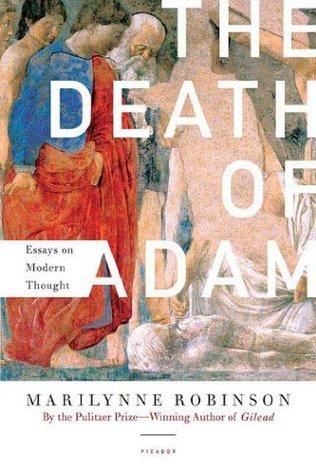
In this award-winning collection, the bestselling author of Gilead offers us other ways of thinking about history, religion, and society. Whether rescuing Calvinism and its creator Jean Cauvin from the repressive puritan stereotype, or considering how the McGuffey readers were inspired by Midwestern abolitionists, or the divide between the Bible and Darwinism, Marilynne Robinson repeatedly sends her reader back to the primary texts that are central to the development of American culture but little read or acknowledged today. A passionate and provocative celebration of ideas, the old arts of civilization, and life's mystery, The Death of Adam is, in the words of Robert D. Richardson, Jr., a grand, sweeping, blazing, brilliant, life-changing book.
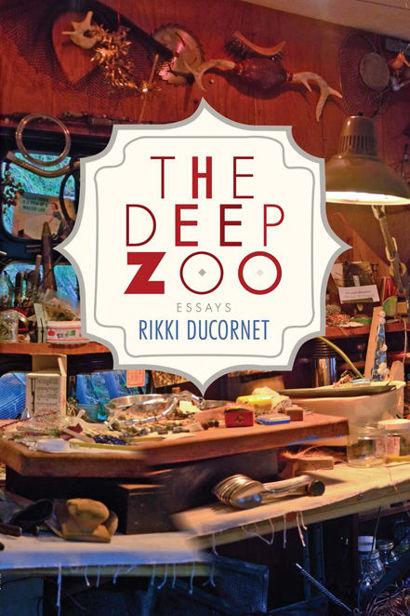
Included in Library Journal’s "25 Key Indie Fiction Titles, Fall 2014-Winter 2015".
Within the writer's life, words and things acquire power. For Borges it is the tiger and the color red, for Cortázar a pair of amorous lions, and for an early Egyptian scribe the monarch butterfly that metamorphosed into the Key of Life. Ducornet names these powers The Deep Zoo. Her essays take us from the glorious bestiary of Aloys Zötl to Abu Ghraib, from the tree of life to Sade's Silling Castle, from The Epic of Gilgamesh to virtual reality. Says Ducornet, "To write with the irresistible ink of tigers and the uncaging of our own Deep Zoo, we need to be attentive and fearless — above all very curious — and all at the same time."
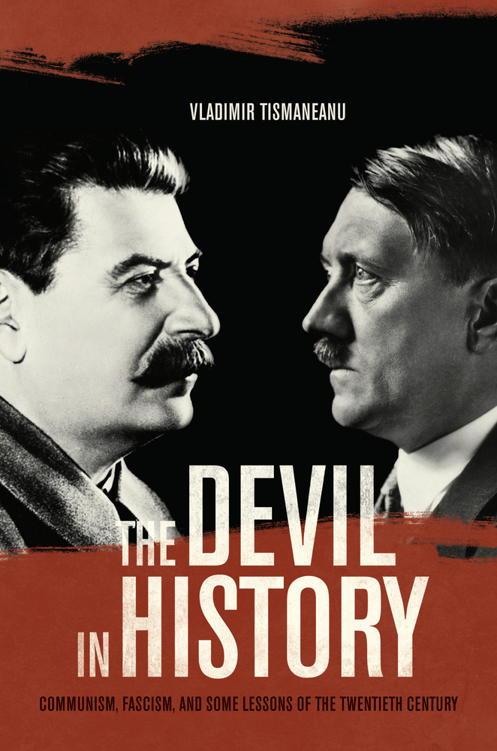
The Devil in History is a provocative analysis of the relationship between communism and fascism. Reflecting the author’s personal experiences within communist totalitarianism, this is a book about political passions, radicalism, utopian ideals, and their catastrophic consequences in the twentieth century’s experiments in social engineering. Vladimir Tismaneanu brilliantly compares communism and fascism as competing, sometimes overlapping, and occasionally strikingly similar systems of political totalitarianism. He examines the inherent ideological appeal of these radical, revolutionary political movements, the visions of salvation and revolution they pursued, the value and types of charisma of leaders within these political movements, the place of violence within these systems, and their legacies in contemporary politics.
The author discusses thinkers who have shaped contemporary understanding of totalitarian movements—people such as Hannah Arendt, Raymond Aron, Isaiah Berlin, Albert Camus, François Furet, Tony Judt, Ian Kershaw, Leszek Kolakowski, Richard Pipes, and Robert C. Tucker. As much a theoretical analysis of the practical philosophies of Marxism-Leninism and Fascism as it is a political biography of particular figures, this book deals with the incarnation of diabolically nihilistic principles of human subjugation and conditioning in the name of presumably pure and purifying goals. Ultimately, the author claims that no ideological commitment, no matter how absorbing, should ever prevail over the sanctity of human life. He comes to the conclusion that no party, movement, or leader holds the right to dictate to the followers to renounce their critical faculties and to embrace a pseudo-miraculous, a mystically self-centered, delusional vision of mandatory happiness.
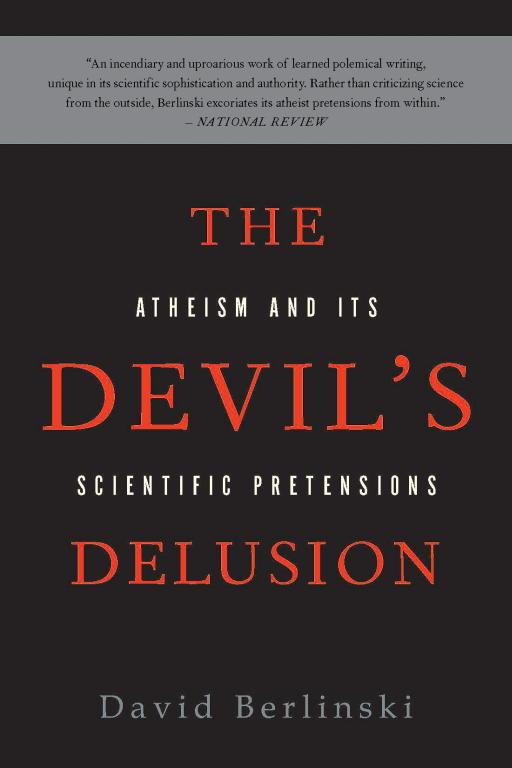
Militant atheism is on the rise. In recent years Richard Dawkins, Sam Harris, Daniel Dennett, and Christopher Hitchens have produced a steady stream of best-selling books denigrating religious belief. These authors are merely the leading edge of a larger movement that includes much of the scientific community.
In response, mathematician David Berlinski, himself a secular Jew, delivers a biting defense of religious thought. The Devil’s Delusion is a brilliant, incisive, and funny book that explores the limits of science and the pretensions of those who insist it is the ultimate touchstone for understanding our world.