 fb2
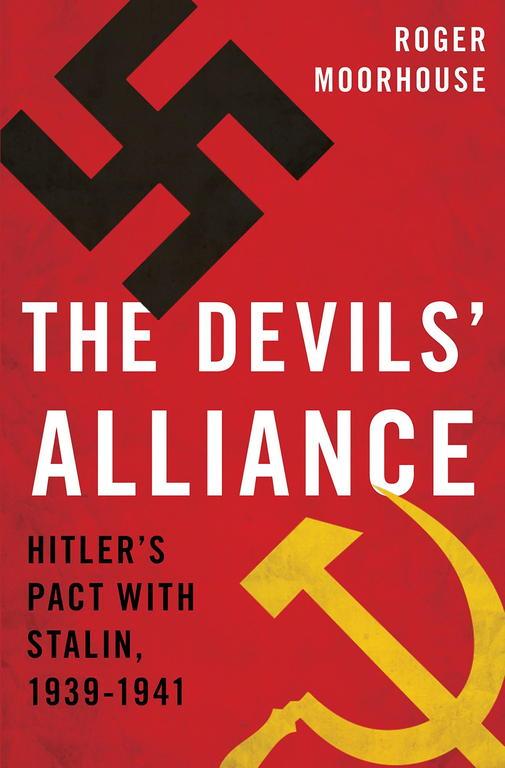
fb2History remembers the Soviets and the Nazis as bitter enemies and ideological rivals, the two mammoth and opposing totalitarian regimes of World War II whose conflict would be the defining and deciding clash of the war. Yet for nearly a third of the conflict’s entire timespan, Hitler and Stalin stood side by side as allies. In The Devils’ Alliance, acclaimed historian Roger Moorhouse explores the causes and implications of the tenuous Nazi-Soviet pact, an unholy covenant whose creation and dissolution were crucial turning points in World War II. Indeed, this riveting chapter of World War II is the key to understanding why the conflict evolved—and ended—the way it did.
Nazism and Bolshevism made unlikely bedfellows, but the brutally efficient joint Nazi-Soviet invasion of Poland in 1939 illustrated the powerful incentives that existed for both sides to set aside their differences. Forged by vain and pompous German foreign minister Joachim von Ribbentrop and his Russian counterpart, the inscrutable and stubborn Vyacheslav Molotov, the Nazi-Soviet pact in August of 1939 briefly unified the two powers. Together, the Germans and Soviets quickly conquered and divvied up central and eastern Europe—Poland, the Baltic States, Finland, and Bessarabia—aiding one another through exchanges of information, blueprints, and prisoners. The human cost was staggering: in Poland alone, the Soviets deported 1.5 million people in 1940, 400,000 of whom would never return. Tens of thousands were also deported from the Baltic States, including almost all of the members of the Estonian parliament. Of the 100,000 civilians deported to Siberia from Bessarabia, barely a third survived.
Nazi and Soviet leaders hoped that a similar quid-pro-quo agreement would also characterize their economic relationship. The Soviet Union would export much-needed raw materials to Germany, while the Germans would provide weapons and technological innovations to their communist counterparts. In reality, however, economic negotiations were fraught from the start, not least because the Soviets, mindful that the Germans were in dire need of raw materials to offset a British blockade, made impossible demands of their ally. Although German-Soviet trade still grew impressively through 1940, it was not enough to convince Hitler that he could rely on the partnership with Moscow, which on the whole was increasingly turbulent and unpredictable.
Fortunately for the Allies, the pact—which seemed to negate any chances of an Allied victory in Europe—was short-lived. Delving into the motivations and forces at work, Moorhouse explores how the partnership soured, ultimately resulting in the surprise June 1941 German invasion of the Soviet Union. With the final dissolution of the pact, the Soviets sided with the Western democracies, a development that changed the course of the war—and which, upon Germany’s defeat, allowed the Soviets to solidify the inroads they had made into Eastern Europe during their ill-starred alliance. Reviled by contemporaries, the Nazi-Soviet Pact would have a similarly baleful afterlife. Though it was torn up by the Nazis and denied or excused as a strategic necessity by the Soviets, its effects and political ramifications proved remarkably persistent. The boundaries of modern eastern and central Europe adhere closely to the hasty divisions made by Ribbentrop and Molotov. Even more importantly, the pact laid the groundwork for Soviet control of Eastern Europe, a power grab that would define the post-war order.
Drawing on memoirs, diaries, and official records from newly opened Soviet archives, The Devils’ Alliance is the authoritative work on one of the seminal episodes of World War II. In his characteristically rich and detailed prose, Moorhouse paints a vivid picture of the pact’s origins and its enduring influence as a crucial turning point, in both the war and in modern history.
When German author W. G. Sebald died in a car accident at the age of fifty-seven, the literary world mourned the loss of a writer whose oeuvre it was just beginning to appreciate. Through published interviews with and essays on Sebald, award-winning translator and author Lynne Sharon Schwartz offers a profound portrait of the writer, who has been praised posthumously for his unflinching explorations of historical cruelty, memory, and dislocation.
With contributions from poet, essayist, and translator Charles Simic, New Republic editor Ruth Franklin, Bookworm radio host Michael Silverblatt, and more, The Emergence of Memory offers Sebald’s own voice in interviews between 1997 up to a month before his death in 2001. Also included are cogent accounts of almost all of Sebald’s books, thematically linked to events in the contributors’ own lives.
Contributors include Carole Angier, Joseph Cuomo, Ruth Franklin, Michael Hofmann, Arthur Lubow, Tim Parks, Michael Silverblatt, Charles Simic, and Eleanor Wachtel.

Эта книга – история успеха и расследование одновременно. Рассказ о том, как, пережив крах пузыря доткомов, Amazon сумел обойти конкурентов и начать свою беспрецедентную экспансию по странам и отраслям. Расследование того, как устроена одна из самых необычных на сегодняшний день компаний планеты, которой принадлежат не только самый известный интернет-магазин, но и фирмы робототехники, облачных технологий, космические проекты и СМИ.
Джефф Безос – выдающийся бизнесмен, блестящий аналитический ум и жесткий организатор. Перед вами первая и весьма подробная биография этого неутомимого лидера и генератора идей, не признающего в бизнесе границ, традиций и стереотипов.
Вы узнаете, чем живет Amazon сегодня и каковы его планы на ближайший, ХХI век, ведь «магазин всего» – далеко не окончательная ипостась компании Безоса. Какой она будет через несколько лет, предсказать невозможно: эта история пишется в наши дни.
Winner of the Kobayashi Hideo Award, The Fall of Language in the Age of English lays bare the struggle to retain the brilliance of one's own language in this period of English-language dominance. Born in Tokyo but also raised and educated in the United States, Minae Mizumura acknowledges the value of a universal language in the pursuit of knowledge, yet also embraces the different ways of understanding offered by multiple tongues. She warns against losing this precious diversity.
Universal languages have always played a pivotal role in advancing human societies, Mizumura shows, but in the globalized world of the Internet, English is fast becoming the sole common language of humanity. The process is unstoppable, and striving for total language equality is delusional-and yet, particular kinds of knowledge can be gained only through writings in specific languages.
Mizumura calls these writings "texts" and their ultimate form "literature." Only through literature, and more fundamentally through the diverse languages that give birth to a variety of literatures, can we nurture and enrich humanity. Incorporating her own experiences as a writer and a lover of language, and embedding a parallel history of Japanese, Mizumura offers an intimate look at the phenomena of individual and national expression.
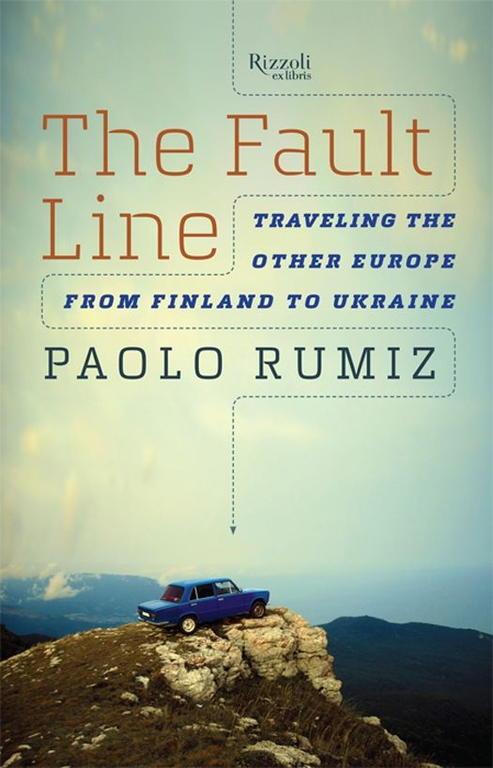
An award-winning writer travels the eastern front of Europe, where the push/pull between old empires and new possibilities has never been more evident. Paolo Rumiz traces the path that has twice cut Europe in two—first by the Iron Curtain and then by the artificial scaffolding of the EU—moving through vibrant cities and abandoned villages, some places still gloomy under the ghost of these imposing borders, some that have sought to erase all memory of it and jump with both feet into the West (if only the West would have them).
In The Fault Line, he is a sublime and lively guide through these unfamiliar landscapes, piecing together an atlas that has been erased by modern states, delighting in the discovery of communities that were once engulfed by geopolitics then all but forgotten, until now.The farther south he goes, the more he feels he is traveling not along some abandoned Eastern frontier, but right in the middle of things: Mitteleuropa wasn’t to be found in Viennese cafés but much farther east, beyond even Budapest and Warsaw. As in Ukraine, these remain places in flux, where the political and cultural values of the East and West have stared each other down for centuries.
Rumiz gives a human face not just to what the Cold War left behind but to the ancient ties of empire and ethnicity that are still at the root of modern politics in flash-point areas such as this.
Paolo Rumiz has been a correspondent for Italy’s La Repubblica since 1986, focusing on the Balkans and Eastern Europe. He was a frontline correspondent during the wars in the former Yugoslavia, Bosnia/Herzegovina, and Afghanistan, and has won many prizes for his journalism and nonfiction.
Deported to a concentration camp from 1941 until the end of the war, Norman Manea again left his native Romania in 1986 to escape the Ceausescu regime. He now lives in New York. In this selection of essays, he explores the language and psyche of the exiled writer.
Among pieces on the cultural-political landscape of Eastern Europe and on the North America of today, there are astute critiques of fellow Romanian and American writers. Manea answers essential questions on censorship and on linguistic roots. He unravels the relationship of the mother tongue to the difficulties of translation. Above all, he describes what homelessness means for the writer.
These essays — many translated here for the first time — are passionate, lucid, and enriching, conveying a profound perspective on our troubled society.
An eye-opening account of how the hidden rise of personalization on the Internet is controlling—and limiting—the information we consume.
In December 2009, Google began customizing its search results for each user. Instead of giving you the most broadly popular result, Google now tries to predict what you are most likely to click on. According to MoveOn.org board president Eli Pariser, Google’s change in policy is symptomatic of the most significant shift to take place on the Web in recent years—the rise of personalization. In this groundbreaking investigation of the new hidden Web, Pariser uncovers how this growing trend threatens to control how we consume and share information as a society—and reveals what we can do about it.
Though the phenomenon has gone largely undetected until now, personalized filters are sweeping the Web, creating individual universes of information for each of us. Facebook—the primary news source for an increasing number of Americans—prioritizes the links it believes will appeal to you so that if you are a liberal, you can expect to see only progressive links. Even an old-media bastion like The Washington Post devotes the top of its home page to a news feed with the links your Facebook friends are sharing. Behind the scenes a burgeoning industry of data companies is tracking your personal information to sell to advertisers, from your political leanings to the color you painted your living room to the hiking boots you just browsed on Zappos.
In a personalized world, we will increasingly be typed and fed only news that is pleasant, familiar, and confirms our beliefs—and because these filters are invisible, we won’t know what is being hidden from us. Our past interests will determine what we are exposed to in the future, leaving less room for the unexpected encounters that spark creativity, innovation, and the democratic exchange of ideas.
While we all worry that the Internet is eroding privacy or shrinking our attention spans, Pariser uncovers a more pernicious and far-reaching trend on the Internet and shows how we can—and must—change course. With vivid detail and remarkable scope, The Filter Bubble reveals how personalization undermines the Internet’s original purpose as an open platform for the spread of ideas and could leave us all in an isolated, echoing world.
McKinsey сегодня – это не просто фирма с почти столетней историей, а один из символов постоянного и стабильного успеха. Именно ее консультанты помогли создать и распространить по всему миру то, что мы сейчас называем американским капитализмом.
В чем причина столь глубокого и масштабного влияния компании на корпоративный мир Америки? Почему при широчайшей известности о ее внутренней «кухне» мы знаем ничтожно мало? Кто они, эти серые кардиналы, придумавшие консалтинг и сумевшие возвести его в ранг политики, инструмента управления компаниями и государствами? Каковы плоды и методы их беспрецедентного влияния на экономику целых отраслей? И наконец, как удается этой Фирме в течение почти целого века сохранять и приумножать свой авторитет, несмотря на ряд впечатляющих провалов?
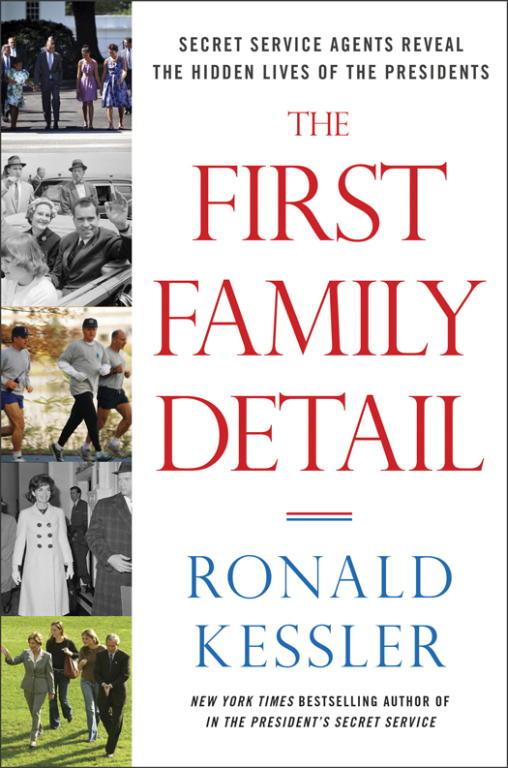
As in a play, presidents, vice presidents, and presidential candidates perform on stage for the public and the media. What the nation’s leaders are really like and what goes on behind the scenes remains hidden. Secret Service agents have a front row seat on their private lives and those of their wives and children.
Crammed with new, headline-making revelations, THE FIRST FAMILY DETAIL: Secret Service Agents Reveal the Hidden Lives of the Presidents by Ronald Kessler tells that eye-opening, uncensored story.
Since publication of his New York Times bestselling book In the President’s Secret Service, award-winning investigative reporter Ronald Kessler has continued to penetrate the wall of secrecy that surrounds the U.S. Secret Service, breaking the story that Secret Service agents who were to protect President Obama hired prostitutes in Cartagena, Colombia and revealing that the Secret Service allowed a third uninvited guest to crash a White House state dinner.
Now in this new book, Kessler presents far bigger and more consequential stories about our nation’s leaders and the agency sworn to protect them. Kessler widens his scope to include presidential candidates and former presidents after they leave the White House. In particular, he focuses on first ladies and their children and their relationships with the presidents.
From observing Vice President Joe Biden’s reckless behavior that jeopardizes the country’s safety, to escorting Bill Clinton’s blond mistress at Chappaqua, to overhearing First Lady Michelle Obama’s admonitions to the president, to witnessing President Nixon’s friends bring him a nude stripper, to seeing their own agency take risks that could result in an assassination, Secret Service agents know a secret world that Ronald Kessler exposes in breathtaking detail.
THE FIRST FAMILY DETAIL reveals:
• Vice President Joe Biden regularly orders the Secret Service to keep his military aide with the nuclear football a mile behind his motorcade, potentially leaving the country unable to retaliate in the event of a nuclear attack.
• Secret Service agents discovered that former president Bill Clinton has a blond mistress who lives near the Clintons’ home in Chappaqua, New York. Within minutes of Hillary Clinton’s leaving, the woman—codenamed Energizer by agents—shows up to be with Bill and stays every day while the likely future presidential candidate is away.
• The Secret Service covered up the fact that President Ronald Reagan’s White House staff overruled the Secret Service to let unscreened spectators get close to Reagan as he left the Washington Hilton, allowing John W. Hinckley Jr. to shoot the president.
• Secret Service agents have been dismayed to overhear Michelle Obama push her husband to be more aggressive in attacking Republicans and to side with blacks in racial controversies.
• Secret Service Director Mark Sullivan diverted agents from protecting President Obama and his family at the White House and ordered them instead to protect his assistant at her home and illegally retrieve confidential law enforcement records as a favor to her.
• Because Hillary Clinton is so nasty to agents, being assigned to her protective detail is considered a form of punishment and the worst assignment in the Secret Service.
• Secret Service agents were ordered to ignore security rules and allow the SUV carrying actor Bradley Cooper to drive unscreened into a secure restricted area when President Obama was about to deliver his speech at the White House Correspondents Dinner.
• Vice President Joe Biden has racked up costs to taxpayers of a million dollars to fly to and from his home in Delaware on Air Force Two. His office tried to cover up the costs of the personal trips.
• Because the Secret Service refused to provide enough magnetometers at his campaign events, Mitt Romney regularly left himself open to assassination by giving speeches to crowds that had not been screened.
• Vice President Joe Biden swims nude at the vice president’s residence in Washington and at his home in Delaware, offending female Secret Service agents.
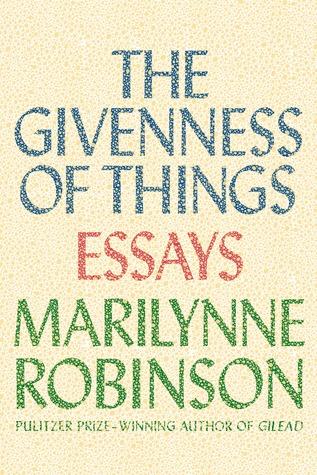
The spirit of our times can appear to be one of joyless urgency. As a culture we have become less interested in the exploration of the glorious mind, and more interested in creating and mastering technologies that will yield material well-being. But while cultural pessimism is always fashionable, there is still much to give us hope. In The Givenness of Things, the incomparable Marilynne Robinson delivers an impassioned critique of our contemporary society while arguing that reverence must be given to who we are and what we are: creatures of singular interest and value, despite our errors and depredations.
Robinson has plumbed the depths of the human spirit in her novels, including the National Book Critics Circle Award-winning Lila and the Pulitzer Prize-winning Gilead, and in her new essay collection she trains her incisive mind on our modern predicament and the mysteries of faith. These seventeen essays examine the ideas that have inspired and provoked one of our finest writers throughout her life. Whether she is investigating how the work of the great thinkers of the past, Calvin, Locke, Bonhoeffer-and Shakespeare-can infuse our lives, or calling attention to the rise of the self-declared elite in American religious and political life, Robinson's peerless prose and boundless humanity are on display. Exquisite and bold, The Givenness of Things is a necessary call for us to find wisdom and guidance in our cultural heritage, and to offer grace to one another.
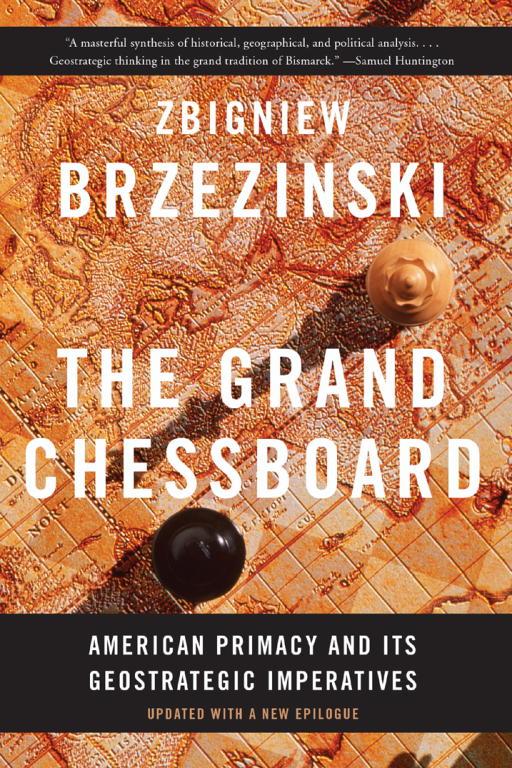
In The Grand Chessboard, renowned geostrategist Zbigniew Brzezinski delivers a brutally honest and provocative vision for American preeminence in the twenty-first century. The task facing the United States, he argues, is to become the sole political arbiter in Eurasian lands and to prevent the emergence of any rival power threatening our material and diplomatic interests. The Eurasian landmass, home to the greatest part of the globe’s population, natural resources, and economic activity, is the “grand chessboard” on which America’s supremacy will be ratified and challenged in the years to come. In this landmark work of public policy and political science, Brzezinski outlines a groundbreaking and powerful blueprint for America’s vital interests in the modern world.
In a revised edition with a new epilogue, Brzezinski brings his seminal work up to date with commentary on the latest global developments, including the war in Ukraine, the re-emergence of Russia, and the rise of China.
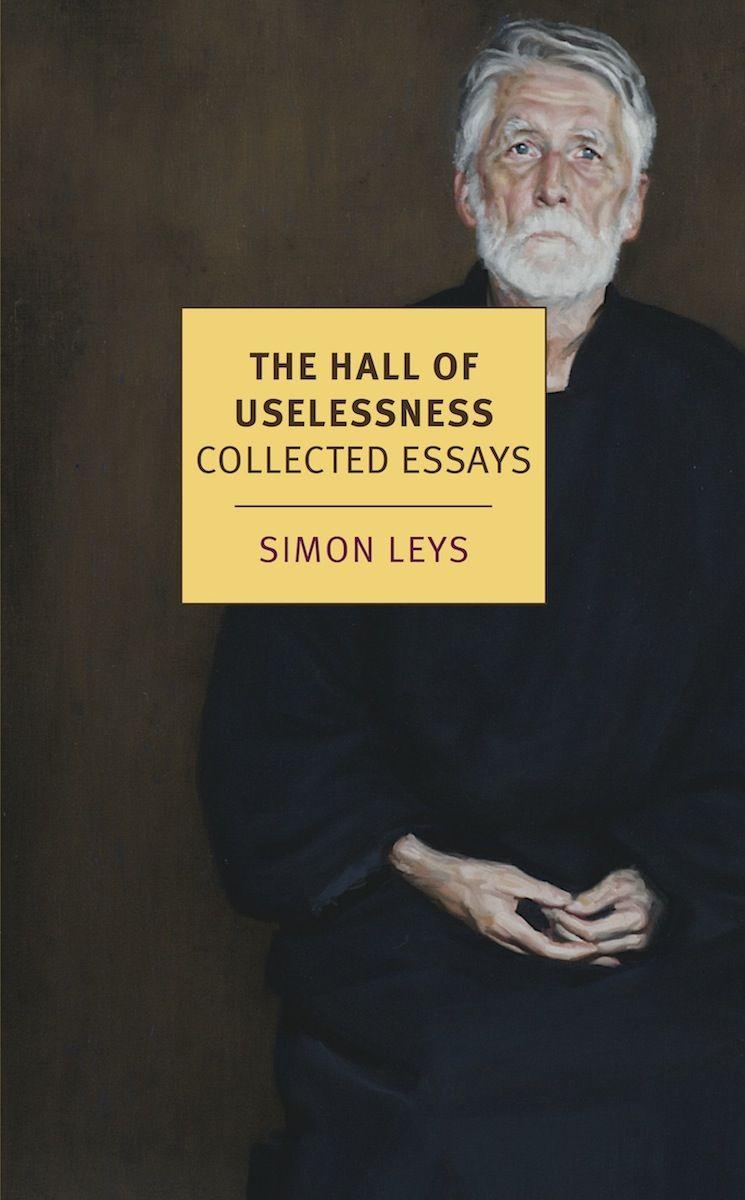
Simon Leys is a Renaissance man for the era of globalization: a distinguished scholar of classical Chinese art and literature, he was one of the first Westerners to expose the horrors of Mao’s Cultural Revolution. Leys’s interests and expertise are not, however, confined to China: he also writes about European art, literature, history, and politics, and is an unflinching observer of the way we live now. No matter the topic he writes with unfailing elegance and intelligence, seriousness and acerbic wit. Leys is, in short, not simply a critic or commentator but an essayist, and one of the most outstanding ones of our time.
The Hall of Uselessness gathers the finest of Leys’s essays for an American audience for the first time. On subjects ranging from China to Orwell and from Quixotism to the sea, Leys feuds with Christopher Hitchens, ponders the popularity of Victor Hugo, and considers whether Vladimir Nabokov’s posthumous novel should ever have been published. He dissects Mao’s Cultural Revolution and the Khmer Rouge regime, and discusses the legacies of Waugh, Chesterton, Simenon, and Confucius. He discusses Chinese art, culture, and politics; the joys of literary translation; and the fate of the university.
The Hall of Uselessness is an illuminating compendium from a brilliant and quirky writer and an exemplary global voice.

История неофициального русского искусства последней четверти XX века, рассказанная очевидцем событий. Приехав с журналистским заданием на первый аукцион «Сотбис» в СССР в 1988 году, Эндрю Соломон, не зная ни русского языка, ни особенностей позднесоветской жизни, оказывается сначала в сквоте в Фурманном переулке, а затем в гуще художественной жизни двух столиц: нелегальные вернисажи в мастерских и на пустырях, запрещенные концерты групп «Среднерусская возвышенность» и «Кино», «поездки за город» Андрея Монастырского и первые выставки отечественных звезд арт-андеграунда на Западе, круг Ильи Кабакова и «Новые художники». Как добросовестный исследователь, Соломон пытается описать и объяснить зашифрованное для внешнего взгляда советское неофициальное искусство, попутно рассказывая увлекательную историю культурного взрыва эпохи перестройки и описывая людей, оказавшихся в его эпицентре.
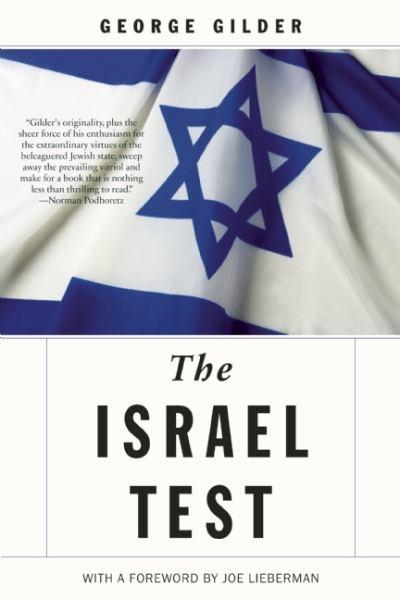
In this book, George Gilder asserts that widespread antagonism toward the current state of Israel springs from, like anti-Semitism everywhere, envy of superior accomplishment. Israel’s sudden rise as a world capitalist and technological power, he argues, stems in part from the Jewish “culture of mind” and in part from Judaism itself, which, “perhaps more than any other religion, favors capitalist activity and provides a rigorous moral framework for it.” Critics of Israel—in the U.S., in the surrounding countries of the Middle East and in Western European nations that are facing socialist decline—have failed the “Israel Test” because they seek to tear down this country’s success rather than emulate it. America’s ability and desire to defend Israel will define our future survival as a nation: “If Israel is destroyed,” he says, “capitalist Europe will likely die as well, and America, as the epitome of productive and creative capitalism spurred by Jews, will be in jeopardy.”
In The Jukebox and Other Essays on Storytelling, Peter Handke offers three intimate, eloquent meditations that map a self-reflexive journey from Alaska to the Austria of his childhood, while illuminating the act of writing itself. In his "Essay on Tiredness, " Handke transforms an everyday experience — often precipitated by boredom — into a fascinating exploration of the world of slow motion, differentiating degrees of fatigue, the types of weariness, its rejuvenating effects, as well as its erotic, cultural, and political implications. The title essay is Handke's attempt to understand the significance of the jukebox, a quest which leads him, while on a trip in Spain, into the literature of the jukebox, the history of the music box, and memories of the Beatle's music. In turn elucidating various stages of his own life. And in his "Essay on the Successful Day, " for which there is no prescription, Handke invents to picture of tranquility, using a self-portrait by Hogarth as his point of departure to describe a state of being at peace. Playful, reflective, insightful, and entertaining, The Jukebox and Other Essays on Storytelling constitutes a literary triptych that redefines the art of the essay and challenges the form of the short story, confirming Peter Handke's stature as "one of the most original and provocative of contemporary writers" (Lawrence Graver, The New York Times Book Review).
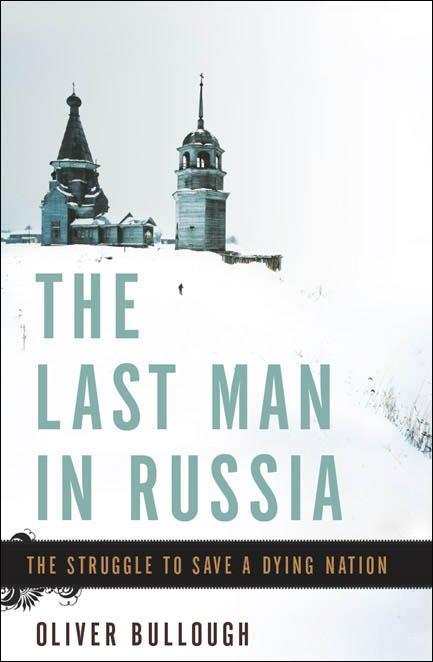
Russia is dying from within. Oligarchs and oil barons may still dominate international news coverage, but their prosperity masks a deep-rooted demographic tragedy. Faced with staggering population decline—and near-certain economic collapse—driven by toxic levels of alcohol abuse, Russia is also battling a deeper sickness: a spiritual one, born out of the country’s long totalitarian experiment.
In The Last Man in Russia, award-winning journalist Oliver Bullough uses the tale of a lone priest to give life to this national crisis. Father Dmitry Dudko, a dissident Orthodox Christian, was thrown into a Stalinist labor camp for writing poetry. Undaunted, on his release in the mid-1950s he began to preach to congregations across Russia with little concern for his own safety. At a time when the Soviet government denied its subjects the prospect of advancement, and turned friend against friend and brother against brother, Dudko urged his followers to cling to hope. He maintained a circle of sacred trust at the heart of one of history’s most deceitful systems. But as Bullough reveals, this courageous group of believers was eventually shattered by a terrible act of betrayal—one that exposes the full extent of the Communist tragedy. Still, Dudko’s dream endures. Although most Russians have forgotten the man himself, the embers of hope that survived the darkness are once more beginning to burn.
Leading readers from a churchyard in Moscow to the snow-blanketed ghost towns of rural Russia, and from the forgotten graves of Stalin’s victims to a rock festival in an old gulag camp, The Last Man in Russia is at once a travelogue, a sociological study, a biography, and a cri de coeur for a dying nation—one that, Bullough shows, might yet be saved.
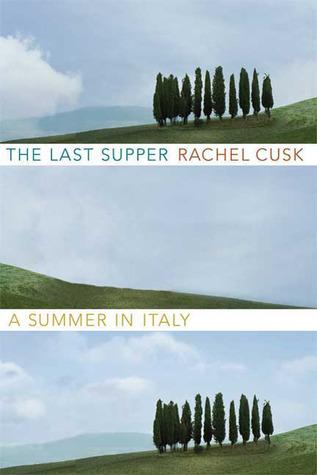
Casting off a northern winter and an orderly life, a family decides to sell everything and go to Italy to search for art and its meanings, for freedom from routine, for a different path into the future. The award-winning writer Rachel Cusk describes a three-month journey around the Italy of Raphael and rented villas, of the Piero della Francesca trail and the tourist furnace of Amalfi, of soccer and the simple glories of pasta and gelato.
With her husband and two children, Cusk uncovers the mystery of a foreign language, the perils and pleasures of unbelonging, and the startling thrill of discovery — at once historic and intimate. Both sharp and humane in its exploration of the desire to travel and to escape, of art and its inspirations, of beauty and ugliness, and of the challenge of balancing domestic life with creativity, The Last Supper is an astonishing memoir.
The “media” used to mean television, radio, newspapers, and magazines; but today it largely involves social media, which has swallowed up all of these other forms and is now controlled by a small group of Silicon Valley titans who decide what billions of people are able to see and hear online.
The convergence of old technology and new has centralized unimaginable power into the hands of a few gigantic corporations that now dictate how we communicate with each other and perceive the outside world.
Media analyst Mark Dice details how the rise of social media that tipped the balance of power regarding the production and distribution of information has also resulted in a massive backslash from those conspiring to regain the influence they once held.
Now conservatives are experiencing widespread censorship as the tech giants scramble to put the genie back in the bottle.
The liberal media has launched an information war against President Trump and his supporters, and are using their monopolies to manipulate public opinion in order to further their aims of a socialist revolution.