 fb2
fb2In his sensational new book, Economist senior editor Edward Lucas lays bare the naïveté, hypocrisy and sinister background surrounding Edward Snowden, the fugitive American intelligence contractor now living in Moscow. “The Snowden Operation”, demolishes Snowden’s claim to be a whistleblower. Drawing on 30 years’ experience observing the world of intelligence, Lucas depicts Snowden as at best reckless and naïve, and at worst a saboteur. He stole far more secrets than were necessary to make his case and did so in a deliberately damaging matter. Any benefits to the public debate about issues such as meta-data and encryption are far outweighed by the damage done to the West’s security, diplomacy and economic interests.
“The Snowden Operation” highlights the inconsistencies and puzzles in the account of events given by the “Snowdenistas”. It explains how Russia could have sponsored Snowden’s data heist — the greatest disaster ever to hit Western intelligence, and one whose effects have neatly suited Vladimir Putin’s Russia.
Russia under Vladimir Putin has proved a prickly partner for the West, a far cry from the democratic ally many hoped for when the Soviet Union collapsed. Abroad, Putin has used Russia’s energy strength as a foreign policy weapon, while at home he has cracked down on opponents, adamant that only he has the right vision for his country’s future.
Former BBC Moscow correspondent Angus Roxburgh charts the dramatic fight for Russia’s future under Vladimir Putin – how the former KGB man changed from reformer to autocrat; how he sought the West’s respect but earned its fear; how he cracked down on his rivals at home and burnished a flamboyant personality cult, one day saving snow leopards or horseback riding bare-chested, the next tongue-lashing Western audiences. Drawing on dozens of exclusive interviews in Russia, where he worked as a Kremlin insider advising Putin on press relations, Roxburgh also argues that the West threw away chances to bring Russia in from the cold by failing to understand its fears and aspirations following the collapse of communism.
The Sunny Side gathers the best short works by the inimitable A. A. Milne. Written for the satire magazine Punch, these brief stories and essays perfectly capture Milne’s sly humor, beguiling social insight, and scathing wit. From Odd Verses to War Sketches, Summer Days to Men of Letters, Milne takes his readers from the stiff British drawing room to the irreverent joy of a boy’s day at the beach. Ideal for curling up with in the hammock or stretching out by the fire, these tales shine brightly any day of the year. The Sunny Side offers the perfect chance to rediscover this forgotten classic by one of our most cherished authors.
A true-life Catch-22 set in the deeply dysfunctional countries of Afghanistan and Pakistan, by one of the region’s longest-serving correspondents.
Kim Barker is not your typical, impassive foreign correspondent--she is candid, self-deprecating, laugh-out-loud funny. At first an awkward newbie in Afghanistan, she grows into a wisecracking, seasoned reporter with grave concerns about our ability to win hearts and minds in the region. In The Taliban Shuffle, Barker offers an insider’s account of the “forgotten war” in Afghanistan and Pakistan, chronicling the years after America’s initial routing of the Taliban, when we failed to finish the job.
When Barker arrives in Kabul, foreign aid is at a record low, electricity is a pipe dream, and of the few remaining foreign troops, some aren’t allowed out after dark. Meanwhile, in the vacuum left by the U.S. and NATO, the Taliban is regrouping as the Afghan and Pakistani governments flounder. Barker watches Afghan police recruits make a travesty of practice drills and observes the disorienting turnover of diplomatic staff. She is pursued romantically by the former prime minister of Pakistan and sees adrenaline-fueled colleagues disappear into the clutches of the Taliban. And as her love for these hapless countries grows, her hopes for their stability and security fade.
Swift, funny, and wholly original, The Taliban Shuffle unforgettably captures the absurdities and tragedies of life in a war zone.
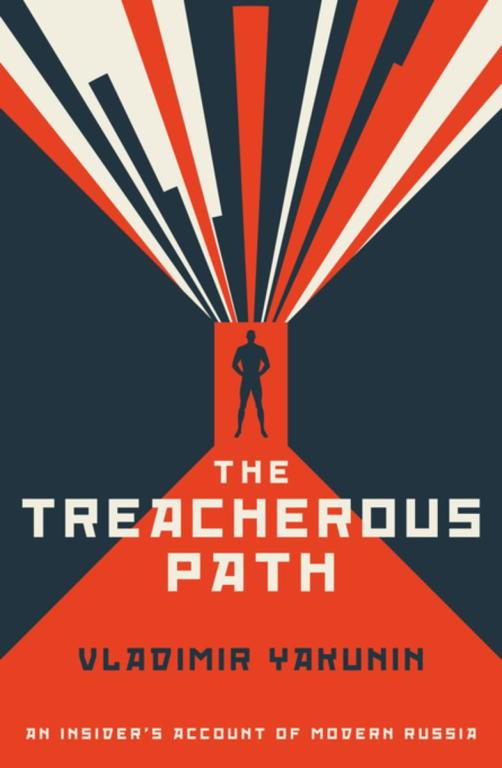
In 1991, Vladimir Yakunin, a Soviet diplomat and KGB officer, returned from his posting in New York to a country that no longer existed.
The state that he had served for all his adult life had been dissolved, the values he knew abandoned. Millions of his compatriots suffered as their savings disappeared and their previously secure existences were threatened by an unholy combination of criminality, corruption and chaos. Others thrived amid the opportunities offered in the new polity, and a battle began over the direction the fledgling state should take.
While something resembling stability was won in the early 2000s, today Russia’s future remains unresolved; its governing class divided.
The Treacherous Path is Yakunin’s account of his own experiences on the front line of Russia’s implosion and eventual resurgence, and of a career – as an intelligence officer, a government minister and for ten years the CEO of Russia’s largest company – that has taken him from the furthest corners of this incomprehensibly vast and complex nation to the Kremlin’s corridors.
Tackling topics as diverse as terrorism, government intrigue and the reality of doing business in Russia, and offering unparalleled insights into the post-Soviet mindset, this is the first time that a figure with Yakunin’s background has talked so openly and frankly about his country.
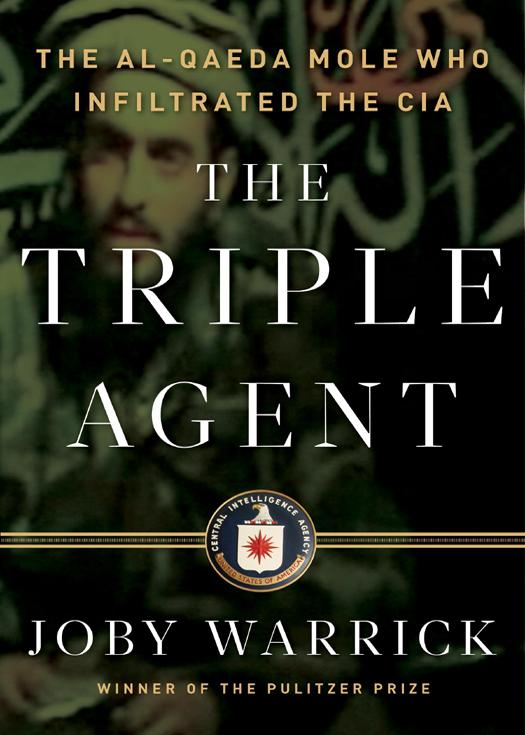
A stunning narrative account of the mysterious Jordanian who penetrated both the inner circle of al-Qaeda and the highest reaches of the CIA, with a devastating impact on the war on terror.
In December 2009, a group of the CIA’s top terrorist hunters gathered at a secret base in Khost, Afghanistan, to greet a rising superspy: Humam Khalil al-Balawi, a Jordanian double-agent who infiltrated the upper ranks of al-Qaeda. For months, he had sent shocking revelations from inside the terrorist network and now promised to help the CIA assassinate Osama bin Laden’s top deputy. Instead, as he stepped from his car, he detonated a thirty-pound bomb strapped to his chest, instantly killing seven CIA operatives, the agency’s worst loss of life in decades.
In The Triple Agent, Pulitzer Prize–winning reporter Joby Warrick takes us deep inside the CIA’s secret war against al-Qaeda, a war that pits robotic planes and laser-guided missiles against a cunning enemy intent on unleashing carnage in American cities. Flitting precariously between the two sides was Balawi, a young man with extraordinary gifts who managed to win the confidence of hardened terrorists as well as veteran spymasters. With his breathtaking accounts from inside al-Qaeda’s lair, Balawi appeared poised to become America’s greatest double-agent in half a century-but he was not at all what he seemed. Combining the powerful momentum of Black Hawk Down with the institutional insight of Jane Mayer’s The Dark Side, Warrick takes the readers on a harrowing journey from the slums of Amman to the inner chambers of the White House in an untold true story of miscalculation, deception, and revenge.
A stunning narrative account of the mysterious Jordanian who penetrated both the inner circle of al-Qaeda and the highest reaches of the CIA, with a devastating impact on the war on terror.
In December 2009, a group of the CIA’s top terrorist hunters gathered at a secret base in Khost, Afghanistan, to greet a rising superspy: Humam Khalil al-Balawi, a Jordanian double-agent who infiltrated the upper ranks of al-Qaeda. For months, he had sent shocking revelations from inside the terrorist network and now promised to help the CIA assassinate Osama bin Laden’s top deputy. Instead, as he stepped from his car, he detonated a thirty-pound bomb strapped to his chest, instantly killing seven CIA operatives, the agency’s worst loss of life in decades.
In The Triple Agent, Pulitzer Prize–winning reporter Joby Warrick takes us deep inside the CIA’s secret war against al-Qaeda, a war that pits robotic planes and laser-guided missiles against a cunning enemy intent on unleashing carnage in American cities. Flitting precariously between the two sides was Balawi, a young man with extraordinary gifts who managed to win the confidence of hardened terrorists as well as veteran spymasters. With his breathtaking accounts from inside al-Qaeda’s lair, Balawi appeared poised to become America’s greatest double-agent in half a century-but he was not at all what he seemed. Combining the powerful momentum of Black Hawk Down with the institutional insight of Jane Mayer’s The Dark Side, Warrick takes the readers on a harrowing journey from the slums of Amman to the inner chambers of the White House in an untold true story of miscalculation, deception, and revenge.
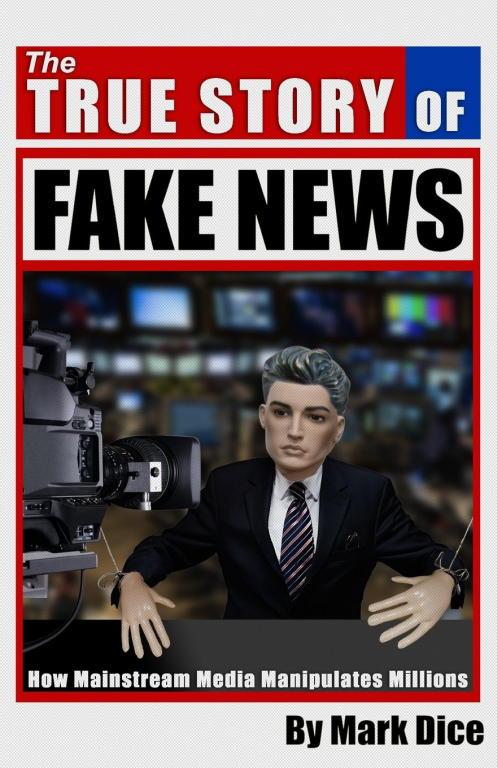
Is fake news being spread through social media as part of an information war? Are political operatives publishing disinformation to smear the opposition and help their own agendas? Who creates fake news, how does it spread, and can it be stopped?
What are the real world effects of fake news stories that go viral? Did it affect the outcome of the 2016 presidential election? Or is ‘fake news’ a fake problem, designed to justify tighter control over the mechanisms of sharing information online to drive audiences back to brand name media outlets because their audiences and influence are dwindling?
Media analyst Mark Dice takes a close look at the fake news phenomenon and the implications of mega-corporations like Facebook, Google, and Twitter becoming the ultimate gatekeepers and distributors of news and information.
You will see the powerful and deceptive methods of manipulation that affect us all, as numerous organizations and political activists cunningly plot to have their stories seen, heard, and believed by as many people as possible.
The depths of lies, distortions, and omissions from traditional mainstream media will shock you; and now they’re colluding with the top tech companies trying to maintain their information monopolies. This is The True Story of Fake News.
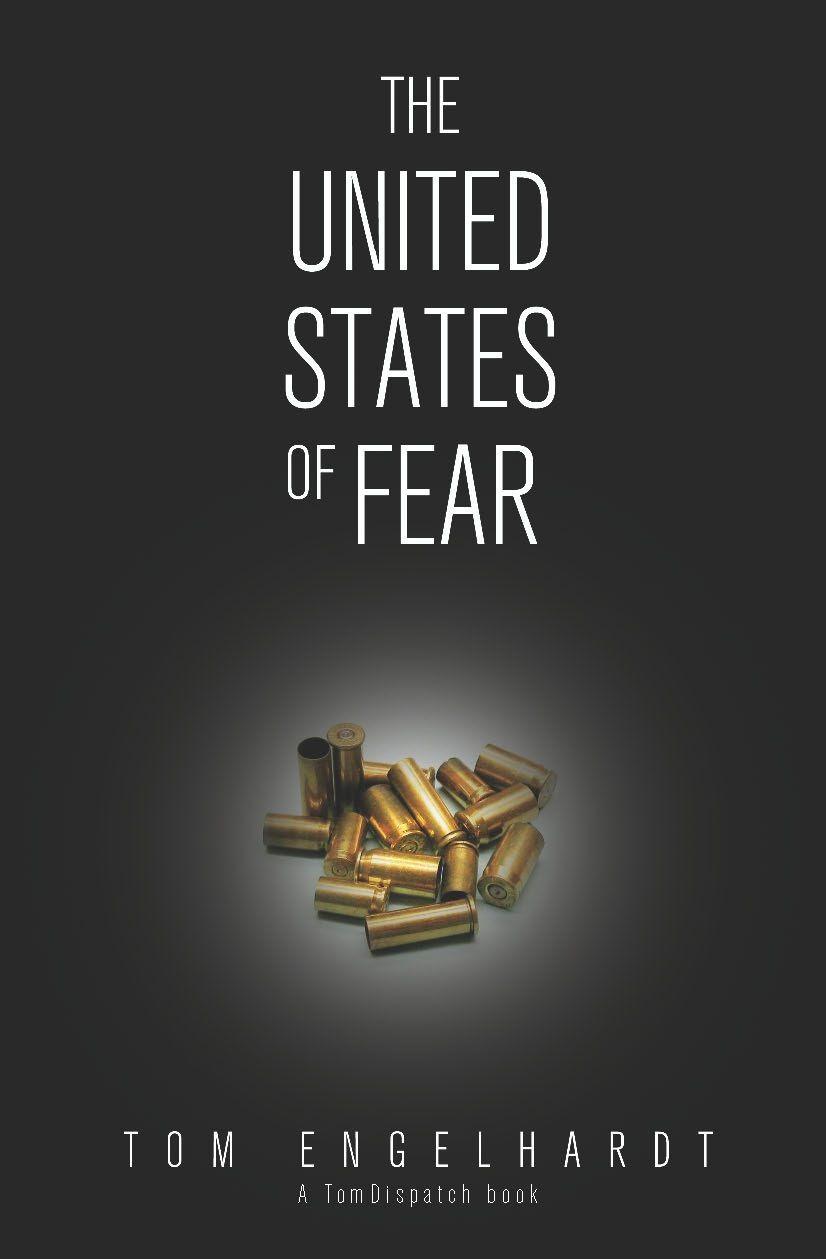
The creator of TomDispatch dissects America’s endless urge to go to war.
In 2008, when the US National Intelligence Council issued its latest report meant for the administration of newly elected President Barack Obama, it predicted that the planet’s “sole superpower” would suffer a modest decline and a soft landing fifteen years hence. In his new book The United States of Fear, Tom Engelhardt makes clear that Americans should don their crash helmets and buckle their seat belts, because the United States is on the path to a major decline at a startling speed. Engelhardt offers a savage anatomy of how successive administrations in Washington took the “Soviet path”—pouring American treasure into the military, war, and national security—and so helped drive their country off the nearest cliff.
This is the startling tale of how fear was profitably shot into the national bloodstream, how the country—gripped by terror fantasies—was locked down, and how a brain-dead Washington elite fiddled (and profited) while America quietly burned.
Think of it as the story of how the Cold War really ended, with the triumphalist “sole superpower” of 1991 heading slowly for the same exit through which the Soviet Union left the stage twenty years earlier.
Tom Engelhardt created and runs the TomDispatch.com website, a project of The Nation Institute, where he is a fellow. He is the author of the critically acclaimed The American Way of War and The End of Victory Culture.
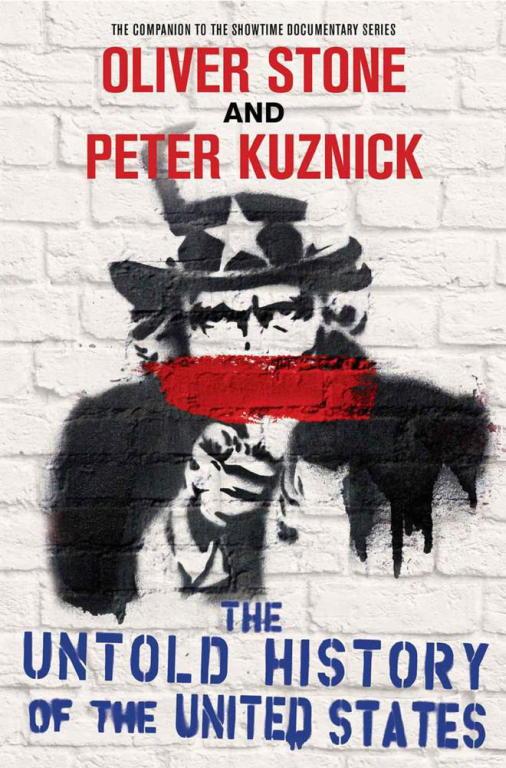
The companion to the Showtime documentary series, director Oliver Stone and historian Peter Kuznick challenge the prevailing orthodoxies of traditional history books in this thoroughly researched and rigorously analyzed look at the dark side of American history.
The notion of American exceptionalism, dating back to John Winthrop’s 1630 sermon aboard the Arbella, still warps Americans’ understanding of their nation’s role in the world. Most are loathe to admit that the United States has any imperial pretensions. But history tells a different story as filmmaker Oliver Stone and historian Peter Kuznick reveal in this riveting account of the rise and decline of the American empire.
Aided by the latest archival findings and recently declassified documents and building on the research of the world’s best scholars, Stone and Kuznick construct an often shocking but meticulously documented “People’s History of the American Empire” that offers startling context to the Bush-Cheney policies that put us at war in two Muslim countries and show us why the Obama administration has had such a difficult time cleaving a new path.
Stone and Kuznick will introduce readers to a pantheon of heroes and villains as they show not only how far the United States has drifted from its democratic traditions, but the powerful forces that have struggled to get us back on track.
The authors reveal that:
• The atomic bombings of Hiroshima and Nagasaki were militarily unnecessary and morally indefensible.
• The United States, not the Soviet Union, bore the lion’s share of responsibility for perpetuating the Cold War.
• The U.S. love affair with right-wing dictators has gone as far as overthrowing elected leaders, arming and training murderous military officers, and forcing millions of people into poverty.
• U.S.-funded Islamist fundamentalists, who fought against the Soviets in Afghanistan, have blown back to threaten the interests of the U.S. and its allies.
• U.S. presidents, especially in wartime, have frequently trampled on the constitution and international law.
• The United States has brandished nuclear threats repeatedly and come terrifyingly close to nuclear war.
American leaders often believe they are unbound by history, yet Stone and Kuznick argue that we must face our troubling history honestly and forthrightly in order to set a new course for the twenty-first century. Their conclusions will challenge even experts, but there is one question only readers can answer: Is it too late for America to change?
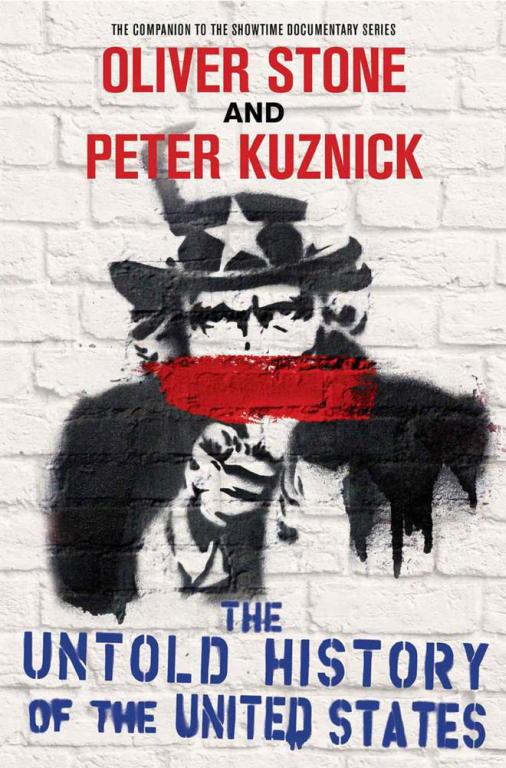
The companion to the Showtime documentary series, director Oliver Stone and historian Peter Kuznick challenge the prevailing orthodoxies of traditional history books in this thoroughly researched and rigorously analyzed look at the dark side of American history.
The notion of American exceptionalism, dating back to John Winthrop’s 1630 sermon aboard the Arbella, still warps Americans’ understanding of their nation’s role in the world. Most are loathe to admit that the United States has any imperial pretensions. But history tells a different story as filmmaker Oliver Stone and historian Peter Kuznick reveal in this riveting account of the rise and decline of the American empire.
Aided by the latest archival findings and recently declassified documents and building on the research of the world’s best scholars, Stone and Kuznick construct an often shocking but meticulously documented “People’s History of the American Empire” that offers startling context to the Bush-Cheney policies that put us at war in two Muslim countries and show us why the Obama administration has had such a difficult time cleaving a new path.
Stone and Kuznick will introduce readers to a pantheon of heroes and villains as they show not only how far the United States has drifted from its democratic traditions, but the powerful forces that have struggled to get us back on track.
The authors reveal that:
• The atomic bombings of Hiroshima and Nagasaki were militarily unnecessary and morally indefensible.
• The United States, not the Soviet Union, bore the lion’s share of responsibility for perpetuating the Cold War.
• The U.S. love affair with right-wing dictators has gone as far as overthrowing elected leaders, arming and training murderous military officers, and forcing millions of people into poverty.
• U.S.-funded Islamist fundamentalists, who fought against the Soviets in Afghanistan, have blown back to threaten the interests of the U.S. and its allies.
• U.S. presidents, especially in wartime, have frequently trampled on the constitution and international law.
• The United States has brandished nuclear threats repeatedly and come terrifyingly close to nuclear war.
American leaders often believe they are unbound by history, yet Stone and Kuznick argue that we must face our troubling history honestly and forthrightly in order to set a new course for the twenty-first century. Their conclusions will challenge even experts, but there is one question only readers can answer: Is it too late for America to change?
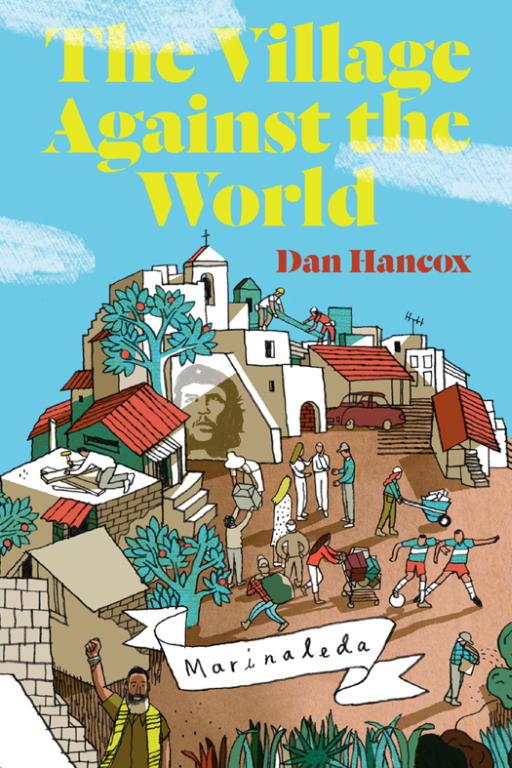
One hundred kilometers from Seville, there is a small village, Marinaleda, that for the last thirty years has been at the center of a long struggle to create a communist utopia. In a story reminiscent of the Asterix books, Dan Hancox explores the reality behind the community where no one has a mortgage, sport is played in the Che Guevara stadium and there are monthly “Red Sundays” where everyone works together to clean up the neighbourhood. In particular he tells the story of the village mayor, Sánchez Gordillo, who in 2012 became a household name in Spain after leading raids on local supermarkets to feed the Andalucian unemployed.
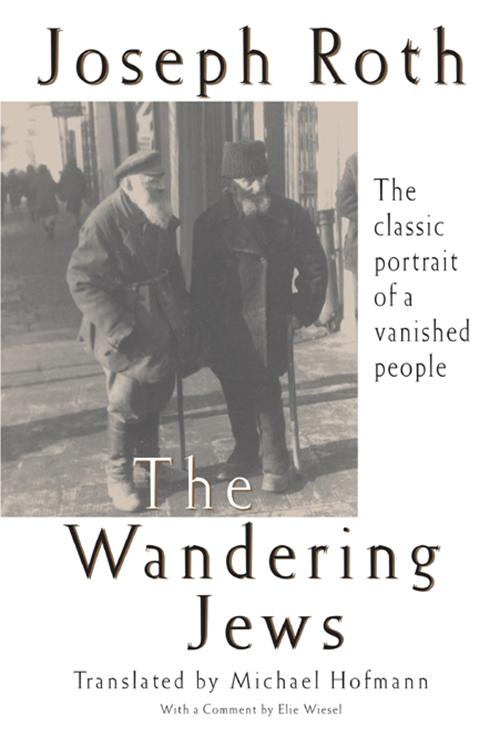
A masterpiece of twentieth-century history, only recently rediscovered in Germany, appears for the first time in English. Every few decades, a book is published that shapes Jewish consciousness. One thinks of Elie Wiesel's Night or Primo Levi's Survival in Auschwitz. In 1927, however, before these works were written, Joseph Roth (1894–1939) composed The Wandering Jews. At the time a correspondent in Berlin, emotionally ravaged by the whirlwind events of Weimar Germany, Roth examined the concept of Jewish identity and questioned what lay in store for it. Whether writing of the schism between Eastern and Western Jews, warning of the false comforts of assimilation, or eerily foreseeing the horrors posed by Nazism, The Wandering Jews remains as unforgettably vital today as it was when first published.
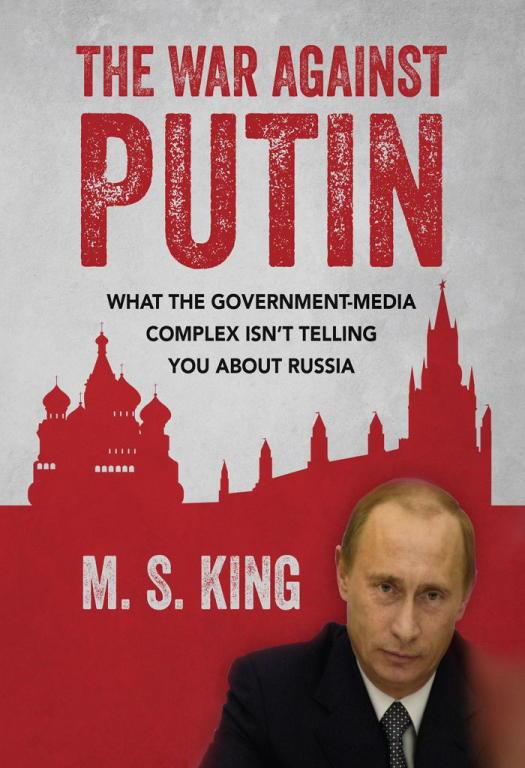
In the West, politicians and journalists of all stripes have referred to Russian President Vladimir Putin as a “thug”, a “tyrant”, a “murderer”, a “Communist”, a “Nazi”, the next “Hitler” and more. But amongst the Russian people, his popularity rating has reached levels as high as 85%. There is even a very popular hit ‘disco’ song about him — ‘A Man Like Putin’.
So, who’s right? Why such hatred for Vladimir Putin? Is it justified? Or has Putin been targeted merely for standing up the US-EU Axis of Internationalism? In clear, simple, powerful and concise language — supported by more than 100 illustrations — ‘The War Against Putin’ takes readers on an exciting ‘crash course’ journey from Russia’s Medieval founding, through the days of the Czars, through the Communist Revolution and bloody Civil War, through Stalin & World War II, through the Cold War, through the Soviet collapse, through the Yeltsin disaster, and finally the Putin-led rebirth of the Russian nation.
It is one of the “greatest stories never told”, and will shed badly needed light on the new Russia, its dynamic leader, the dark forces aiming to bring about its demise, and maybe even World War III.
Says Dr. William Carlucci: “I was glued to the edge of my seat with jaw wide open as I read this gem of a book from start to finish, in a single sitting. The clarity and simplicity with which King’s masterpiece demystifies current events represents a rare ability to speak to the reader with entertaining and understandable prose. This piece really needs to go viral, and fast. 5 Huge Stars!”
Nicholson Baker, who “writes like no one else in America” (Newsweek), here assembles his best short pieces from the last fifteen years.
The Way the World Works, Baker’s second nonfiction collection, ranges over the map of life to examine what troubles us, what eases our pain, and what brings us joy. Baker moves from political controversy to the intimacy of his own life, from forgotten heroes of pacifism to airplane wings, telephones, paper mills, David Remnick, Joseph Pulitzer, the OED, and the manufacture of the Venetian gondola. He writes about kite string and about the moment he met his wife, and he surveys our fascination with video games while attempting to beat his teenage son at Modern Warfare 2. In a celebrated essay on Wikipedia, Baker describes his efforts to stem the tide of encyclopedic deletionism; in another, he charts the rise of e-readers; in a third he chronicles his Freedom of Information lawsuit against the San Francisco Public Library.
Through all these pieces, many written for The New Yorker, Harper’s, and The American Scholar, Baker shines the light of an inexpugnable curiosity. The Way the World Works is a keen-minded, generous-spirited compendium by a modern American master.
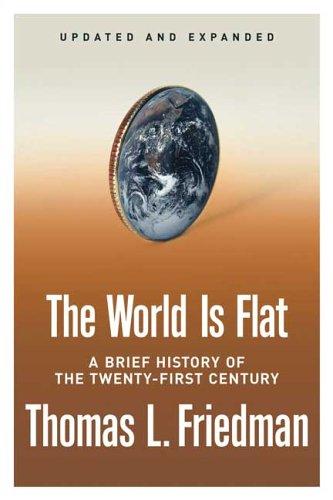
Thomas L. Friedman is not so much a futurist, which he is sometimes called, as a presentist. His aim in The World Is Flat, as in his earlier, influential Lexus and the Olive Tree, is not to give you a speculative preview of the wonders that are sure to come in your lifetime, but rather to get you caught up on the wonders that are already here. The world isn't going to be flat, it is flat, which gives Friedman's breathless narrative much of its urgency, and which also saves it from the Epcot-style polyester sheen that futurists—the optimistic ones at least—are inevitably prey to.
What Friedman means by "flat" is "connected": the lowering of trade and political barriers and the exponential technical advances of the digital revolution that have made it possible to do business, or almost anything else, instantaneously with billions of other people across the planet. This in itself should not be news to anyone. But the news that Friedman has to deliver is that just when we stopped paying attention to these developments—when the dot-com bust turned interest away from the business and technology pages and when 9/11 and the Iraq War turned all eyes toward the Middle East—is when they actually began to accelerate. Globalization 3.0, as he calls it, is driven not by major corporations or giant trade organizations like the World Bank, but by individuals: desktop freelancers and innovative startups all over the world (but especially in India and China) who can compete—and win—not just for low-wage manufacturing and information labor but, increasingly, for the highest-end research and design work as well. (He doesn't forget the "mutant supply chains" like Al-Qaeda that let the small act big in more destructive ways.)
Friedman has embraced this flat world in his own work, continuing to report on his story after his book's release and releasing an unprecedented hardcover update of the book a year later with 100 pages of revised and expanded material. What's changed in a year? Some of the sections that opened eyes in the first edition—on China and India, for example, and the global supply chain—are largely unaltered. Instead, Friedman has more to say about what he now calls "uploading," the direct-from-the-bottom creation of culture, knowledge, and innovation through blogging, podcasts, and open-source software. And in response to the pleas of many of his readers about how to survive the new flat world, he makes specific recommendations about the technical and creative training he thinks will be required to compete in the "New Middle" class. As before, Friedman tells his story with the catchy slogans and globe-hopping anecdotes that readers of his earlier books and his New York Times columns know well, and he holds to a stern sort of optimism. He wants to tell you how exciting this new world is, but he also wants you to know you're going to be trampled if you don't keep up with it. A year later, one can sense his rising impatience that our popular culture, and our political leaders, are not helping us keep pace.
—Tom Nissley
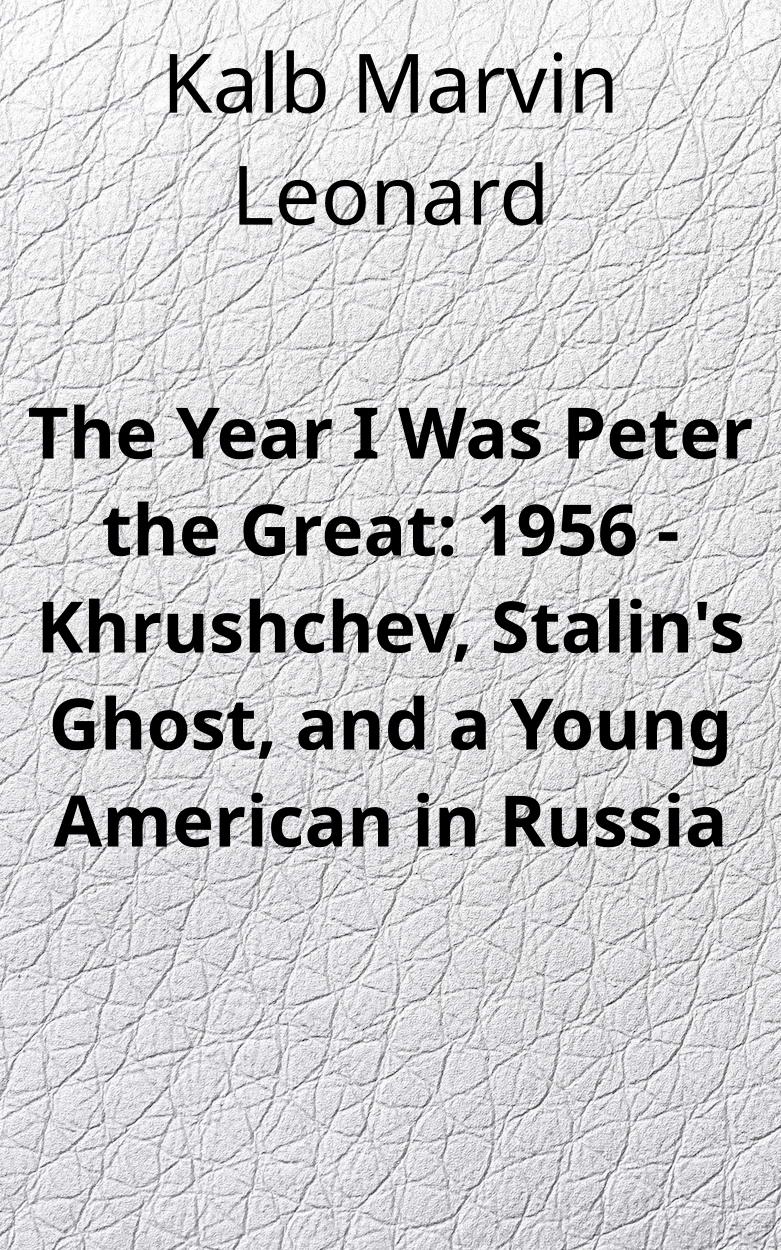
A chronicle of the year that changed Soviet Russia—and molded the future path of one of America’s pre-eminent diplomatic correspondents
1956 was an extraordinary year in modern Russian history. It was called “the year of the thaw”—a time when Stalin’s dark legacy of dictatorship died in February only to be reborn later that December. This historic arc from rising hope to crushing despair opened with a speech by Nikita Khrushchev, then the unpredictable leader of the Soviet Union. He astounded everyone by denouncing the one figure who, up to that time, had been hailed as a “genius,” a wizard of communism—Josef Stalin himself. Now, suddenly, this once unassailable god was being portrayed as a “madman” whose idiosyncratic rule had seriously undermined communism and endangered the Soviet state.
This amazing switch from hero to villain lifted a heavy overcoat of fear from the backs of ordinary Russians. It also quickly led to anti-communist uprisings in Eastern Europe, none more bloody and challenging than the one in Hungary, which Soviet troops crushed at year’s end.
Marvin Kalb, then a young diplomatic attaché at the U.S. Embassy in Moscow, observed this tumultuous year that foretold the end of Soviet communism three decades later. Fluent in Russian, a doctoral candidate at Harvard, he went where few other foreigners would dare go, listening to Russian students secretly attack communism and threaten rebellion against the Soviet system, traveling from one end of a changing country to the other and, thanks to his diplomatic position, meeting and talking with Khrushchev, who playfully nicknamed him Peter the Great.
In this, his fifteenth book, Kalb writes a fascinating eyewitness account of a superpower in upheaval and of a people yearning for an end to dictatorship.
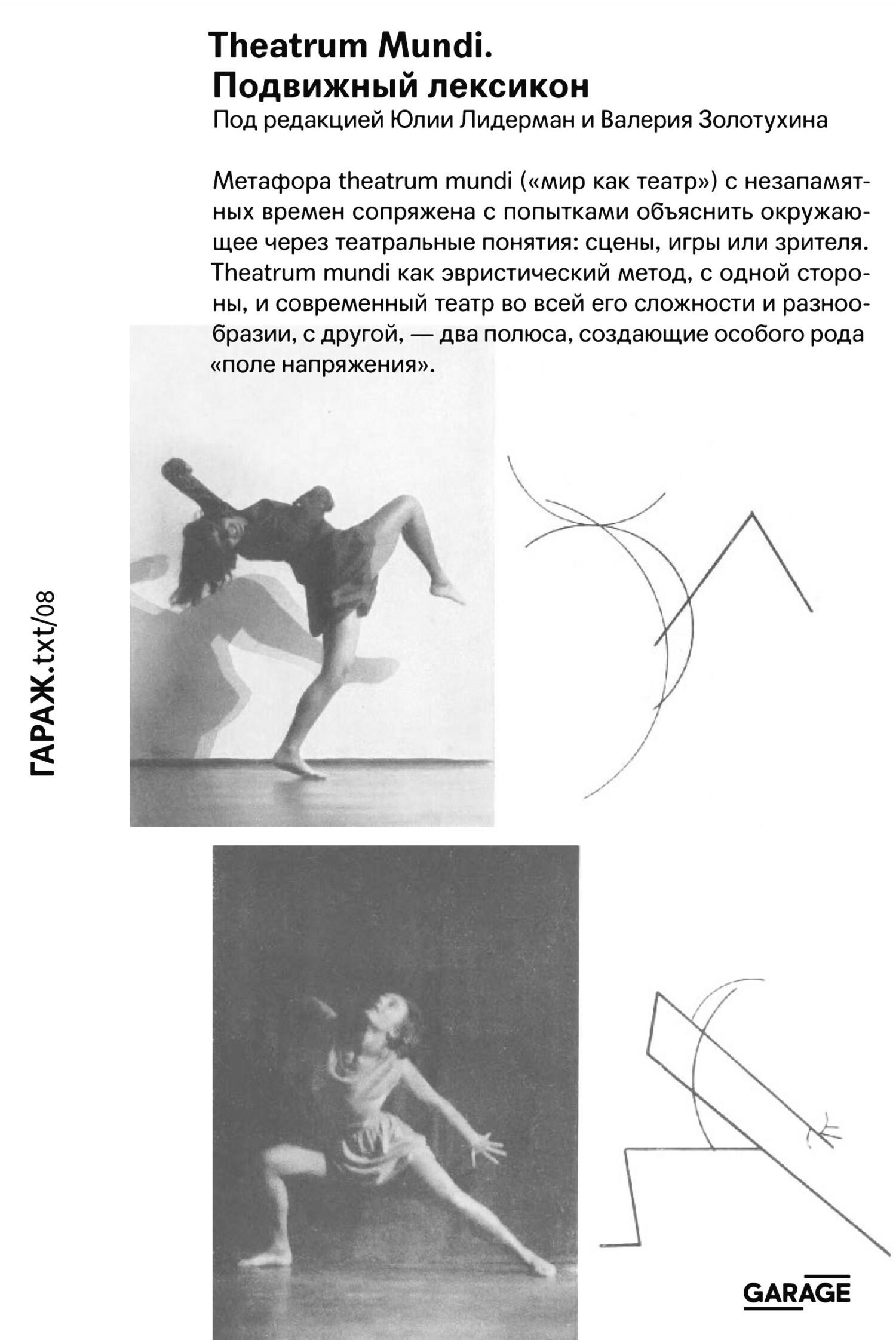
Авторов этой книги – филологов, философов, театроведов, культурологов и историков – объединяет участие в разные годы в работе московской независимой исследовательской лаборатории Theatrum Mundi, которую в 2017 году основали Мария Неклюдова и Юлия Лидерман. В текстах этого сборника в широком контексте современной гуманитарной теории анализируются разные формы бытования современного театра – от перформанса до современного танца. Вошедшие в книгу статьи дают читателям возможность составить представление как об основополагающих понятиях современной теории перформативных искусств (политике зрительства, театральности, аффекте и др.), так и о разных возможностях их использования в гуманитарных исследованиях.
В формате PDF A4 сохранён издательский дизайн.
Things I Don't Want to Know is a brilliantly insightful longform essay by Deborah Levy.
'Things I Don't Want to Know' is a unique response to George Orwell from one of our most vital contemporary writers. Taking Orwell's famous list of motives for writing as the jumping-off point for a sequence of thrilling reflections on the writing life, this is a perfect companion not just to Orwell's essay, but also to Levy's own, essential oeuvre.
'In her powerful rejoinder to Orwell, Deborah Levy responds to his proposed motives for writing — 'sheer egoism', 'aesthetic enthusiasm', 'historical impulse' and 'political purpose' — with illuminating moments of autobiography. A vivid, striking account of a writer's life, which feminises and personalises Orwell's blunt assertions' Spectator
'An up-to-date version of 'A Room of One's Own'. . I suspect it will be quoted for many years to come' Irish Examiner
'Levy's strength is her originality of thought and expression' Jeanette Winterson
Deborah Levy writes fiction, plays and poetry. Her work has been staged by the Royal Shakespeare Company, and she is the author of numerous highly praised books including The Unloved, Swallowing Geography and Beautiful Mutants, all of which are now published by Penguin. Her novel Swimming Home was shortlisted for the 2012 Man Booker Prize, 2012 Specsavers National Book Awards and 2013 Jewish Quarterly Wingate Prize.

In this masterly, deeply personal, and provocative book, the internationally renowned Mexican writer Carlos Fuentes, whose work has been called “a combination of Poe, Baudelaire, and Isak Dinesen” (Newsweek), steps back to survey the wellsprings of art and ideology, the events that have shaped our time, and his extraordinary life and fiercest passions.
Arranged alphabetically from “Amore” to “Zurich,” This I Believe takes us on a marvelous inner journey with a great writer. Fuentes ranges wide, from contradictions inherent in Latin American culture and politics to his long friendship with director Luis Buñuel.
Along the way, we find reflection on the mixed curse and blessing of globalization; memories of a sexual initiation in Zurich; a fond tracing of a family tree heavy with poets, dreamers, and diplomats; evocations of the streets, cafés, and bedrooms of Washington, Paris, Santiago de Chile, Cambridge, Oaxaca, and New York; and a celebration of literary heroes including Balzac, Cervantes, Faulkner, Kafka, and Shakespeare. Throughout, Fuentes captivates with the power of his intellect and his prose.
Here, too, are vivid, often heartbreaking glimpses into his personal life. “Silvia” is a powerful love letter to his beloved wife. In “Children,” Fuentes recalls the births of his daughters and the tragic death of his son; in “Cinema” he relives the magic of films such as Citizen Kane and The Wizard of Oz. Further extending his reach, he examines the collision between history and contemporary life in “Civil Society,” “Left,” and “Revolution.”
And he poignantly addresses the experiences we all hold in common as he grapples with beauty, death, freedom, God, and sex. By turns provocative and intimate, partisan and universal, this book is a brilliant summation of an international literary career. Revisiting the influences, commitments, readings, and insights of a lifetime, Fuentes has fashioned a magnificently coherent statement of his view of the world, reminding us once again why reading Fuentes is “like standing beneath the dome of the Sistine Chapel. . The breadth and enormity of this accomplishment is breathtaking” (The Denver Post).