 fb2
fb2Joan Didion's unblinking eye and razor-sharp perceptions of the American scene are exhibited in the essays Girl of the Golden West, In the Realm of the Fisher King, and Sentimental Journeys' from After Henry; excerpts from Salvador and Miami; and more.
“I died in Vietnam, but I didn’t even know it,” said a young Vietnam vet on the Today Show one morning in 1978, shocking viewers across the country. Waiting for an Army to Die: The Tragedy of Agent Orange—the first book ever written on the effects of Agent Orange—tells this young vet’s story and that of hundreds of thousands of other former American servicemen. During the war, the US sprayed an estimated 12 million gallons of Agent Orange on Vietnam, in order to defoliate close to 5 million acres of its land. “Had anyone predicted that millions of human beings exposed to Agent Orange/dioxin would get sick and die,” scholar Fred A. Wilcox writes in the new introduction to his seminal book, “their warnings would have been dismissed as sci-fi fantasy or apocalyptic nonsense.” Told in a gripping and compassionate narrative style that travels from the war in Vietnam to the war at home, and through portraits of many of the affected survivors, their families, and the doctors and scientists whose clinical experience and research gave the lie to the government whitewash, Waiting for an Army to Die tells a story that, thirty years later, continues to create new twists and turns for Americans still waiting for justice and an honest account of what happened to them. Vietnam has chosen August 10—the day that the US began spraying Agent Orange on Vietnam—as Agent Orange Day, to commemorate all its citizens who were affected by the deadly chemical. The new second edition of Waiting for an Army to Die will be released upon the third anniversary of this day, in honor of all those whose families have suffered, and continue to suffer, from this tragedy.
[This book contains tables. Best viewed with CoolReader.]
In War, Sebastian Junger (The Perfect Storm) turns his brilliant and empathetic eye to the reality of combat—the fear, the honor, and the trust among men in an extreme situation whose survival depends on their absolute commitment to one another. His on-the-ground account follows a single platoon through a 15-month tour of duty in the most dangerous outpost in Afghanistan’s Korengal Valley. Through the experiences of these young men at war, he shows what it means to fight, to serve, and to face down mortal danger on a daily basis.
In April 1992, a handful of young physicians, not one of them a surgeon, was trapped along with 50,000 men, women, and children in the embattled enclave of Srebrenica, Bosnia-Herzegovina. There the doctors faced the most intense professional, ethical, and personal predicaments of their lives.
Drawing on extensive interviews, documents, and recorded materials she collected over four and a half years, doctor and journalist Sheri Fink tells the harrowing—and ultimately enlightening—story of these physicians and the three who try to help them: an idealistic internist from Doctors without Borders, who hopes that interposition of international aid workers will help prevent a massacre; an aspiring Bosnian surgeon willing to walk through minefields to reach the civilian wounded; and a Serb doctor on the opposite side of the front line with the army that is intent on destroying his former colleagues.
With limited resources and a makeshift hospital overflowing with patients, how can these doctors decide who to save and who to let die? Will their duty to treat patients come into conflict with their own struggle to survive? And are there times when medical and humanitarian aid ironically prolong war and human suffering rather than helping to relieve it?
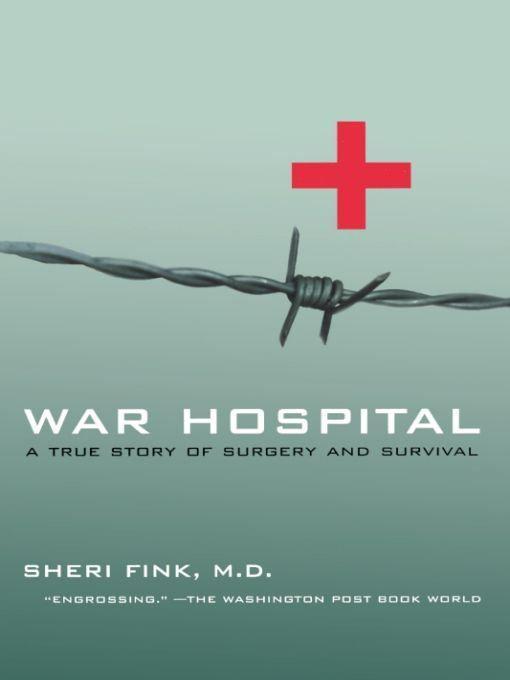
In April 1992, a handful of young physicians, not one of them a surgeon, was trapped along with 50,000 men, women, and children in the embattled enclave of Srebrenica, Bosnia-Herzegovina. There the doctors faced the most intense professional, ethical, and personal predicaments of their lives.
Drawing on extensive interviews, documents, and recorded materials she collected over four and a half years, doctor and journalist Sheri Fink tells the harrowing—and ultimately enlightening—story of these physicians and the three who try to help them: an idealistic internist from Doctors without Borders, who hopes that interposition of international aid workers will help prevent a massacre; an aspiring Bosnian surgeon willing to walk through minefields to reach the civilian wounded; and a Serb doctor on the opposite side of the front line with the army that is intent on destroying his former colleagues.
With limited resources and a makeshift hospital overflowing with patients, how can these doctors decide who to save and who to let die? Will their duty to treat patients come into conflict with their own struggle to survive? And are there times when medical and humanitarian aid ironically prolong war and human suffering rather than helping to relieve it?
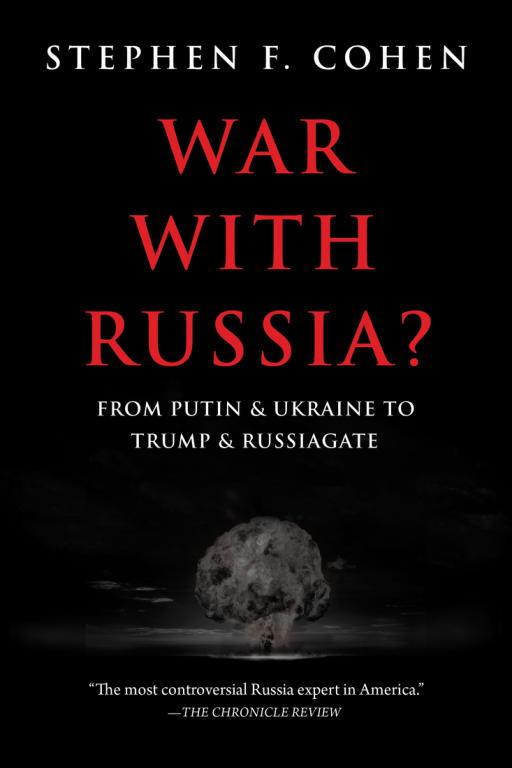
An Alternative Narrative of Donald Trump’s US and Putin’s Russia, from America’s Most Prominent Russian Scholar
Are we in a new Cold War with Russia? How does a new Cold War affect the safety and security of the United States? Does Vladimir Putin really want to destabilize the West?
America is in a new Cold War with Russia even more dangerous than the one the world barely survived in the twentieth century. The Soviet Union is gone, but the two nuclear superpowers are again locked in political and military confrontations, now from Ukraine to Syria. All of this is exacerbated by Washington’s war-like demonizing of the Kremlin leadership and by Russiagate’s unprecedented allegations. US mainstream media accounts are highly selective and seriously misleading. American “disinformation,” not only Russian, is a growing peril.
In War With Russia?, Stephen F. Cohen—the widely acclaimed historian of Soviet and post-Soviet Russia—gives readers a very different, dissenting narrative of this more dangerous new Cold War from its origins in the 1990s, the actual role of Vladimir Putin, and the 2014 Ukrainian crisis to Donald Trump’s election and today’s unprecedented Russiagate allegations.
Cohen’s views have made him, it is said, “America’s most controversial Russia expert.” Some say this to denounce him, others to laud him as a bold, highly informed critic of US policies and the dangers they have helped to create.
War With Russia? gives readers a chance to decide for themselves who is right: are we living, as Cohen argues, in a time of unprecedented perils at home and abroad?
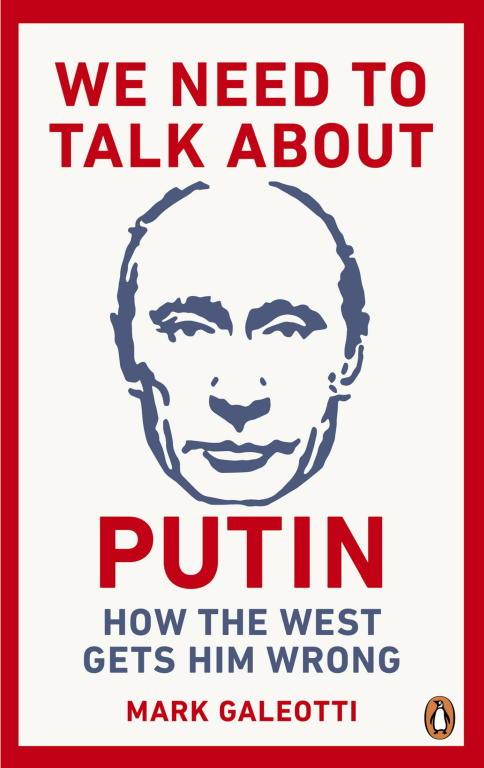
A The Times best book of 2019
Meet the world’s most dangerous man. Or is he?
Who is the real Vladimir Putin? What does he want? And what will he do next?
Despite the millions of words written on Putin’s Russia, the West still fails to truly understand one of the world’s most powerful politicians, whose influence spans the globe and whose networks of power reach into the very heart of our daily lives.
In this essential primer, Professor Mark Galeotti uncovers the man behind the myth, addressing the key misperceptions of Putin and explaining how we can decipher his motivations and next moves. From Putin’s early life in the KGB and his real relationship with the USA to his vision for the future of Russia – and the world – Galeotti draws on new Russian sources and explosive unpublished accounts to give unparalleled insight into the man at the heart of global politics.
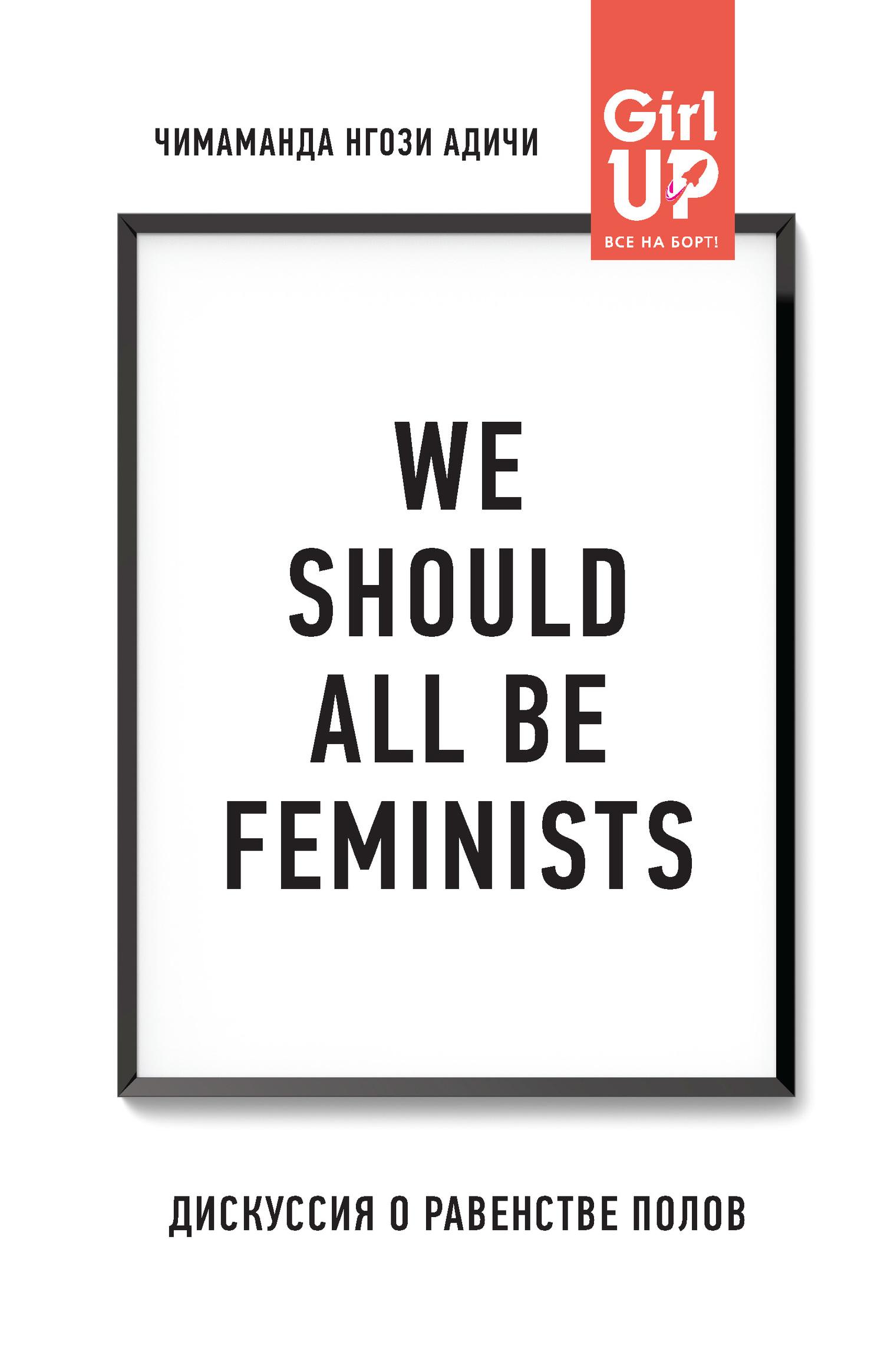
Бестселлер Нью-Йорк Таймс на русском языке! Очень личное и красноречивое эссе, в котором вы найдете инклюзивное определение феминизма, которое пытается разрушить все стереотипы, связанные с этим понятием. С помощью анекдотов и историй из жизни Адичи пытается донести, что просто сосредоточиться на общих правах человека недостаточно, важно акцентировать внимание на феминизме и доносить его принципы до каждого человека в этом мире. Приводя примеры из разных культур, автор откровенно заявляет, что положение женщин в истории всегда было неустойчивым и что отголоски этих стереотипов до сих пор портят жизнь многим молодым девушкам, поэтому нужно перестать отрицать проблему и начать действовать – всем вместе! Легкий юмористический тон повествования поможет вам без труда вникнуть в исследование и сделать свои выводы.
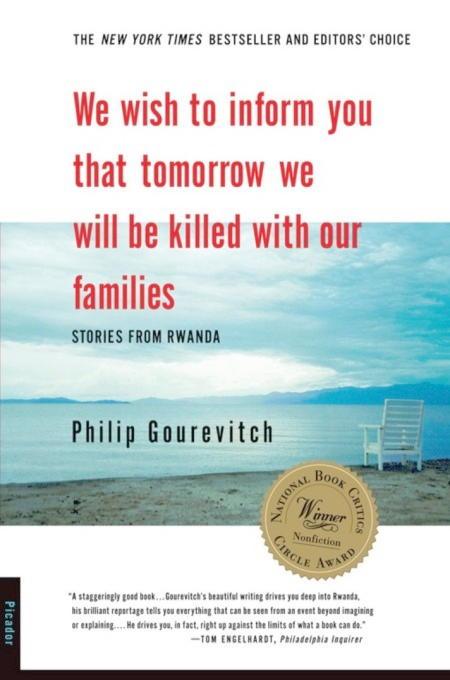
Winner of the National Book Critics Circle Award for Nonfiction.
In April of 1994, the government of Rwanda called on everyone in the Hutu majority to kill everyone in the Tutsi minority. Over the next three months, 800,000 Tutsis were murdered in the most unambiguous case of genocide since Hitler’s war against the Jews. Philip Gourevitch’s haunting work is an anatomy of the killings in Rwanda, a vivid history of the genocide’s background, and an unforgettable account of what it means to survive in its aftermath.
One of the most acclaimed books of the year, this account will endure as a chilling document of our time.
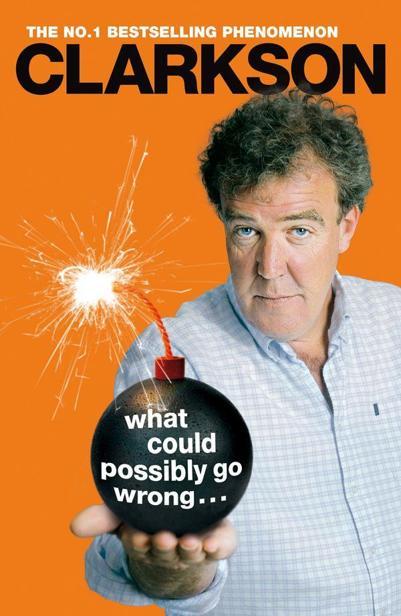
No one writes about cars like Jeremy Clarkson. While most correspondents are too buys diving straight into BHP, MPG and MPH, Jeremy appreciates that there are more important things to life. Don’t worry, we’ll get to the cars. Eventually. But first we should consider:
• The case for invading France
• The overwhelming appeal of a nice sit-down
• The inconvenience of gin and tonic
• Why clothes are no better than ice cream
• Spot-welding with the Duchess of Kent
• And why Denmark is the best place in the world
Armed only with conviction, curiosity, enthusiasm and a stout pair of trousers, Jeremy hurtles around the world – along motorway, autoroute, freeway and autobahn – in search of answers to life’s puzzles and ponderings without forethought or fear for his own safety. What, you have to ask, could possibly go wrong…
The contents of this book first appeared in Jeremy Clarkson’s Sunday Times column. Read more about the world according to Clarkson every week in The Sunday Times.
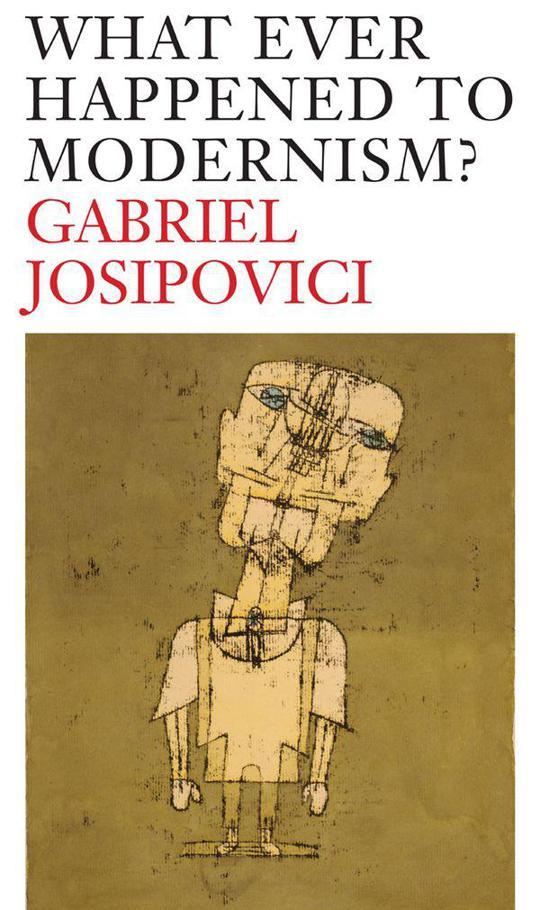
The quality of today’s literary writing arouses the strongest opinions. For novelist and critic Gabriel Josipovici, the contemporary novel in English is profoundly disappointing — a poor relation of its groundbreaking Modernist forebears. This agile and passionate book asks why.
Modernism, Josipovici suggests, is only superficially a reaction to industrialization or a revolution in diction and form; essentially, it is art coming to consciousness of its own limits and responsibilities. And its origins are to be sought not in 1850 or 1800, but in the early 1500s, with the crisis of society and perception that also led to the rise of Protestantism. With sophistication and persuasiveness, Josipovici charts some of Modernism’s key stages, from Dürer, Rabelais, and Cervantes to the present, bringing together a rich array of artists, musicians, and writers both familiar and unexpected — including Beckett, Borges, Friedrich, Cézanne, Stevens, Robbe-Grillet, Beethoven, and Wordsworth. He concludes with a stinging attack on the current literary scene in Britain and America, which raises questions about not only national taste, but contemporary culture itself.
Gabriel Josipovici has spent a lifetime writing, and writing about other writers. What Ever Happened to Modernism? is a strident call to arms, and a tour de force of literary, artistic, and philosophical explication that will stimulate anyone interested in art in the twentieth century and today.
For the first time, Hillary Rodham Clinton reveals what she was thinking and feeling during one of the most controversial and unpredictable presidential elections in history. Now free from the constraints of running, Hillary takes you inside the intense personal experience of becoming the first woman nominated for president by a major party in an election marked by rage, sexism, exhilarating highs and infuriating lows, stranger-than-fiction twists, Russian interference, and an opponent who broke all the rules. This is her most personal memoir yet.
In these pages, she describes what it was like to run against Donald Trump, the mistakes she made, how she has coped with a shocking and devastating loss, and how she found the strength to pick herself back up afterward. With humor and candor, she tells readers what it took to get back on her feet—the rituals, relationships, and reading that got her through, and what the experience has taught her about life. She speaks about the challenges of being a strong woman in the public eye, the criticism over her voice, age, and appearance, and the double standard confronting women in politics.
She lays out how the 2016 election was marked by an unprecedented assault on our democracy by a foreign adversary. By analyzing the evidence and connecting the dots, Hillary shows just how dangerous the forces are that shaped the outcome, and why Americans need to understand them to protect our values and our democracy in the future.
The election of 2016 was unprecedented and historic. What Happened is the story of that campaign and its aftermath—both a deeply intimate account and a cautionary tale for the nation.
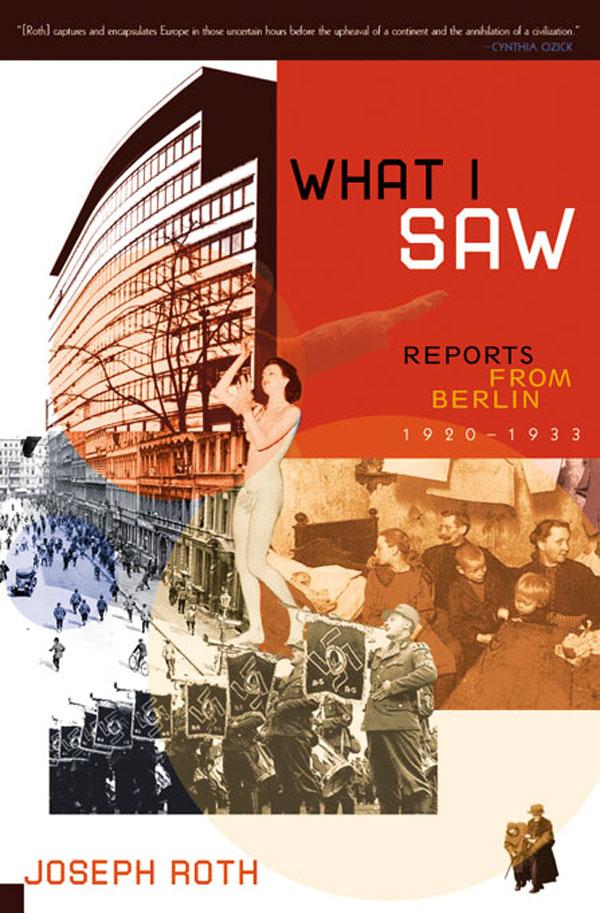
The Joseph Roth revival has finally gone mainstream with the thunderous reception for What I Saw, a book that has become a classic with five hardcover printings. Glowingly reviewed, What I Saw introduces a new generation to the genius of this tortured author with its "nonstop brilliance, irresistible charm and continuing relevance" (Jeffrey Eugenides, The New York Times Book Review). As if anticipating Christopher Isherwood, the book re-creates the tragicomic world of 1920s Berlin as seen by its greatest journalistic eyewitness. In 1920, Joseph Roth, the most renowned German correspondent of his age, arrived in Berlin, the capital of the Weimar Republic. He produced a series of impressionistic and political essays that influenced an entire generation of writers, including Thomas Mann and the young Christopher Isherwood. Translated and collected here for the first time, these pieces record the violent social and political paroxysms that constantly threatened to undo the fragile democracy that was the Weimar Republic. Roth, like no other German writer of his time, ventured beyond Berlin's official veneer to the heart of the city, chronicling the lives of its forgotten inhabitants: the war cripples, the Jewish immigrants from the Pale, the criminals, the bathhouse denizens, and the nameless dead who filled the morgues. Warning early on of the dangers posed by the Nazis, Roth evoked a landscape of moral bankruptcy and debauched beauty; a memorable portrait of a city and a time of commingled hope and chaos. What I Saw, like no other existing work, records the violent social and political paroxysms that compromised and ultimately destroyed the precarious democracy that was the Weimar Republic.
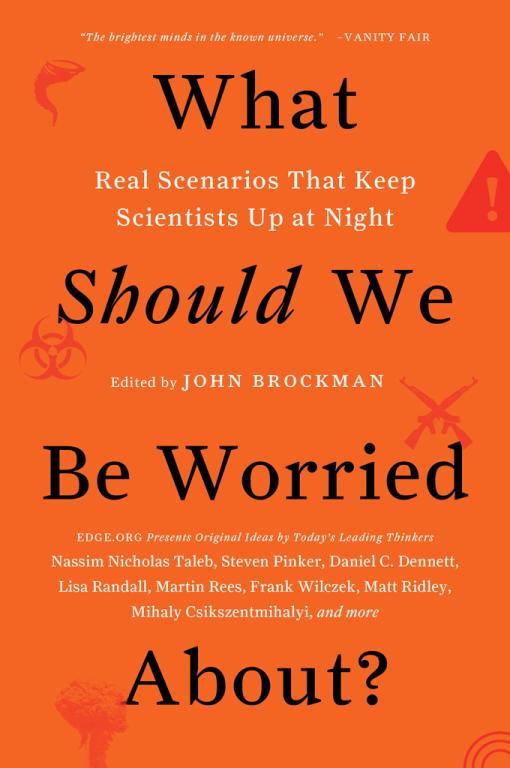
Drawing from the horizons of science, today’s leading thinkers reveal the hidden threats nobody is talking about—and expose the false fears everyone else is distracted by.
What should we be worried about? That is the question John Brockman, publisher of Edge.org (“The world’s smartest website”—The Guardian), posed to the planet’s most influential minds. He asked them to disclose something that, for scientific reasons, worries them—particularly scenarios that aren’t on the popular radar yet. Encompassing neuroscience, economics, philosophy, physics, psychology, biology, and more—here are 150 ideas that will revolutionize your understanding of the world.
Steven Pinker uncovers the real risk factors for war • Mihaly Csikszentmihalyi peers into the coming virtual abyss • Nobel laureate Frank Wilczek laments our squandered opportunities to prevent global catastrophe • Seth Lloyd calculates the threat of a financial black hole • Alison Gopnik on the loss of childhood • Nassim Nicholas Taleb explains why firefighters understand risk far better than economic “experts” • Matt Ridley on the alarming re-emergence of superstition • Daniel C. Dennett and george dyson ponder the impact of a major breakdown of the Internet • Jennifer Jacquet fears human-induced damage to the planet due to “the Anthropocebo Effect” • Douglas Rushkoff fears humanity is losing its soul • Nicholas Carr on the “patience deficit” • Tim O’Reilly foresees a coming new Dark Age • Scott Atran on the homogenization of human experience • Sherry Turkle explores what’s lost when kids are constantly connected • Kevin Kelly outlines the looming “underpopulation bomb” • Helen Fisher on the fate of men • Lawrence Krauss dreads what we don’t know about the universe • Susan Blackmore on the loss of manual skills • Kate Jeffery on the death of death • plus J. Craig Venter, Daniel Goleman, Virginia Heffernan, Sam Harris, Brian Eno, Martin Rees, and more.
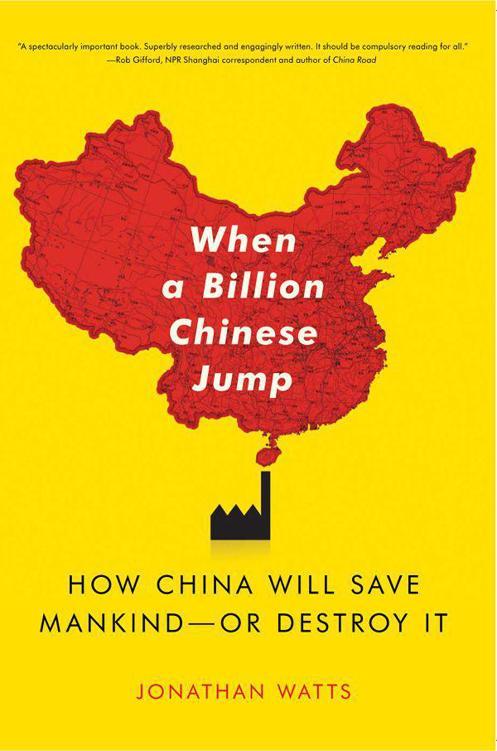
When a Billion Chinese Jump is a road journey into the future of our species. Traveling from the mountains of Tibet to the deserts of Inner Mongolia via the Silk Road, tiger farms, cancer villages, weather-modifying bases, and eco-cities, Watts chronicles the environmental impact of economic growth with a series of gripping stories from the country on the front line of global development. He talks to nomads and philosophers, entrepreneurs and scientists, rural farmers and urban consumers, examining how individuals are trying to adapt to one of the most spectacular bursts of change in human history, then poses a question that will affect all of our lives: Can China find a new way forward or is this giant nation doomed to magnify the mistakes that have already taken humanity to the brink of disaster?
Asian environmental correspondent for the Guardian, Watts travels to the four corners of China, from the southwest Himalayan region, rebranded as “Shangri-la” to attract tourists, to Xanadu (Shangdu) in Inner Mongolia, exploring how Beijing is balancing economic growth with sustainability and whether China will “emerge as the world’s first green superpower” or tip our species “over the environmental precipice.” What he finds is both hopeful and disturbing. Wildlife refuges, rather than focusing on biodiversity, breed animals for meat and traditional remedies like black bear bile. The city of Ordos plans to build a huge wind farm and solar plant, but these benefits are offset by its coal-liquification mine, “an environmentalist's worst nightmare” of greenhouse gases and water exploitation. The Chinese dictatorship, envied by other nations for its ability to enact environmental changes without the slow democratic process, turns out to be ineffective, with power lying with developers and local bureaucracies. Readers interested in global warming will appreciate the firsthand information about China, and Watts’s travels are so extensive and China is changing so fast, some material is likely to be fresh and new even for Sinologists.
Starred Review
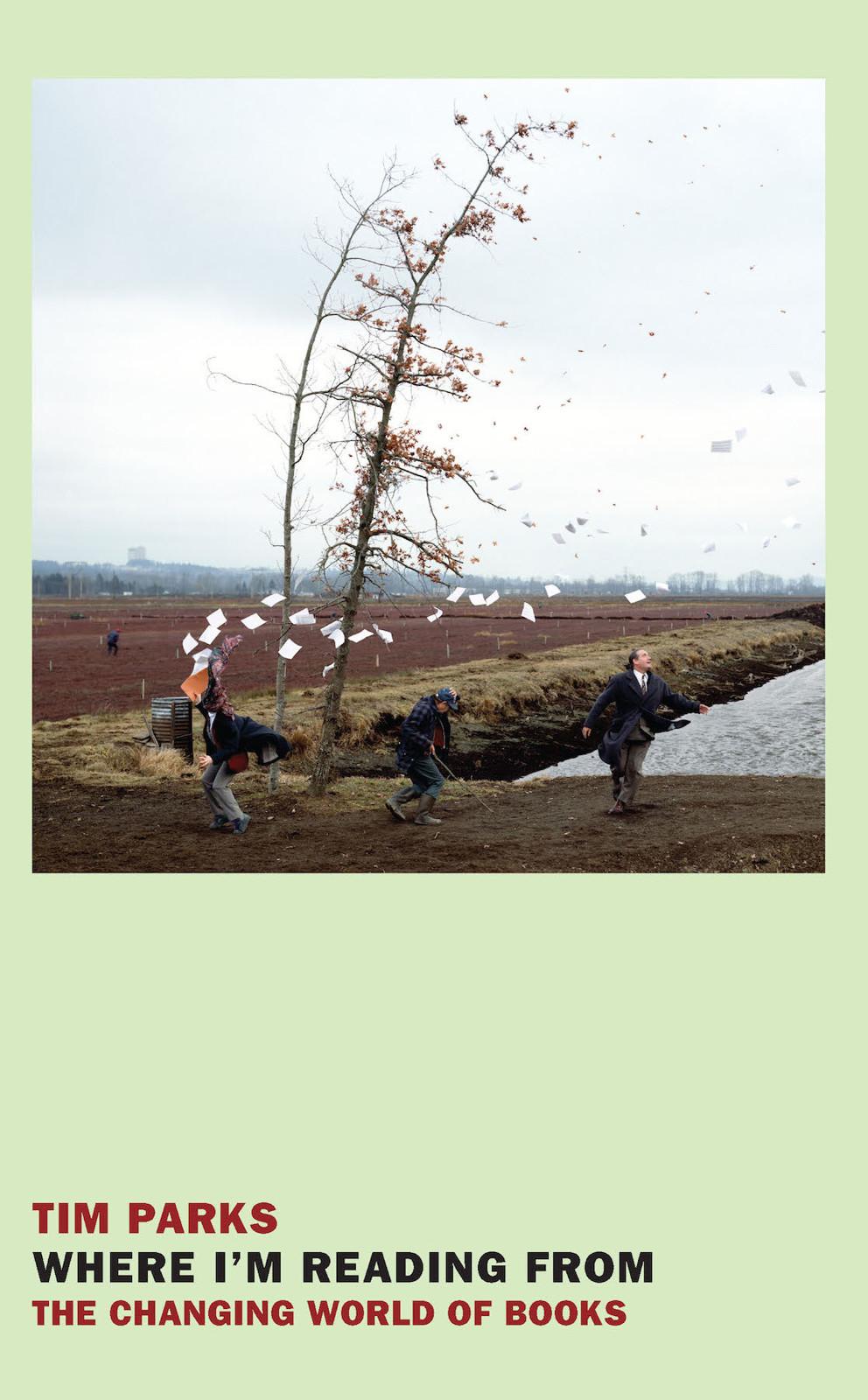
Why do we need fiction? Why do books need to be printed on paper, copyrighted, read to the finish? Why should a group of aging Swedish men determine what “world” literature is best? Do books change anything? Did they use to? Do we read to challenge our vision of the world or to confirm it? Has novel writing turned into a job like any other? In Where I’m Reading From, the internationally acclaimed novelist and critic Tim Parks ranges over a lifetime of critical reading--from Leopardi, Dickens and Chekhov, to Woolf, Lawrence and Bernhard, and on to contemporary work by Jonathan Franzen, Peter Stamm, and many others—to overturn many of our long-held assumptions about literature and its purpose.
Taking the form of thirty-eight interlocking essays, Where I’m Reading From examines the rise of the “global” novel and the disappearance of literary styles that do not travel; the changing vocation of the writer today; the increasingly paradoxical effects of translation; the shifting expectations we bring to fiction; the growing stasis of literary criticism; and the problematic relationship between writers’ lives and their work. In the end Parks wonders whether writers—and readers--can escape the twin pressures of the new global system and the novel that has become its emblematic genre.