 fb2
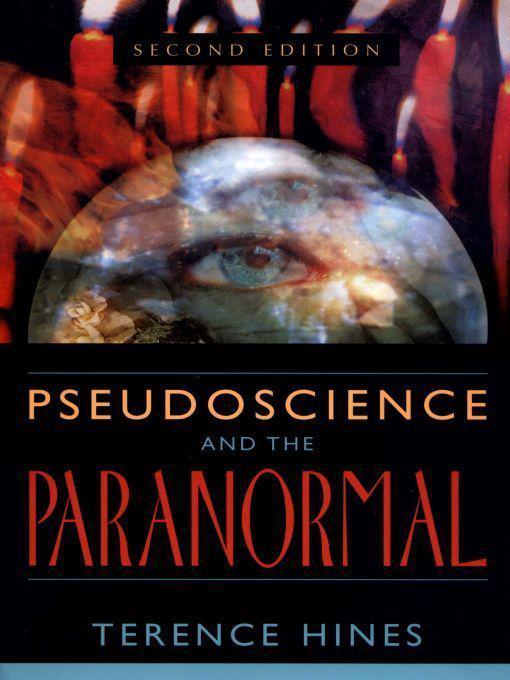
fb2Television, the movies, and computer games fill the minds of their viewers with a daily staple of fantasy, from tales of UFO landings, haunted houses, and communication with the dead to claims of miraculous cures by gifted healers or breakthrough treatments by means of fringe medicine. The paranormal is so ubiquitous in one form of entertainment or another that many people easily lose sight of the distinction between the real and the imaginary, or they never learn to make the distinction in the first place. In this thorough review of pseudoscience and the paranormal in contemporary life, psychologist Terence Hines shows readers how to carefully evaluate all such claims in terms of scientific evidence.
Hines devotes separate chapters to psychics; life after death; parapsychology; astrology; UFOs; ancient astronauts, cosmic collisions, and the Bermuda Triangle; faith healing; and more. New to this second edition are extended sections on psychoanalysis and pseudopsychologies, especially recovered memory therapy, satanic ritual abuse, facilitated communication, and other questionable psychotherapies. There are also new chapters on alternative medicine and on environmental pseudoscience, such as the connection between cancer and certain technologies like cell phones and power lines.
Finally, Hines discusses the psychological causes for belief in the paranormal despite overwhelming evidence to the contrary. This valuable, highly interesting, and completely accessible analysis critiques the whole range of current paranormal claims.
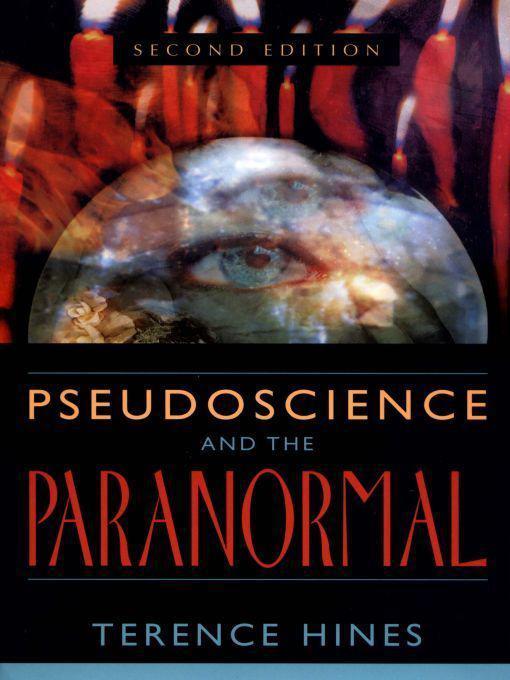
Television, the movies, and computer games fill the minds of their viewers with a daily staple of fantasy, from tales of UFO landings, haunted houses, and communication with the dead to claims of miraculous cures by gifted healers or breakthrough treatments by means of fringe medicine. The paranormal is so ubiquitous in one form of entertainment or another that many people easily lose sight of the distinction between the real and the imaginary, or they never learn to make the distinction in the first place. In this thorough review of pseudoscience and the paranormal in contemporary life, psychologist Terence Hines shows readers how to carefully evaluate all such claims in terms of scientific evidence.
Hines devotes separate chapters to psychics; life after death; parapsychology; astrology; UFOs; ancient astronauts, cosmic collisions, and the Bermuda Triangle; faith healing; and more. New to this second edition are extended sections on psychoanalysis and pseudopsychologies, especially recovered memory therapy, satanic ritual abuse, facilitated communication, and other questionable psychotherapies. There are also new chapters on alternative medicine and on environmental pseudoscience, such as the connection between cancer and certain technologies like cell phones and power lines.
Finally, Hines discusses the psychological causes for belief in the paranormal despite overwhelming evidence to the contrary. This valuable, highly interesting, and completely accessible analysis critiques the whole range of current paranormal claims.
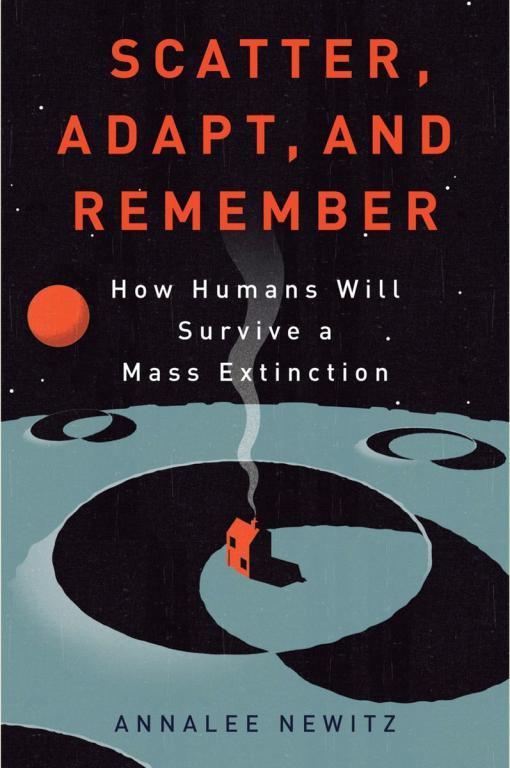
In its 4.5 billion-year history, life on Earth has been almost erased at least half a dozen times: shattered by asteroid impacts, entombed in ice, smothered by methane, and torn apart by unfathomably powerful megavolcanoes. And we know that another global disaster is eventually headed our way. Can we survive it? How?
As a species, Homo sapiens is at a crossroads. Study of our planet’s turbulent past suggests that we are overdue for a catastrophic disaster, whether caused by nature or by human interference.
It’s a frightening prospect, as each of the Earth’s past major disasters—from meteor strikes to bombardment by cosmic radiation—resulted in a mass extinction, where more than 75 percent of the planet’s species died out. But in Scatter, Adapt, and Remember, Annalee Newitz, science journalist and editor of the science Web site io9.com explains that although global disaster is all but inevitable, our chances of long-term species survival are better than ever. Life on Earth has come close to annihilation—humans have, more than once, narrowly avoided extinction just during the last million years—but every single time a few creatures survived, evolving to adapt to the harshest of conditions.
This brilliantly speculative work of popular science focuses on humanity’s long history of dodging the bullet, as well as on new threats that we may face in years to come. Most important, it explores how scientific breakthroughs today will help us avoid disasters tomorrow. From simulating tsunamis to studying central Turkey’s ancient underground cities; from cultivating cyanobacteria for “living cities” to designing space elevators to make space colonies cost-effective; from using math to stop pandemics to studying the remarkable survival strategies of gray whales, scientists and researchers the world over are discovering the keys to long-term resilience and learning how humans can choose life over death.
Newitz’s remarkable and fascinating journey through the science of mass extinctions is a powerful argument about human ingenuity and our ability to change. In a world populated by doomsday preppers and media commentators obsessively forecasting our demise, Scatter, Adapt, and Remember is a compelling voice of hope. It leads us away from apocalyptic thinking into a future where we live to build a better world—on this planet and perhaps on others. Readers of this book will be equipped scientifically, intellectually, and emotionally to face whatever the future holds.
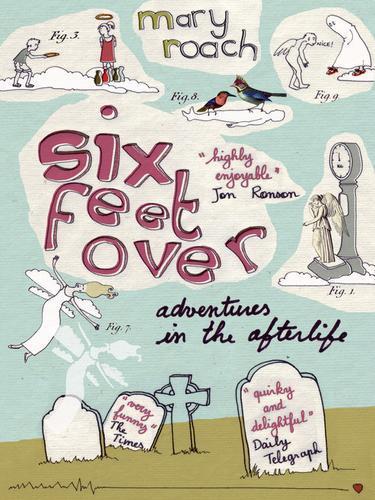
Does the light just go out and that’s that — the million-year nap? Or will some part of my personality, my me-ness, persist? What will that feel like? What will I do all day? Is there a place to plug in my laptop?” Mary Roach trains her considerable humour and curiosity on the human soul, seeking answers from a varied and fascinating crew of contemporary and historical soul-searchers: scientists, schemers, engineers, mediums, all trying to prove (or disprove) that life goes on after we die. Along the way she encounters electromagnetic hauntings, out-of-body experiences, ghosts and lawsuits: Mary Roach sifts and weighs the evidence in her hilarious, inimitable style.
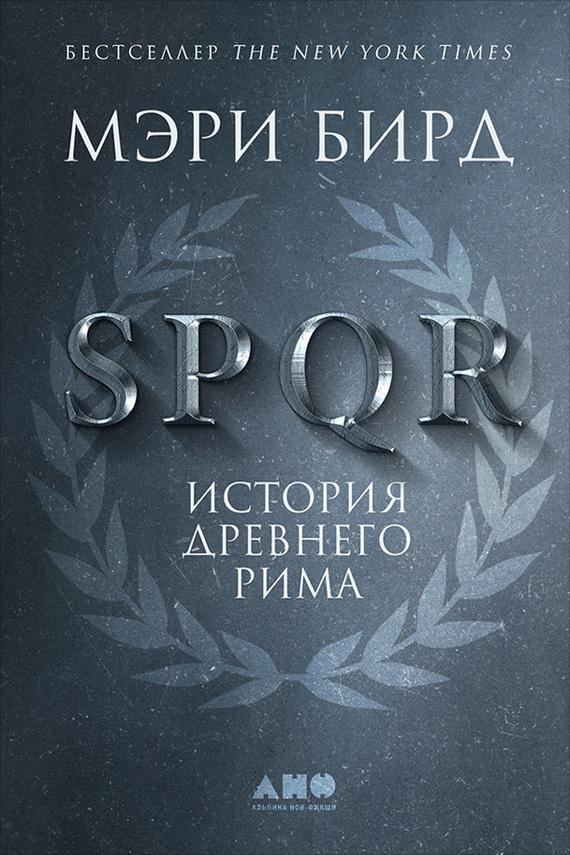
Мы встречаемся с образами и историей Древнего Рима в науке, литературе, искусстве. Но насколько близки к реальности наши представления об эпохе, на которую опирается вся западная цивилизация? Ведущий мировой специалист по древней истории Мэри Бирд в своей книге «SPQR: История Древнего Рима» объясняет, почему нам так важна римская история, каким образом маленький, ничем не примечательный городок Центральной Италии превратился в империю трех континентов.
Название «SPQR» – аббревиатура латинского выражения senatus populus que romanus, означающего «сенат и народ Рима». Сенат дал название современным законодательным собраниям по всему миру.
SPQR – книга о Риме и о том, как он сохранял свое господство несколько веков подряд, о его жителях, императорах и заговорщиках. Описывая взаимоотношения власти и человека, политическое устройство и конфликты, становление государственности и империи, знаменитых и никому не известных римлян, автор посредством научных данных разрушает мифы.
Изложение истории Древнего Рима начинается с середины I в. до н. э., когда Рим уже был обширной метрополией с населением больше миллиона жителей, с предвестия переворота и описания звездного часа Цицерона. А заканчивается кульминационным моментом, когда в 212 г. император Каракалла дал всем свободным жителям Римской империи право полного римского гражданства, уничтожив различия между победителями и побежденными.
Почему книга достойна прочтения:
– Здесь есть все лучшее, что читатель может найти в научно-популярной литературе: глубокое и всестороннее знание предмета, великолепный язык, ощущение пульсации повседневной жизни.
– С увеличением числа находок, обнаруженных в грунте, подземных водах и даже в библиотеках, историография Древнего Рима претерпела сильные изменения за последние 50 лет. Книга содержит актуальные научные данные.
– Эта книга – исторический спектакль, связь между прошлым и настоящим. Удивительно, как много похожих событий и параллелей с сегодняшним днем читатель найдет в истории о Древнем Риме.
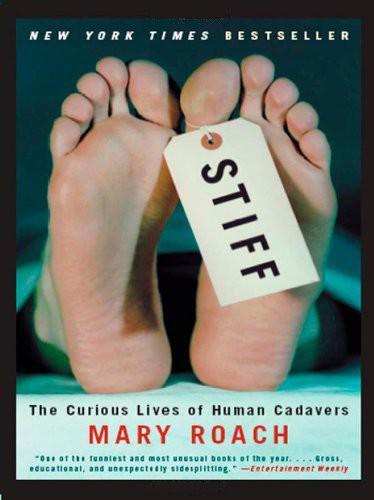
Stiff is an oddly compelling, often hilarious exploration of the strange lives of our bodies postmortem. For two thousand years, cadavers—some willingly, some unwittingly—have been involved in science’s boldest strides and weirdest undertakings. They’ve tested France’s first guillotines, ridden the NASA Space Shuttle, been crucified in a Parisian laboratory to test the authenticity of the Shroud of Turin, and helped solve the mystery of TWA Flight 800. For every new surgical procedure, from heart transplants to gender reassignment surgery, cadavers have been there alongside surgeons, making history in their quiet way.
In this fascinating, ennobling account, Mary Roach visits the good deeds of cadavers over the centuries—from the anatomy labs and human-sourced pharmacies of medieval and nineteenth-century Europe to a human decay research facility in Tennessee, to a plastic surgery practice lab, to a Scandinavian funeral directors’ conference on human composting. In her droll, inimitable voice, Roach tells the engrossing story of our bodies when we are no longer with them.
Submarine warfare of to-day: how the submarine menace was met and vanquished, with descriptions of the inventions and devices used, fast boats, mystery ships, nets, aircraft, &c., &c., also describing the selection and training of the enormous personnel used in this new branch of the navy.
This eBook is for the use of anyone anywhere at no cost and with almost no restrictions whatsoever. You may copy it, give it away or re-use it under the terms of the Project Gutenberg License included with this eBook or online at www.gutenberg.org.
http://www.gutenberg.org/ebooks/29685
Best viewed with CoolReader.
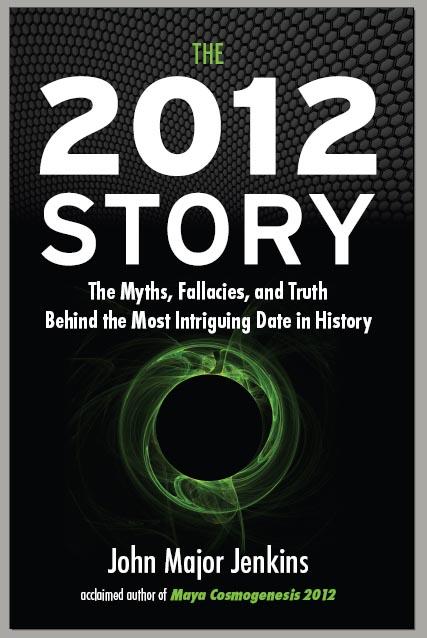
On December 21, 2012, the Mesoamerican Long Count calendar, a 5,125-year cycle calendar system pioneered by the Maya, will come to an end. At the same time, the earth, the sun, and the center of the galaxy will come together in an extremely rare cosmic alignment. More and more people believe that the world as we know it will experience a transformation in 2012, but few are aware of the complete history or significance of the date.
John Major Jenkins, among the most authoritative voices of the 2012 movement, has written a definitive explanation of one of the most thought-provoking phenomena of our time. Drawing from his own groundbreaking research (including his involvement in the modern reconstruction of Mayan 2012 cosmology) and more than two decades of extensive study of Mayan culture, Jenkins has created the crucial guide to understanding the story of 2012 an essential overview of the history, theory, cultures, and personalities that have brought this extraordinary idea into modern awareness. Jenkins provides illuminating answers to some of the most-asked questions about 2012, including:
• How did the early Maya devise the calendar that gives us the cycle ending in 2012, and how does it work?
• How did the calendar come to be rediscovered and reconstructed in our era?
• What controversies and intrigues surround the topic, and what do scholars and researchers have to say about them?
• How can we cut through all the noise about 2012 and gain true wisdom from the Mayan teachings about this moment?
On December 21, 2012, the Mesoamerican Long Count calendar, a 5,125-year cycle calendar system pioneered by the Maya, will come to an end. At the same time, the earth, the sun, and the center of the galaxy will come together in an extremely rare cosmic alignment. More and more people believe that the world as we know it will experience a transformation in 2012, but few are aware of the complete history or significance of the date.
John Major Jenkins, among the most authoritative voices of the 2012 movement, has written a definitive explanation of one of the most thought-provoking phenomena of our time. Drawing from his own groundbreaking research (including his involvement in the modern reconstruction of Mayan 2012 cosmology) and more than two decades of extensive study of Mayan culture, Jenkins has created the crucial guide to understanding the story of 2012 an essential overview of the history, theory, cultures, and personalities that have brought this extraordinary idea into modern awareness. Jenkins provides illuminating answers to some of the most-asked questions about 2012, including:
• How did the early Maya devise the calendar that gives us the cycle ending in 2012, and how does it work?
• How did the calendar come to be rediscovered and reconstructed in our era?
• What controversies and intrigues surround the topic, and what do scholars and researchers have to say about them?
• How can we cut through all the noise about 2012 and gain true wisdom from the Mayan teachings about this moment?
Russell Gold, a brilliant and dogged investigative reporter at The Wall Street Journal, has spent more than a decade reporting on one of the biggest stories of our time: the spectacular, world-changing rise of “fracking.” Recognized as a finalist for the Pulitzer Prize and a recipient of the Gerald Loeb Award for his work, Gold has traveled along the pipelines and into the hubs of this country’s energy infrastructure; he has visited frack sites from Texas to North Dakota; and he has conducted thousands of interviews with engineers and wildcatters, CEOs and roughnecks, environmentalists and politicians. He has also sifted through reams of engineering reports, lawsuit transcripts, and financial filings. The result is an essential book—a commanding piece of journalism, an astounding study of human ingenuity, and an epic work of storytelling.
Fracking has vociferous critics and fervent defenders, but the debate between these camps has obscured the actual story: Fracking has become a fixture of the American landscape and the global economy. It has upended the business models of energy companies around the globe, and it has started to change geopolitics and global energy markets in profound ways. Gold tells the story of this once-obscure oilfield technology—a story with an incredible cast of tycoons and geologists, dreamers and drillers, speculators and skeptics, a story that answers a critical question of our time: Where will the energy come from to power our world—and what price will we have to pay for it?
“The edge of the sea is a strange and beautiful place.”
A book to be read for pleasure as well as a practical identification guide, The Edge of the Sea introduces a world of teeming life where the sea meets the land. A new generation of readers is discovering why Rachel Carson’s books have become cornerstones of the environmental and conservation movements. New introduction by Sue Hubbell.

Outbreaks of avian and swine flu have reawakened fears that had lain dormant for nearly a century, ever since the influenza pandemic of 1918 that killed at least 50 million people worldwide. When a highly lethal strain of avian flu broke out in Asia in recent years and raced westward, the Washington Post’s Alan Sipress chased the emerging threat as it infiltrated remote jungle villages, mountain redoubts, and teeming cities. He tracked the virus across nine countries, watching its secrets repeatedly elude the world’s brightest scientists and most intrepid disease hunters. Savage and mercurial, this novel influenza strain—H5N1—has been called the kissing cousin of the Spanish flu and, with just a few genetic tweaks, could kill millions of people. None of us is immune.
The Fatal Strain is a fast-moving account that weaves cultural, political, and scientific strands into a tale of inevitable epidemic. In his vivid portrayal of the struggle between man and microbe, Sipress chronicles the accelerating number of near misses and explores the cruel dynamic that has often made Asia the fountainhead of killer flu strains. Even more than modern medicine, it is chicken smugglers, fighting cock breeders, and witch doctors who could determine the evolution of this viral menace by allowing it to breed and speeding it on its way.
The ease of international travel and the delicate balance of today’s global economy have left the world vulnerable to pandemic in a way the victims of 1918 could never imagine. But it is human failings that may pose the greatest peril. Political bosses in country after country have covered up outbreaks. Ancient customs, like trading in live poultry and the ritual release of birds to earn religious merit, have failed to adapt to the microbial threat. The world’s wealthy countries have left poorer, frontline countries without affordable vaccines or other weapons for confronting the disease, fostering a sense of grievance that endangers us all.
The chilling truth is that we don’t have command over the H5N1 virus. It continues to spread, thwarting efforts to uproot it. And as it does, the viral dice continue to roll, threatening to produce a pandemic strain that is both deadly and can spread as easily as the common cold. Swine flu has reminded us that flu epidemics happen. Sipress reminds us something far worse could be brewing.

Outbreaks of avian and swine flu have reawakened fears that had lain dormant for nearly a century, ever since the influenza pandemic of 1918 that killed at least 50 million people worldwide. When a highly lethal strain of avian flu broke out in Asia in recent years and raced westward, the Washington Post’s Alan Sipress chased the emerging threat as it infiltrated remote jungle villages, mountain redoubts, and teeming cities. He tracked the virus across nine countries, watching its secrets repeatedly elude the world’s brightest scientists and most intrepid disease hunters. Savage and mercurial, this novel influenza strain—H5N1—has been called the kissing cousin of the Spanish flu and, with just a few genetic tweaks, could kill millions of people. None of us is immune.
The Fatal Strain is a fast-moving account that weaves cultural, political, and scientific strands into a tale of inevitable epidemic. In his vivid portrayal of the struggle between man and microbe, Sipress chronicles the accelerating number of near misses and explores the cruel dynamic that has often made Asia the fountainhead of killer flu strains. Even more than modern medicine, it is chicken smugglers, fighting cock breeders, and witch doctors who could determine the evolution of this viral menace by allowing it to breed and speeding it on its way.
The ease of international travel and the delicate balance of today’s global economy have left the world vulnerable to pandemic in a way the victims of 1918 could never imagine. But it is human failings that may pose the greatest peril. Political bosses in country after country have covered up outbreaks. Ancient customs, like trading in live poultry and the ritual release of birds to earn religious merit, have failed to adapt to the microbial threat. The world’s wealthy countries have left poorer, frontline countries without affordable vaccines or other weapons for confronting the disease, fostering a sense of grievance that endangers us all.
The chilling truth is that we don’t have command over the H5N1 virus. It continues to spread, thwarting efforts to uproot it. And as it does, the viral dice continue to roll, threatening to produce a pandemic strain that is both deadly and can spread as easily as the common cold. Swine flu has reminded us that flu epidemics happen. Sipress reminds us something far worse could be brewing.
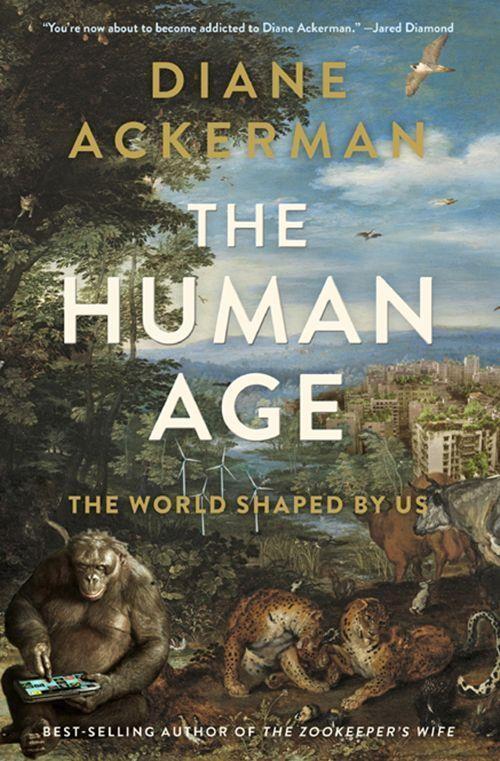
As Diane Ackerman writes in her brilliant new book, The Human Age, “our relationship with nature has changed… radically, irreversibly, but by no means all for the bad. Our new epoch is laced with invention. Our mistakes are legion, but our talent is immeasurable.”
Ackerman is justly celebrated for her unique insight into the natural world and our place in it. In this landmark book, she confronts the unprecedented reality that one prodigiously intelligent and meddlesome creature, Homo sapiens, is now the dominant force shaping the future of planet Earth.
Humans have “subdued 75 percent of the land surface, concocted a wizardry of industrial and medical marvels, strung lights all across the darkness.” We tinker with nature at every opportunity; we garden the planet with our preferred species of plants and animals, many of them invasive; and we have even altered the climate, threatening our own extinction. Yet we reckon with our own destructive capabilities in extraordinary acts of hope-filled creativity: we collect the DNA of vanishing species in a “frozen ark,” equip orangutans with iPads, and create wearable technologies and synthetic species that might one day outsmart us. With her distinctive gift for making scientific discovery intelligible to the layperson, Ackerman takes us on an exhilarating journey through our new reality, introducing us to many of the people and ideas now creating—perhaps saving—our future and that of our fellow creatures.
A beguiling, optimistic engagement with the changes affecting every part of our lives, The Human Age is a wise and beautiful book that will astound, delight, and inform intelligent life for a long time to come.
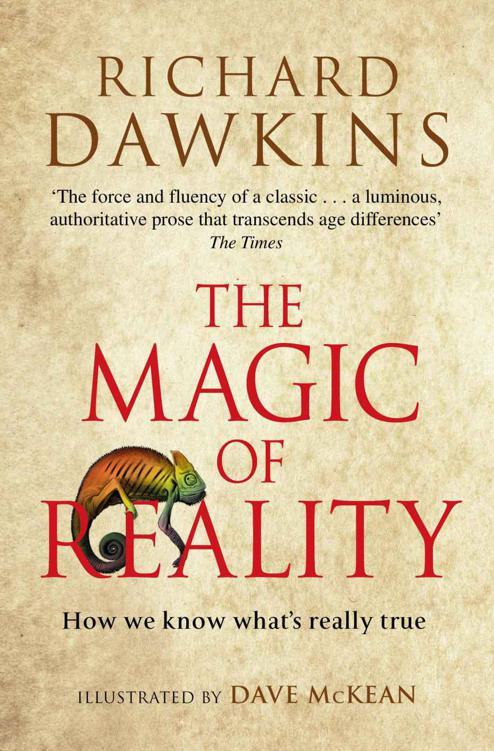
Magic takes many forms. The ancient Egyptians explained the night by suggesting that the goddess Nut swallowed the sun. The Vikings believed a rainbow was the gods’ bridge to earth. These are magical, extraordinary tales. But there is another kind of magic, and it lies in the exhilaration of discovering the real answers to these questions. It is the magic of reality – science.
Packed with inspiring explanations of space, time and evolution, laced with humour and clever thought experiments, The Magic of Reality explores a stunningly wide range of natural phenomena. What is stuff made of? How old is the universe? What causes tsunamis? Who was the first man, or woman? This is a page-turning, inspirational detective story that not only mines all the sciences for its clues but primes the reader to think like a scientist too.
Richard Dawkins elucidates the wonders of the natural world to all ages with his inimitable clarity and exuberance in a text that will enlighten and inform for generations to come.
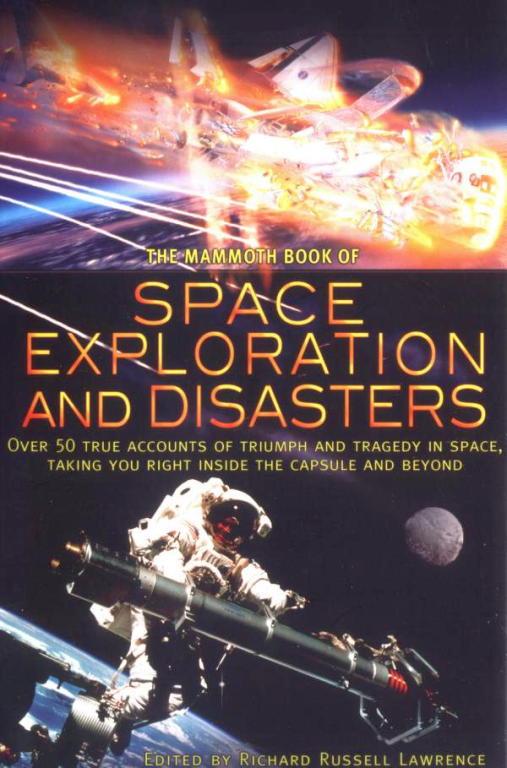
In the words of those who trod the void and those at mission control, here are over 50 of the greatest true stories of suborbital, orbital and deep-space exploration. From Apollo 8’s first view of a fractured, tortured landscape of craters on the ‘dark side’ of the Moon to the series of cliff-hanger crises aboard space station Mir, they include moments of extraordinary heroic achievement as well as episodes of terrible human cost. Among the astronauts and cosmonauts featured are John Glenn, Pavel Beyayev, Jim Lovell, Neil Armstrong, Buzz Aldrin, Valery Korzun, Vasily Tsibliyev and Michael Foale.
• First walk in space by Sergei Leonov and his traumatic return to Earth
• Apollo 13’s problem — the classic, nail-biting account of abandoning ship on the way to the Moon
• Docking with the frozen, empty Salyut 7 space station that had drifted without power for eight months
• Progress crashes into Mir — the astronauts survive death by a hair’s breadth
• Jerry Linenger’s panic attack during a space walk, ‘just out there dangling’.
In the words of those who trod the void and those at mission control, here are over 50 of the greatest true stories of suborbital, orbital and deep-space exploration. From Apollo 8’s first view of a fractured, tortured landscape of craters on the ‘dark side’ of the Moon to the series of cliff-hanger crises aboard space station Mir, they include moments of extraordinary heroic achievement as well as episodes of terrible human cost. Among the astronauts and cosmonauts featured are John Glenn, Pavel Beyayev, Jim Lovell, Neil Armstrong, Buzz Aldrin, Valery Korzun, Vasily Tsibliyev and Michael Foale.
• First walk in space by Sergei Leonov and his traumatic return to Earth
• Apollo 13’s problem — the classic, nail-biting account of abandoning ship on the way to the Moon
• Docking with the frozen, empty Salyut 7 space station that had drifted without power for eight months
• Progress crashes into Mir — the astronauts survive death by a hair’s breadth
• Jerry Linenger’s panic attack during a space walk, ‘just out there dangling’.
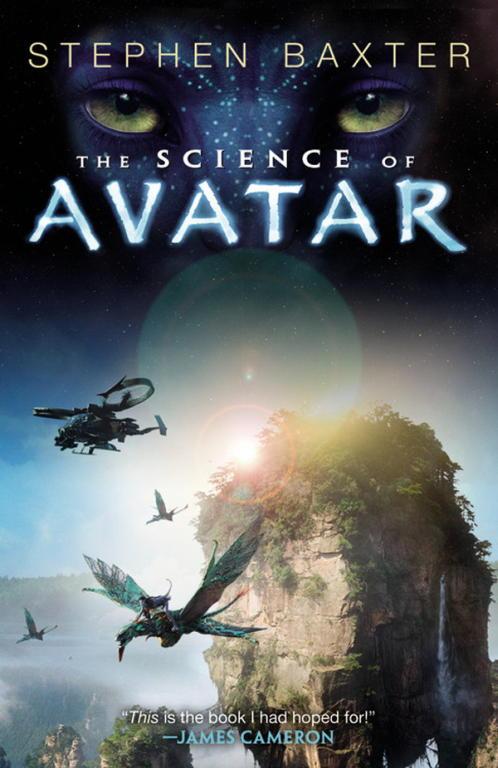
Audiences around the world have been enchanted by James Cameron’s visionary Avatar, with its glimpse of the Na’vi on the marvelous world of Pandora. But the movie is not entirely a fantasy; there is a scientific rationale for much of what we saw on the screen, from the possibility of travel to other worlds, to the life forms seen on screen and the ecological and cybernetic concepts that underpin the ‘neural networks’ in which the Na’vi and their sacred trees are joined, as well as to the mind-linking to the avatars themselves.
From popular science journalist and acclaimed science fiction author Stephen Baxter, THE SCIENCE OF AVATAR is a guide to the rigorous fact behind the fiction. It will enhance the readers’ enjoyment of the movie experience by drawing them further into its imagined world.
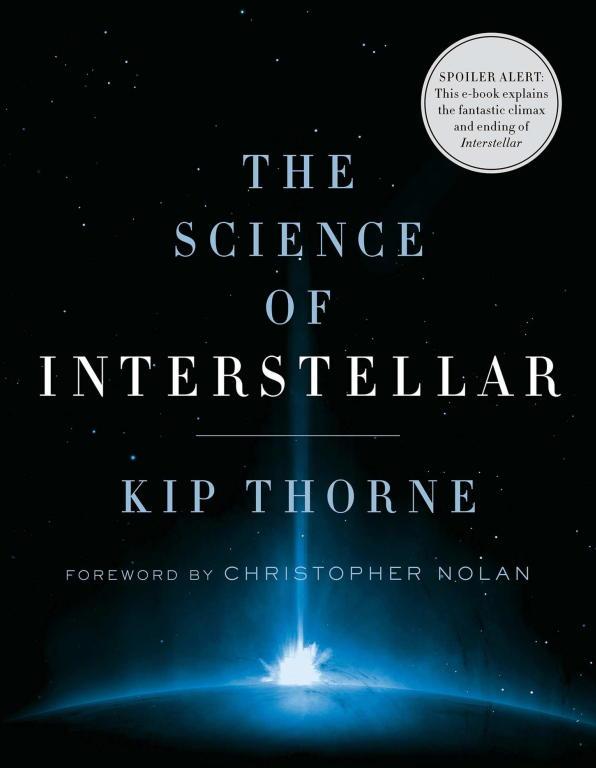
A journey through the otherworldly science behind Christopher Nolan’s highly anticipated film, Interstellar, from executive producer and theoretical physicist Kip Thorne.
Interstellar, from acclaimed filmmaker Christopher Nolan, takes us on a fantastic voyage far beyond our solar system. Yet in The Science of Interstellar, Kip Thorne, the physicist who assisted Nolan on the scientific aspects of Interstellar, shows us that the movie’s jaw-dropping events and stunning, never-before-attempted visuals are grounded in real science. Thorne shares his experiences working as the science adviser on the film and then moves on to the science itself. In chapters on wormholes, black holes, interstellar travel, and much more, Thorne’s scientific insights—many of them triggered during the actual scripting and shooting of Interstellar—describe the physical laws that govern our universe and the truly astounding phenomena that those laws make possible.
[200 color illustrations]
https://www.youtube.com/watch?v=jQye2XkvDpo
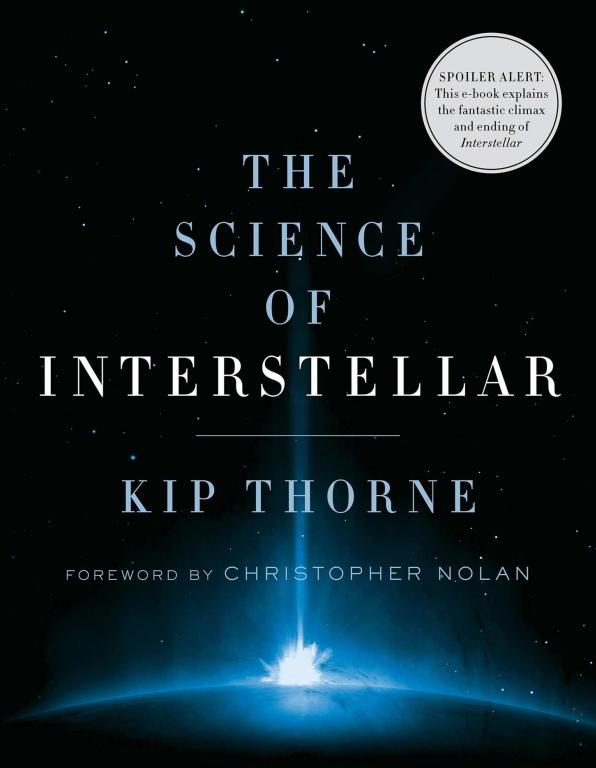
A journey through the otherworldly science behind Christopher Nolan’s highly anticipated film, Interstellar, from executive producer and theoretical physicist Kip Thorne.
Interstellar, from acclaimed filmmaker Christopher Nolan, takes us on a fantastic voyage far beyond our solar system. Yet in The Science of Interstellar, Kip Thorne, the physicist who assisted Nolan on the scientific aspects of Interstellar, shows us that the movie’s jaw-dropping events and stunning, never-before-attempted visuals are grounded in real science. Thorne shares his experiences working as the science adviser on the film and then moves on to the science itself. In chapters on wormholes, black holes, interstellar travel, and much more, Thorne’s scientific insights—many of them triggered during the actual scripting and shooting of Interstellar—describe the physical laws that govern our universe and the truly astounding phenomena that those laws make possible.
[200 color illustrations]
https://www.youtube.com/watch?v=jQye2XkvDpo