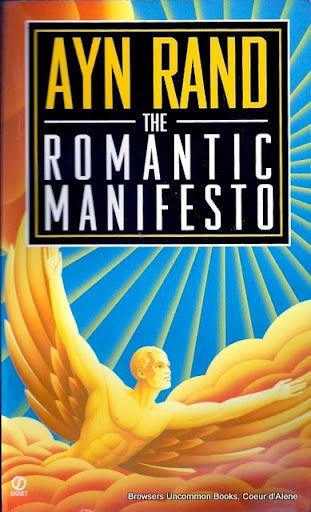
 fb2
fb2In this searching and courageous work, Ayn Rand cuts through the haze of sentimentality and vague thinking that surrounds the subject of art. For the first time a precise definition is given to art, and a careful analysis made of its nature. With the uncompromising honesty Ayn Rand’s millions of readers have come to expect, the author presents a devastating case against both naturalistic and abstract art—and explains the force that drives her to write, and the goals she strives to attain. The Romantic Manifesto takes its place as a keystone book in the towering intellectual edifice raised by one of the most remarkable writers and thinkers of our age.
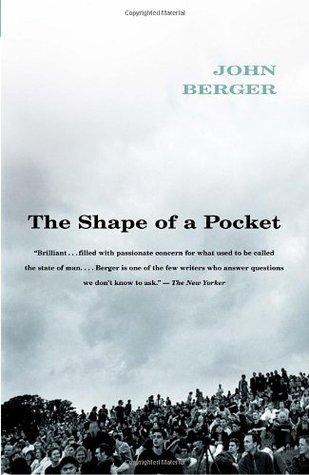
The pocket in question is a small pocket of resistance. A pocket is formed when two or more people come together in agreement. The resistance is against the inhumanity of the New World Economic Order. The people coming together are the reader, me, and those the essays are about — Rembrandt, Paleolithic cave painters, a Romanian peasant, ancient Egyptians, an expert in the loneliness of a certain hotel bedroom, dogs at dusk, a man in a radio station. And unexpectedly, our exchanges strengthen each of us in our conviction that what is happening in the world today is wrong, and that what is often said about it is a lie. I’ve never written a book with a greater sense of urgency.
— John Berger
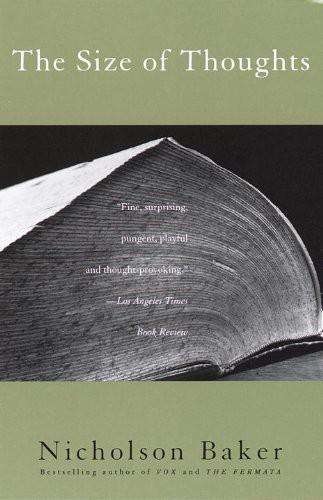
The bestselling author of Vox and The Fermata devotes his hyperdriven curiosity and magnificently baroque prose to the fossils of punctuation and the lexicography of smut, delivering to readers a provocative and often hilarious celebration of the neglected aspects of our experience.
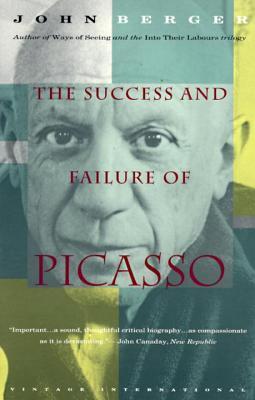
At the height of his powers, Pablo Picasso was the artist as revolutionary, breaking through the niceties of form in order to mount a direct challenge to the values of his time. At the height of his fame, he was the artist as royalty: incalculably wealthy, universally idolized−and wholly isolated.
In this stunning critical assessment, John Berger−one of this century's most insightful cultural historians−trains his penetrating gaze upon this most prodigious and enigmatic painter and on the Spanish landscape and very particular culture that shpaed his life and work. Writing with a novelist's sensuous evocation of character and detail, and drawing on an erudition that embraces history, politics, and art, Berger follows Picasso from his childhood in Malaga to the Blue Period and Cubism, from the creation of Guernica to the pained etchings of his final years. He gives us the full measure of Picasso's triumphs and an unsparing reckoning of their cost−in exile, in loneliness, and in a desolation that drove him, in his last works, into an old man's furious and desperate frenzy at the beauty of what he could no longer create.
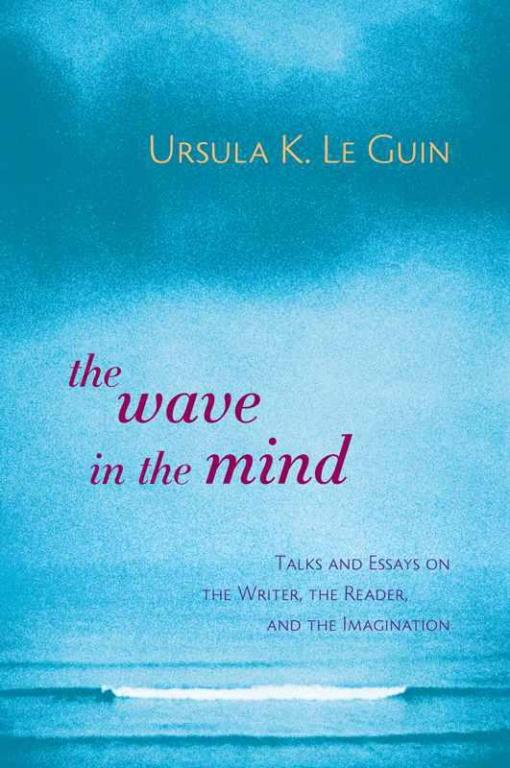
Join Ursula K. Le Guin as she explores a broad array of subjects, ranging from Tolstoy, Twain, and Tolkien to women’s shoes, beauty, and family life. With her customary wit, intelligence, and literary craftsmanship, she offers a diverse and highly engaging set of readings.
The Wave in the Mind includes some of Le Guin’s finest literary criticism, rare autobiographical writings, performance art pieces, and, most centrally, her reflections on the arts of writing and reading.
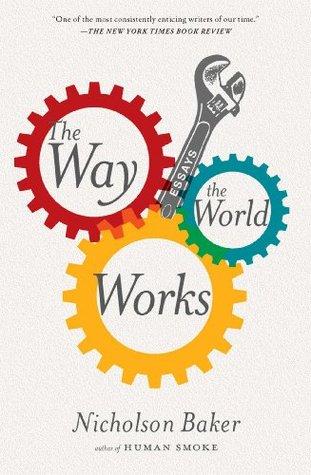
Nicholson Baker, who “writes like no one else in America” (Newsweek), here assembles his best short pieces from the last fifteen years.
The Way the World Works, Baker’s second nonfiction collection, ranges over the map of life to examine what troubles us, what eases our pain, and what brings us joy. Baker moves from political controversy to the intimacy of his own life, from forgotten heroes of pacifism to airplane wings, telephones, paper mills, David Remnick, Joseph Pulitzer, the OED, and the manufacture of the Venetian gondola. He writes about kite string and about the moment he met his wife, and he surveys our fascination with video games while attempting to beat his teenage son at Modern Warfare 2. In a celebrated essay on Wikipedia, Baker describes his efforts to stem the tide of encyclopedic deletionism; in another, he charts the rise of e-readers; in a third he chronicles his Freedom of Information lawsuit against the San Francisco Public Library.
Through all these pieces, many written for The New Yorker, Harper’s, and The American Scholar, Baker shines the light of an inexpugnable curiosity. The Way the World Works is a keen-minded, generous-spirited compendium by a modern American master.
Written during Olsen's five-month stay at the American Academy in Berlin, There. is part critifictional meditation and part trash diary exploring what happens at the confluence of curiosity, travel, and innovative writing practices. A collage of observations, facts, quotations, recollections, and theoretical reflections, it touches on a wide range of authors, genres, and places, from Beckett and Ben Marcus to David Bowie and Wayne Koestenbaum, film and architecture to avant-garde music and hypermedia, the Venezuelan jungle and Bhutanese mountains to New Jersey mall culture and the restlessness known as Berlin. There is an always-already bracketed performance about how, by inhabiting unstable spaces, we continually unlearn and therefore relearn what thought, experience, and imagination feel like.
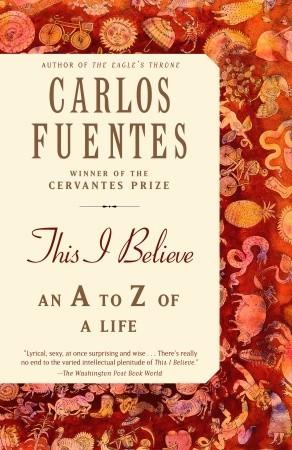
In this masterly, deeply personal, and provocative book, the internationally renowned Mexican writer Carlos Fuentes, whose work has been called “a combination of Poe, Baudelaire, and Isak Dinesen” (Newsweek), steps back to survey the wellsprings of art and ideology, the events that have shaped our time, and his extraordinary life and fiercest passions.
Arranged alphabetically from “Amore” to “Zurich,” This I Believe takes us on a marvelous inner journey with a great writer. Fuentes ranges wide, from contradictions inherent in Latin American culture and politics to his long friendship with director Luis Buñuel.
Along the way, we find reflection on the mixed curse and blessing of globalization; memories of a sexual initiation in Zurich; a fond tracing of a family tree heavy with poets, dreamers, and diplomats; evocations of the streets, cafés, and bedrooms of Washington, Paris, Santiago de Chile, Cambridge, Oaxaca, and New York; and a celebration of literary heroes including Balzac, Cervantes, Faulkner, Kafka, and Shakespeare. Throughout, Fuentes captivates with the power of his intellect and his prose.
Here, too, are vivid, often heartbreaking glimpses into his personal life. “Silvia” is a powerful love letter to his beloved wife. In “Children,” Fuentes recalls the births of his daughters and the tragic death of his son; in “Cinema” he relives the magic of films such as Citizen Kane and The Wizard of Oz. Further extending his reach, he examines the collision between history and contemporary life in “Civil Society,” “Left,” and “Revolution.”
And he poignantly addresses the experiences we all hold in common as he grapples with beauty, death, freedom, God, and sex. By turns provocative and intimate, partisan and universal, this book is a brilliant summation of an international literary career. Revisiting the influences, commitments, readings, and insights of a lifetime, Fuentes has fashioned a magnificently coherent statement of his view of the world, reminding us once again why reading Fuentes is “like standing beneath the dome of the Sistine Chapel. . The breadth and enormity of this accomplishment is breathtaking” (The Denver Post).
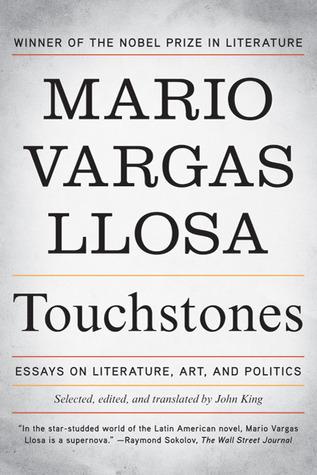
One of Latin America's greatest novelists, Mario Vargas Llosa is also a most acute and wide-ranging cultural critic and an acerbic political commentator. Touchstones includes his readings of major twentieth-century novels, from Heart of Darkness to The Tin Drum and Herzog and major works by Hemingway, Woolf, Orwell, Camus and Nabokov. There are long studies of George Grosz, vignettes on Botero and Picasso, and an appreciation of Cezanne and Van Gogh, including a visit to Cezanne's homes in the South Seas. Also included are essays on political and social thinkers, from the nineteenth-century feminist, Flora Tristan, to Isaiah Berlin, and contemporary pieces on 9/11, the aftermath of the war in Iraq, and the terrorist attacks on London and Madrid. Fantastically intelligent, inspired and surprising, Touchstones is a landmark collection from one of the world's leading intellectuals.
This book contains a selection of the too numerous addresses which Lewis gave during the late war and the years that immediately followed it. All were composed in response to personal requests and for particular audiences, without thought of subsequent publication. As a result, in one or two places they seem to repeat, though they really anticipated, sentences which had already appeared in print. The period from which these pieces date was an exceptional one; and though Lewis do not think to have altered any belief that they embody, he could not totally recapture the tone and temper in which they were written. Nor would those who wanted to have them in a permanent form be pleased with a patchwork. It has therefore seemed better to let them go with only a few verbal corrections.
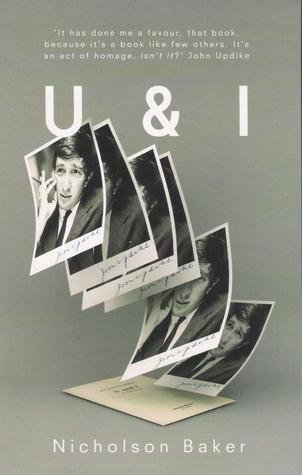
When Nicholson Baker, one of the most linguistically talented writers in America, set out to write a book about John Updike, the result was no ordinary biography. Instead Baker's account of his relationship with his hero is a hilarious story of ambition, obsession, talent and neurosis, alternately self-deprecating and self-aggrandizing. More memoir than literary criticism, Baker is excruciatingly honest, and U & I reveals at least as much about Baker himself as it does about his idol. Written twenty years before Updike's death in 2009, U & I is a very smart and extremely funny exploration of the debts we owe our heroes.
« C’est l’histoire d’une Emma Bovary des seventies, qui a reproduit lors de son divorce le silence de la génération précédente sur les malheurs des deux guerres.
C’est l’histoire d’un homme devenu un jouisseur pour se venger d’être quitté, d’un père cynique parce que son cœur était brisé.
C’est l’histoire d’un grand frère qui a tout fait pour ne pas ressembler à ses parents, et d’un cadet qui a tout fait pour ne pas ressembler à son grand frère.
C’est l’histoire d’un garçon mélancolique parce qu’il a grandi dans un pays suicidé, élevé par des parents déprimés par l’échec de leur mariage.
C’est l’histoire d’un pays qui a réussi à perdre deux guerres en faisant croire qu’il les avait gagnées, et ensuite à perdre son empire colonial en faisant comme si cela ne changeait rien à son importance.
C’est l’histoire d’une humanité nouvelle, ou comment des catholiques monarchistes sont devenus des capitalistes mondialisés.
Telle est la vie que j’ai vécue : un roman français. »
In a series of conversations with Between the Covers’s David Naimon, Ursula K. Le Guin discusses her fiction, nonfiction, and poetry—both her process and her philosophy—with all the wisdom, profundity, and rigour we expect from one of our great American writers.
When the New York Times called Ursula K. Le Guin, “America’s greatest living science fiction writer,” they just might have undersold her legacy. It’s hard to look at her vast body of work—novels and stories across multiple genres, poems, translations, essays, speeches, and criticism—and see anything but one of our greatest writers, period.
In a series of interviews with David Naimon (Between the Covers), Le Guin discusses craft, aesthetics, and philosophy in her fiction, poetry, and nonfiction respectively. The discussions provide ample advice and guidance for writers of every level, but also give Le Guin a chance to to sound off on some of her favorite subjects: the genre wars, the patriarchy, the natural world, and what, in her opinion, makes for great writing. With excerpts from her own books and those that she looked to for inspiration, this volume is a treat for Le Guin’s longtime readers, a perfect introduction for those first approaching her writing, and a tribute to her incredible life and work.
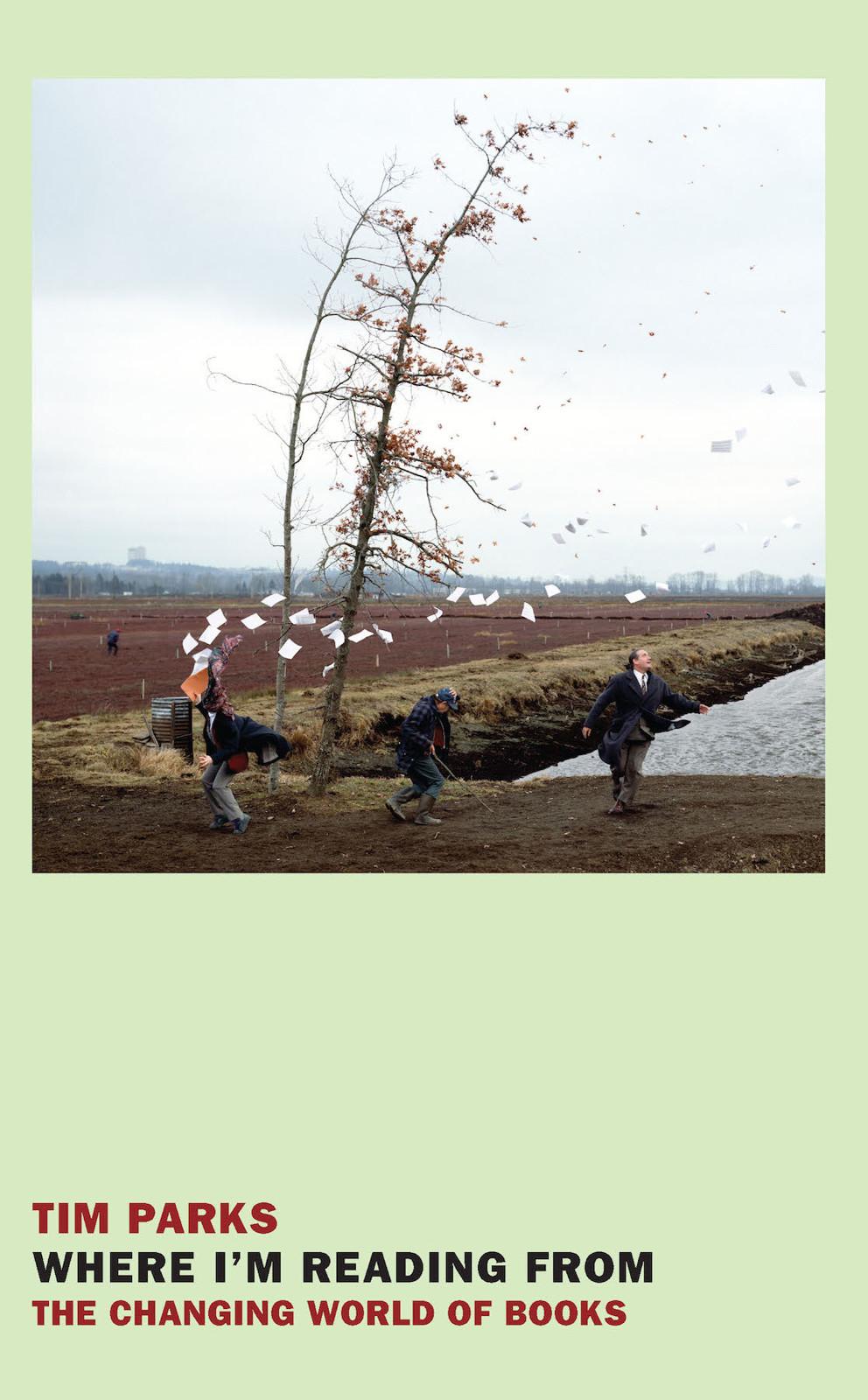
Why do we need fiction? Why do books need to be printed on paper, copyrighted, read to the finish? Why should a group of aging Swedish men determine what “world” literature is best? Do books change anything? Did they use to? Do we read to challenge our vision of the world or to confirm it? Has novel writing turned into a job like any other? In Where I’m Reading From, the internationally acclaimed novelist and critic Tim Parks ranges over a lifetime of critical reading--from Leopardi, Dickens and Chekhov, to Woolf, Lawrence and Bernhard, and on to contemporary work by Jonathan Franzen, Peter Stamm, and many others—to overturn many of our long-held assumptions about literature and its purpose.
Taking the form of thirty-eight interlocking essays, Where I’m Reading From examines the rise of the “global” novel and the disappearance of literary styles that do not travel; the changing vocation of the writer today; the increasingly paradoxical effects of translation; the shifting expectations we bring to fiction; the growing stasis of literary criticism; and the problematic relationship between writers’ lives and their work. In the end Parks wonders whether writers—and readers--can escape the twin pressures of the new global system and the novel that has become its emblematic genre.

Sarah Bakewells Buch ist ein Geniestreich: Auf höchst elegante und unterhaltsame Weise erzählt sie das Leben Montaignes und beantwortet zugleich unsere Fragen nach einem guten Leben. Authentischer und aktueller wurde noch nie über den großen Philosophen und Essayisten geschrieben. Das Buch wurde in den USA mit dem „National Book Critics Circle Award for Biography“ und in Großbritannien mit dem „Duff Cooper Prize for Non-Fiction“ ausgezeichnet und stand auf den Shortlists des „Costa Biographie Award“ und des „Marsh Biography Award“.
Lies viel, vergiss das meiste wieder, und sei schwer von Begriff! — Habe ein Hinterzimmer in deinem Geschäft! — Tu etwas, was noch nie zuvor jemand getan hat! — Mach deinen Job gut, aber nicht zu gut! — Philosophiere nur zufällig! — Bedenke alles, bereue nichts! — Mit diesen und anderen Antworten auf die eine Frage „Wie soll ich leben?“ führt Sarah Bakewell durch das ungewöhnliche Leben des Weingutbesitzers, Liebhabers, Essayisten, Bürgermeisters und Reisenden Michel de Montaigne. Dabei gelingt ihr das Kunststück, ihn ganz im 16. Jahrhundert, im Zeitalter der Religionskriege, zu verorten und gerade dadurch für unsere Zeit verständlich zu machen. Wie soll man Montaigne lesen? Nicht wie ein Kind, um sich zu amüsieren, und nicht wie die Ehrgeizigen, um sich zu belehren. „Nein. Lesen sie ihn, um zu leben!“, empfahl der große Flaubert.
„Eine bezaubernde Einführung in Leben und Denken Montaignes und ein großes Lesevergnügen. Hier ist eine Autorin, deren Liebe zu ihrem Gegenstand ansteckend ist.“ Mark Lilla, The New York Review of Books
„Eine Mischung aus Biographie und Alain-de-Bottonesker Lebensphilosophie, … die erfreulichste Einführung in Montaigne in englischer Sprache, … eine überzeugende Verbindung von Literatur und Leben.“ Timothy Chesters, The Times Literary Supplement
„Montaigne hat hier die Biographie, die er verdient, und hätte seine Freude an ihrem unkonventionellen Aufbau.“ Michael Bywater, The Independent
„Eine wunderbar souveräne und klare Einführung … Man kann Sarah Bakewell nur dazu gratulieren, dass sie den Lesern einen so reizvollen Zugang zu Montaigne eröffnet.“ David Sexton, Evening Standard
„Glänzend konzipiert und vorzüglich geschrieben. … Sarah Bakewell bringt eine neue Generation dazu, sich in Montaigne zu verlieben …, enorm fesselnd …, rühmenswert.“ James McConnachie, Sunday Times
„Das Buch schöpft gekonnt eine Lebenskunst aus dem breiten Strom der Montaigne'schen Prosa. … Eine überragende, begnadete Einführung in den Meister!“ Adam Thorpe, Guardian
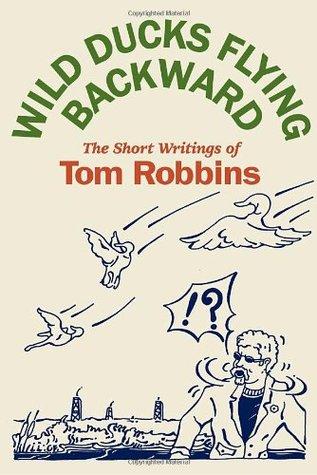
Known for his meaty seriocomic novels — expansive works that are simultaneously lowbrow and highbrow — Tom Robbins has also published over the years a number of short pieces, predominantly nonfiction. His travel articles, essays, and tributes to actors, musicians, sex kittens, and thinkers have appeared in publications ranging from Esquire to Harper’s, from Playboy to the New York Times, High Times, and Life. A generous sampling, collected here for the first time and including works as diverse as scholarly art criticism and some decidedly untypical country-music lyrics, Wild Ducks Flying Backward offers a rare sweeping overview of the eclectic sensibility of an American original.
Whether he is rocking with the Doors, depoliticizing Picasso’s Guernica, lamenting the angst-ridden state of contemporary literature, or drooling over tomato sandwiches and a species of womanhood he calls “the genius waitress,” Robbins’s briefer writings often exhibit the same five traits that perhaps best characterize his novels: an imaginative wit, a cheerfully brash disregard for convention, a sweetly nasty eroticism, a mystical but keenly observant eye, and an irrepressible love of language.
Embedded in this primarily journalistic compilation are a couple of short stories, a sheaf of largely unpublished poems, and an off-beat assessment of our divided nation. And wherever we open Wild Ducks Flying Backward, we’re apt to encounter examples of the intently serious playfulness that percolates from the mind of a self-described “romantic Zen hedonist” and “stray dog in the banquet halls of culture.”
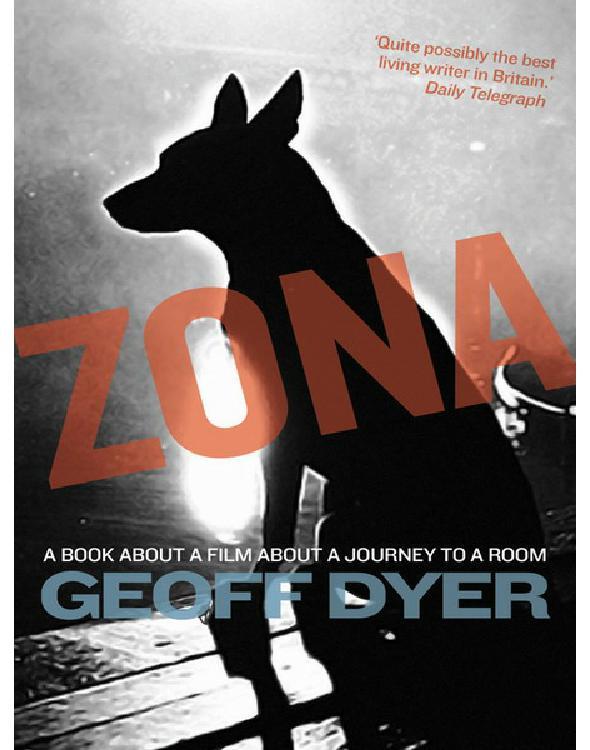
Geoff Dyer, described by the Daily Telegraph as 'possibly the best living writer in Britain', takes on his biggest challenge yet: unlocking the film that has obsessed him all his adult life. Magnificently unpredictable and hilarious (and surely one of the most unusual books ever written about cinema), Zona takes the reader on an enthralling, thought-provoking journey.
The ostensible subject of Zona is the film Stalker, by the great Russian director Andrei Tarkovsky. As Dyer immerses us in the movie, it becomes apparent that Stalker is only the point of departure for a wonderfully digressive exploration of cinema, of how we understand our obsessions and of how we try to realise — and, discover — our deepest wishes.
'An impassioned, yet acerbic and witty appraisal of a screen classic is a work of art in its own rights.' Scotland on Sunday
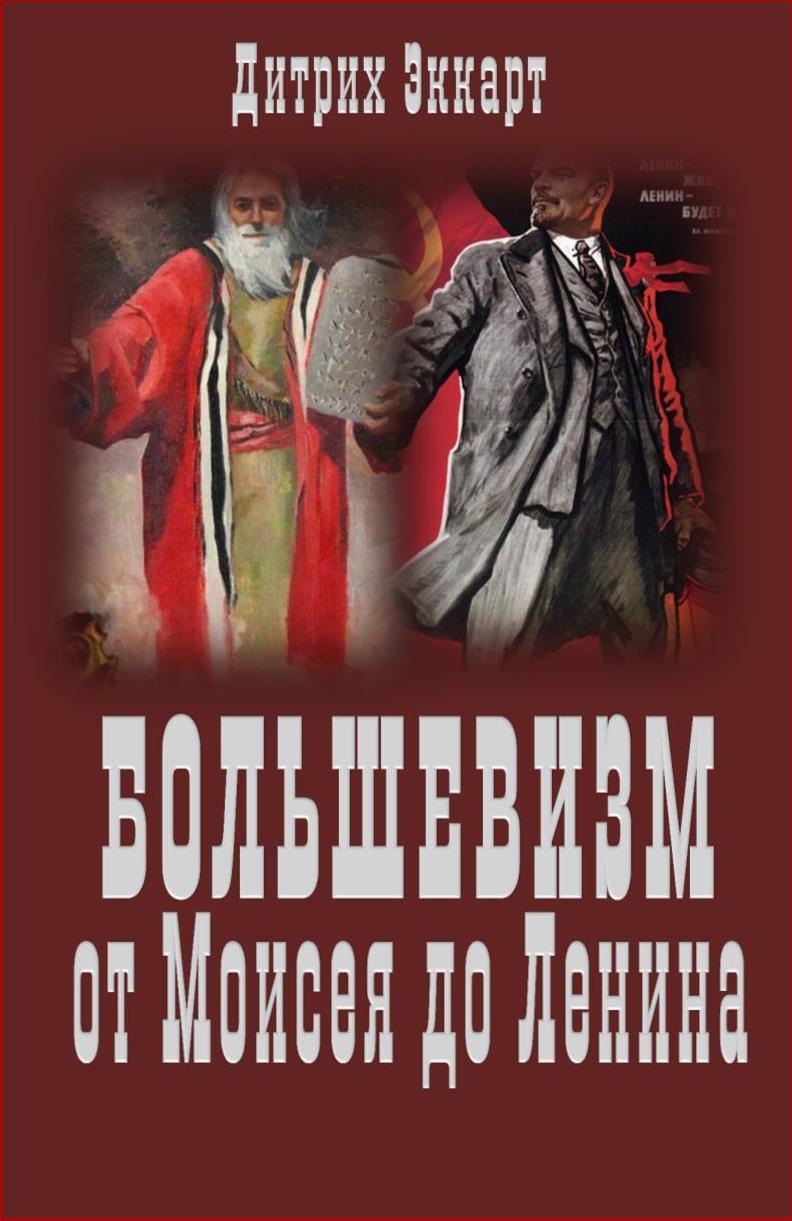
Данное произведение появилось в 1923 году. В тот момент Адольф Гитлер был руководителем маленькой партии и практически неизвестен за пределами Баварии. Тогда едва ли кто-то мог бы даже во сне представить, что за десять лет этот человек превратится в абсолютного правителя Германии.
По этой причине можно с уверенностью исходить из того, что друг и наставник Гитлера, писатель Дитрих Эккарт, правильно передал высказывания будущего фюрера. Для сознательной фальсификации слов Гитлера в то время просто не было никакой причины. Ввиду этого факта данный текст представляет собой весьма важный источник информации об образе мышления Гитлера. Особенно недвусмысленно проясняет он вопрос об отношении Гитлера к христианству вообще, и к Католической церкви в частности: Гитлер рассматривал себя как католик и ни в коем случае не стремился к разрушению христианства, а только к очищению его от еврейского мышления. Это, само собой разумеется, означает, что он рассматривал иудейский Ветхий Завет не как составную часть христианского вероучения, а как его полную противоположность.