 fb2
fb2
«Во Франции явилась книга, на которой встречаем мы русское имя, и хотя язык, каким она написана, не наш, но все-таки это произведение русского таланта, и мы с радостью причисляем ее к явлениям нашей литературы. Мы говорим про книгу, заглавие которой выписано выше…»
Brilliant, inspired, and gloriously erudite, Literature and the Gods is the culmination of Roberto Calasso’s lifelong study of the gods in the human imagination. By uncovering the divine whisper that lies behind the best poetry and prose from across the centuries, Calasso gives us a renewed sense of the mystery and enchantment of great literature.
From the banishment of the classical divinities during the Age of Reason to their emancipation by the Romantics and their place in the literature of our own time, the history of the gods can also be read as a ciphered and splendid history of literary inspiration. Rewriting that story, Calasso carves out a sacred space for literature where the presence of the gods is discernible. His inquiry into the nature of “absolute literature” transports us to the realms of Dionysus and Orpheus, Baudelaire and Mallarmé, and prompts a lucid and impassioned defense of poetic form, even when apparently severed from any social function. Lyrical and assured, Literature and the Gods is an intensely engaging work of literary affirmation that deserves to be read alongside the masterpieces it celebrates.
Sei Shonagon’s Pillow Book—a key inspiration for Rivka Galchen’s new book — contains a list of “Things That Make One Nervous.” And wouldn’t the blessed event top almost anyone’s list?
Little Labors is a slanted, enchanted literary miscellany. Varying in length from just a sentence or paragraph to a several-page story or essay, Galchen’s puzzle pieces assemble into a shining, unpredictable, mordant picture of the ordinary-extraordinary nature of babies and literature. Anecdotal or analytic, each part opens up an odd and tender world of wonder. The 47 Ronin; the black magic of maternal love; babies morphing from pumas to chickens; the quasi-repellent concept of “women writers”; origami-ophilia in Oklahoma as a gateway drug to a lifelong obsession with Japan; discussions of favorite passages from the Heian masterpieces Genji and The Pillow Book; the frightening prevalence of orange as today’s new chic color for baby gifts; Frankenstein as a sort of baby; babies gold mines; babies as tiny Godzillas …
Little Labors — atomized and exploratory, conceptually byzantine and freshly forthright — delights.
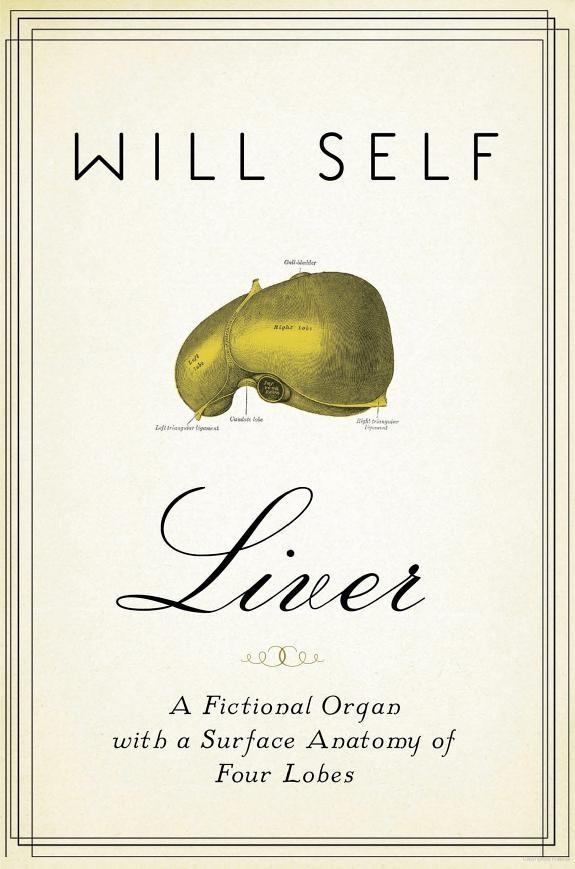
British satirist Will Self spins four interconnected stories into a brilliantly insightful commentary on human foibles and resilience.
Will Self’s remarkable new stories center on the disease and decay that target the largest of human organs: the liver. Set in locales as toxic as a London drinking club and mundane as a clinic in an ultraorderly Swiss city, the stories distill the hard lives of their subjects whether alcoholic, drug addict, or cancer patient. I n “Fois Humane,” set at the Plantation Club, it’s always a Tuesday afternoon in midwinter, and the shivering denizens of this dusty realm spend their days observing its proprietor as he force-feeds the barman vodkaspiked beer. Joyce Beddoes, protagonist of “Leberknödel,” has terminal liver cancer and is on her way to be euthanized in Zurich when, miraculously, her disease goes into remission. In “Prometheus” a young copywriter at London’s most cutting edge ad agency has his liver nibbled by a griffon thrice daily, but he’s always in the pink the following morning and ready to make that killer pitch. If blood and bile flow through liverish London, the two arteries meet in “Birdy Num Num,” where “career junky” Billy Chobham performs little services for the customers who gather to wait for the Man, while in his blood a virus pullulates. A moving portrayal of egos, appetites and addictions, Liver is an extraordinary achievement.
British satirist Will Self spins four interconnected stories into a brilliantly insightful commentary on human foibles and resilience.
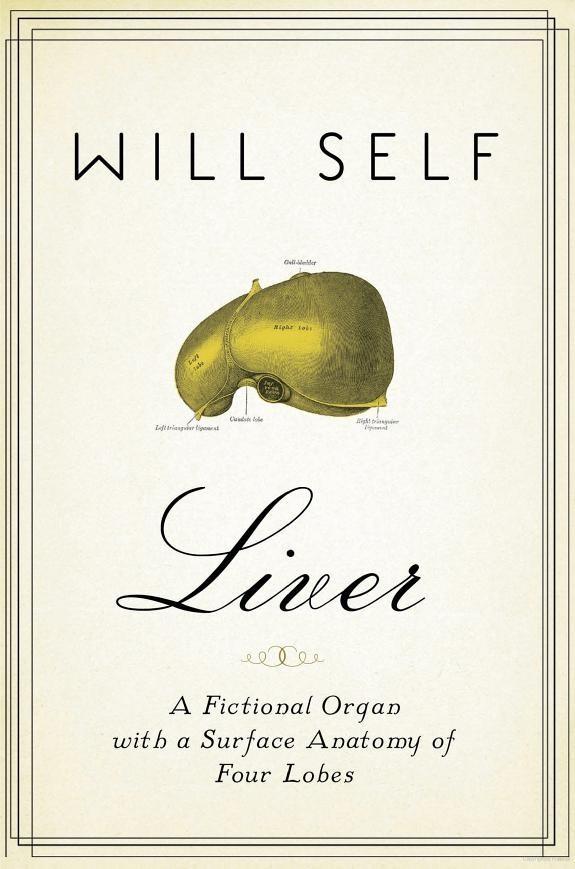
Will Self’s remarkable new stories center on the disease and decay that target the largest of human organs: the liver. Set in locales as toxic as a London drinking club and mundane as a clinic in an ultraorderly Swiss city, the stories distill the hard lives of their subjects whether alcoholic, drug addict, or cancer patient. I n “Fois Humane,” set at the Plantation Club, it’s always a Tuesday afternoon in midwinter, and the shivering denizens of this dusty realm spend their days observing its proprietor as he force-feeds the barman vodkaspiked beer. Joyce Beddoes, protagonist of “Leberknödel,” has terminal liver cancer and is on her way to be euthanized in Zurich when, miraculously, her disease goes into remission. In “Prometheus” a young copywriter at London’s most cutting edge ad agency has his liver nibbled by a griffon thrice daily, but he’s always in the pink the following morning and ready to make that killer pitch. If blood and bile flow through liverish London, the two arteries meet in “Birdy Num Num,” where “career junky” Billy Chobham performs little services for the customers who gather to wait for the Man, while in his blood a virus pullulates. A moving portrayal of egos, appetites and addictions, Liver is an extraordinary achievement.
A collection of essays on writers and writing by the Booker-shortlisted novelist and critic.
Writing about real lives takes various forms, which overlap and may be combined with each other: biography, autobiography, biographical criticism, biographical fiction, memoir, confession, diary.
In these thoughtful and enlightening essays David Lodge considers some particularly interesting examples of life-writing, and contributes several of his own. The subjects include celebrated modern British writers such as Graham Greene, Kingsley Amis, Muriel Spark and Alan Bennett, and two major figures from the past, Anthony Trollope and H.G.Wells. Lodge examines connections between the style and the man in the diaries of the playwright Simon Gray and the cultural criticism of Terry Eagleton, and recalls how his own literary career was entwined with that of his friend Malcolm Bradbury.
All except one of the subjects (Princess Diana) are or were themselves professionally "in writing", making this collection a kind of casebook of the splendours and miseries of authorship. In a final essay Lodge describes the genesis and compositional method of his recent novel about H.G.Wells, A Man of Parts, and engages with the critical controversies that have been provoked by the increasing popularity of narrative and dramatic writing that combines fact and fiction.
Drawing on David Lodge's long experience as a novelist and critic, Lives in Writing is a fascinating study of the interface between life and literature.
The internationally acclaimed novelist Siri Hustvedt has also produced a growing body of nonfiction. She has published a book of essays on painting (Mysteries of the Rectangle) as well as an interdisciplinary investigation of a neurological disorder (The Shaking Woman or A History of My Nerves). She has given lectures on artists and theories of art at the Prado, the Metropolitan Museum of Art in New York, and the Academy of Fine Arts in Munich. In 2011, she delivered the thirty-ninth annual Freud Lecture in Vienna. Living, Thinking, Looking brings together thirty-two essays written between 2006 and 2011, in which the author culls insights from philosophy, neuroscience, psychology, psychoanalysis, and literature.The book is divided into three sections: the essays in Living draw directly from Hustvedt’s life; those in Thinking explore memory, emotion, and the imagination; and the pieces in Looking are about visual art. And yet, the same questions recur throughout the collection. How do we see, remember, and feel? How do we interact with other people? What does it mean to sleep, dream, and speak? What is "the self"? Hustvedt’s unique synthesis of knowledge from many fields reinvigorates the much-needed dialogue between the humanities and the sciences as it deepens our understanding of an age-old riddle: What does it mean to be human?
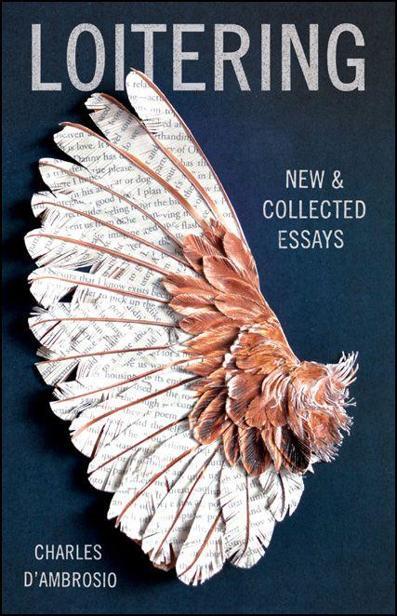
Charles D’Ambrosio’s essay collection Orphans spawned something of a cult following. In the decade since the tiny limited-edition volume sold out its print run, its devotees have pressed it upon their friends, students, and colleagues, only to find themselves begging for their copy’s safe return. For anyone familiar with D’Ambrosio’s writing, this enthusiasm should come as no surprise. His work is exacting and emotionally generous, often as funny as it is devastating. Loitering gathers those eleven original essays with new and previously uncollected work so that a broader audience might discover one of our great living essayists. No matter his subject — Native American whaling, a Pentecostal “hell house,” Mary Kay Letourneau, the work of J. D. Salinger, or, most often, his own family — D’Ambrosio approaches each piece with a singular voice and point of view; each essay, while unique and surprising, is unmistakably his own.
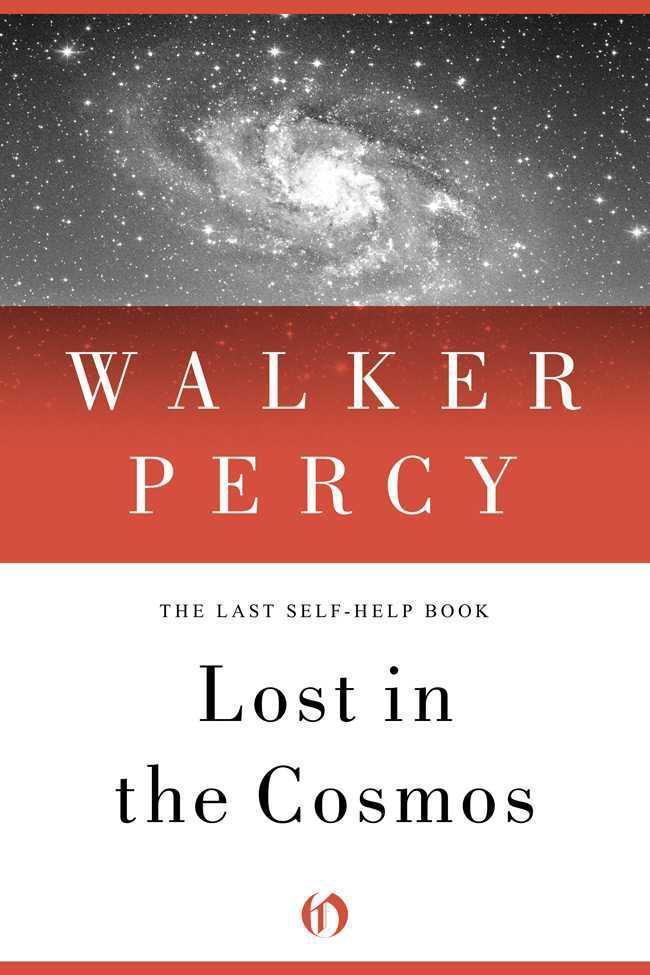
“A mock self-help book designed not to help but to provoke; a chapbook to inveigle us into thinking about who we are and how we got into this mess.” —Los Angeles Times Book Review
Published at the height of the 1980s self-help boom, Lost in the Cosmos is Percy’s unforgettable riff on the trend that swept the nation. Filled with quizzes, essays, short stories, and diagrams, Lost in the Cosmos is a laugh-out-loud spin on a familiar genre that also pushes readers to serious contemplation of life’s biggest questions. One part parody and two parts philosophy, Lost in the Cosmos is an enlightening guide to the dilemmas of human existence, and an unrivaled spin on self-help manuals by one of modern America’s greatest literary masters.
«На нынешней неделе праздновалась столетняя годовщина первого представления первой русской комедии, положившей такое достославное основание драматической сатире в России. Можно даже сказать, не отрицая заслуг «Ябеды», что от «Недоросля» до «Горя от ума» («Ревизор» явился позднее) не было сатирического произведения, которое бы по таланту, по критической меткости, а главное – по своему воздействию на общество равнялось с знаменитым произведением Фонвизина…»
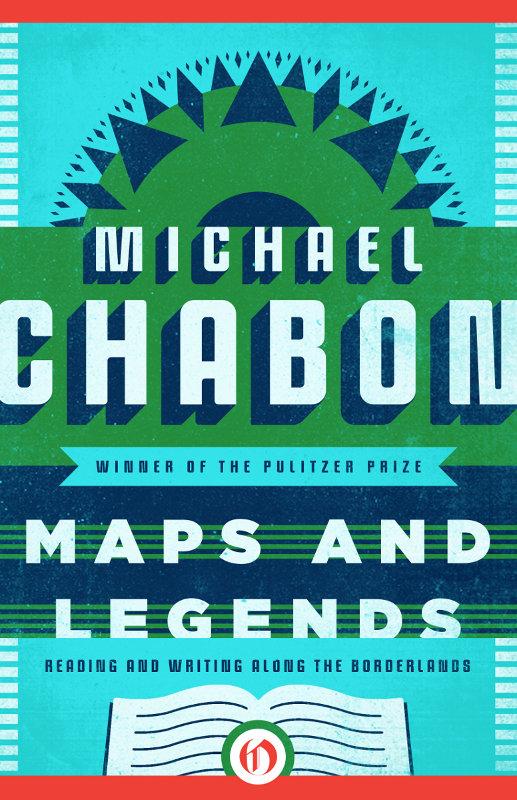
Michael Chabon's sparkling first book of nonfiction is a love song in sixteen parts — a series of linked essays in praise of reading and writing, with subjects running from ghost stories to comic books, Sherlock Holmes to Cormac McCarthy. Throughout, Chabon energetically argues for a return to the thrilling, chilling origins of storytelling, rejecting the false walls around "serious" literature in favor of a wide-ranging affection.
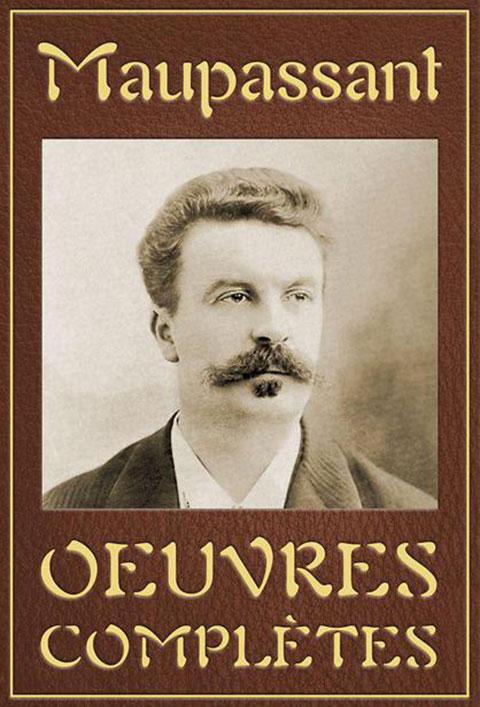
Ce livre des œuvres complètes de Guy de Maupassant est exhaustif. Il réunit ses huit romans (dont deux inachevés), ses quelques 350 nouvelles réunies en 24 recueils, ses sept pièces de théâtre (dont deux inachevées), toutes ses poésies (réunies en deux volumes), ses carnets de voyages ainsi que les centaines d’articles qu’il écrivit pour la presse entre 1876 et 1891 (classées par dates de publication et par recueils annuels). Une introduction de l’éditeur explique le parcours et l’œuvre de Guy de Maupassant. Ce livre est le fruit d'une somme de travail considérable. Les quelques milliers de pages de « Maupassant : Œuvres complètes » sont réparties en 57 volumes, ayant chacun un sommaire interactif propre. Aussi, un sommaire général permet d’accéder instantanément à n'importe lequel de ses volumes, ou, au choix, à un de ses chapitres, nouvelles, contes fantastiques, poésies, articles de presse, etc. Toutes ces œuvres ont été relues, corrigées lorsque cela était nécessaire, et mises en page avec soin pour en rendre leur lecture aussi agréable que possible.
Au-delà d’une simple compilation, « Maupassant : Œuvres complètes » constitue également un formidable outil de recherche, facile et agréable à utiliser pour quiconque s’intéresse à l’œuvre de Guy de Maupassant. Pour le simple lecteur, il est une source de plaisir et de curiosité quasiment inépuisable.
• Edition complétée d’une étude de l’éditeur.
• Edition enrichie de notes explicatives interactives.
In this bold and controversial examination of the past, present, and future of science fiction, internationally acclaimed grand master Stanislaw Lem informs the raging debate over the literary merit of the genre with ten arch, incisive, provocative essays. Lem believes that science fiction should attempt to discover what hasn’t been thought or done before. Too often, says Lem, science fiction resorts to well-worn patterns of primitive adventure literature, plays empty games with the tired devices of time travel and robots, and is oblivious to cultural and intellectual values. An expert examination of the scientific and literary premises of his own and other writers’ work, this collection is quintessential Lem.
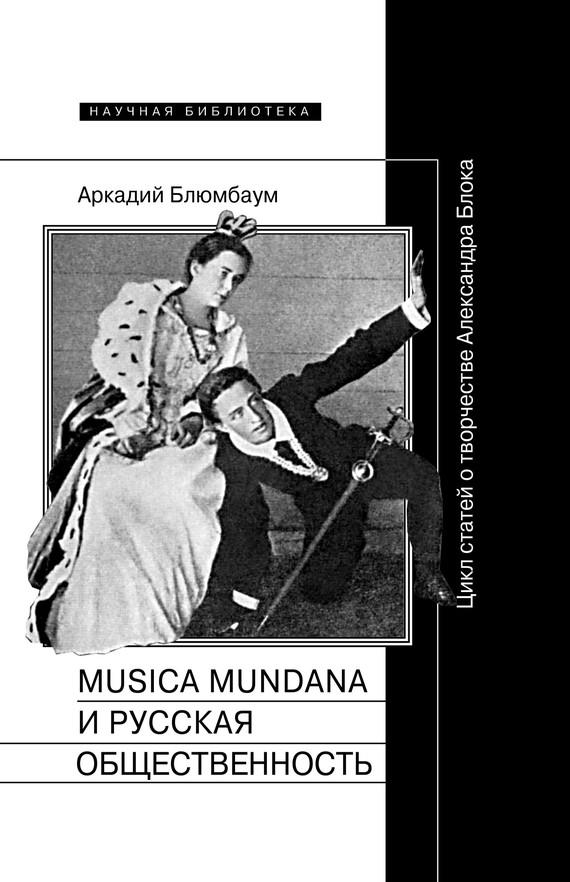
В центре внимания книги – идеологические контексты, актуальные для русского символизма в целом и для творчества Александра Блока в частности. Каким образом замкнутый в начале своего литературного пути на мистических переживаниях соловьевец Блок обращается к сфере «общественности», какие интеллектуальные ресурсы он для этого использует, как то, что начиналось в сфере мистики, закончилось политикой? Анализ нескольких конкретных текстов (пьеса «Незнакомка», поэма «Возмездие», речь «О романтизме» и т. д.), потребовавший от исследователя обращения к интеллектуальной истории, истории понятий и т. д., позволил автору книги реконструировать общий горизонт идеологических предпочтений Александра Блока, основания его полемической позиции по отношению к позитивистскому, либеральному, секулярному, «немузыкальному» «девятнадцатому веку», некрологом которому стало знаменитое блоковское эссе «Крушение гуманизма».
In Myself with Others, Fuentes has assembled essays reflecting three of the great elements of his work: autobiography, love of literature, and politics. They include his reflections on his beginning as a writer, his celebrated Harvard University commencement address, and his trenchant examinations of Cervantes, Gabriel Garcia Marquez, and Borges.
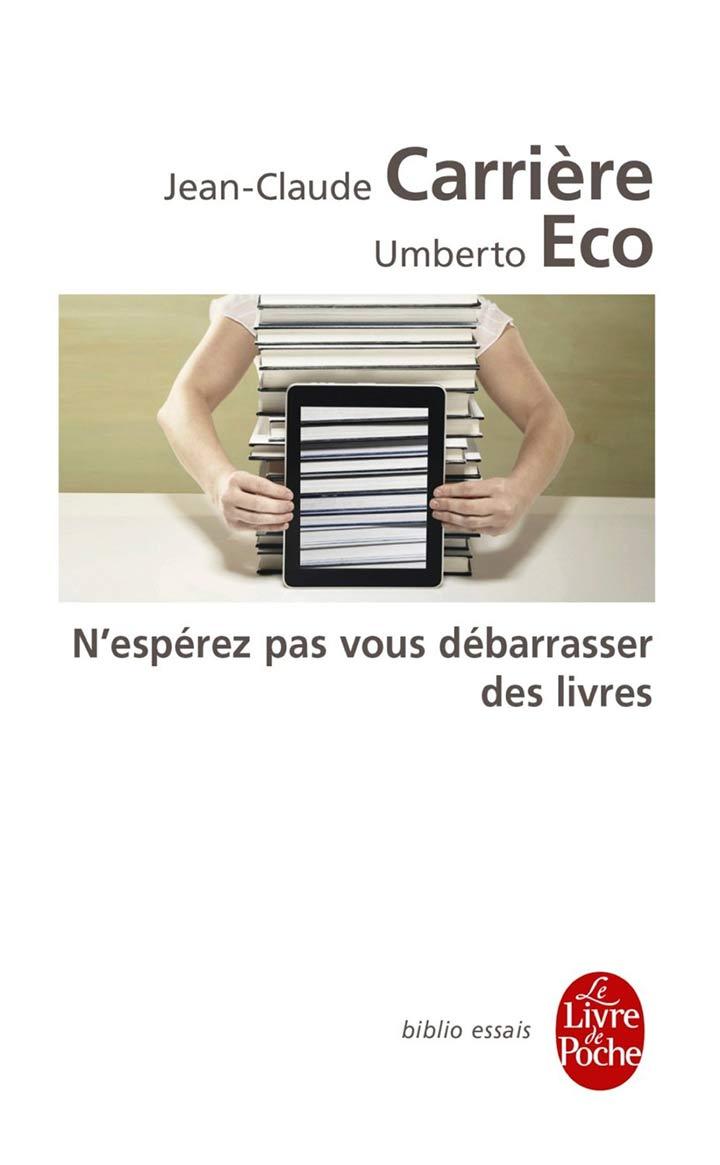
Du papyrus au fichier électronique, nous traversons deux mille ans d’histoire du livre à travers une discussion à la fois érudite et humoristique, savante et subjective, dialectique et anecdotique, curieuse et goûteuse. On y parcourt les temps et les lieux, les personnes réelles s’y mêlent aux personnages de fiction, on y fait l’éloge de la bêtise, on y analyse la passion du collectionneur, les raisons pour lesquelles telle époque engendre des chefs-d’œuvre, la manière dont fonctionnent la mémoire et le classement d’une bibliothèque. En ces temps d’obscurantisme galopant, c’est peut-être le plus bel hommage qui se puisse imaginer à la culture de l’esprit, et l’antidote le plus efficace au désenchantement.
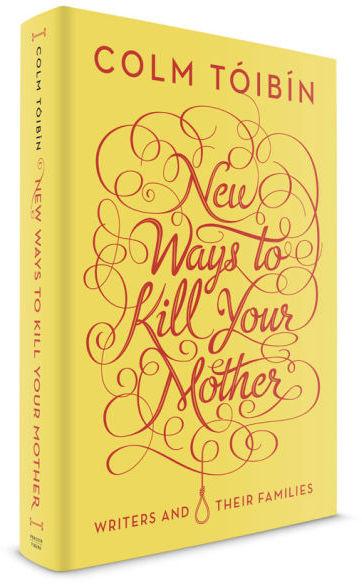
In a brilliant, nuanced and wholly original collection of essays, the novelist and critic Colm Tóibín explores the relationships of writers to their families and their work.
From Jane Austen’s aunts to Tennessee Williams’s mentally ill sister, the impact of intimate family dynamics can be seen in many of literature’s greatest works. Tóibín, celebrated both for his award-winning fiction and his provocative book reviews and essays, and currently the Mellon Professor in the Humanities at Columbia, traces and interprets those intriguing, eccentric, often twisted family ties in New Ways to Kill Your Mother. Through the relationship between W. B. Yeats and his father, Thomas Mann and his children, and J. M. Synge and his mother, Tóibín examines a world of relations, richly comic or savage in its implications. In Roddy Doyle’s writing on his parents, Tóibín perceives an Ireland reinvented. From the dreams and nightmares of John Cheever’s journals, Tóibín illuminates this darkly comic misanthrope and his relationship to his wife and his children. “Educating an intellectual woman,” Cheever remarked, “is like letting a rattlesnake into the house.” Acutely perceptive and imbued with rare tenderness and wit, New Ways to Kill Your Mother is a fascinating look at writers’ most influential bonds and a secret key to understanding and enjoying their work.
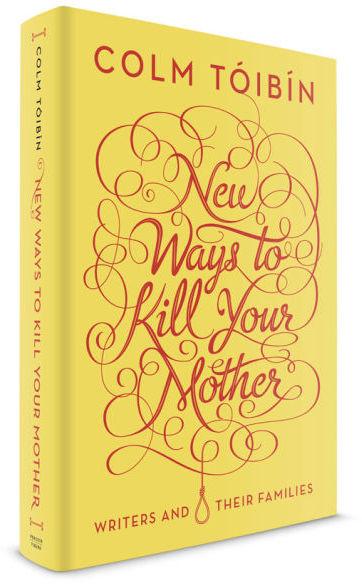
In a brilliant, nuanced and wholly original collection of essays, the novelist and critic Colm Tóibín explores the relationships of writers to their families and their work.
From Jane Austen’s aunts to Tennessee Williams’s mentally ill sister, the impact of intimate family dynamics can be seen in many of literature’s greatest works. Tóibín, celebrated both for his award-winning fiction and his provocative book reviews and essays, and currently the Mellon Professor in the Humanities at Columbia, traces and interprets those intriguing, eccentric, often twisted family ties in New Ways to Kill Your Mother. Through the relationship between W. B. Yeats and his father, Thomas Mann and his children, and J. M. Synge and his mother, Tóibín examines a world of relations, richly comic or savage in its implications. In Roddy Doyle’s writing on his parents, Tóibín perceives an Ireland reinvented. From the dreams and nightmares of John Cheever’s journals, Tóibín illuminates this darkly comic misanthrope and his relationship to his wife and his children. “Educating an intellectual woman,” Cheever remarked, “is like letting a rattlesnake into the house.” Acutely perceptive and imbued with rare tenderness and wit, New Ways to Kill Your Mother is a fascinating look at writers’ most influential bonds and a secret key to understanding and enjoying their work.
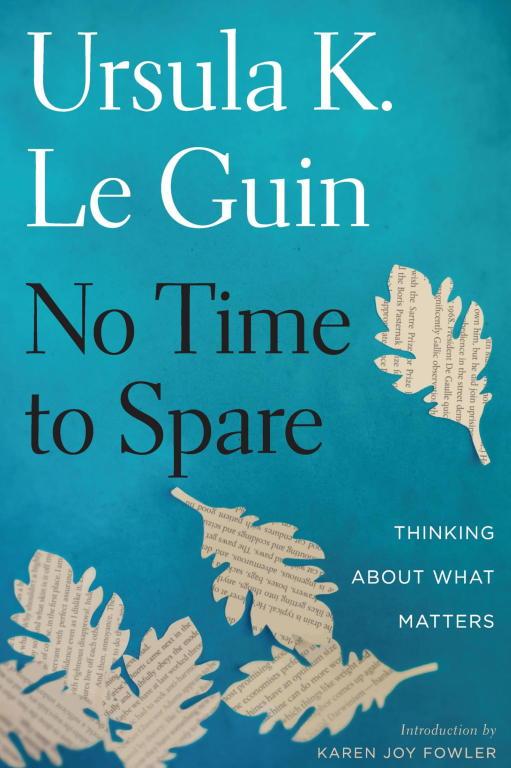
From acclaimed author Ursula K. Le Guin, and with an introduction by Karen Joy Fowler, a collection of thoughts—always adroit, often acerbic—on aging, belief, the state of literature, and the state of the nation.
Ursula K. Le Guin has taken readers to imaginary worlds for decades. Now she’s in the last great frontier of life, old age, and exploring new literary territory: the blog, a forum where her voice—sharp, witty, as compassionate as it is critical—shines. No Time to Spare collects the best of Ursula’s blog, presenting perfectly crystallized dispatches on what matters to her now, her concerns with this world, and her wonder at it.
On the absurdity of denying your age, she says, If I’m ninety and believe I’m forty-five, I’m headed for a very bad time trying to get out of the bathtub. On cultural perceptions of fantasy: The direction of escape is toward freedom. So what is ‘escapism’ an accusation of? On her new cat: He still won’t sit on a lap… I don’t know if he ever will. He just doesn’t accept the lap hypothesis. On breakfast: Eating an egg from the shell takes not only practice, but resolution, even courage, possibly willingness to commit crime. And on all that is unknown, all that we discover as we muddle through life: How rich we are in knowledge, and in all that lies around us yet to learn. Billionaires, all of us.