 fb2
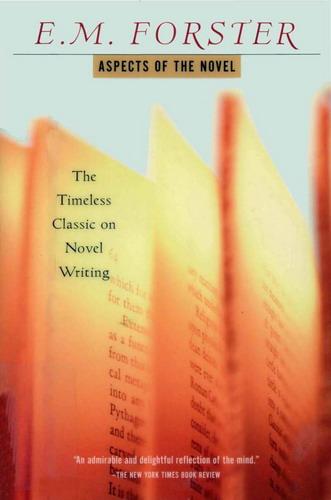
fb2Forster's renowned guide to writing sparkles with wit and insight for contemporary writers and readers. With lively language and excerpts from well-known classics, Forster takes on the seven elements vital to a novel: story, people, plot, fantasy, prophecy, pattern, and rhythm. He not only defines and explains such terms as "round" characters versus "flat" characters (and why both are needed for an effective novel), but also provides examples of writing from such literary greats as Dickens and Austen. Forster's original commentary illuminates and entertains without lapsing into complicated, scholarly rhetoric, coming together in a key volume on writing by a novelist Graham Greene called a "gentle genius".
EDWARD MORGAN FORSTER was born in 1879 in London and attended King's College, Cambridge, where he later became an honorary Fellow. After leaving Cambridge, Forster lived in Greece and Italy as well as Egypt and India. He is the author of six novels, Where Angels Fear to Tread, A Room with a View, Howards End, Maurice, A Passage to India, and The Longest Journey, as well as numerous essays and short-story collections. He died in 1970 in Coventry, England.
E. M. Forster, one of England's most distinguished writers, was born in 1879 and attended King's College, Cambridge, of which he was an honorary Fellow. He was named to membership in the Order of Companions of Honor by the Queen in 1953. He wrote his first novel, Where Angels Fear to Tread, at twenty-six, followed by A Room with a View in 1908, Howards End in 191 0, and other novels and critical essays. These in-elude A Passage to India (1924), Aspects of the Novel (1927), Abinger Harvest (1936), Two Cheers for Democracy (1951), The Hill of Devi (1953), and Marianne Thornton, the biography of his great-aunt (1956). Two books have been published since his death in 1970: Maurice (1972) and The Life to Come and Other Stories (1973)
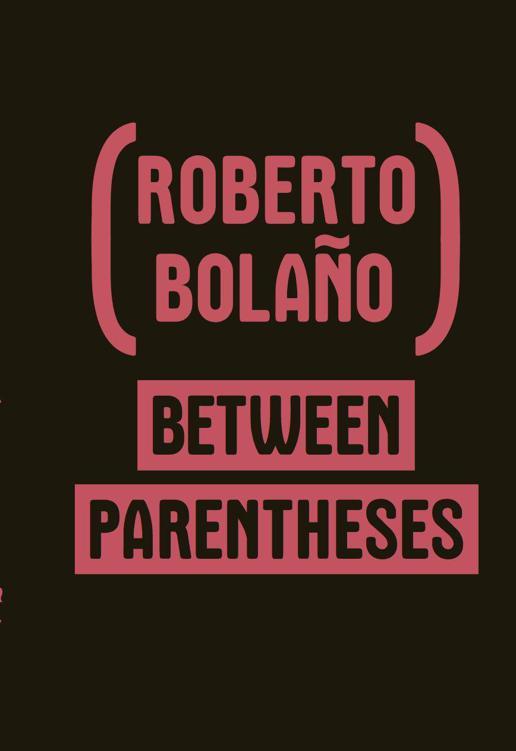
Between Parentheses collects most of the newspaper columns and articles Bolaño wrote during the last five years of his life, as well as the texts of some of his speeches and talks and a few scattered prologues. “Taken together,” as the editor Ignacio Echevarría remarks in his introduction, they provide “a personal cartography of the writer: the closest thing, among all his writings, to a kind of fragmented ‘autobiography.’” Bolaño’s career as a nonfiction writer began in 1998, the year he became famous overnight for The Savage Detectives; he was suddenly in demand for articles and speeches, and he took to this new vocation like a duck to water. Cantankerous, irreverent, and insufferably opinionated, Bolaño also could be tender (about his family and favorite places) as well as a fierce advocate for his heroes (Borges, Cortázar, Parra) and his favorite contemporaries, whose books he read assiduously and promoted generously. A demanding critic, he declares that in his “ideal literary kitchen there lives a warrior”: he argues for courage, and especially for bravery in the face of failure.
Between Parentheses fully lives up to his own demands: “I ask for creativity from literary criticism, creativity at all levels.”
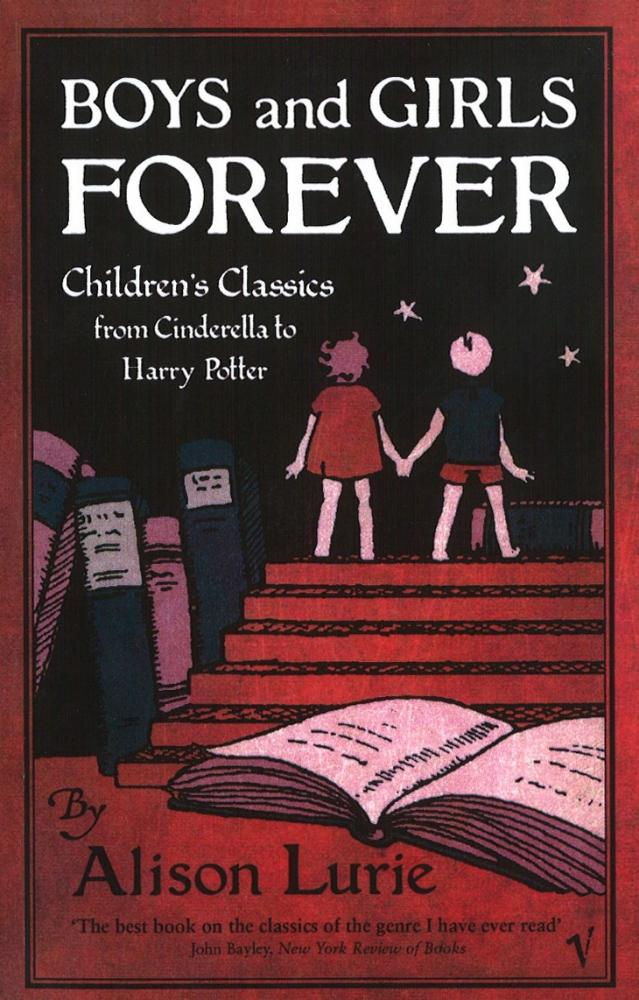
Are some of the world's most talented children's book authors essentially children themselves? In this engaging series of essays, Pulitzer Prize-winning author Alison Lurie considers this theory, exploring children's classics from many eras and relating them to the authors who wrote them, including Little Women author Louisa May Alcott and Wizard of Oz author Frank Baum, as well as Dr. Seuss and Salman Rushdie. Analyzing these and many others, Lurie shows how these gifted writers have used children's literature to transfigure sorrow, nostalgia, and the struggles of their own experiences.
CONTENTS
Foreword
THE UNDERDUCKLING:
HANS CHRISTIAN ANDERSEN
LITTLE WOMEN AND BIG GIRLS:
LOUISA MAY ALCOTT
THE ODDNESS OF OZ
IS THERE ANYBODY THERE?
WALTER DE LA MARE’S SOLITARY CHILD
JOHN MASEFIELD’S BOXES OF DELIGHT
MOOMINTROLL AND HIS FRIENDS
DR. SEUSS COMES BACK
HAROUN AND THE SEA OF STORIES
THE PERILS OF HARRY POTTER
WHAT FAIRY TALES TELL US
BOYS AND GIRLS COME OUT TO PLAY:
CHILDREN’S GAMES
POETRY BY AND FOR CHILDREN
LOUDER THAN WORDS:
CHILDREN’S BOOK ILLUSTRATIONS
ENCHANTED FORESTS AND SECRET GARDENS:
NATURE IN CHILDREN’S LITERATURE
THE GOOD BAD BOY
Notes
Bibliography
Are some of the world's most talented children's book authors essentially children themselves? In this engaging series of essays, Pulitzer Prize-winning author Alison Lurie considers this theory, exploring children's classics from many eras and relating them to the authors who wrote them, including Little Women author Louisa May Alcott and Wizard of Oz author Frank Baum, as well as Dr. Seuss and Salman Rushdie. Analyzing these and many others, Lurie shows how these gifted writers have used children's literature to transfigure sorrow, nostalgia, and the struggles of their own experiences.
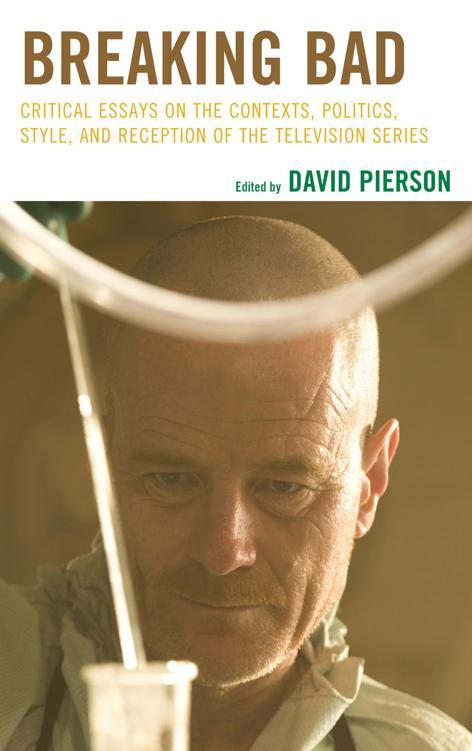
Breaking Bad: Critical Essays on the Contexts, Politics, Style, and Reception of the Television Series, edited by David P. Pierson, explores the contexts, politics, and style of AMC’s original series Breaking Bad. The book’s first section locates and addresses the series from several contemporary social contexts, including neo-liberalism, its discourses and policies, the cultural obsession with the economy of time and its manipulation, and the epistemological principles and assumptions of Walter White’s criminal alias Heisenberg.
Section two investigates how the series characterizes and intersects with current cultural politics, such as male angst and the re-emergence of hegemonic masculinity, the complex portrayal of Latinos, and the depiction of physical and mental impairment and disability.
The final section takes a close look at the series’ distinctive visual, aural, and narrative stylistics. Under examination are Breaking Bad’s unique visual style whereby image dominates sound, the distinct role and use of beginning teaser segments to disorient and enlighten audiences, the representation of geographic space and place, the position of narrative songs to complicate viewer identification, and the integral part that emotions play as a form of dramatic action in the series.
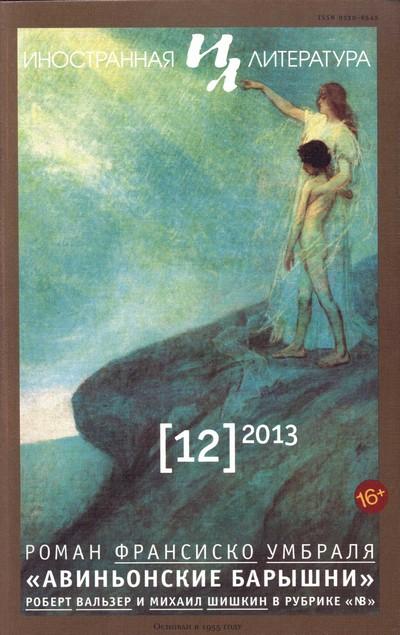
В рубрике «Другая поэзия» — «Canto XXXYI» классика американского и европейского модернизма Эзры Паунда (1885–1972). Перевод с английского, вступление и комментарии Яна Пробштейна (1953). Здесь же — статья филолога и поэта Ильи Кукулина (1969) «Подрывной Эпос: Эзра Паунд и Михаил Еремин». Автор статьи находит эстетические точки соприкосновения двух поэтов.
C'est le besoin d'argent qui, très tôt, pousse le jeune Maupassant, alors employé de ministère, à donner des articles de critique littéraire. Mais il rechigne un peu à se lier à un journal comme à se livrer à une écriture trop hâtive : « Jamais mon nom au bas d'une chronique écrite en moins de deux heures. » Et cependant, après la publication de « Boule de suif » au printemps de 1880 - il a trente ans tout juste -, sa réputation de conteur change la donne : c'est une rémunération d'écrivain reconnu qu'on lui offre et, l'année suivante, une soixantaine de chroniques paraissent dans Le Gaulois. D'autres journaux accueilleront aussi sa signature jusqu'à ce que, en 1887, il décide de pleinement se consacrer à ses derniers livres. Mais il aura écrit près de deux cent cinquante chroniques, dont le présent volume offre une anthologie ordonnée selon quatre grands thèmes : société et politique, murs du jour, flâneries et voyages, lettres et arts. Ainsi se dessine un témoignage capital sur son époque, mais ainsi se construit aussi une part de son uvre qu'on ne saurait négliger : dans les journaux, les chroniques alternent avec les contes ou les nouvelles, et des parentés de structure ou de thèmes ne manquent pas d'apparaître au point que l'on hésite à faire de tel texte une nouvelle plutôt qu'une chronique. Assurément, l'unité est ici celle d'un monde et d'une époque : mais c'est aussi bien celle que leur imposent le regard et la plume d'un homme qui a pu se dire « acteur et spectateur de lui-même et des autres ».
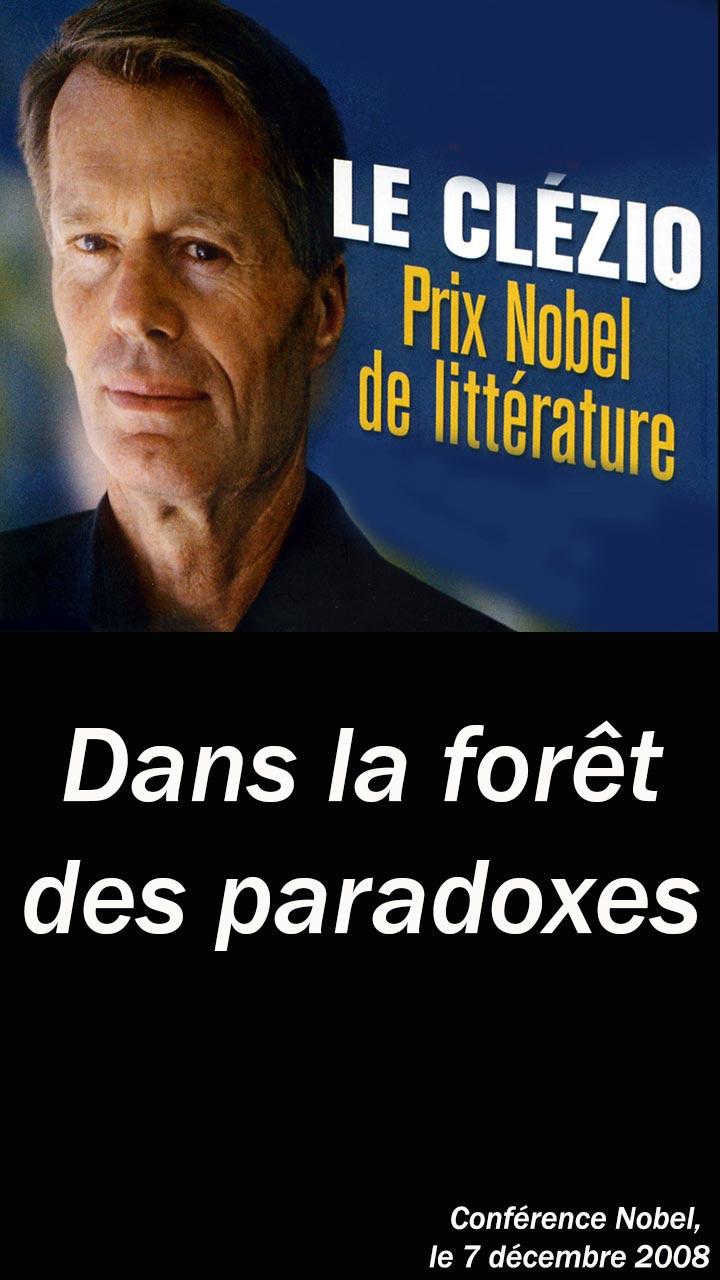
L'écrivain français Jean-Marie Gustave Le Clézio, qui a reçu son prix Nobel mercredi 10 décembre des mains du roi de Suède, a fait samedi 7 décembre l'apologie de la littérature universelle dans son discours de réception prononcé à Stockholm.
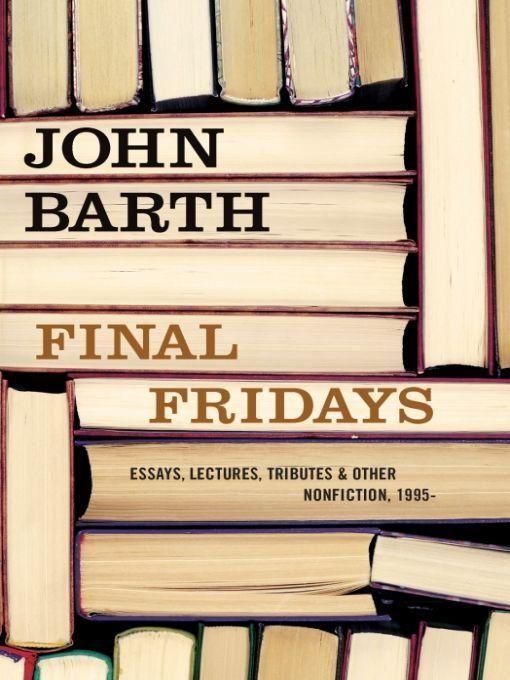
For decades, acclaimed author John Barth has strayed from his Monday-through-Thursday-morning routine of fiction-writing and dedicated Friday mornings to the muse of nonfiction. The result is Final Fridays, his third essay collection, following The Friday Book (1984) and Further Fridays (1995). Sixteen years and six novels since his last volume of non-fiction, Barth delivers yet another remarkable work comprised of 27 insightful essays.
With pieces covering everything from reading, writing, and the state of the art, to tributes to writer-friends and family members, this collection is witty and engaging throughout. Barth’s “unaffected love of learning” (San Francisco Examiner & Chronicle) and “joy in thinking that becomes contagious” (Washington Post), shine through in this third, and, with an implied question mark, final essay collection.

«В стихах Гумилева есть прелесть романтизма, но не того романтизма, которым чарует нас Новалис или Блок с их магической влюбленностью в Прекрасную Даму, а того молодого, воинствующего, бряцающего романтизма, который зовет нас в страны, „где дробясь, пылают блики солнца“…»
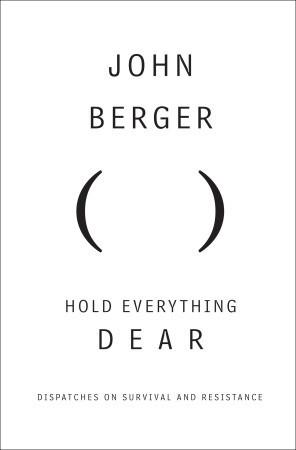
From one of the most impassioned of writers of our time, this powerful collection of essays offers a stark portrait of post-9/11 realities. John Berger occupies a unique position in the international cultural landscape: artist, filmmaker, poet, philosopher, novelist, and essayist, he is also a deeply thoughtful political activist. In Hold Everything Dear, his artistry and activism meld in an attempt to make sense of the current state of our world. Berger analyzes the nature of terrorism and the profound despair that gives rise to it. He writes about the homelessness of millions who have been forced by poverty and war to live as refugees. He discusses Afghanistan, Iraq, Palestine, Serbia, Bosnia, China, Indonesia-anyplace where people are deprived of the most basic of freedoms. Berger powerfully acknowledges the depth of suffering around the world and suggests actions that might finally help bring it to an end.
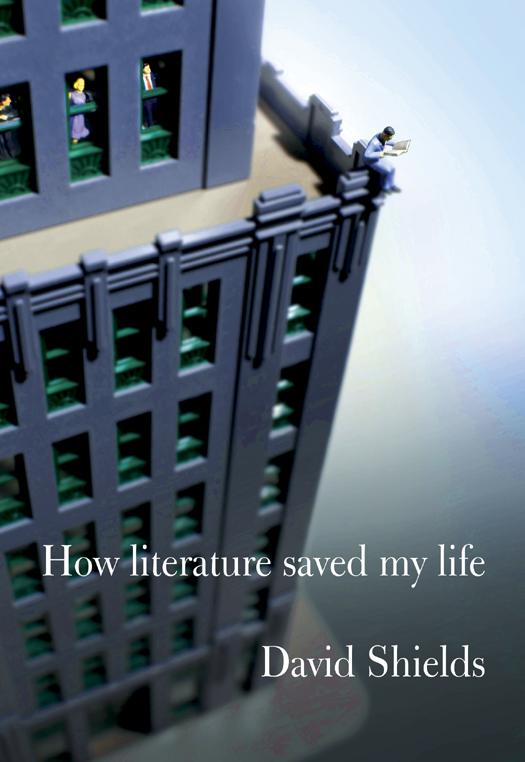
In this wonderfully intelligent, stunningly honest, and painfully funny book, acclaimed writer David Shields uses himself as a representative for all readers and writers who seek to find salvation in literature.
Blending confessional criticism and anthropological autobiography, Shields explores the power of literature (from Blaise Pascal’s Pensées to Maggie Nelson’s Bluets, Renata Adler’s Speedboat to Proust’s A Remembrance of Things Past) to make life survivable, maybe even endurable. Shields evokes his deeply divided personality (his “ridiculous” ambivalence), his character flaws, his woes, his serious despairs. Books are his life raft, but when they come to feel unlifelike and archaic, he revels in a new kind of art that is based heavily on quotation and consciousness and self-consciousness—perfect, since so much of what ails him is acute self-consciousness. And he shares with us a final irony: he wants “literature to assuage human loneliness, but nothing can assuage human loneliness. Literature doesn’t lie about this—which is what makes it essential.”
A captivating, thought-provoking, utterly original way of thinking about the essential acts of reading and writing.
Cheryl Strayed is the author of the best-selling memoir Wild. Strayed writes the “Dear Sugar” column on TheRumpus.net. Her writing has appeared in the New York Times Magazine, the Washington Post Magazine, Vogue, Allure, Self, the Missouri Review, Brain, Child, The Rumpus, the Sun and elsewhere. The winner of a Pushcart Prize as well as fellowships to the Bread Loaf Writers’ Conference and the Sewanee Writers’ Conference, her essays and stories have been published in The Best American Essays, The Best New American Voices, and other anthologies.
Great books are born of grand passions. The best literature is made when authors refuse to rest easy, but instead dig into their obsessions in order to express not just what’s true, but what’s truer still. This greatness is apparent on every page of David Shields’s How Literature Saved My Life, a culturally searching declaration of the power and limitations of literature that’s also a highly idiosyncratic, deeply personal soul search by one super smart man who consumes and considers books as if his life depends on it.
Part memoir, part manifesto, How Literature Saved My Life is as wide-ranging as it is intimate, and much of its power lies in the ambitiousness of Shields’s reach. It’s a book that defies definition. My category for it is simply a strange book that I love. It’s a serenade wrapped inside a cross-examination; an intellectual book that reads like a detective novel. In its pages, one reads about subjects as diverse as Tiger Woods, the theory that someday tiny robots will roam inside our bodies to reverse the damage caused by aging, Renata Adler’s Speedboat, and the private journals of Shields’s unsuspecting college girlfriend.
This is a long way of saying that How Literature Saved My Life is a book with balls. It doesn’t ask for permission to be what it is: an original, opinionated, gentle-hearted, astonishingly intelligent collage of the ideas, reflections, memories, and experiences of a writer so avidly determined to understand what literature means that the reader must know too.
Amazon Best Books of the Month, February 2013:
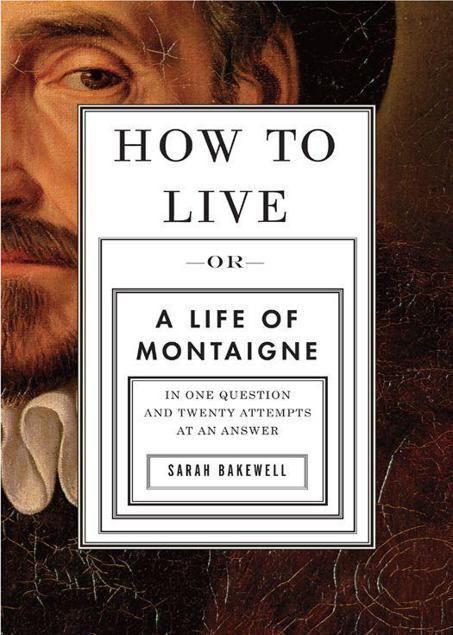
In a wide-ranging intellectual career, Michel de Montaigne found no knowledge so hard to acquire as the knowledge of how to live this life well. By casting her biography of the writer as 20 chapters, each focused on a different answer to the question How to live? Bakewell limns Montaigne’s ceaseless pursuit of this most elusive knowledge. Embedded in the 20 life-knowledge responses, readers will find essential facts — when and where Montaigne was born, how and whom he married, how he became mayor of Bordeaux, how he managed a public life in a time of lethal religious and political passions. But Bakewell keeps the focus on the inner evolution of the acute mind informing Montaigne’s charmingly digressive and tolerantly skeptical essays. Flexible and curious, this was a mind at home contemplating the morality of cannibals, the meaning of his own near-death experience, and the puzzlingly human behavior of animals. And though Montaigne has identified his own personality as his overarching topic, Bakewell marvels at the way Montaigne’s prose has enchanted diverse readers — Hazlitt and Sterne, Woolf and Gide — with their own reflections. Because Montaigne’s capacious mirror still captivates many, this insightful life study will win high praise from both scholars and general readers. -Bryce Christensen
“This charming biography shuffles incidents from Montaigne’s life and essays into twenty thematic chapters… Bakewell clearly relishes the anthropological anecdotes that enliven Montaigne’s work, but she handles equally well both his philosophical influences and the readers and interpreters who have guided the reception of the essays.”
—The New Yorker
“Serious, engaging, and so infectiously in love with its subject that I found myself racing to finish so I could start rereading the Essays themselves… It is hard to imagine a better introduction — or reintroduction — to Montaigne than Bakewell’s book.”
—Lorin Stein, Harper’s Magazine
“Ms. Bakewell’s new book, How to Live, is a biography, but in the form of a delightful conversation across the centuries.”
—The New York Times
“So artful is Bakewell’s account of [Montaigne] that even skeptical readers may well come to share her admiration.”
—The New York Times Book Review
“Extraordinary… a miracle of complex, revelatory organization, for as Bakewell moves along she provides a brilliant demonstration of the alchemy of historical viewpoint.”
—Boston Globe
“Well, How to Live is a superb book, original, engaging, thorough, ambitious, and wise.”
—Nick Hornby, in the November/December 2010 issue of The Believer
“In How to Live, an affectionate introduction to the author, Bakewell argues that, far from being a dusty old philosopher, Montaigne has never been more relevant — a 16th-century blogger, as she would have it — and so must be read, quite simply, ‘in order to live’… Bakewell is a wry and intelligent guide.”
—The Daily Beast
“Witty, unorthodox… How to Live is a history of ideas told entirely on the ground, never divorced from the people thinking them. It hews close to Montaigne’s own preoccupations, especially his playful uncertainty — Bakewell is a stickler for what we can’t know… How to Live is a delight…”
—The Plain Dealer
“This book will have new readers excited to be acquainted to Montaigne’s life and ideas, and may even stir their curiosity to read more about the ancient Greek philosophers who influenced his writing. How to Live is a great companion to Montaigne’s essays, and even a great stand-alone.”
—San Francisco Book Review
“A bright, genial, and generous introduction to the master’s methods.”
—Kirkus Reviews
“[Bakewell reveals] one of literature's enduring figures as an idiosyncratic, humane, and surprisingly modern force.”
—Publisher’s Weekly (starred)
“As described by Sarah Bakewell in her suavely enlightening How to Live, or A Life of Montaigne in One Question and Twenty Attempts at an Answer Montaigne is, with Walt Whitman, among the most congenial of literary giants, inclined to shrug over the inevitability of human failings and the last man to accuse anyone of self-absorption. His great subject, after all, was himself.”
—Laura Miller, Salon.com
“Lively and fascinating… How To Live takes its place as the most enjoyable introduction to Montaigne in the English language.”
—The Times Literary Supplement
“Splendidly conceived and exquisitely written… enormously absorbing.”
—Sunday Times
“How to Live will delight and illuminate.”
—The Independent
“It is ultimately [Montaigne’s] life-loving vivacity that Bakewell succeeds in communicating to her readers.”
—The Observer
“This subtle and surprising book manages the trick of conversing in a frank and friendly manner with its centuries-old literary giant, as with a contemporary, while helpfully placing Montaigne in a historical context. The affection of the author for her subject is palpable and infectious.”
—Phillip Lopate, author of The Art of the Personal Essay
“An intellectually lively treatment of a Renaissance giant and his world.”
—Saturday Telegraph
“Like recent books on Proust, Joyce, and Austen, How to Live skillfully plucks a life-guide from the incessant flux of Montaigne’s prose… A superb, spirited introduction to the master.”
—The Guardian
In a wide-ranging intellectual career, Michel de Montaigne found no knowledge so hard to acquire as the knowledge of how to live this life well. By casting her biography of the writer as 20 chapters, each focused on a different answer to the question How to live? Bakewell limns Montaigne’s ceaseless pursuit of this most elusive knowledge. Embedded in the 20 life-knowledge responses, readers will find essential facts — when and where Montaigne was born, how and whom he married, how he became mayor of Bordeaux, how he managed a public life in a time of lethal religious and political passions. But Bakewell keeps the focus on the inner evolution of the acute mind informing Montaigne’s charmingly digressive and tolerantly skeptical essays. Flexible and curious, this was a mind at home contemplating the morality of cannibals, the meaning of his own near-death experience, and the puzzlingly human behavior of animals. And though Montaigne has identified his own personality as his overarching topic, Bakewell marvels at the way Montaigne’s prose has enchanted diverse readers — Hazlitt and Sterne, Woolf and Gide — with their own reflections. Because Montaigne’s capacious mirror still captivates many, this insightful life study will win high praise from both scholars and general readers. -Bryce Christensen Named one of Library Journal’s Top Ten Best Books of 2010 In a wide-ranging intellectual career, Michel de Montaigne found no knowledge so hard to acquire as the knowledge of how to live this life well. By casting her biography of the writer as 20 chapters, each focused on a different answer to the question How to live? Bakewell limns Montaigne’s ceaseless pursuit of this most elusive knowledge. Embedded in the 20 life-knowledge responses, readers will find essential facts — when and where Montaigne was born, how and whom he married, how he became mayor of Bordeaux, how he managed a public life in a time of lethal religious and political passions. But Bakewell keeps the focus on the inner evolution of the acute mind informing Montaigne’s charmingly digressive and tolerantly skeptical essays. Flexible and curious, this was a mind at home contemplating the morality of cannibals, the meaning of his own near-death experience, and the puzzlingly human behavior of animals. And though Montaigne has identified his own personality as his overarching topic, Bakewell marvels at the way Montaigne’s prose has enchanted diverse readers — Hazlitt and Sterne, Woolf and Gide — with their own reflections. Because Montaigne’s capacious mirror still captivates many, this insightful life study will win high praise from both scholars and general readers.
—Bryce Christensen Named one of Library Journal’s Top Ten Best Books of 2010
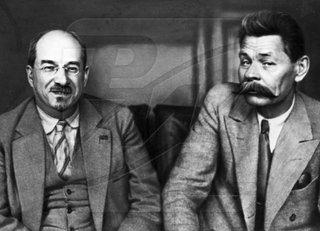
Рецензия А.В.Луначарского на повесть «Исповедь» М.Горького опубликованная в 23-ем сборнике «Знания»
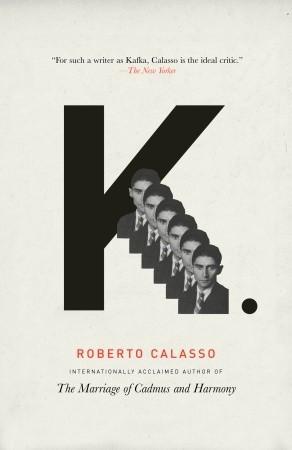
From the internationally acclaimed author of The Marriage of Cadmus and Harmony comes one of the most significant books in recent years on a writer of perennial interest — a virtuoso interpretation of the work of Franz Kafka.
What are Kafka’s fictions about? Are they dreams? Allegories? Symbols? Countless answers have been offered, but the essential mystery remains intact. Setting out on his own exploration, Roberto Calasso enters the flow, the tortuous movement, the physiology of Kafka’s work to discover why K. and Josef K. — the protagonists of The Castle and The Trial—are so radically different from any other character in the history of the novel, and to determine who, in the end, is K. The culmination of Calasso’s lifelong fascination with Kafka’s work, K. is also an unprecedented consideration of the mystery of Kafka himself.
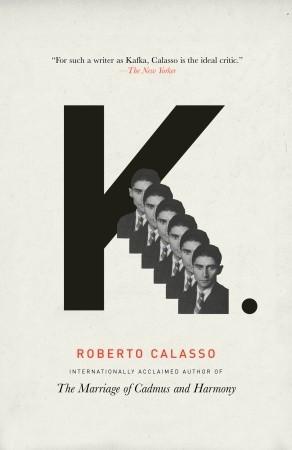
From the internationally acclaimed author of The Marriage of Cadmus and Harmony comes one of the most significant books in recent years on a writer of perennial interest — a virtuoso interpretation of the work of Franz Kafka.
What are Kafka’s fictions about? Are they dreams? Allegories? Symbols? Countless answers have been offered, but the essential mystery remains intact. Setting out on his own exploration, Roberto Calasso enters the flow, the tortuous movement, the physiology of Kafka’s work to discover why K. and Josef K. — the protagonists of The Castle and The Trial—are so radically different from any other character in the history of the novel, and to determine who, in the end, is K. The culmination of Calasso’s lifelong fascination with Kafka’s work, K. is also an unprecedented consideration of the mystery of Kafka himself.
В рецензии на роман Н. Н. Семенова ярче, чем в других произведениях Добролюбова, выразилось неприятие критиком-демократом социальной психологии и морали дворянского общества, сколком которых является этот роман. Добролюбов с неодобрением воспринимает сам факт сочинительства русского автора на французском языке, в чем критик видит проявление элитарности, незаинтересованности в демократическом читателе. Но особенно возмущает критика крепостническое отношение к женщине, которым пропитан «аристократический» роман Семенова.