Speedboat
When Speedboat burst on the scene in the late ’70s it was like nothing readers had encountered before. It seemed to disregard the rules of the novel, but it wore its unconventionality with ease. Reading it was a pleasure of a new, unexpected kind. Above all, there was its voice, ambivalent, curious, wry, the voice of Jen Fain, a journalist negotiating the fraught landscape of contemporary urban America. Party guests, taxi drivers, brownstone dwellers, professors, journalists, presidents, and debutantes fill these dispatches from the world as Jen finds it.A touchstone over the years for writers as different as David Foster Wallace and Elizabeth Hardwick, Speedboat returns to enthrall a new generation of readers.
|
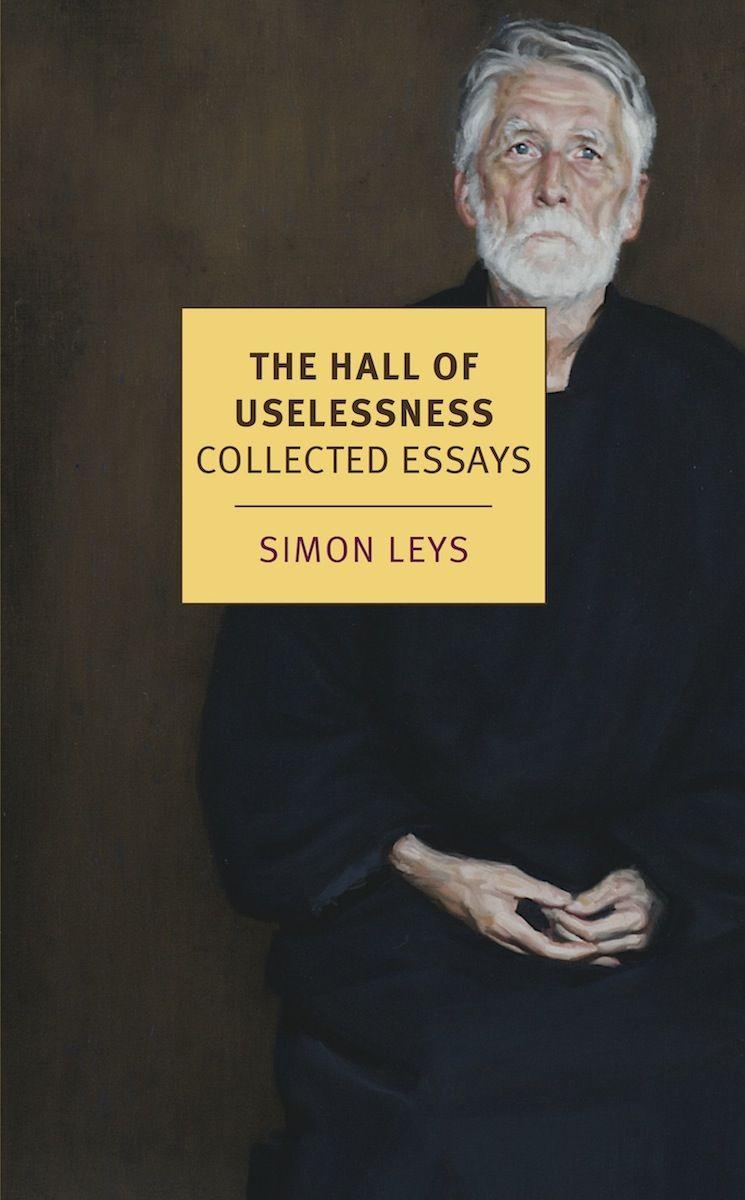
The Hall of Uselessness: Collected Essays
Simon Leys is a Renaissance man for the era of globalization: a distinguished scholar of classical Chinese art and literature, he was one of the first Westerners to expose the horrors of Mao’s Cultural Revolution. Leys’s interests and expertise are not, however, confined to China: he also writes about European art, literature, history, and politics, and is an unflinching observer of the way we live now. No matter the topic he writes with unfailing elegance and intelligence, seriousness and acerbic wit. Leys is, in short, not simply a critic or commentator but an essayist, and one of the most outstanding ones of our time.The Hall of Uselessness gathers the finest of Leys’s essays for an American audience for the first time. On subjects ranging from China to Orwell and from Quixotism to the sea, Leys feuds with Christopher Hitchens, ponders the popularity of Victor Hugo, and considers whether Vladimir Nabokov’s posthumous novel should ever have been published. He dissects Mao’s Cultural Revolution and the Khmer Rouge regime, and discusses the legacies of Waugh, Chesterton, Simenon, and Confucius. He discusses Chinese art, culture, and politics; the joys of literary translation; and the fate of the university.The Hall of Uselessness is an illuminating compendium from a brilliant and quirky writer and an exemplary global voice.
|
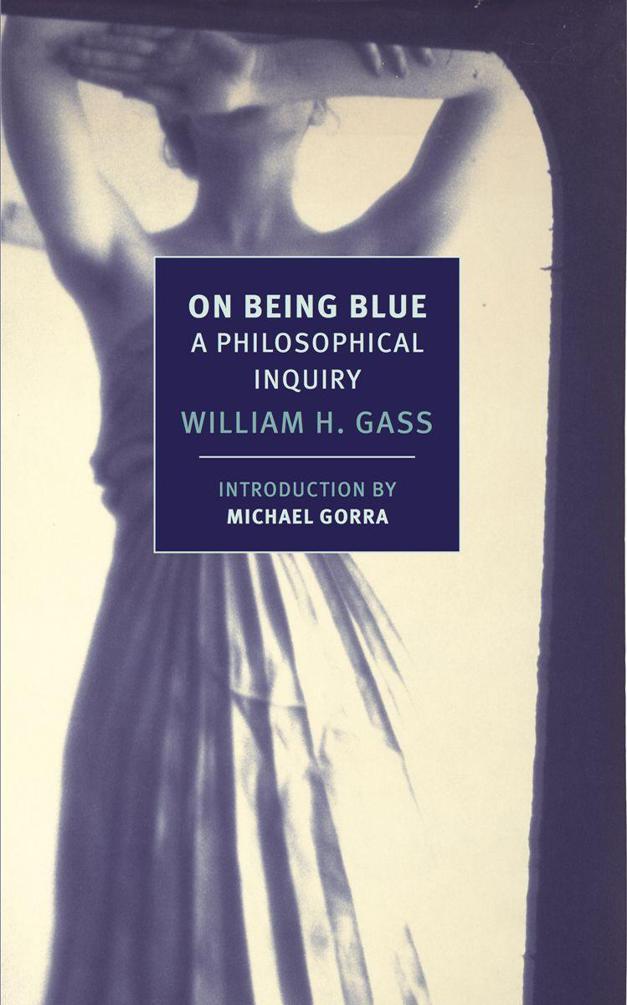
On Being Blue: A Philosophical Inquiry
On Being Blue is a book about everything blue — sex and sleaze and sadness, among other things — and about everything else. It brings us the world in a word as only William H. Gass, among contemporary American writers, can do.Gass writes:Of the colors, blue and green have the greatest emotional range. Sad reds and melancholy yellows are difficult to turn up. Among the ancient elements, blue occurs everywhere: in ice and water, in the flame as purely as in the flower, overhead and inside caves, covering fruit and oozing out of clay. Although green enlivens the earth and mixes in the ocean, and we find it, copperish, in fire; green air, green skies, are rare. Gray and brown are widely distributed, but there are no joyful swatches of either, or any of the exuberant black, sullen pink, or acquiescent orange. Blue is therefore most suitable as the color of interior life. Whether slick light sharp high bright think quick sour new and cool or low deep sweet dark soft slow smooth heavy old and warm: blue moves easily among them all, and all profoundly qualify our states of feeling.
|
Henri Duchemin and His Shadows
Emmanuel Bove was one of the most original writers to come out of twentieth-century France and a popular success in his day. Discovered by Colette, who arranged for the publication of his first novel, My Friends, Bove enjoyed a busy literary career, until the German occupation silenced him. During his lifetime, Bove’s novels and stories were admired by Rainer Maria Rilke, the surrealists, Albert Camus, and Samuel Beckett, who said of him that “more than anyone else he has an instinct for the essential detail.”Henry Duchemin and His Shadows is the perfect introduction to Bove’s world, with its cast of stubborn isolatoes who call to mind Herman Melville’s Bartleby, Robert Walser’s “little men,” and Jean Rhys’s lost women. The poet of the flophouse and the dive, the park bench and the pigeon’s crumb, Bove is also a deeply empathetic writer for whom no defeat is so great as to silence desire.
|
Rock Crystal
Seemingly the simplest of stories — a passing anecdote of village life — Rock Crystal opens up into a tale of almost unendurable suspense. This jewel-like novella by the writer that Thomas Mann praised as "one of the most extraordinary, the most enigmatic, the most secretly daring and the most strangely gripping narrators in world literature" is among the most unusual, moving, and memorable of Christmas stories. Two children — Conrad and his little sister, Sanna — set out from their village high up in the Alps to visit their grandparents in the neighboring valley. It is the day before Christmas but the weather is mild, though of course night falls early in December and the children are warned not to linger. The grandparents welcome the children with presents and pack them off with kisses. Then snow begins to fall, ever more thickly and steadily. Undaunted, the children press on, only to take a wrong turn. The snow rises higher and higher, time passes: it is deep night when the sky clears and Conrad and Sanna discover themselves out on a glacier, terrifying and beautiful, the heart of the void. Adalbert Stifter's rapt and enigmatic tale, beautifully translated by Elizabeth Mayer and Marianne Moore, explores what can be found between Christmas Eve and Christmas Day — or on any night of the year.
|
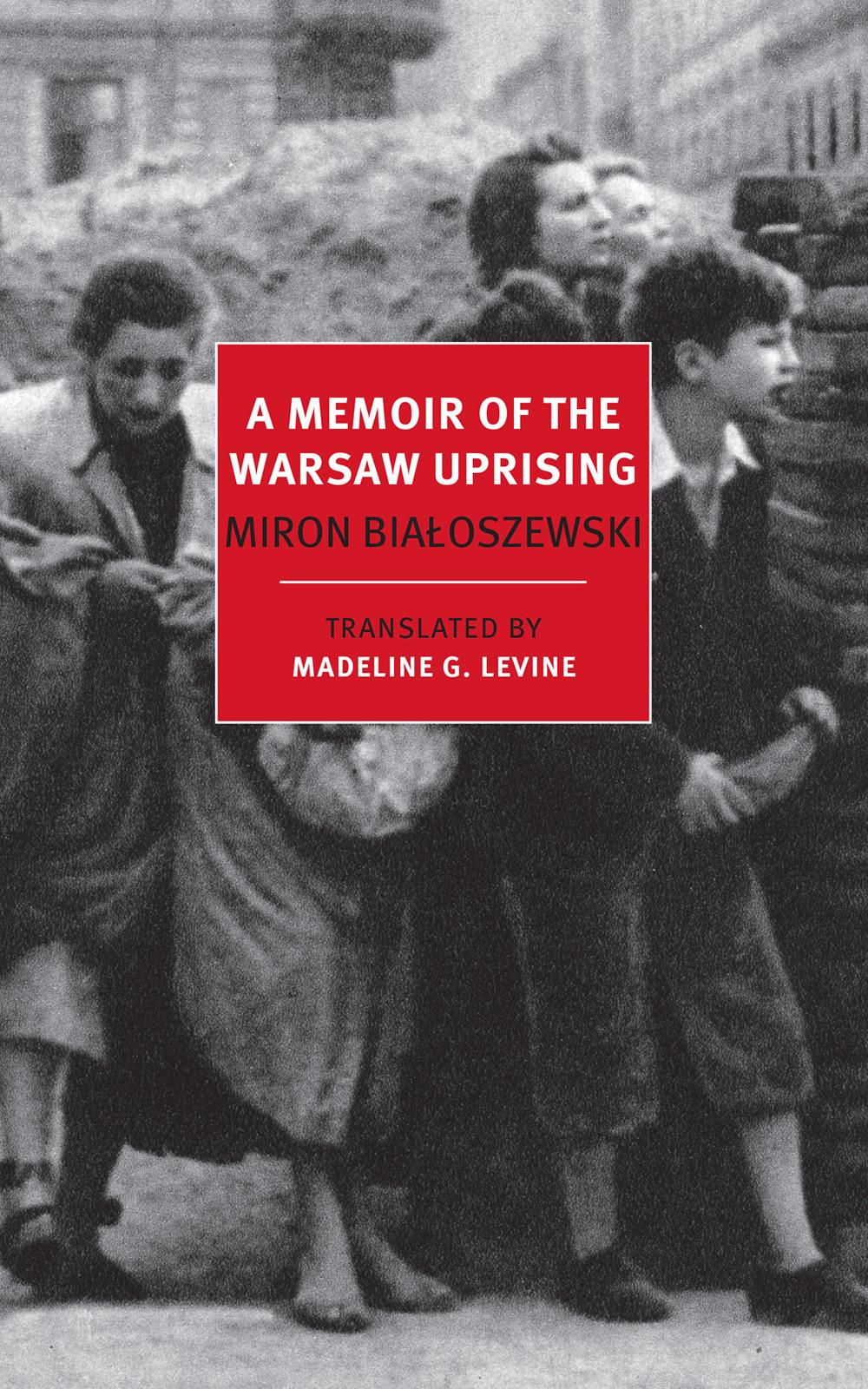
A Memoir of the Warsaw Uprising
This book is both a work of memory and a work about memory. Miron Bialoszewski (1922-83), the great avant-garde Polish poet, memorializes the doomed uprising of the Polish population against their Nazi masters which began on August 1, 1944, and was eventually abandoned on October 2, 1944, with the physical destruction of Warsaw, street by street and house by house, and the slaughter of 200,000 civilians.
|
The Adventures of Sindbad
“What you have loved remains yours.” Thus speaks the irresistible rogue Sindbad, ironic hero of these fantastic tales, who has seduced and abandoned countless women over the course of centuries but never lost one, for he returns to visit them all — ladies, actresses, housemaids — in his memories and dreams. From the bustling streets of Budapest to small provincial towns where nothing ever seems to change, this ghostly Lothario encounters his old flames wherever he goes: along the banks of the Danube; under windows where they once courted; in churches and in graveyards, where Eros and Thanatos tryst. Lies, bad behavior, and fickleness of all kinds are forgiven, and love is reaffirmed as the only thing worth persevering for, weeping for, and living for.The Adventures of Sindbad is the Hungarian master Gyula Krúdy’s most famous book, an uncanny evocation of the autumn of the Hapsburg Empire that is enormously popular not only in Hungary but throughout Eastern Europe.
|
Fat City
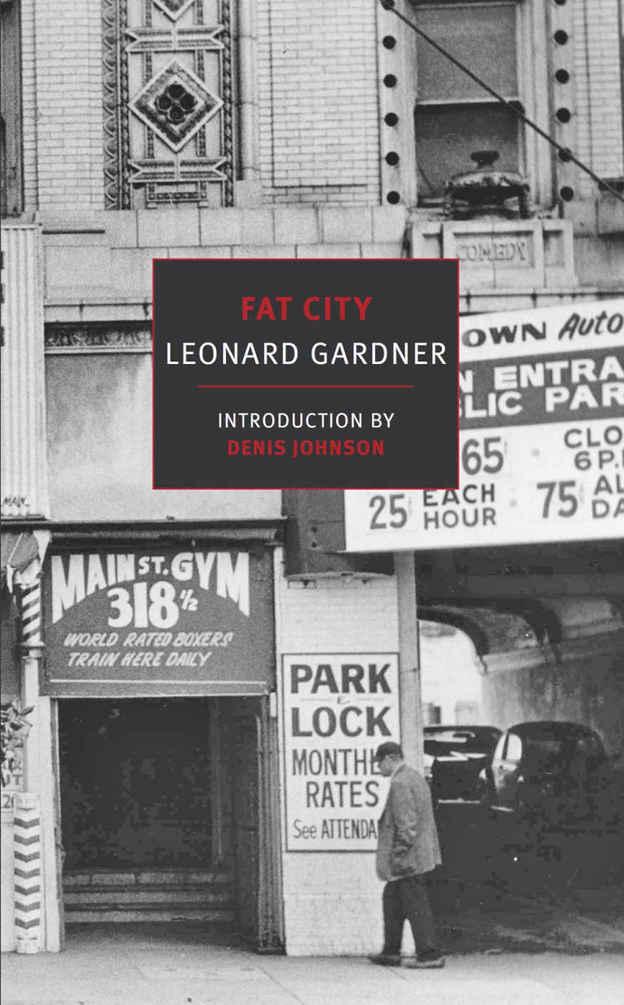
Fat City is a vivid novel of allegiance and defeat, of the potent promise of the good life and the desperation and drink that waylay those whom it eludes. Stockton, California, is the setting: the Lido Gym, the Hotel Coma, Main Street lunchrooms and dingy bars, days like long twilights in houses obscured by untrimmed shrubs and black walnut trees. When two men meet in the ring — the retired boxer Billy Tully and the newcomer Ernie Munger — their brief bout sets into motion their hidden fates, initiating young Munger into the company of men and luring Tully back into training. In a dispassionate and composed voice, Leonard Gardner narrates their swings of fortune, and the stubborn optimism of their manager, Ruben Luna, as he watches the most promising boys one by one succumb to some undefined weakness; still, “There was always someone who wanted to fight.”
|
The Death of Napoleon
As he bore a vague resemblance to the Emperor, the sailors on board the Hermann-Augustus Stoeffer had nicknamed him Napoleon. And so, for convenience, that is what we shall call him.Besides, he was Napoleon. .Napoleon has escaped from St. Helena, leaving a double behind him. Now disguised as the cabin hand Eugène Lenormand and enduring the mockery of the crew (Napoleon, they laughingly nickname the pudgy, hopelessly clumsy little man), he is on his way back to Europe, ready to make contact with the huge secret organization that will return him to power. But then the ship on which he sails is rerouted from Bordeaux to Antwerp. When Napoleon disembarks, he is on his own.He revisits the battlefield of Waterloo, now a tourist destination. He makes his way to Paris. Mistakes, misunderstandings, and mishaps conduct our puzzled hero deeper and deeper into the mystery of Napoleon.
|
Talk
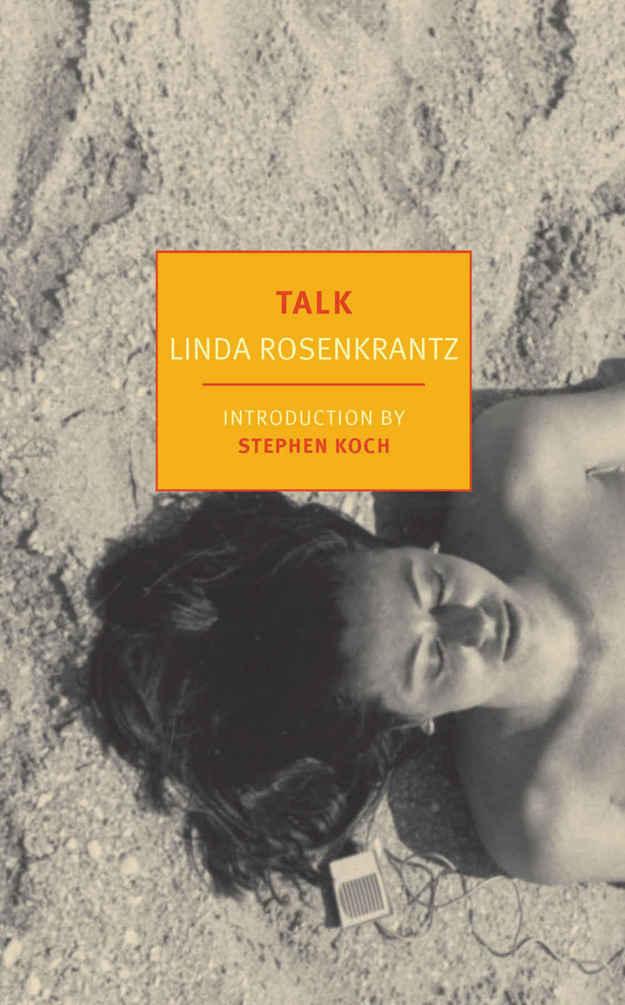
Friendships are built on chatter, on gossip, on revelations — on talk. Over the course of the summer of 1965, Linda Rosenkrantz taped conversations between three friends (two straight, one gay) on the cusp of thirty vacationing at the beach: Emily, an actor; Vince, a painter; and Marsha, a writer. The result was Talk, a novel in dialogue. The friends are ambitious, conflicted, jealous, petty, loving, funny, sex- and shrink-obsessed, and there’s nothing they won’t discuss. Topics covered include LSD, fathers, exes, lovers, abortions, S&M, sculpture, books, cats, and of course, each other.Talk was ahead of its time in recognizing the fascination and significance of nonfamily ties in contemporary life. It may be almost fifty years since Emily, Vince, and Marsha spent the season in East Hampton, but they wouldn’t be out of place on the set of Girls or in the pages of a novel like Sheila Heti’s How Should a Person Be? |
Dear Illusion: Selected Stories
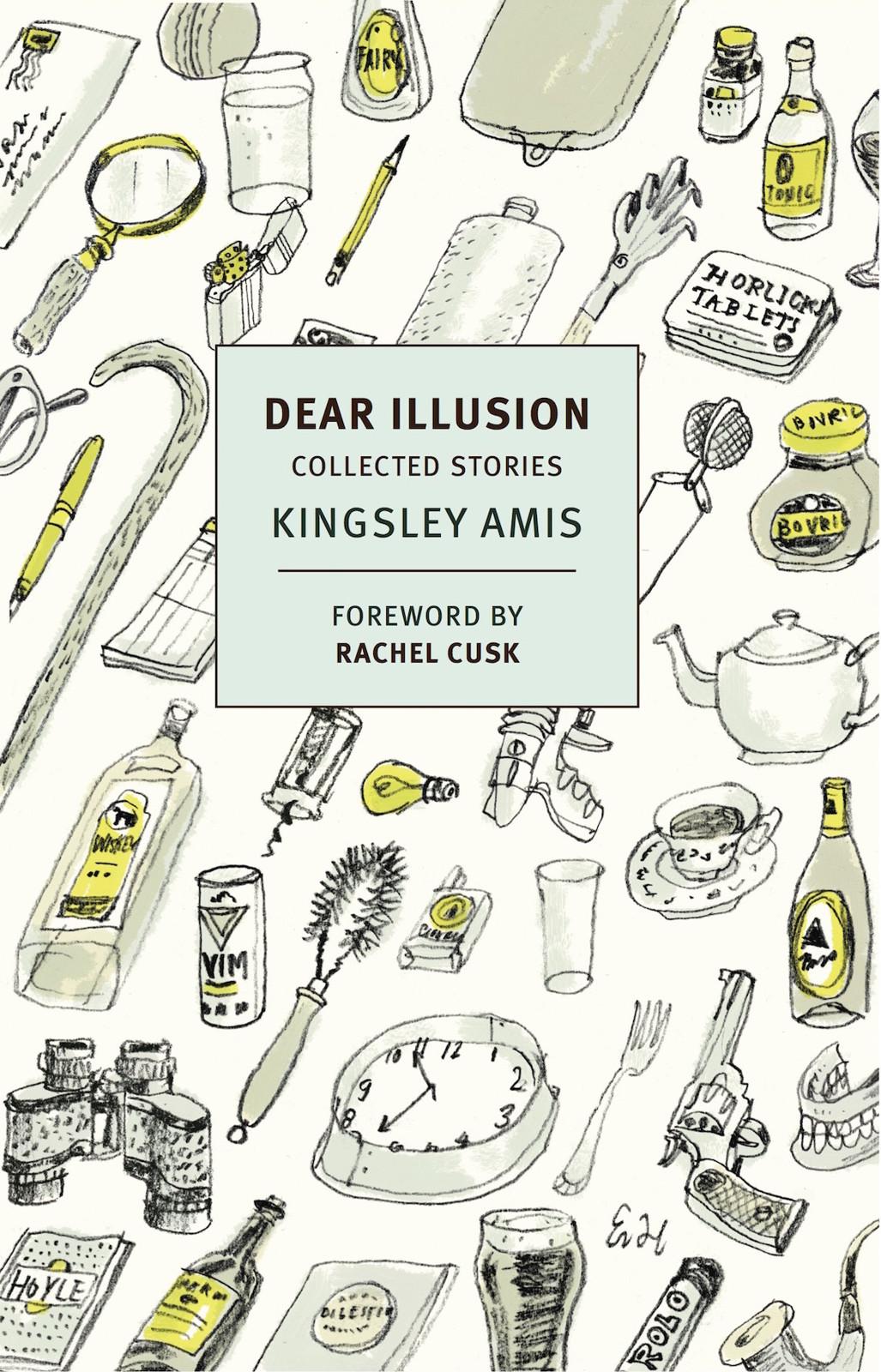
When he published his first novel, Lucky Jim, in which his misbehaving hero wreaks havoc with the starchy protocols of academic life, Kingsley Amis emerged as a bad boy of British letters. Later he became famous as another kind of bad boy, an inveterate boozer, a red-faced scourge of political correctness. He was consistent throughout in being a committed enemy of any presumed “right thinking,” and it is this, no doubt, that made him one of the most consistently unconventional and exploratory writers of his day, a master of classical English prose who was at the same time altogether unafraid to apply himself to literary genres all too often dismissed by sophisticates as “low.” Science fiction, the spy story, the ghost story were all grist for Amis’s mill, and nowhere is the experimental spirit in which he worked, his will to test both reality and the reader’s imagination, more apparent than in his short stories. These “woodchips from [his] workshop”—here presented in a new selection — are anything but throwaway work. They are instead the essence of Amis, a brew that is as tonic as it is intoxicating.
|
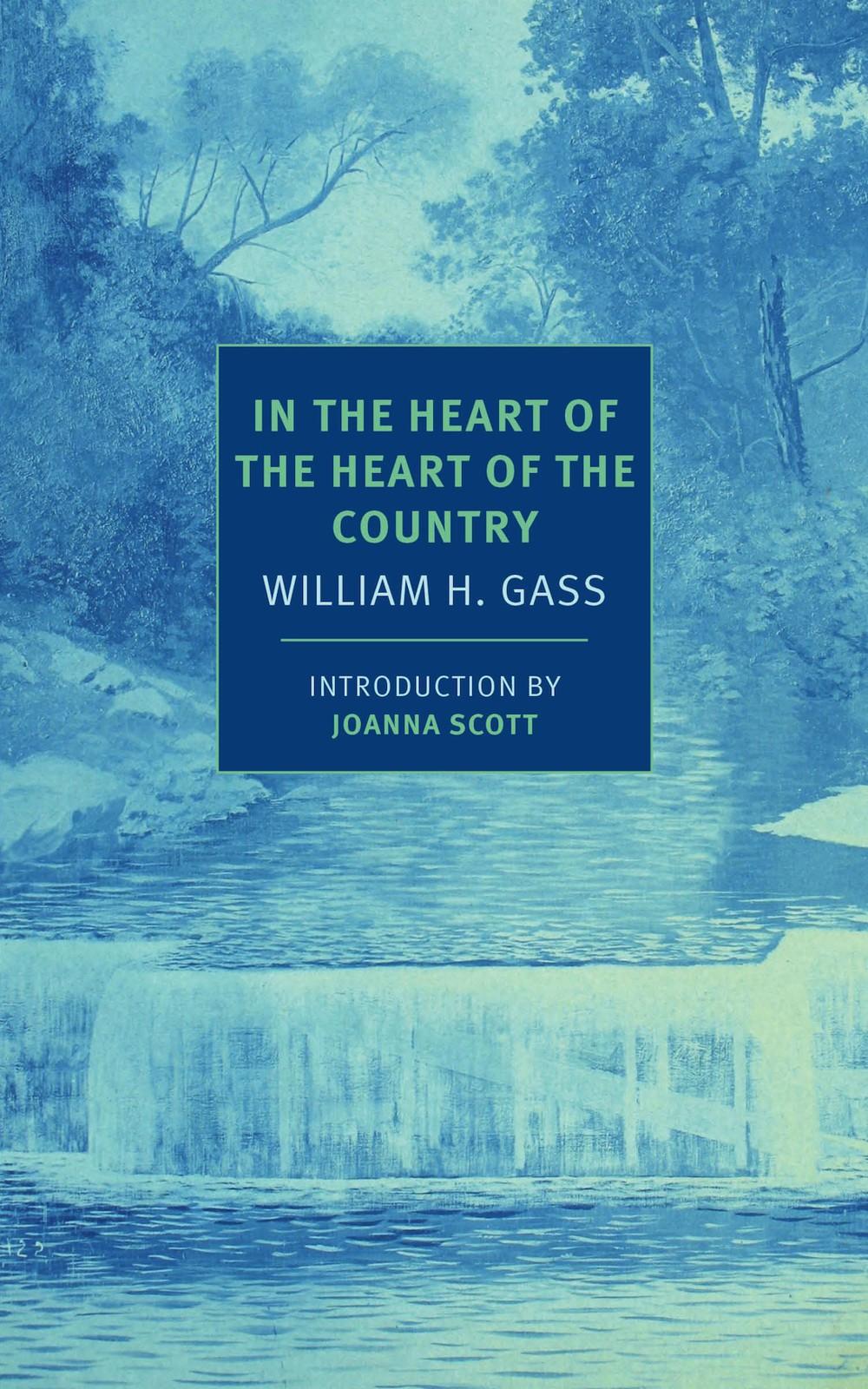
In the Heart of the Heart of the Country
IN THIS SUITE of five short pieces — one of the unqualified literary masterpieces of the American 1960s — William Gass finds five beautiful forms in which to explore the signature theme of his fiction: the solitary soul's poignant, conflicted, and doomed pursuit of love and community. In their obsessions, Gass's Midwestern dreamers are like the "grotesques" of Sherwood Anderson, but in their hyper-linguistic streams of consciousness, they are the match for Joyce's Dubliners.First published in 1968, this book begins with a beguiling thirty-three page essay and has five fictions: the celebrated novella "The Pedersen Kid," "Mrs. Mean," "Icicles," "Order of Insects," and the title story.
|
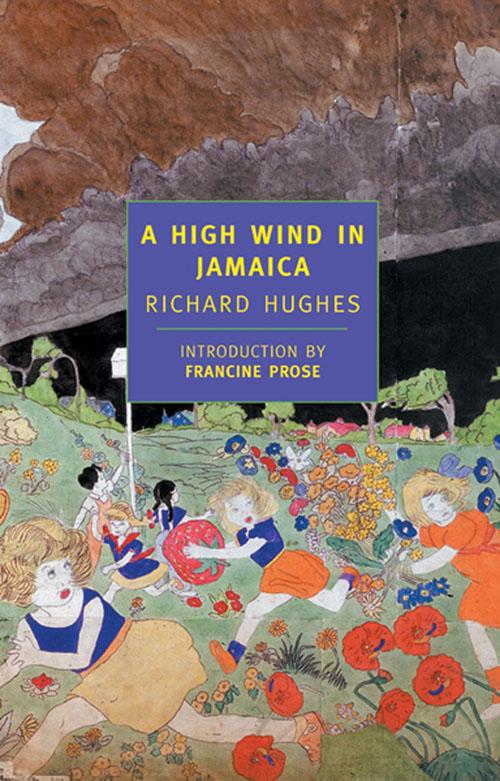
A High Wind in Jamaica
New edition of a classic adventure novel and one of the most startling, highly praised stories in English literature-a brilliant chronicle of two sensitive children's violent voyage from innocence to experience.After a terrible hurricane levels their Jamaican estate, the Bas-Thorntons decide to send their children back to the safety and comfort of England. On the way their ship is set upon by pirates, and the children are accidentally transferred to the pirate vessel. Jonsen, the well-meaning pirate captain, doesn't know how to dispose of his new cargo, while the children adjust with surprising ease to their new life. As this strange company drifts around the Caribbean, events turn more frightening and the pirates find themselves increasingly incriminated by the children's fates. The most shocking betrayal, however, will take place only after the return to civilization.The swift, almost hallucinatory action of Hughes's novel, together with its provocative insight into the psychology of children, made it a best seller when it was first published in 1929 and has since established it as a classic of twentieth-century literature — an unequaled exploration of the nature, and limits, of innocence.
|
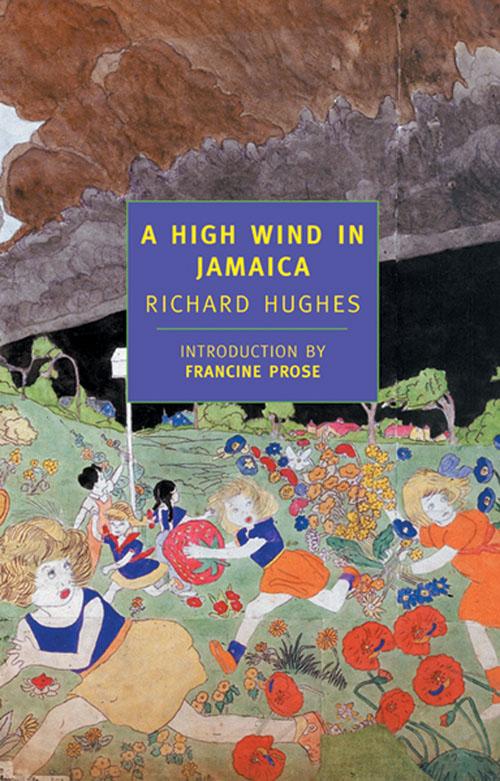
A High Wind in Jamaica
New edition of a classic adventure novel and one of the most startling, highly praised stories in English literature-a brilliant chronicle of two sensitive children's violent voyage from innocence to experience.After a terrible hurricane levels their Jamaican estate, the Bas-Thorntons decide to send their children back to the safety and comfort of England. On the way their ship is set upon by pirates, and the children are accidentally transferred to the pirate vessel. Jonsen, the well-meaning pirate captain, doesn't know how to dispose of his new cargo, while the children adjust with surprising ease to their new life. As this strange company drifts around the Caribbean, events turn more frightening and the pirates find themselves increasingly incriminated by the children's fates. The most shocking betrayal, however, will take place only after the return to civilization.The swift, almost hallucinatory action of Hughes's novel, together with its provocative insight into the psychology of children, made it a best seller when it was first published in 1929 and has since established it as a classic of twentieth-century literature — an unequaled exploration of the nature, and limits, of innocence.
|
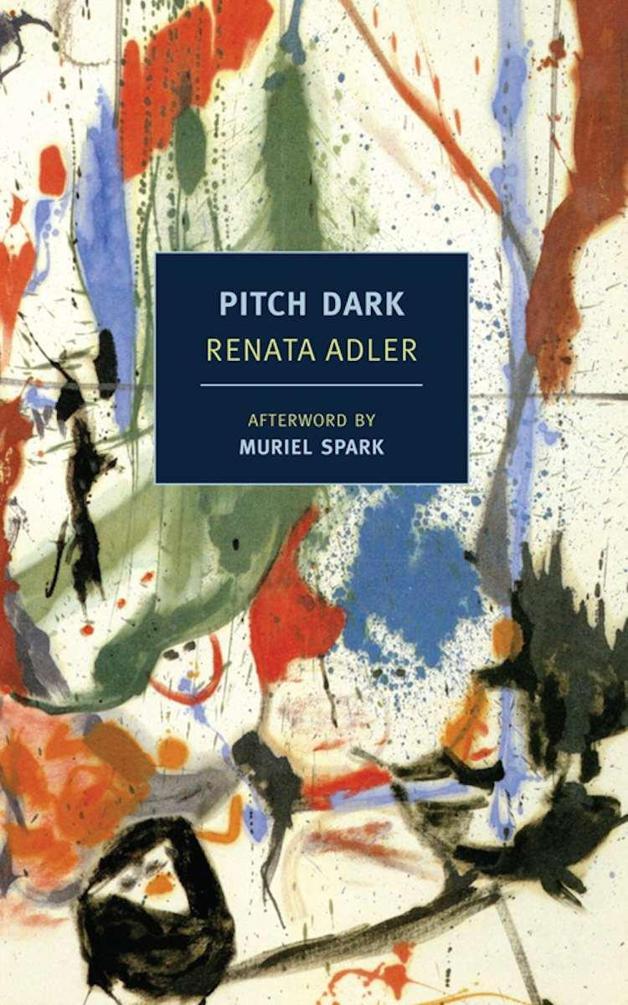
Pitch Dark
“What’s new. What else. What next. What’s happened here.”Pitch Dark is a book about love. Kate Ennis is poised at a critical moment in an affair with a married man. The complications and contradictions pursue her from a house in rural Connecticut to a brownstone apartment in New York City, to a small island off the coast of Washington, to a pitch black night in backcountry Ireland.Composed in the style of Renata Adler’s celebrated novel Speedboat and displaying her keen journalist’s eye and mastery of language, both simple and sublime, Pitch Dark is a bold and astonishing work of art.
|
Basti
Basti is the great Pakistani novel, a beautifully written, brilliantly inventive reckoning with the violent history of a country whose turbulence, ambitions, and uncertainties increasingly concern the whole world. In Urdu, basti means any space, from the most intimate to the most universal, in which groups of people come together to try to live together, and the universal question at the heart of the book is how to constitute a common world. What brings people together? What tears them apart? “When the world was still all new, when the sky was fresh and the earth not yet soiled, when trees breathed through centuries and ages spoke around in the voices of birds, how astonished he was that everything was so new and yet looked so old”—so the book begins, with a mythic, even mystic, vision of harmony, as the hero, Zakir, looks back on his childhood in a subcontinent that had not yet been divided between Muslims and Hindus. But Zakir is abruptly evicted from this paradise — real or imagined — into the maelstrom of history. The new country of Pakistan is born, separating him once and for all from the woman he loves, and in a jagged and jarring sequence of scenes we witness a nation and a psyche torn into existence only to be torn apart again and again by political, religious, economic, linguistic, personal, and sexual conflicts — in effect, a world of loneliness. Zakir, whose name means “remember,” serves as the historian of this troubled place, while the ties he maintains across the years with old friends — friends who run into one another in cafés and on corners and the odd other places where history takes a time-out — suggest that the possibility of reconciliation is not simply a dream. The characters wait for a sign that minds and hearts may still meet. In the meantime, the dazzling artistry of Basti itself gives us reason to hope against hope.
|
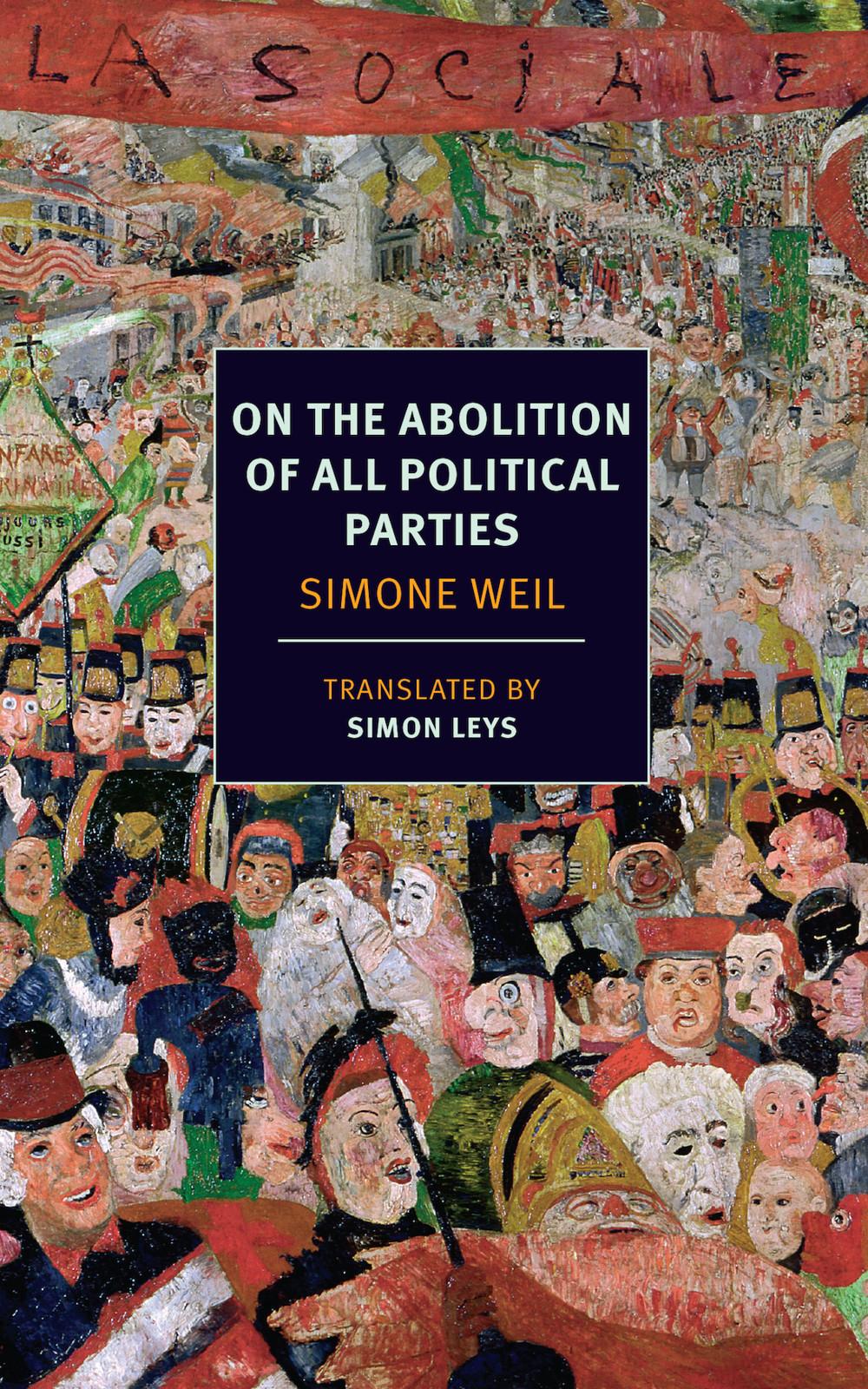
On the Abolition of All Political Parties
A brilliant woman who was a study in fiercely maintained contradictions, a star student who went to work on a factory line, a Jewish convert to Catholicism who insisted on refusing baptism, Simone Weil is one of the most intransigent and taxing of spiritual masters, always willing to push her thinking — and us — one step beyond the apparently reasonable in pursuit of the one truth, the one good. She asks hard questions and avoids easy answers. In this essay — now in English for the first time — she challenges the foundation of the modern liberal political order, making an argument that will have particular resonance in present-day America. Examining the dynamic of power and propaganda caused by party spirit, the increasing disregard for truth in favor of opinion, and the consequent corruption of education, journalism, and art, Weil proposes that politics can only begin where the party spirit comes to an end.This volume also reprints an admiring portrait of Weil by the Nobel laureate Czesław Miłosz and an essay about Weil’s friendship with Albert Camus by the translator Simon Leys.
|
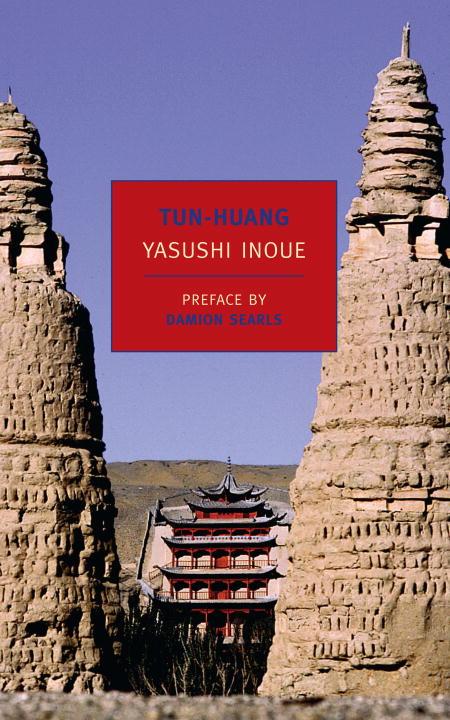
Tun-huang
More than a thousand years ago, an extraordinary trove of early Buddhist sutras and other scriptures was secreted away in caves near the Silk Road city of Tun-huang. But who hid this magnificent treasure and why? In Tun-huang, the great modern Japanese novelist Yasushi Inoue tells the story of Chao Hsing-te, a young Chinese man whose accidental failure to take the all-important exam that will qualify him as a high government official leads to a chance encounter that draws him farther and farther into the wild and contested lands west of the Chinese Empire. Here he finds love, distinguishes himself in battle, and ultimately devotes himself to the strange task of depositing the scrolls in the caves where, many centuries later, they will be rediscovered. A book of magically vivid scenes, fierce passions, and astonishing adventures, Tun-huang is also a profound and stirring meditation on the mystery of history and the hidden presence of the past.
|
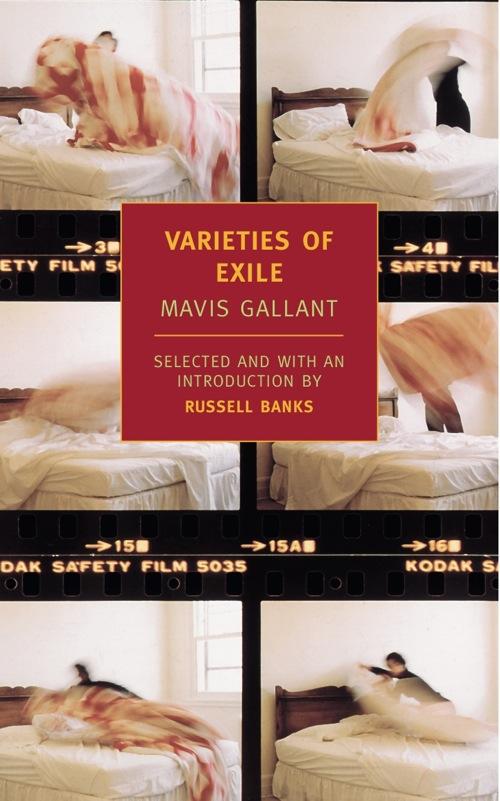
Varieties of Exile
Mavis Gallant is the modern master of what Henry James called the international story, the fine-grained evocation of the quandaries of people who must make their way in the world without any place to call their own. The irreducible complexity of the very idea of home is especially at issue in the stories Gallant has written about Montreal, where she was born, although she has lived in Paris for more than half a century.Varieties of Exile, Russell Banks's extensive new selection from Gallant's work, demonstrates anew the remarkable reach of this writer's singular art. Among its contents are three previously uncollected stories, as well as the celebrated semi-autobiographical sequence about Linnet Muir — stories that are wise, funny, and full of insight into the perils and promise of growing up and breaking loose.
|
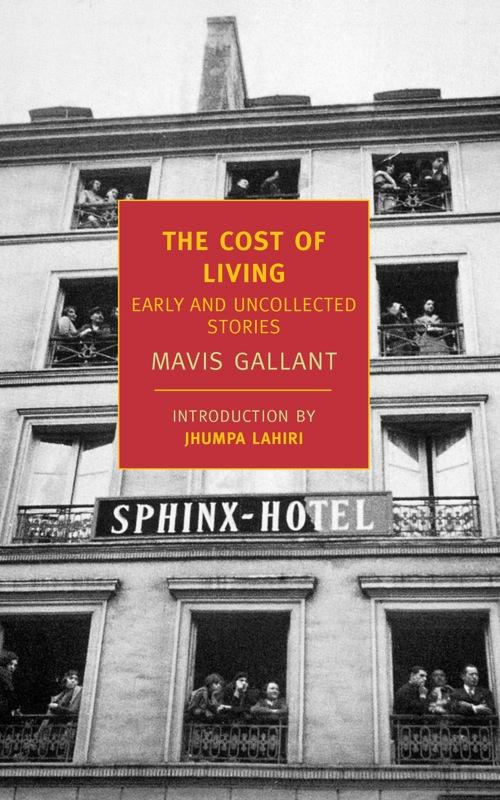
The Cost of Living: Early and Uncollected Stories
A New York Review Books OriginalMavis Gallant is renowned as one of the great short-story writers of our day. This new gathering of long-unavailable or previously uncollected work presents stories from 1951 to 1971 and shows Gallant's progression from precocious virtuosity, to accomplished artistry, to the expansive innovatory spirit that marks her finest work."Madeleine's Birthday," the first of Gallant's many stories to be published in The New Yorker, pairs off a disaffected teenager, abandoned by her social-climbing mother, with a complacent middle-aged suburban housewife, in a subtly poignant comedy of miscommunication that reveals both characters to be equally adrift. "The Cost of Living," the extraordinary title story, is about a company of strangers, shipwrecked over a chilly winter in a Parisian hotel and bound to one another by animosity as much as by unexpected love.Set in Paris, New York, the Riviera, and Montreal and full of scrupulously observed characters ranging from freebooters and malingerers to runaway children and fashion models, Gallant's stories are at once satirical and lyrical, passionate and skeptical, perfectly calibrated and in constant motion, brilliantly capturing the fatal untidiness of life.
|