
 fb2
fb2Компилятивное сочинение об истории Рима от основания Города до середины VI века, написанное для лангобардской принцессы Адельперги.

History Of Florence And Of The Affairs Of Italy: From The Earliest Times To The Death Of Lorenzo The Magnificent. Florence is a major historical city in Italy, distinguished as one of the most outstanding economic, cultural, political and artistic centers in the peninsula from the late Middle Ages to the Renaissance. Machiavelli was an Italian historian, politician, diplomat, philosopher, humanist, and writer based in Florence during the Renaissance. He was for many years an official in the Florentine Republic, with responsibilities in diplomatic and military affairs.
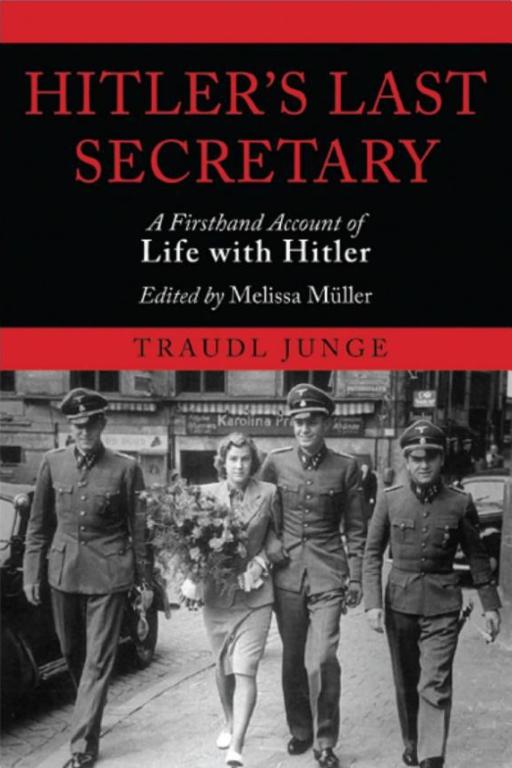
In 1942 Germany, Traudl Junge was a young woman with dreams of becoming a ballerina when she was offered the chance of a lifetime. At the age of twenty-two she became private secretary to Adolf Hitler and served him for two and a half years, right up to the bitter end. Junge observed the intimate workings of Hitler’s administration, she typed correspondence and speeches, including Hitler’s public and private last will and testament; she ate her meals and spent evenings with him; and she was close enough to hear the bomb that was intended to assassinate Hitler in the Wolf’s Lair, close enough to smell the bitter almond odor of Eva Braun’s cyanide pill. In her intimate, detailed memoir, Junge invites readers to experience day-to-day life with the most horrible dictator of the twentieth century.
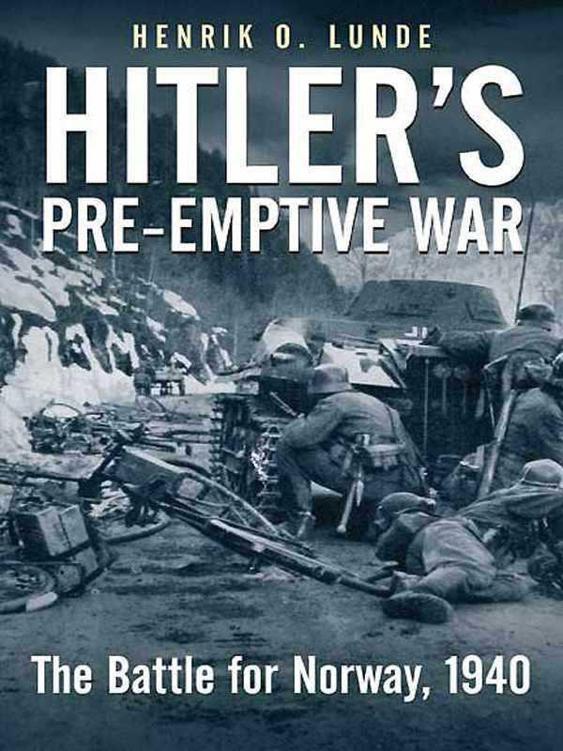
A thorough examination of one of history’s revolutionary campaigns…
After Hitler conquered Poland, and while still fine-tuning his plans against France, the British began to exert control of the coastline of neutral Norway, an action that threatened to cut off Germany’s iron-ore conduit to Sweden and outflank from the start its hegemony on the Continent.
The Germans quickly responded with a dizzying series of assaults, using every tool of modern warfare developed in the previous generation. Airlifted infantry, mountain troops and paratroopers were dispatched to the Scandinavian nation, seizing Norwegian strong points while forestalling larger but more cumbersome Allied units.
The German navy also set sail, taking a brutal beating at the hands of Britannia, while ensuring with its sacrifice that key harbors could be held open for resupply. As dive bombers soared overhead, small but elite German units traversed forbidding terrain to ambush Allied units trying to forge inland. At Narvik, some 6,000 German troops battled 20,000 French and British, until the Allies were finally forced to withdraw by the great disaster in France, which had then get underway.
As a veritable coda to the campaign, the aircraft carrier Glorious, while trying to sail back to Britain, was hammered under the waves by the German battle cruiser Scharnhorst.
The air, airborne, sea, amphibious, infantry, armor and commando aspects of this brief but violent campaign are here covered in meticulous detail. Henrik Lunde, a native Norwegian and former U.S. Special Operations colonel, has written perhaps the most objective account to date of a campaign in which 20th century military innovation found its first fertile playing field.
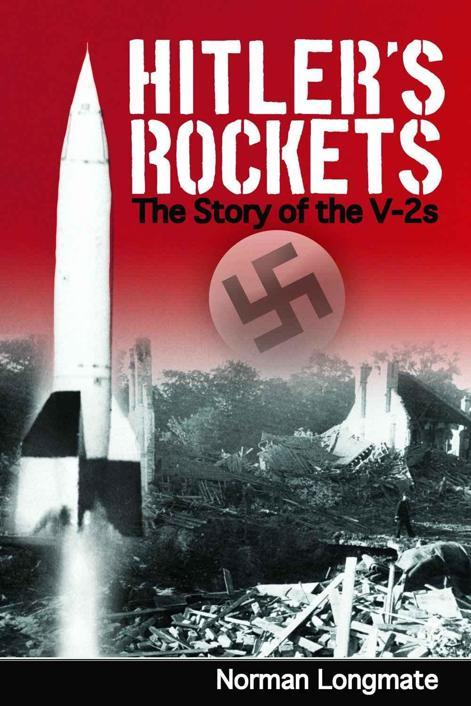
In Hitler’s Rockets Norman Longmate tells the story of the V-2, the technically brilliant but hated weapon, the ancestor and forerunner of all subsequent ballistic missiles. He reveals the devious power-play within the German armed forces and the Nazi establishment that so influenced the creation of the rockets. He shows through contemporary documents and protagonists’ accounts how the British intelligence skillfully pieced together often contradictory evidence as it sought to establish the true nature of the threat. Finally he recalls in detail the feel and fears of the time from the viewpoint of those who suffered, and those who were all too conscious tat they were the target.
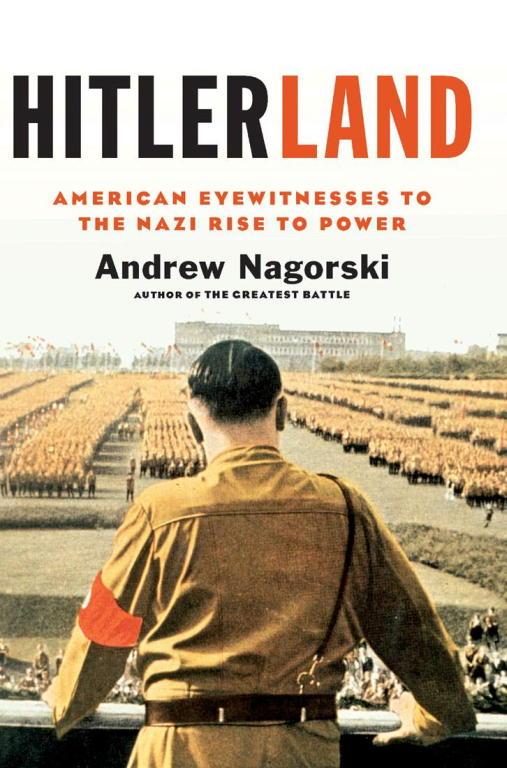
Hitler’s rise to power, Germany’s march to the abyss, as seen through the eyes of Americans—diplomats, military, expats, visiting authors, Olympic athletes—who watched horrified and up close. By tapping a rich vein of personal testimonies, Hitlerland offers a gripping narrative full of surprising twists—and a startlingly fresh perspective on this heavily dissected era.
Some of the Americans in Weimar and then Hitler’s Germany were merely casual observers, others deliberately blind; a few were Nazi apologists. But most slowly began to understand the horror of what was unfolding, even when they found it difficult to grasp the breadth of the catastrophe.
Among the journalists, William Shirer, Edgar Mowrer, and Dorothy Thompson were increasingly alarmed. Consul General George Messersmith stood out among the American diplomats because of his passion and courage. Truman Smith, the first American official to meet Hitler, was an astute political observer and a remarkably resourceful military attaché. Historian William Dodd, whom FDR tapped as ambassador in Hitler’s Berlin, left disillusioned; his daughter Martha scandalized the embassy with her procession of lovers from her initial infatuation with Nazis she took up with. She ended as a Soviet spy.
On the scene were George Kennan, who would become famous as the architect of containment; Richard Helms, who rose to the top of the CIA; Howard K. Smith, who would coanchor the ABC Evening News. The list of prominent visitors included writers Sinclair Lewis and Thomas Wolfe, famed aviator Charles Lindbergh, the great athlete Jesse Owens, newspaper publisher William Randolph Hearst, and black sociologist and historian W.E.B. Dubois.
Observing Hitler and his movement up close, the most perceptive of these Americans helped their reluctant countrymen begin to understand the nature of Nazi Germany as it ruthlessly eliminated political opponents, instilled hatred of Jews and anyone deemed a member of an inferior race, and readied its military and its people for a war for global domination. They helped prepare Americans for the years of struggle ahead.
Yuval Noah Harari, author of the critically-acclaimed New York Times bestseller and international phenomenon Sapiens, returns with an equally original, compelling, and provocative book, turning his focus toward humanity’s future, and our quest to upgrade humans into gods.
Over the past century humankind has managed to do the impossible and rein in famine, plague, and war. This may seem hard to accept, but, as Harari explains in his trademark style—thorough, yet riveting—famine, plague and war have been transformed from incomprehensible and uncontrollable forces of nature into manageable challenges. For the first time ever, more people die from eating too much than from eating too little; more people die from old age than from infectious diseases; and more people commit suicide than are killed by soldiers, terrorists and criminals put together. The average American is a thousand times more likely to die from binging at McDonalds than from being blown up by Al Qaeda.
What then will replace famine, plague, and war at the top of the human agenda? As the self-made gods of planet earth, what destinies will we set ourselves, and which quests will we undertake? Homo Deus explores the projects, dreams and nightmares that will shape the twenty-first century—from overcoming death to creating artificial life. It asks the fundamental questions: Where do we go from here? And how will we protect this fragile world from our own destructive powers? This is the next stage of evolution. This is Homo Deus.
With the same insight and clarity that made Sapiens an international hit and a New York Times bestseller, Harari maps out our future.


The best and brightest of America's premier university came to Moscow in the 1990s to teach Russians how to be capitalists. This is the inside story of how their efforts led to scandal and disgrace.
There is the case of economics professor Andrei Shleifer, who in the mid-1990s led a Harvard advisory program in Russia that collapsed in disgrace. In August, after years of litigation, Harvard, Shleifer and others agreed to pay at least $31 million to settle a lawsuit brought by the U.S. government. Harvard had been charged with breach of contract, Shleifer and an associate, Jonathan Hay, with conspiracy to defraud the U.S. government.
Shleifer remains a faculty member in good standing. Colleagues say that is because he is a close longtime friend and collaborator of Summers.
In the following pages investigative journalist David McClintick, a Harvard alumnus, chronicles Shleifer's role in the university's Russia Project and how his friendship with Summers has protected him from the consequences of that debacle inside America's premier academic institution.
Most of us rally around the glory of the Allies’ victory over the Nazis in World War II. The story is often told of how the good fight was won by an astonishing array of manpower and stunning tactics. However, what is often overlooked is how the intersection between Adolf Hitler’s influential personality and his military strategy was critical in causing Germany to lose the war.
With an acute eye for detail and his use of clear prose, acclaimed military historian Bevin Alexander goes beyond counterfactual “What if?” history and explores for the first time just how close the Allies were to losing the war. Using beautifully detailed, newly designed maps, How Hitler Could Have Won World War II exquisitely illustrates the important battles and how certain key movements and mistakes by Germany were crucial in determining the war’s outcome. Alexander’s harrowing study shows how only minor tactical changes in Hitler’s military approach could have changed the world we live in today.
How Hitler Could Have Won World War II untangles some of the war’s most confounding strategic questions, such as:
Why didn’t the Nazis concentrate their enormous military power on the only three beaches upon which the Allies could launch their attack into Europe?
Why did the terrifying German panzers, on the brink of driving the British army into the sea in May 1940, halt their advance and allow the British to regroup and evacuate at Dunkirk?
With the chance to cut off the Soviet lifeline of oil, and therefore any hope of Allied victory from the east, why did Hitler insist on dividing and weakening his army, which ultimately led to the horrible battle of Stalingrad?
Ultimately, Alexander probes deeply into the crucial intersection between Hitler’s psyche and military strategy and how his paranoia fatally overwhelmed his acute political shrewdness to answer the most terrifying question: Just how close were the Nazis to victory?
Why did Hitler insist on terror bombing London in the late summer of 1940, when the German air force was on the verge of destroying all of the RAF sector stations, England’s last defense?
With the opportunity to drive the British out of Egypt and the Suez Canal and occupy all of the Middle East, therefore opening a Nazi door to the vast oil resources of the region, why did Hitler fail to move in just a few panzer divisions to handle such an easy but crucial maneuver?
On the verge of a last monumental effort and concentration of German power to seize Moscow and end Stalin’s grip over the Eastern front, why did the Nazis divert their strength to bring about the far less important surrender of Kiev, thereby destroying any chance of ever conquering the Soviets?
The president loses control of fifty nukes for nearly an hour. Russian nuclear bombers almost bump wingtips with American fighter jets over the Pacific coast. North Korea detonates nuclear weapons underground. Iran’s nuclear shroud is penetrated by a computer worm. Al-Qaeda goes on the hunt for Pakistan’s bomb, and Israelis debate the merit of a preemptive nuclear strike. Treaties are signed, but thousands of nuclear weapons are still on hair-trigger alert.
This is how the end begins.
In this startling new book, bestselling author Ron Rosenbaum gives us a wake-up call about this new age of peril and delivers a provocative analysis of how close—and how often—the world has come to nuclear annihilation and why we are once again on the brink.
Rosenbaum tracks down key characters in our new nuclear drama and probes deeply into their war game strategies, fears, and moral agonies. He travels to Omaha’s underground nuclear command center, goes deep into the missile silo complexes beneath the Great Plains, and holds in his hands a set of nuclear launch keys.
Along the way, Rosenbaum confronts the missile men as well as the general at the very top of our nation’s nuclear command system with tough questions about the terrifying assumptions underlying it. He reveals disturbing Haws in our nuclear launch control system, suggests remedies for them, shows how the old Cold War system of bipolar deterrence has become dangerously unstable, and examines the new movement for nuclear abolition.
Having explored the depths of Hitler’s evil and the intense emotion of Shakespeare’s tragedies, Rosenbaum now has produced a powerful, urgently needed work that challenges us: Can we undream our nightmare?
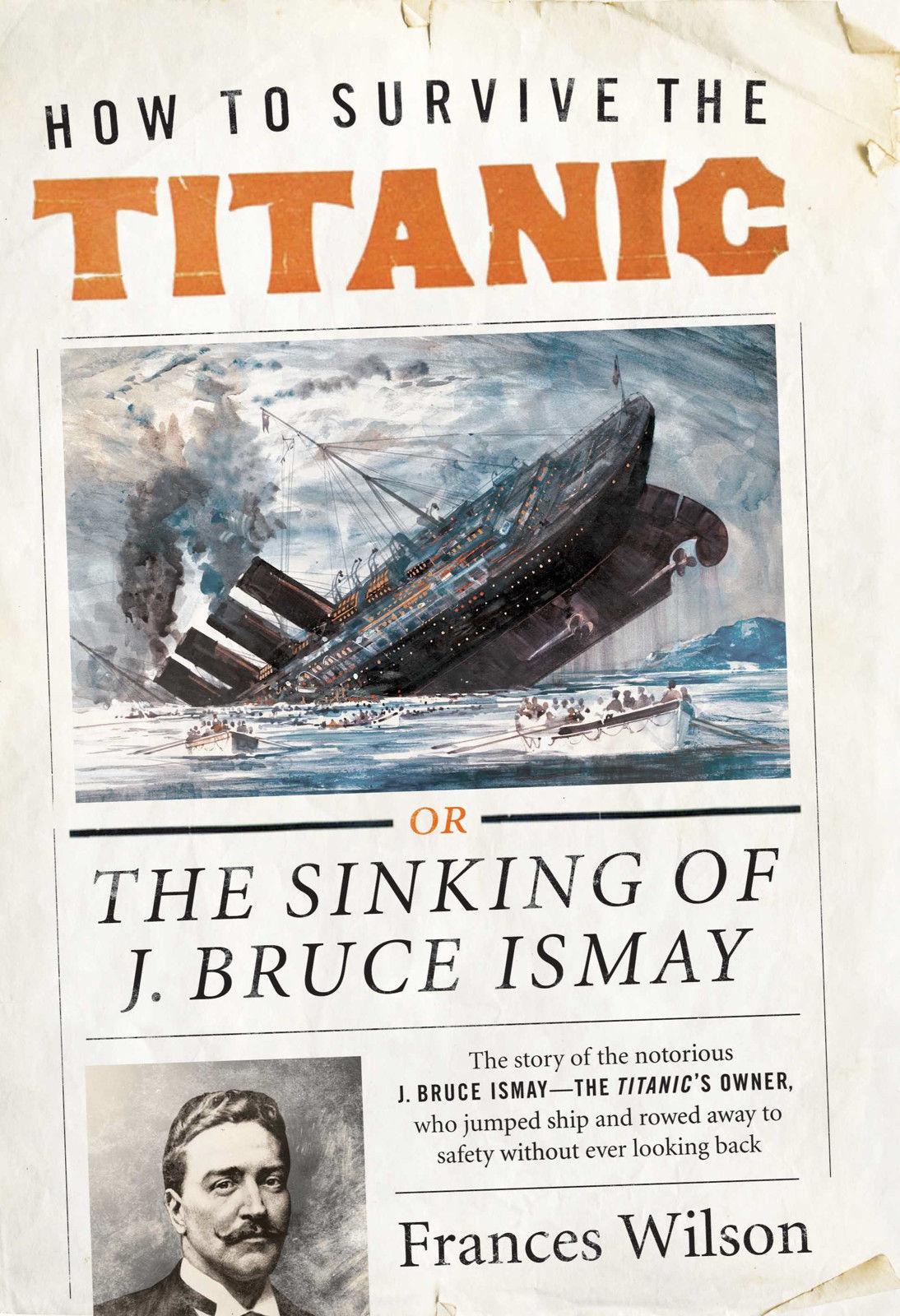
Award-winning historian Frances Wilson delivers a gripping new account of the sinking of the RMS Titanic, looking at the collision and its aftermath through the prism of the demolished life and lost honor of the ship’s owner, J. Bruce Ismay. In a unique work of history evocative of Joseph Conrad’s classic novel Lord Jim, Wilson raises provocative moral questions about cowardice and heroism, memory and identity, survival and guilt—questions that revolve around Ismay’s loss of honor and identity as his monolithic venture—a ship called “The Last Word in Luxury” and “The Unsinkable”—was swallowed by the sea and subsumed in infamy forever.
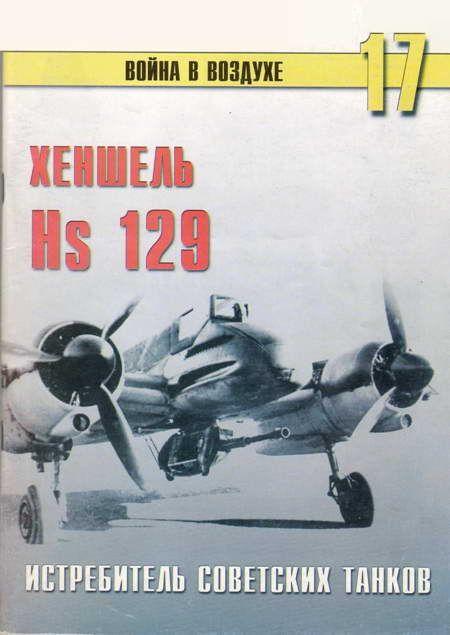
Весной 1937 г. штабом люфтваффе был введен термин Schlachtflugzug (ударный самолет для поражения бронетехники и фортификационных укреплений противника) и объявлен конкурс на создание такой машины. В апреле того же года тактико-технические требования к «Schlachtflugzug» были разосланы на четыре авиастроительные фирмы: Гамбургер (позже Бломм и Фосс), Фокке-Вульф, Гота и Хеншель. В требованиях особо оговаривался состав силовой установки – два двигателя относительно малой мощности, малые геометрические размеры самолета, наличие бронестекла фонаря кабины толщиной не менее 75 мм, бронезащиты двигателей и члена экипажа, вооружение из двух 20-мм автоматических пушек и пулеметов. В отношении количества членов экипажа ясности не наблюдалось, но военные склонялись в пользу одноместной машины, считая, что защиты от атак из задней полусферы не потребуется. В целом же требования выглядели достаточно либеральными, чтобы не сказать размытыми, и не связывали свободу рук конструкторам.
Прим.: Полный комплект иллюстраций, расположенных как в печатном издании, подписи к иллюстрациям текстом.
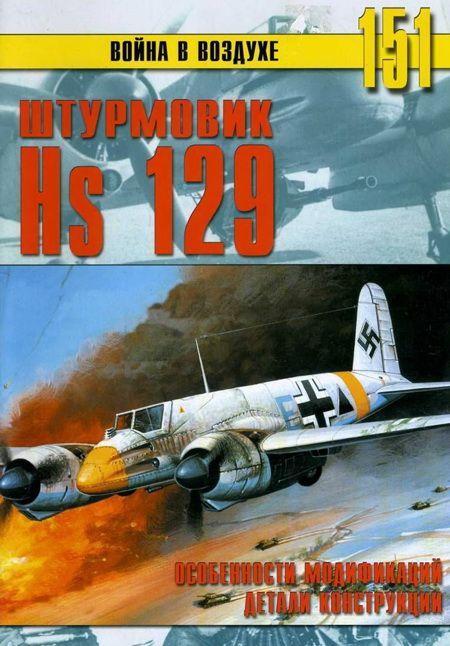
Сегодня уже ни у кого не вызывает сомнения гот факт, что гражданская война в Испании в 1936-39 годах фактически открыла Вторую Мировую войну. С военной точки зрения конфликт был уникальным для всех противоборствующих сторон прежде всего как шанс для апробации доктрины будущей войны. Кроме того, Испания также стала идеальным полигоном для испытания новых образцов техники, включая самолеты. Именно в этом конфликте впервые остро проявилась необходимость в «самолете поля боя». Также впервые для уничтожения небольших целей, таких как, например, корабли была применена атака с пикирования. Для этого широко использовались прежде всего новейшие по тем временам пикировщики «Юнкерсы» Ju 87.
Однако для уничтожения быстрых и маневренных целей как то танки или бронемашины, но прежнему использовали бипланы – например, «Хейнкель» Не 51 или «Хеншель» Hs 123. Однако эта же война показала, что эти устаревшие машины не подходят для этой роли в будущей маневренной войне. Поэтому в Германии остро встал вопрос о создании специализированного Schlachtflugzeug (штурмовика).

"Секреты Балтийского подплава" - произведение необычного жанра. Автор, опираясь на устные предания ветеранов Балтики и на сведения, которые просочились в подцензурной советской литературе, приподнимает завесу "совершенной секретности" над некоторыми событиями Великой Отечественной войны на Балтийском море.

Ian Hamilton’s March picks up the action immediately after Churchill’s London to Ladysmith chronicles, documenting the eponymous general’s 400-mile advance from Bloemfontein to Pretoria. The march saw ten major battles and numerous skirmishes, culminating in the release of prisoners from the camp where Churchill himself was held. Written mostly in the field, this book offers a vivid, personal account of the conditions under which the Boer War was fought, as well as a fascinating look at the formative years of one of the twentieth century’s preeminent leaders.
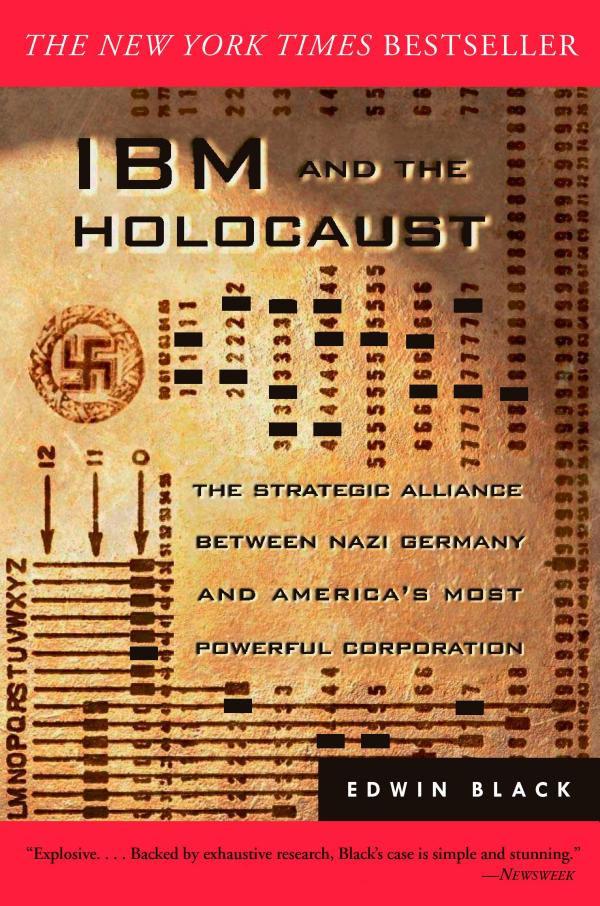
Published to extraordinary praise, this provocative international bestseller details the story of IBM’s strategic alliance with Nazi Germany. IBM and the Holocaust provides a chilling investigation into corporate complicity, and the atrocities witnessed raise startling questions that throw IBM’s wartime ethics into serious doubt. Edwin Black’s monumental research exposes how IBM and its subsidiaries helped create enabling technologies for the Nazis, step-by-step, from the identification and cataloging programs of the 1930s to the selections of the 1940s.

Первый том планируемого к изданию четырехтомника доктора исторических наук О. Ю. Пленкова посвящен социальной истории Третьего Рейха.
За двенадцать лет существования нацистского государства были достигнуты высокие темпы роста в промышленности и сельском хозяйстве, ликвидирована безработица, введены существенные налоговые льготы, что позволило создать весьма благоприятные условия жизни для населения Германии.
Но почему не удалось достичь полного социального благополучия? Почему позитивные при декларировании принципы в момент их реализации дали обратный эффект? Действительно ли за годы нацистского режима произошла модернизация немецкого общества? Как удалось Гитлеру путем улучшения условий жизни склонить немецкую общественность к принятию и оправданию насильственных действий против своих мнимых или настоящих противников?
Используя огромное количество опубликованных (в первую очередь, в Германии) источников и архивных материалов, автор пытается ответить на все эти вопросы.