 fb2
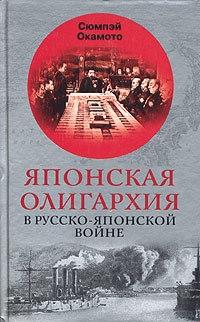
fb2В книге Сюмпэя Окамото, профессора истории, крупного специалиста в области политологии Восточной Азии, на основании многочисленных источников исследуется роль японских олигархов во внешней политике страны в триумфальный для японского народа период после победы над Российской империей. Автор анализирует последствия западного влияния на правящую элиту, механизмы возникновения массовых беспорядков, а также раскрывает слабые и сильные стороны олигархического правления.
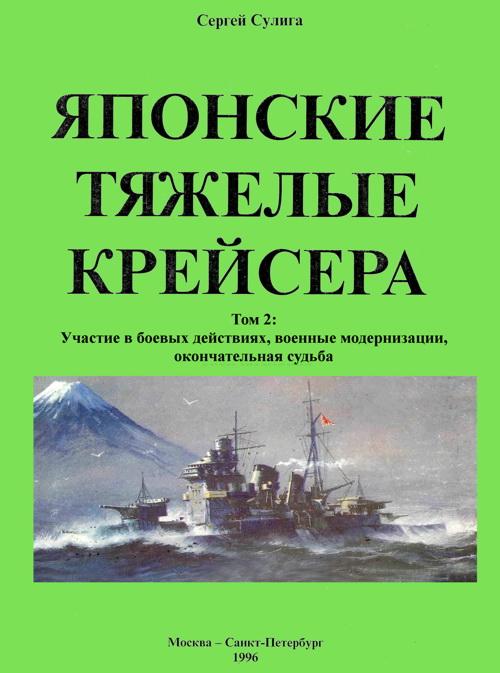
Боевая деятельность японских тяжелых крейсеров в ходе войны на Тихом океане отличалась необычайно широким диапазоном решаемых с их помощью задач. Вряд ли какие-нибудь другие корабли Императорского японского, да и любого другого, флота участвовали в таком же большом количестве операций, часто заканчивающихся ожесточенными схватками. Трудно даже себе представить, насколько менее интересной для современного читателя была бы история второй мировой войны на море, если в ней не рассматривать события, так или иначе связанные с японскими тяжелыми крейсерами. Созданные и прекрасно подготовленные для надводного морского боя, они вполне оправдали вложенные в них средства и усилия, оказавшись бессильными только против стремительно набиравших мощь в ходе войны палубной авиации и подводных лодок, которые и по сей день остаются, пожалуй, самым эффективным морским тактическим оружием, которое в свое время подписало приговор всем крупным артиллерийским кораблям.
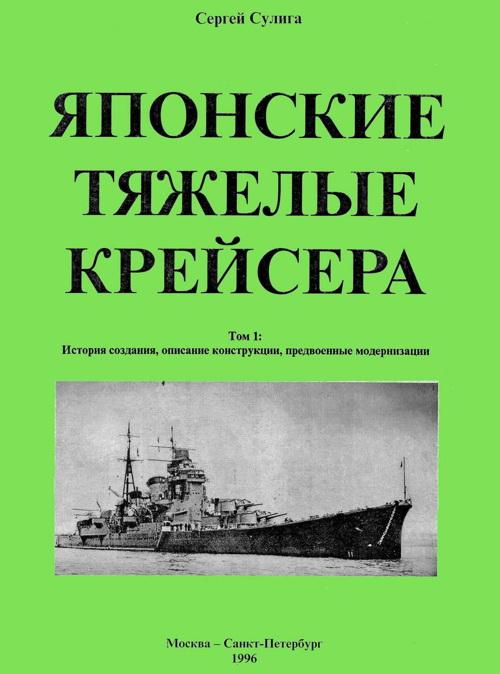
Что касается 18 японских тяжелых крейсеров, ставших предметом данной монографии, то первые из них появились в качестве 7100-тонных дальних разведчиков выходившего на океанские просторы флота и их проекты одобрили еще до подписания Вашингтонского договора. Тем не менее, и они создавались с оглядкой на британские крейсера-защитники торговли конца первой мировой войны типа “Хоукинс” (“Hawkins”), которых считают непосредственными предшественниками всех “вашингтонцев”. Построив 4 корабля с вооружением, заметно уступавшим первым «10000-тонникам» вероятных противников, японцы с лихвой компенсировали свое отставание в последующих двух сериях, за счет всевозможных ухищрений (а не брезговали они и нарушением договоров) давая им на 1 -2 орудия больше, чем у других, а также мощнейшее торпедное и авиационное вооружение. В результате 8 крейсеров типов “Миоко” и “Такао” не без оснований стали считать сильнейшими в мире. На эти корабли японские адмиралы возлагали большие надежды в ночном бою против численно сильнейшего линейного флота США - бою, который по их замыслам должен был предшествовать генеральному сражению. Функции же разведки в интересах линейного флота отошли на второй план, особенно с развитием палубной авиации.
Появление же последних 6 тяжелых крейсеров в составе японского флота не имеет аналогов в практике мирового кораблестроения: построенные в качестве легких (класса “b”) с беспрецедентно мощным вооружением из 15 155-мм орудий, но с заложенной в проекте возможностью перевооружения на 203-мм калибр, они были быстро перестроены в тяжелые, как только японцы отказались от соблюдения всех договоров. В результате к началу войны на Тихом океане количество кораблей этого класса у основных соперников - Японии и США — оказалось равным.
Издание выпущено в формате аналогичном серии "Боевые корабли мира".
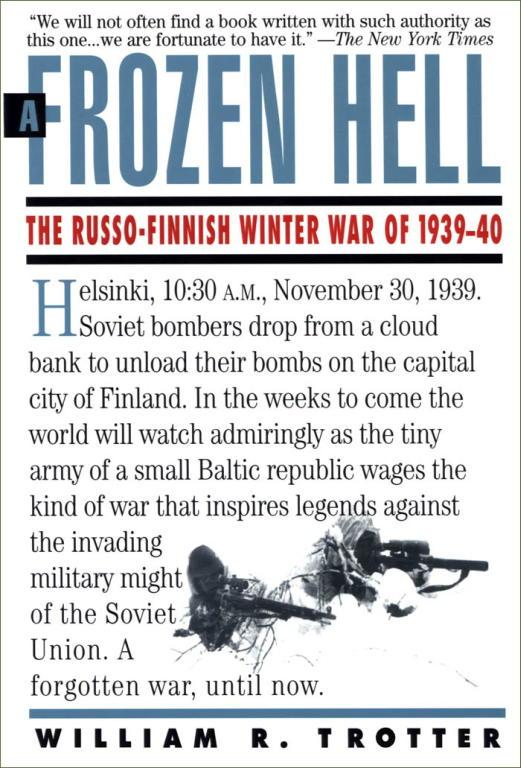
In 1939, tiny Finland waged war—the kind of war that spawns legends—against the mighty Soviet Union, and yet their epic struggle has been largely ignored. Guerrillas on skis, heroic single-handed attacks on tanks, unfathomable endurance, and the charismatic leadership of one of this century's true military geniuses-these are the elements of both the Finnish victory and a gripping tale of war.

Ernst Jünger, one of twentieth-century Germany’s most important and controversial writers, faithfully kept a journal during the Second World War in occupied Paris, on the eastern front, and in Germany until its defeat-writings that are of major historical and literary significance. These wartime journals appear here in English for the first time.
Ernst Jünger was one of twentieth-century Germany’s most important—and most controversial—writers. Decorated for bravery in World War I and the author of the acclaimed western front memoir Storm of Steel, he frankly depicted war’s horrors even as he extolled its glories. As a Wehrmacht captain during World War II, Jünger faithfully kept a journal in occupied Paris and continued to write on the eastern front and in Germany until its defeat—writings that are of major historical and literary significance. Jünger’s Paris journals document his Francophile excitement, romantic affairs, and fascination with botany and entomology, alongside mystical and religious ruminations and trenchant observations on the occupation and the politics of collaboration. While working as a mail censor, he led the privileged life of an officer, encountering artists such as Céline, Cocteau, Braque, and Picasso. His notes from the Caucasus depict the chaos after Stalingrad and atrocities on the eastern front. Upon returning to Paris, Jünger observed the French resistance and was close to the German military conspirators who plotted to assassinate Hitler in 1944. After fleeing France, he reunited with his family as Germany’s capitulation approached.
Both participant and commentator, close to the horrors of history but often distancing himself from them, Jünger turned his life and experiences into a work of art. These wartime journals appear here in English for the first time, giving fresh insights into the quandaries of the twentieth century from the keen pen of a paradoxical observer.
Ernst Jünger (1895–1998) was a major figure in twentieth-century German literature and intellectual life. He was a young leader of right-wing nationalism in the Weimar Republic. Among his many works is the novel On the Marble Cliffs, a symbolic criticism of totalitarianism written under the Third Reich.
Elliot Neaman is professor of history at the University of San Francisco and the author of A Dubious Past: Ernst Jünger and the Politics of Literature after Nazism (1999).
Thomas Hansen, a longtime member of the Wellesley College German Department, is a translator from the German.
Abby Hansen is a translator of German literary and nonfiction texts.
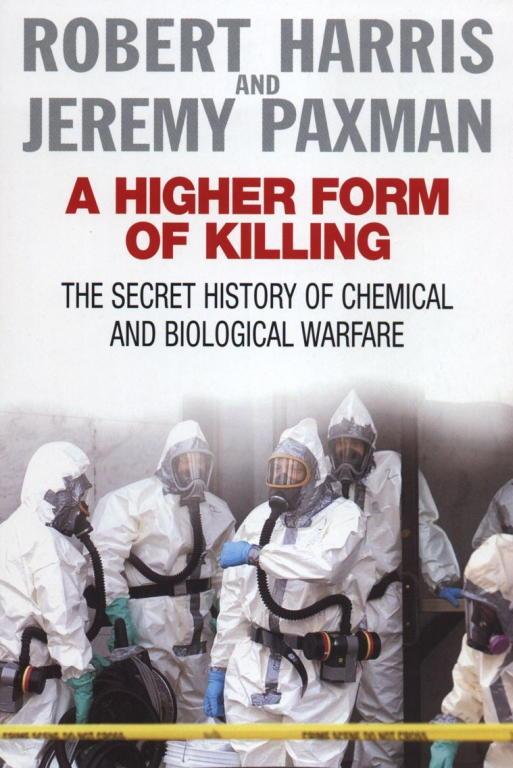
The proliferation of chemical and biological weapons is the greatest threat the world faces today. Far easier to make than nuclear bombs, their effects are scarcely less devastating. And many of the world’s most dangerous regimes – Iraq, Iran, Syria, Libya and North Korea – either possess them, or are trying to get hold of them. In the hands of terrorists, they could kill thousands, or even millions.
Updated in the aftermath of the September 11 attacks, this classic account of the history of chemical and biological warfare, by two of Britain’s leading journalists, spans almost a century of horror, from the mustard gas of the First World War to the germ weapons built up by Saddam Hussein.
‘I could see that still no one had been able to get out from the cockpit. It must have been at this moment that I thought I was going to die because I became remarkably calm.’
Trapped inside a burning Lancaster bomber, 20,000 feet above Berlin, airman John Martin consigned himself to his fate and turned his thoughts to his fiancée back home. In a miraculous turn of events, however, the twenty-one year old was thrown clear of his disintegrating aeroplane and found himself parachuting into the heart of Nazi Germany. He was soon to be captured and began his period as a prisoner of war.
This engaging and compulsively readable true-life account of a Second World War airman, who cheated death in the sky, only to face interrogation and the prospect of being shot by the Gestapo, before having to endure months of hardship as a prisoner of war.

More than 70 years after it was first published, this book is still one of the all-time classics on the art of military marksmanship, and is required reading at the U.S. Marine Corps Sniper School. The author grew up learning to shoot in the backwoods of Indiana, and went on to compete nationally as a sharpshooter. When World War I broke out in Europe, he was so eager to fight that he enlisted in the Canadian Expeditionary Force. Wounded seven times and finally invalided home after nearly two years on the front lines, he was an enthusiastic soldier and a superb sniper, with over 100 confirmed kills. His story of his time in the trenches includes frequent lessons on the mindset, the tactics, and the weapons of sniping, and has much hard-won advice about personal survival on the battlefield. It stands out as one of the best first-person accounts of World War I.
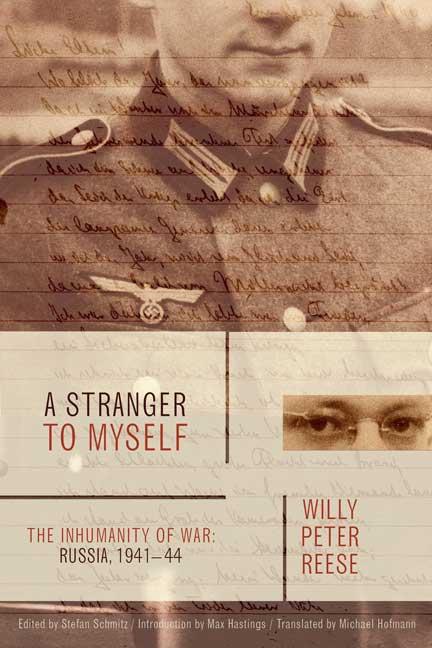
A Stranger to Myself: The Inhumanity of War, Russia 1941-44 is the haunting memoir of a young German soldier on the Russian front during World War II. Willy Peter Reese was only twenty years old when he found himself marching through Russia with orders to take no prisoners. Three years later he was dead. Bearing witness to—and participating in—the atrocities of war, Reese recorded his reflections in his diary, leaving behind an intelligent, touching, and illuminating perspective on life on the eastern front. He documented the carnage perpetrated by both sides, the destruction which was exacerbated by the young soldiers’ hunger, frostbite, exhaustion, and their daily struggle to survive. And he wrestled with his own sins, with the realization that what he and his fellow soldiers had done to civilians and enemies alike was unforgivable, with his growing awareness of the Nazi policies toward Jews, and with his deep disillusionment with himself and his fellow men.
An international sensation, A Stranger to Myself is an unforgettable account of men at war.
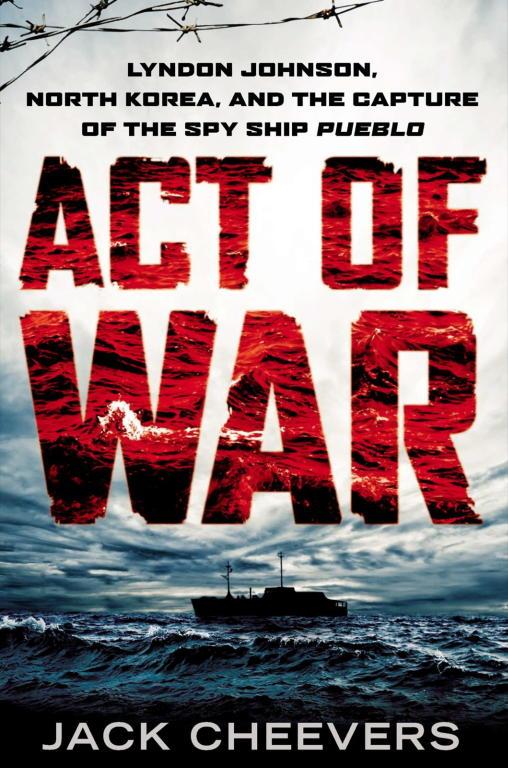
In 1968, a small, dilapidated American spy ship set out on a dangerous mission: to pinpoint military radar stations along the coast of North Korea. Packed with advanced electronic-surveillance equipment and classified intelligence documents, the USS Pueblo was poorly armed and lacked backup by air or sea. Its crew, led by a charismatic, hard-drinking ex-submarine officer named Pete Bucher, was made up mostly of untested sailors in their teens and twenties.
On a frigid January morning while eavesdropping near the port of Wonsan, the Pueblo was challenged by a North Korean gunboat. When Bucher tried to escape, his ship was quickly surrounded by more patrol boats, shelled and machine-gunned, and forced to surrender. One American was killed and ten wounded, and Bucher and his young crew were taken prisoner by one of the world’s most aggressive and erratic totalitarian regimes.
Less than forty-eight hours before the Pueblo’s capture, North Korean commandos had nearly succeeded in assassinating South Korea’s president in downtown Seoul. Together, the two explosive incidents pushed Cold War tensions toward a flashpoint as both North and South Korea girded for war—with fifty thousand American soldiers caught between them. President Lyndon Johnson rushed U.S. combat ships and aircraft to reinforce South Korea, while secretly trying to negotiate a peaceful solution to the crisis.
Act of War tells the riveting saga of Bucher and his men as they struggled to survive merciless torture and horrendous living conditions in North Korean prisons. Based on extensive interviews and numerous government documents released through the Freedom of Information Act, this book also reveals new details of Johnson’s high-risk gambit to prevent war from erupting on the Korean peninsula while his negotiators desperately tried to save the sailors from possible execution. A dramatic tale of human endurance against the backdrop of an international diplomatic poker game, Act of War offers lessons on the perils of covert intelligence operations as America finds itself confronting a host of twenty-first-century enemies.
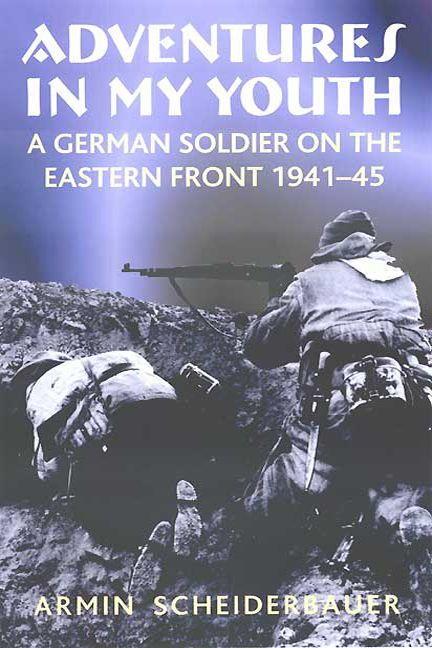
The author could be described as a ‘veteran’ in every sense of the word, even though he was only aged 21 when the war ended. Armin Scheiderbauer served as an infantry officer with the 252nd Infantry Division, German Army, and saw four years of bitter combat on the Eastern Front, being wounded six times. This is an outstanding personal memoir, written with great thoughtfulness and honesty.
Scheiderbauer joined his unit at the front in 1942, and during the following years saw fierce combat in many of the largest battles on the Eastern Front. His experiences of the 1943-45 period are particularly noteworthy, including his recollections of the massive Soviet offensives of summer 1944 and January 1945. Participating in the bitter battles in West Prussia, he was captured by the Soviets and not released until 1947.
Adventures in my Youth is a unique memoir – the author originally wrote it only for his daughter.
John Stieber was twelve-year-old schoolboy in Ireland when he was sent to secondary school in Germany. Caught there by the outbreak of the Second World War, he was unable to return to his parents for seven years.
In due course, he was called to serve in an anti-aircraft battery and in the National Labour Service. Just after his eighteenth birthday, he was sent to the Russian Front with the elite Paratrooper and Tank Division, Hermann Göring. He lived through an amazing series of events, escaping death many times and was one of the few survivors of his division when the war ended.
In this narrative of his early life, John Stieber describes how he went from a carefree childhood through increasing hardships, until every day of his life became a challenge for survival.
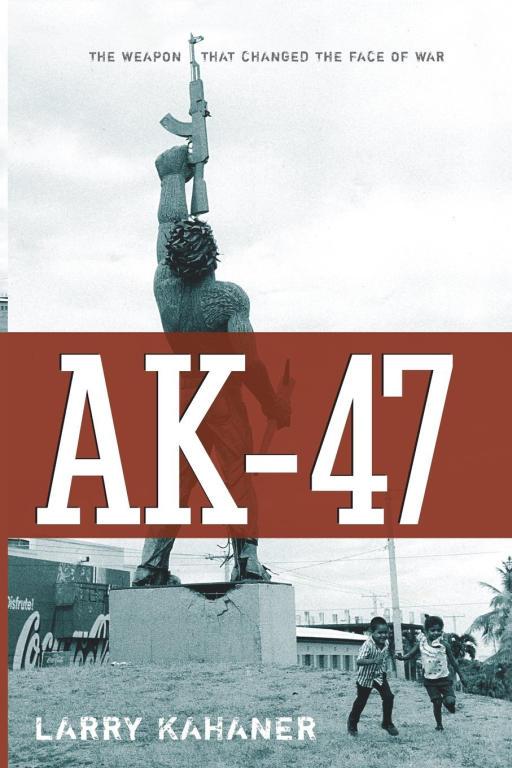
No single weapon has spread so much raw power to so many people in so little time—and had such a devastating effect—as the AK-47 assault rifle. This book examines the legacy of this world-changing weapon, from its creation as means of fighting the Nazis to its ubiquity today in every kind of conflict, from civil wars in Africa to gang wars in L.A.

In May 2011 after a Mediterranean exercise to prove the Apache’s ability to work ship-borne, HMS Ocean and her embarked Apache attack helicopters from 656 Squadron, Army Air Corps were about to head home. But the civil war in Libya and the NATO air campaign intervened. A few days later the Author and his fellow Apache pilots and crewmen were in action at night over hostile territory. In range to Gaddafi’s capable air and land forces once in sight of the coast, they had to fight their way into Libya, complete their mission, evading lethal ground fire, before the hazardous return to Ocean. Flying well within the reach of Libya’s state-of-the-art ground to air weapons, the Apaches made nightly raids at ultra low-level behind enemy lines.
Apache over Libya describes the experiences of eight Army and two Royal Navy pilots who played a significant role in the NATO led campaign. Despite fighting the best armed enemy British aircrew have faced in generations, they defied the odds and survived.
Vividly conveying the thrill and fear of flying the Apache in combat at sea and over enemy-held terrain, this is an unforgettable and unique first-hand account.
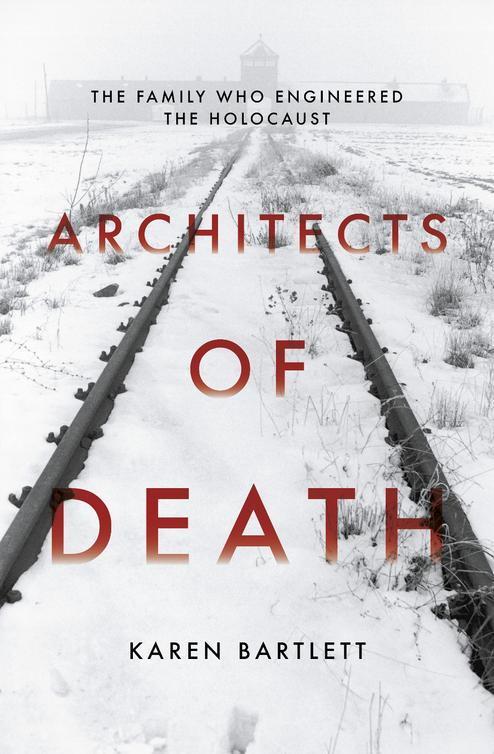
Topf and Sons designed and built the crematoria at the concentration camps at Auschwitz-Birkenau, Buchenwald, Belzec, Dachau, Mauthausen and Gusen. At its height sixty-six Topf triple muffle ovens were in operation – forty-six of which were at Auschwitz.
In five years the gas chambers and crematoria of Auschwitz had been the engine of the holocaust, facilitating the murder and incineration of more than one million people, most of them Jews.
Yet such a spectacularly evil feat of engineering was designed not by the Nazi SS, but by a small respectable firm of German engineers: the owners and engineers of J. A. Topf and Sons. These were not Nazi sadists, but men who were playboys and the sons of train drivers. They were driven not by ideology, but by love affairs, personal ambition and bitter personal rivalries to create the ultimate human killing and disposal machines – even at the same time as their company sheltered Nazi enemies from the death camps.
The intense conflagration of their very ordinary motives created work that surpassed in its inhumanity even the demands of the SS. In order to fulfil their own ‘dreams’ they created the ultimate human nightmare.
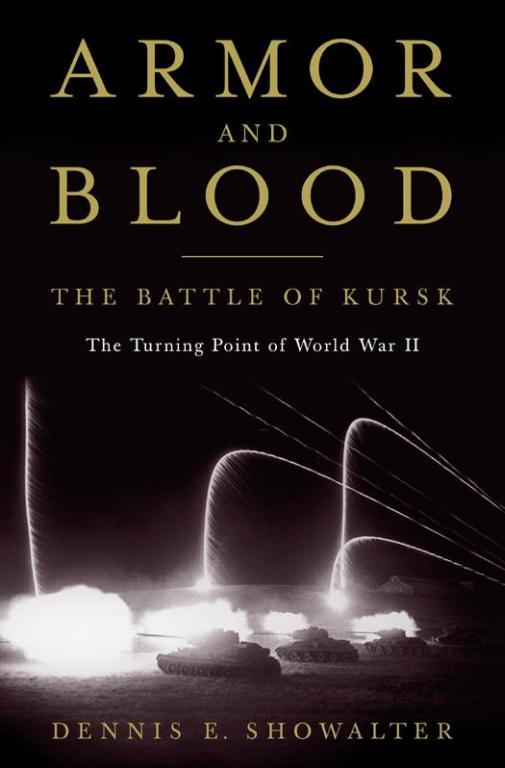
One of America’s most distinguished military historians offers the definitive account of the greatest tank battle of World War II—an epic clash of machines and men that matched the indomitable will of the Soviet Red Army against the awesome might of the Nazi Wehrmacht.
While the Battle of Kursk has long captivated World War II aficionados, it has been unjustly overlooked by historians. Drawing on the masses of new information made available by the opening of the Russian military archives, Dennis Showalter at last corrects that error. This battle was the critical turning point on World War II’s Eastern Front. In the aftermath of the Red Army’s brutal repulse of the Germans at Stalingrad, the stakes could not have been higher. More than three million men and eight thousand tanks met in the heart of the Soviet Union, some four hundred miles south of Moscow, in an encounter that both sides knew would reshape the war. The adversaries were at the peak of their respective powers. On both sides, the generals and the dictators they served were in agreement on where, why, and how to fight. The result was a furious death grapple between two of history’s most formidable fighting forces—a battle that might possibly have been the greatest of all time.
In Armor and Blood, Showalter re-creates every aspect of this dramatic struggle. He offers expert perspective on strategy and tactics at the highest levels, from the halls of power in Moscow and Berlin to the battlefield command posts on both sides. But it is the author’s exploration of the human dimension of armored combat that truly distinguishes this book. In the classic tradition of John Keegan’s The Face of Battle, Showalter’s narrative crackles with insight into the unique dynamics of tank warfare—its effect on men’s minds as well as their bodies. Scrupulously researched, exhaustively documented, and vividly illustrated, this book is a chilling testament to man’s ability to build and to destroy.
When the dust settled, the field at Kursk was nothing more than a wasteland of steel carcasses, dead soldiers, and smoking debris. The Soviet victory ended German hopes of restoring their position on the Eastern Front, and put the Red Army on the road to Berlin. Armor and Blood presents readers with what will likely be the authoritative study of Kursk for decades to come.
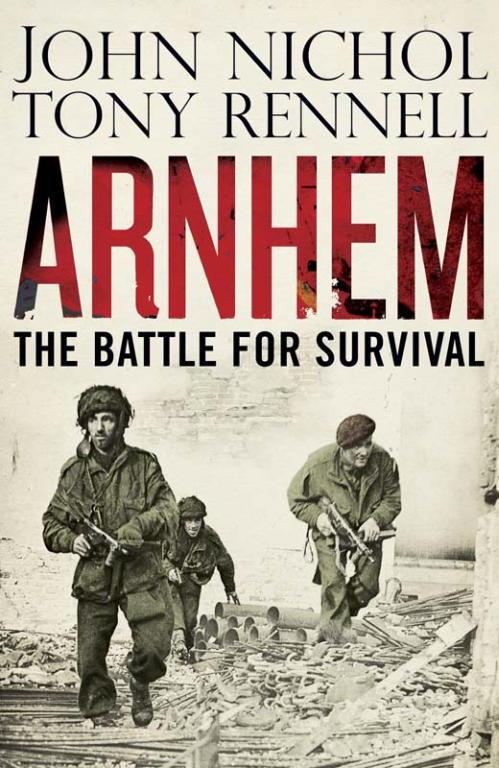
In September 1944, a mighty shock force of battle hardened Allied troops dropped from the skies into enemy-occupied Holland in what was hoped would be the decisive final battle of World War II. Landing miles behind the German lines, their daring mission was to secure bridges across the Rhine so that ground forces could make a rapid dash into Nazi Germany. If all went well, the war could be over by Christmas.
But what many trusted would be a simple operation turned into a brutal losing battle. Of 12,000 British airborne soldiers, 1,500 died and 6,000 were taken prisoner. The vital bridge at Arnhem they had come to capture stayed resolutely in German hands.
But though this was a bitter military defeat for the Allies, beneath the humiliation was another story — of heroism and self-sacrifice, gallantry and survival, guts and determination unbroken in the face of impossible odds.
In the two-thirds of a century that have passed since then, historians have endlessly analysed what went wrong and squabbled over who was to blame. Lost in the process was that other Arnhem story — the triumph of the human spirit, as seen through the dramatic first-hand accounts of those who were there, in the cauldron, fighting for their lives, fighting for their comrades, fighting for their honour, a battle they won hands down.
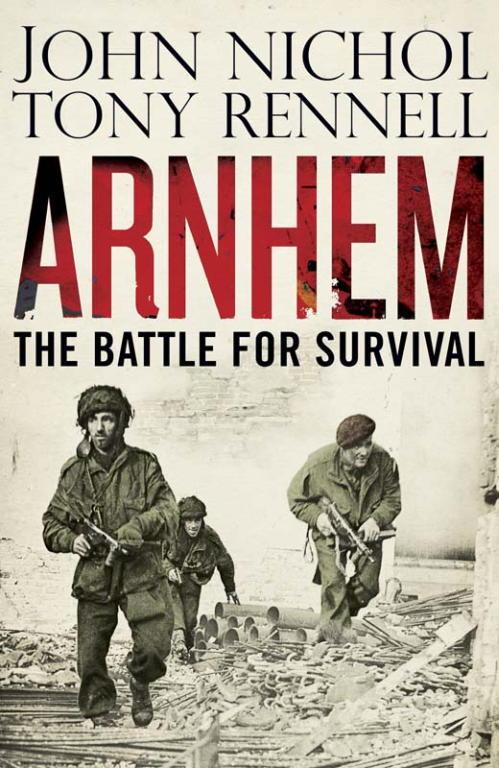
In September 1944, a mighty shock force of battle hardened Allied troops dropped from the skies into enemy-occupied Holland in what was hoped would be the decisive final battle of World War II. Landing miles behind the German lines, their daring mission was to secure bridges across the Rhine so that ground forces could make a rapid dash into Nazi Germany. If all went well, the war could be over by Christmas.
But what many trusted would be a simple operation turned into a brutal losing battle. Of 12,000 British airborne soldiers, 1,500 died and 6,000 were taken prisoner. The vital bridge at Arnhem they had come to capture stayed resolutely in German hands.
But though this was a bitter military defeat for the Allies, beneath the humiliation was another story — of heroism and self-sacrifice, gallantry and survival, guts and determination unbroken in the face of impossible odds.
In the two-thirds of a century that have passed since then, historians have endlessly analysed what went wrong and squabbled over who was to blame. Lost in the process was that other Arnhem story — the triumph of the human spirit, as seen through the dramatic first-hand accounts of those who were there, in the cauldron, fighting for their lives, fighting for their comrades, fighting for their honour, a battle they won hands down.
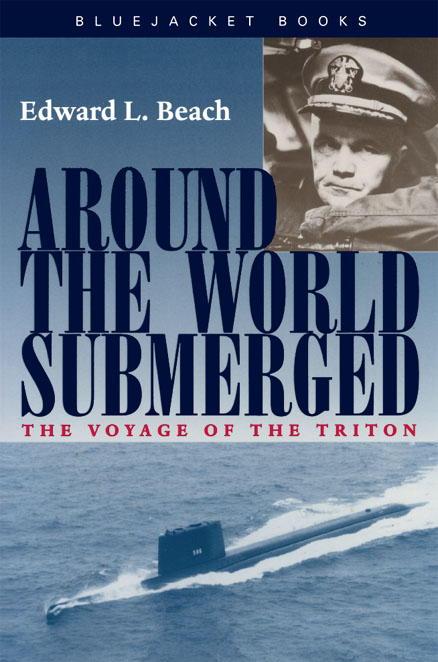
When the nuclear-powered submarine USS Triton was commissioned in November 1959, its commanding officer, Captain Edward L. Beach, planned a routine shakedown cruise in the North Atlantic. Two weeks before the scheduled cruise, however, Beach was summoned to Washington and told of the immediate necessity to prove the reliability of the Rickover-conceived submarine. His new secret orders were to take the Triton around the world, entirely submerged the total distance.
This is Beach’s gripping firsthand account of what went on during the 36,000 nautical-mile voyage whose record for speed and endurance still stands today. It brings to life the many tense events in the historic journey: the malfunction of the essential fathometer that indicated the location of undersea mountains and shallow waters, the sudden agonizing illness of a senior petty officer, and the serious problems with the ship’s main hydraulic oil system.
Intensely dramatic, Beach’s chronicle also describes the psychological stresses of the journey and some touching moments shared by the crew. A skillful story teller, he recounts the experience in such detail that readers feel they have been along for the ride of a lifetime.
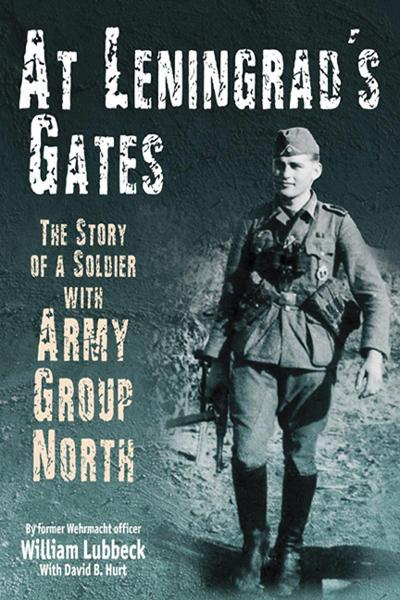
This is the remarkable story of a German soldier who fought throughout World War II, rising from conscript private to captain of a heavy weapons company on the Eastern Front.
William Lubbeck, age 19, was drafted into the Wehrmacht in August 1939. As a member of the 58th Infantry Division, he received his baptism of fire during the 1940 invasion of France. The following spring his division served on the left flank of Army Group North in Operation Barbarossa. After grueling marches amidst countless Russian bodies, burnt-out vehicles, and a great number of cheering Baltic civilians, Lubbeck’s unit entered the outskirts of Leningrad, making the deepest penetration of any German formation.
The Germans suffered hardships the following winter as they fought both Russian counterattacks and the brutal cold. The 58th Division was thrown back and forth across the front of Army Group North, from Novgorod to Demyansk, at one point fighting back Russian attacks on the ice of Lake Ilmen.
A soldier who preferred to be close to the action, Lubbeck served as forward observer for his company, dueling with Russian snipers, partisans and full-scale assaults alike. His worries were not confined to his own safety, however, as news arrived of disasters in Germany, including the destruction of Hamburg where his girlfriend served as an Army nurse.
In September 1943, Lubbeck earned the Iron Cross and was assigned to officers’ training school in Dresden. By the time he returned to Russia, Army Group North was in full-scale retreat. Now commanding his former heavy weapons company, Lubbeck alternated sharp counterattacks with inexorable withdrawal to Memel on the Baltic. In April 1945 his company was nearly obliterated, but in the last scramble from East Prussia, he was able to evacuate on a newly minted German destroyer.
After his release from British captivity, Lubbeck immigrated to the United States where he raised a successful family. With the assistance of David B. Hurt, he has drawn on his wartime notes and letters, Soldatbuch, regimental history and personal memories to recount his frontline experience, including rare firsthand accounts of both triumph and disaster.