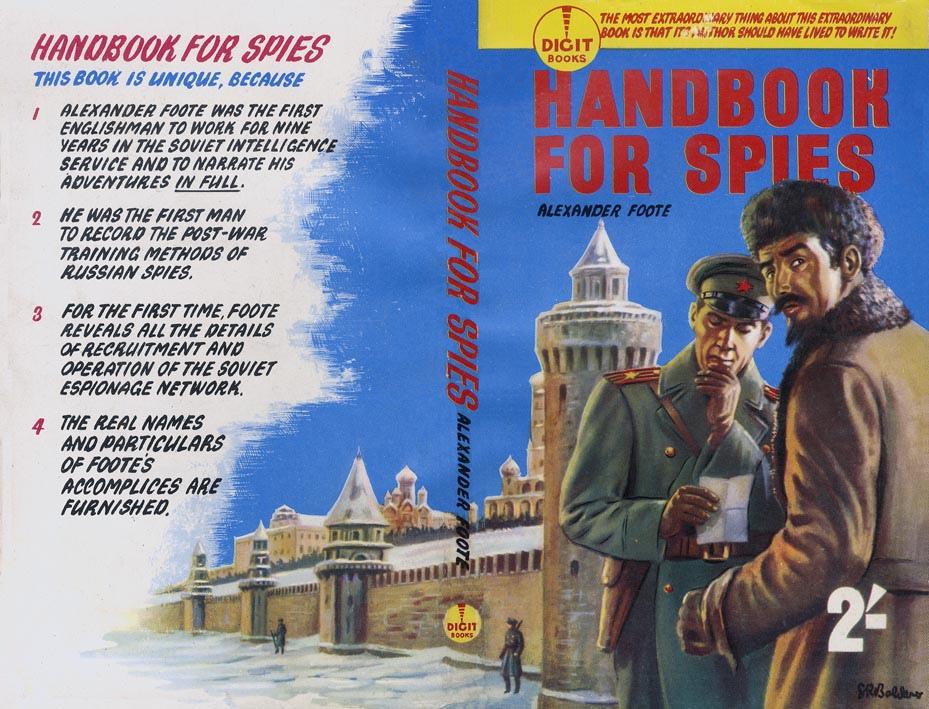
 fb2
fb2Allan Alexander Foote (b. 13. April 1905, d. 1. August 1957) was a radio operator for a Soviet espionage ring in Switzerland during World War II. Foote was originally from Yorkshire in England, and had spent some time in Spain working for the Republican side during the Civil War in the 1930s. He decided to continue his efforts against Fascism (and, perhaps, for Communism) and volunteered for clandestine work with Red Orchestra. He was put into contact with Ursula Kuczynski in Switzerland. He became a radio operator for the Soviet espionage operation run by Alexander Radó and was one of those who passed information to Moscow from the Lucy spy ring run by Rudolf Roessler. Foote was one of those arrested when the Swiss police shut down most of the operation and was detained for a time.
After the War, he spent some time in the Eastern Bloc and then returned to the West and published his book, A Handbook for Spies. He died in the 1950s.
Because of the implausible veracity of the intelligence (fast, plentiful, and accurate) and never explained source of the Lucy Ring's information, suspicion attaches to all those associated with it. Since Foote, as the Lucy Ring's radio operator was a central cog in the chain of supply and therefore in a position to know much, his subsequent account has been thought to be rather dubious in places. This and the fact that he seemingly managed to return to the West rather easily, has led some to suggest Foote was a British Secret Service double agent and one conduit (perhaps even the main one) of intelligence from Britain to Roessler and thence to Moscow.
According to various sources, Foote was indeed a MI6 (SIS) double agent unbeknownst to Rado. After the destruction of Rado's network and his escape from Switzerland, Rado met Foote in Paris and both were ordered to return to Moscow immediately. They took off aboard a Russian military aeroplane on January 6, 1945, taking a circuitous route (due to the war being still in progress) via Egypt. Their plane landed to refuel in Cairo, where upon Rado defected. Continuing alone to Moscow, Foote was subjected to intensive interrogation in an attempt to determine his loyalty and the possibility of his being a penetration agent. Foote was confronted with an instance of disinformation sent from his transmitter in May 1942 and told "That message cost us 100 000 men at Kharkov and resulted in the Germans reaching Stalingrad." Foote said that he merely passed on what he received from Radó. Satisfied with Foote's explanation, the Soviets gave Foote a false identity under the alias of Major Granatov. Posing as a German, Albert Müller, he inserted himself into post war Berlin to establish this alias with the aim of being sent by Moscow Centre to Argentina, to attempt to identify and infiltrate groups of escaped high ranking Nazis.
Journalist, broadcaster and author Malcolm Muggeridge, himself a wartime MI6 officer, "got to know Foote after the war" (pp 207-08) when Foote paid Muggeridge "regular visits" at his flat near Regents Park, London. Foote at this time was working as a clerk in the Ministry of Agriculture and Fisheries, work he found, according to Muggeridge, "very tedious". Muggeridge is firmly of the opinion that the information Foote sent "could only, in fact, have come from Bletchley"
In March 1947, following the defection of a Soviet agent who had been involved with British Intelligence, Foote's allegiance to the British may have been confirmed. Foote himself defected from his Russian control in Berlin, escaping to the British sector.
A fascinating account of Nazi Germany’s armored forces by the author of Patton and Rommel.
Determined to secure a quick, decisive victory on the World War II battlefields, Adolf Hitler adopted an attack plan that combined tools with technique—the formidable Panzer divisions. Self-contained armored units able to operate independently, the Panzers became the German army's fighting core as well as its moral focus, establishing an entirely new military doctrine.
In Hitler’s Panzers, renowned World War II scholar Dennis Showalter presents a comprehensive and unbiased study of Nazi Germany’s armored forces. By delving deeply into a detailed history of the theory, strategy, myths, and realities of Germany’s technologically innovative approach to warfare, Showalter provides a look at the military lessons of the past, and a speculation on how the Panzer ethos may be implemented in the future of international conflict.
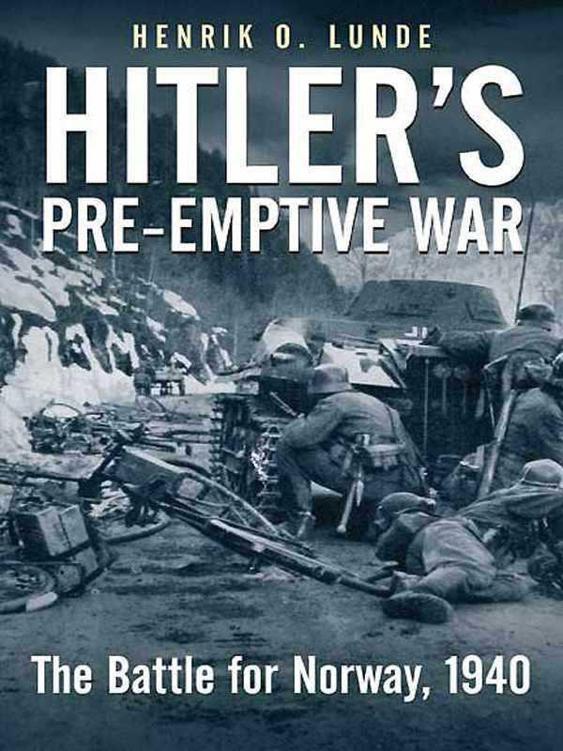
A thorough examination of one of history’s revolutionary campaigns…
After Hitler conquered Poland, and while still fine-tuning his plans against France, the British began to exert control of the coastline of neutral Norway, an action that threatened to cut off Germany’s iron-ore conduit to Sweden and outflank from the start its hegemony on the Continent.
The Germans quickly responded with a dizzying series of assaults, using every tool of modern warfare developed in the previous generation. Airlifted infantry, mountain troops and paratroopers were dispatched to the Scandinavian nation, seizing Norwegian strong points while forestalling larger but more cumbersome Allied units.
The German navy also set sail, taking a brutal beating at the hands of Britannia, while ensuring with its sacrifice that key harbors could be held open for resupply. As dive bombers soared overhead, small but elite German units traversed forbidding terrain to ambush Allied units trying to forge inland. At Narvik, some 6,000 German troops battled 20,000 French and British, until the Allies were finally forced to withdraw by the great disaster in France, which had then get underway.
As a veritable coda to the campaign, the aircraft carrier Glorious, while trying to sail back to Britain, was hammered under the waves by the German battle cruiser Scharnhorst.
The air, airborne, sea, amphibious, infantry, armor and commando aspects of this brief but violent campaign are here covered in meticulous detail. Henrik Lunde, a native Norwegian and former U.S. Special Operations colonel, has written perhaps the most objective account to date of a campaign in which 20th century military innovation found its first fertile playing field.
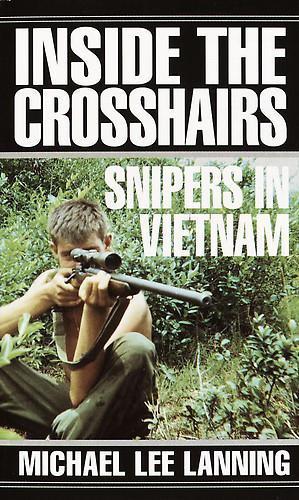
“The American sniper could be regarded as the greatest all-around rifleman the world has ever known….”
At the start of the war in Vietnam, the United States had no snipers; by the end of the war, Marine and army precision marksmen had killed more than 10,000 NVA and VC soldiers—the equivalent of an entire division—at the cost of under 20,000 bullets, proving that long-range shooters still had a place in the battlefield. Now noted military historian Michael Lee Lanning shows how U.S. snipers in Vietnam—combining modern technology in weapons, ammunition, and telescopes—used the experience and traditions of centuries of expert shooters to perfect their craft.
To provide insight into the use of American snipers in Vietnam, Lanning interviewed men with combat trigger time, as well as their instructors, the founders of the Marine and U.S. Army sniper programs, and the generals to whom they reported. Backed by hard information and firsthand accounts, the author demonstrates how the skills these one-shot killers honed in the jungles of Vietnam provided an indelible legacy that helped save American lives in Grenada, the Gulf War, and Somalia and continues to this day with American troops in Bosnia.
[Best viewed with CoolReader.]
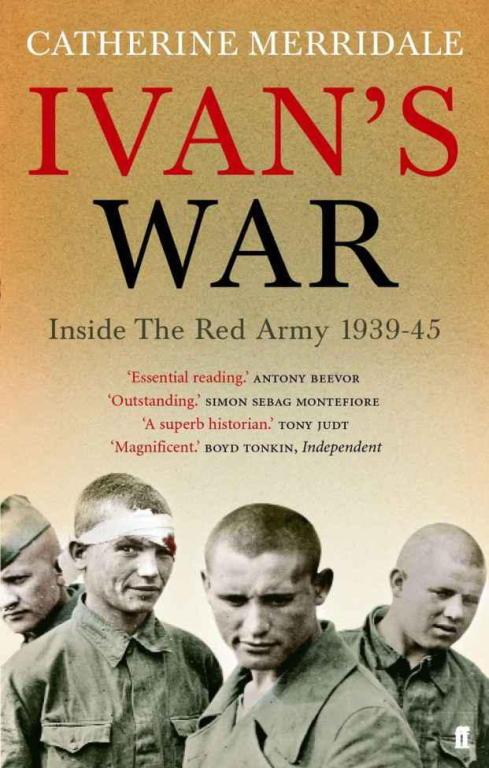
They died in vast numbers, eight million men and women driven forward in suicidal charges, shattered by German shells and tanks. They were the soldiers of the Red Army, an exhausted mass of recruits who confronted Europe’s most lethal fighting force and by 1945 had defeated it. For sixty years, their experiences were suppressed, replaced by patriotic propaganda. We know how the soldiers died, but nearly nothing about how they lived, how they saw the world, or why they fought. In this ambitious, revelatory history, Catherine Merridale uncovers the harrowing story of who these soldiers were, and how they lived and died during the war.
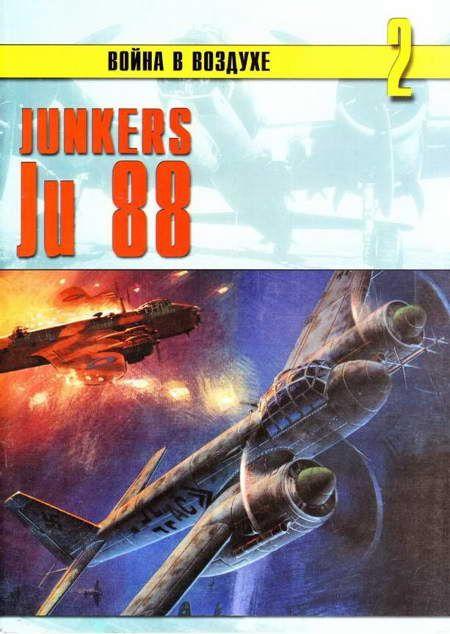
В 1934 году Reichsluftfahrministerium (RLM) – воздушный комиссариат – разработал технические требования к самолету, названному «Kampfzerstoerer» (это слово можно перевести как истребитель-бомобардировщик, термином «Zersloerer» в Германии называли самолеты, которых в других странах относили к тяжелым истребителям). Трехместный самолет должен был нести мощное наступательное вооружение, состоящее из пушек калибра 20 мм, а также брать на борт небольшую бомбовую нагрузку. В качестве силовой установки предполагали использовать два двигателя Даймлер-Бенц DB 600 или два Юнкерс Jumo 210 (оба типа двигателя в то время еще находились на стадии проектирования).
В 1935 году фирма Юнкерса начала работы над самолетами, по конструкции близкими к концепции Kampfzerstoerer. Одновременно были созданы два проекта: Ju 85 – с разнесенным оперением и Ju 88 с оперением однокилевым.
Прим.: Полный комплект иллюстраций, расположенных как в печатном издании (+ собранные схемы на разворотах), подписи к иллюстрациям текстом.
The mass murder of 22,000 Poles by the Soviet NKVD at Katyn is one of the most shocking events of the Second World War and its political implications are still being felt today. This book draws on intelligence reports, witness statements, memoranda and briefing papers of diplomats who dealt with the Katyn massacre.
The bitter dispute is ongoing between the Russian and Polish governments, to declassify the rest of the documents and concede to genocide perpetrated by the Soviets. British “Most Secret” files reveal that Katyn was considered as a provocative incident, which might break political alliance with the Soviets. The “suspension of judgment” policy of the British government hid for more than half a century a deceitful diplomacy of Machiavellian proportions.
Katyn 1940 draws on intelligence reports, previously unpublished documents, witness statements, memoranda, and briefing papers of diplomats and civil servants of various echelons, who dealt with the Katyn massacre up to the present day to expose the true hypocrisy of the British and American attitude to the massacre.
Eugenia Maresch is the author of General Wladyslaw Sikorski, Poland’s Wartime Leader; Intelligence Co-operation Between Great Britain and Poland in World War II; and Polish Forces in Defence of the British Isles 1939-1945.
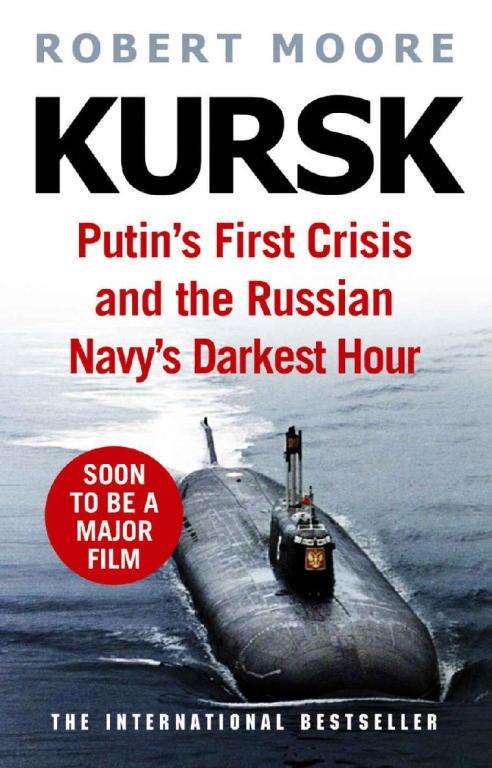
The acclaimed and harrowing story of the fate of Russia’s most powerful submarine – now with new material from the author.
At 11.28 a.m. on Saturday, 12 August 2000, a massive and mysterious blast punched through the shallow Arctic waters of the Barents Sea. 135 seconds later, another colossal explosion was detected by seismologists around the globe. The Kursk, pride of Russia’s Northern Fleet and the largest attack submarine in the world, was plunging to the ocean floor, fatally wounded.
In Kursk, award-winning television journalist Robert Moore vividly recreates this disaster minute by minute. Venturing into a covert world where the Cold War continues out of sight, Moore investigates the military and political background to the tragedy. But above all, he tells the nail-bitingly poignant human story of the families waiting on shore, of the desperate efforts of the British, Norwegian and Russian rescuers, and of the twenty-three sailors, trapped in the aft compartment of the stricken submarine, waiting for rescue, as a horrified world followed their fight to stay alive…
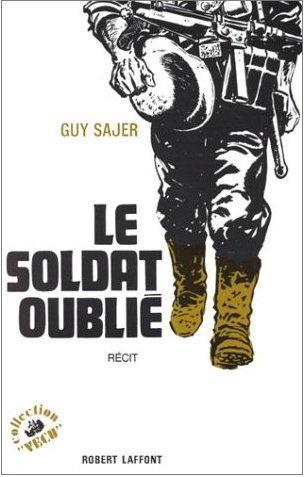
Guy Sajer n’a pas dix-sept ans quand, en juillet 1942, il endosse l’uniforme de la Wehrmacht. Il est français par son père, allemand par sa mère ; il habite alors l’Alsace. À cause de son jeune âge, il n’est pas affecté à une unité combattante, mais dans le train des équipages. Dès novembre, l’hiver s’abat sur la plaine russe ; le froid, la neige, les partisans rendent la progression des convois extrêmement difficile : jamais l’unité de Sajer n’atteindra Stalingrad qu’elle devait ravitailler ; la vie armée aura capitulé avant. Mais Sajer sait déjà que la guerre n’est pas une partie de plaisir, que survivre dans l’hiver russe est déjà un combat. Et pourtant, ce premier hiver, il n’a pas vraiment fait la guerre. La vraie guerre, celle du combattant de première ligne, il la découvre lorsqu’il est versé dans la division « Gross Deutschland », division d’élite, avec laquelle, à partir de l’été 1943, il va se trouver engagé dans les plus grandes batailles du front d’Ukraine, quand la Wehrmacht plie sous l’offensive russe. De Koursk à Kharkov, de jour comme de nuit, dans la boue, la neige, quand le thermomètre marque 40°, sous le martèlement terrifiant de l’artillerie russe, face aux vagues d’assaut d’un adversaire désormais puissamment armé et qui ne se soucie pas des pertes, les hommes de la « Gross Deutschland », portés toujours aux endroits les plus exposés, toujours en première ligne, combattant à un contre vingt, connaissent l’enfer. La bataille de Bielgorod, le passage du Dniepr (la Bérésina à l’échelle de la Seconde Guerre mondiale) constituent, vécus au niveau du simple soldat, deux des plus hauts moments de ce récit d’Apocalypse.
Plus tard, quand le front allemand s’est désagrégé, quand l’immense armée reflue, aux combats réguliers s’ajoutera la lutte contre les partisans, plus sauvage et plus impitoyable. Plus tard encore, c’est la retraite des derniers survivants de la division d’élite à travers la Roumanie et les Carpathes jusqu’en Pologne. Dans l’hiver 1944–1945, Sajer et ses camarades sont lancés dans les combats désespérés que les Allemands livrent en Prusse-Orientale pour interdire l’entrée du Vaterland aux Russes. C’est encore Memel, où l’horreur atteint à son comble, et Dantzig, au milieu de l’exode des populations allemandes de l’Est. Enfin, malade, épuisé, Sajer sera fait prisonnier par les Anglais dans le Hanovre…
Si ce récit de la guerre en Russie ne ressemble à aucun autre, s’il surpasse en vérité, en horreur et en grandeur tout ce qui a été écrit, ce n’est pas seulement parce que l’auteur a réellement vécu tout ce qu’il rapporte, ce n’est pas seulement parce que, sous sa plume, les mots froid, faim, fièvre, sang et peur prennent l’accent et la force terrible et de la réalité, c’est aussi parce que Sajer sait voir et faire voir dans le détail avec une puissance de trait vraiment extraordinaire. Alors, le lecteur ne peut douter que tout ce qui est rapporté là est vrai, vrai au détail près ; il sait de science certaine qu’il n’y a pas là de « littérature », pas de morceaux de bravoure – mais que c’était ainsi : ainsi dans le courage et ainsi dans la peur, ainsi dans la misère et ainsi dans l’horreur.
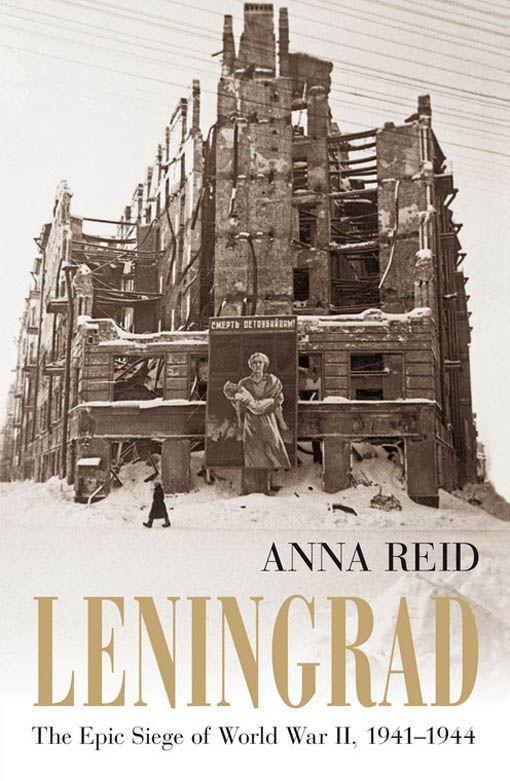
On September 8, 1941, eleven weeks after Hitler launched Operation Barbarossa, his brutal surprise attack on the Soviet Union, Leningrad was surrounded. The siege was not lifted for two and a half years, by which time some three quarters of a million Leningraders had died of starvation.
Anna Reid’s Leningrad is a gripping, authoritative narrative history of this dramatic moment in the twentieth century, interwoven with indelible personal accounts of daily siege life drawn from diarists on both sides. They reveal the Nazis’ deliberate decision to starve Leningrad into surrender and Hitler’s messianic miscalculation, the incompetence and cruelty of the Soviet war leadership, the horrors experienced by soldiers on the front lines, and, above all, the terrible details of life in the blockaded city: the relentless search for food and water; the withering of emotions and family ties; looting, murder, and cannibalism—and at the same time, extraordinary bravery and self-sacrifice.
Stripping away decades of Soviet propaganda, and drawing on newly available diaries and government records, Leningrad also tackles a raft of unanswered questions: Was the size of the death toll as much the fault of Stalin as of Hitler? Why didn’t the Germans capture the city? Why didn’t it collapse into anarchy? What decided who lived and who died? Impressive in its originality and literary style, Leningrad gives voice to the dead and will rival Anthony Beevor’s classic Stalingrad in its impact.
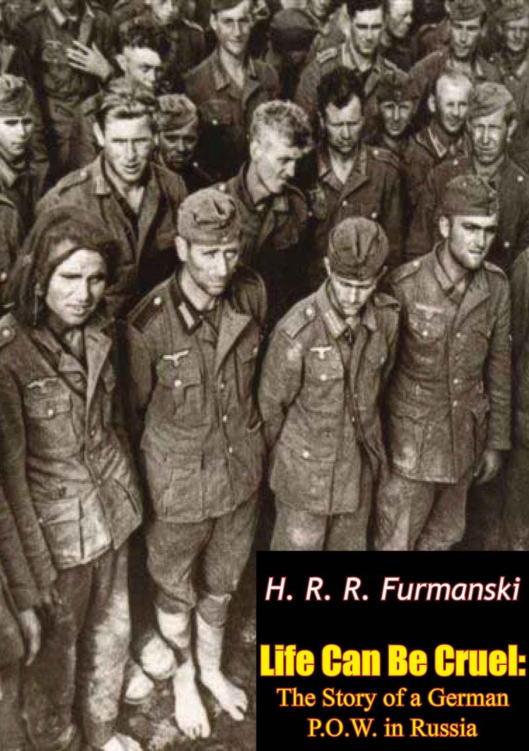
Originally published in 1960, this compact book tells the true story of a German soldier: from his early childhood during the First World War, through to his harrowing experiences on the frontline during the Word War II, culminating in his capture by the Red Army on 20 December 1942…
An astonishing first-hand account.
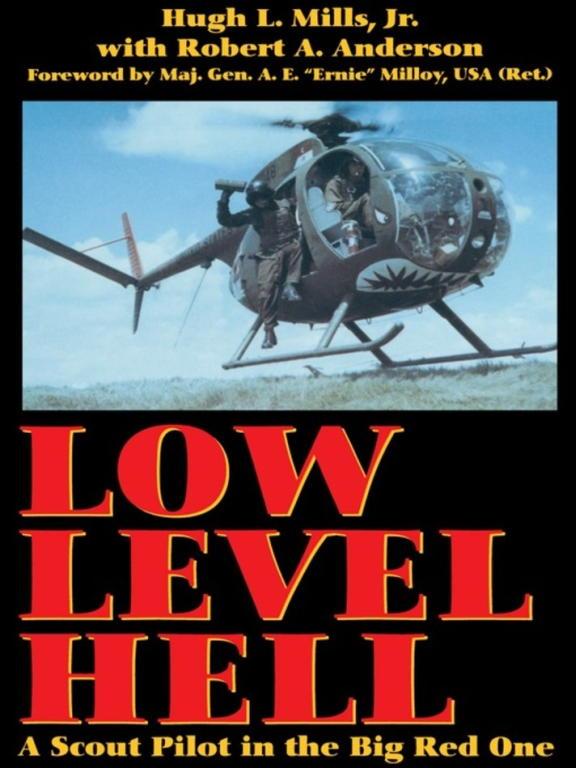
The aeroscouts of the 1st Infantry Division had three words emblazoned on their unit patch: Low Level Hell. It was then and continues today as the perfect, concise definition of what these intrepid aviators experienced as they ranged the skies of Vietnam from the Cambodian border to the Iron Triangle. The Outcasts, as they were known, flew low and slow, aerial eyes of the division in search of the enemy. Too often for longevity's sake they found the Viet Cong and the fight was on. These young pilots (19-22 years-old) literally “invented” the book as they went along.
In September 2003, James ‘Ash’ Ashcroft, a former British Infantry Captain, arrived in Iraq as a ‘gun for hire’. It was the beginning of an 18-month journey into blood and chaos.
In this action-packed page-turner, Ashcroft reveals the dangers of his adrenalin-fuelled life as a security contractor in Baghdad, where private soldiers outnumber non-US Coalition forces in a war that is slowly being privatised. From blow-by-blow accounts of days under mortar bombardment to revelations about life operating deep within the Iraqi community, Ashcroft shares the real, unsanitised story of the war in Iraq◦– and its aftermath◦– direct from the front line.
In 1984, Tom Clancy released his blockbuster novel, The Hunt for Red October, an edge-of-your seat thriller that skyrocketed him into international notoriety. The inspiration for that novel came from an obscure report by a US naval officer of a mutiny aboard a Soviet warship in the Baltic Sea. The Hunt for Red October actually happened, and Boris Gindin lived through every minute of it. After decades of silence and fear, Gindin has finally come forward to tell the entire story of the mutiny aboard the FFG Storozhevoy, the real-life Red October.
It was the fall of 1975, and the tensions between the Soviet Union and the United States were climbing. It seemed the two nations were headed for thermonuclear war, and it was that fear that caused most of the crewman of the FFG Storozhevoy to mutiny. Their goal was to send a message to the Soviet people that the Communist government was corrupt and major changes were needed. That message never reached a single person. Within hours the orders came from on high to destroy the Storozhevoy and its crew members. And this would have happened if it weren’t for Gindin and few others whose heroism saved many lives.
Now, with the help of USA Today bestselling author David Hagberg, Gindin relives every minute of that harrowing event. From the danger aboard the ship to the threats of death from the KGB to the fear that forced him to flee the Soviet Union for the United States, Mutiny reveals the real-life story behind The Hunt for Red October and offers an eye-opening look at the Soviet Union during the height of the Cold War.
In 1984, Tom Clancy released his blockbuster novel, The Hunt for Red October, an edge-of-your seat thriller that skyrocketed him into international notoriety. The inspiration for that novel came from an obscure report by a US naval officer of a mutiny aboard a Soviet warship in the Baltic Sea. The Hunt for Red October actually happened, and Boris Gindin lived through every minute of it. After decades of silence and fear, Gindin has finally come forward to tell the entire story of the mutiny aboard the FFG Storozhevoy, the real-life Red October.
It was the fall of 1975, and the tensions between the Soviet Union and the United States were climbing. It seemed the two nations were headed for thermonuclear war, and it was that fear that caused most of the crewman of the FFG Storozhevoy to mutiny. Their goal was to send a message to the Soviet people that the Communist government was corrupt and major changes were needed. That message never reached a single person. Within hours the orders came from on high to destroy the Storozhevoy and its crew members. And this would have happened if it weren’t for Gindin and few others whose heroism saved many lives.
Now, with the help of USA Today bestselling author David Hagberg, Gindin relives every minute of that harrowing event. From the danger aboard the ship to the threats of death from the KGB to the fear that forced him to flee the Soviet Union for the United States, Mutiny reveals the real-life story behind The Hunt for Red October and offers an eye-opening look at the Soviet Union during the height of the Cold War.
This book offers a thorough appraisal of Operation Allied Force, NATO’s 78-day air war to compel the president of Yugoslavia, Slobodan Milosevic, to end his campaign of ethnic cleansing in Kosovo. The author sheds light both on the operation’s strengths and on its most salient weaknesses. He outlines the key highlights of the air war and examines the various factors that interacted to induce Milosevic to capitulate when he did. He then explores air power’s most critical accomplishments in Operation Allied Force as well as the problems that hindered the operation both in its planning and in its execution. Finally, he assesses Operation Allied Force from a political and strategic perspective, calling attention to those issues that are likely to have the greatest bearing on future military policymaking. The book concludes that the air war, although by no means the only factor responsible for the allies’ victory, certainly set the stage for Milosevic’s surrender by making it clear that he had little to gain by holding out. It concludes that in the end, Operation Allied Force’s most noteworthy distinction may lie in the fact that the allies prevailed despite the myriad impediments they faced.
In this new edition of his classic 1970 memoir about the notorious U-2 incident, pilot Francis Gary Powers reveals the full story of what actually happened in the most sensational espionage case in Cold War history. After surviving the shoot-down of his reconnaissance plane and his capture on May 1, 1960, Powers endured sixty-one days of rigorous interrogation by the KGB, a public trial, a conviction for espionage, and the start of a ten-year sentence. After nearly two years, the U.S. government obtained his release from prison in a dramatic exchange for convicted Soviet spy Rudolph Abel. The narrative is a tremendously exciting suspense story about a man who was labeled a traitor by many of his countrymen but who emerged a Cold War hero.
On June 22, 1941, Germany launched the greatest land assault in history on the Soviet Union, an attack that Adolf Hitler deemed crucial to ensure German economic and political survival. As the key theater of the war for the Germans, the eastern front consumed enormous levels of resources and accounted for 75 percent of all German casualties. Despite the significance of this campaign to Germany and to the war as a whole, few English-language publications of the last thirty-five years have addressed these pivotal events.
In Ostkrieg: Hitler’s War of Extermination in the East, Stephen G. Fritz bridges the gap in scholarship by incorporating historical research from the last several decades into an accessible, comprehensive, and coherent narrative. His analysis of the Russo-German War from a German perspective covers all aspects of the eastern front, demonstrating the interrelation of military events, economic policy, resource exploitation, and racial policy that first motivated the invasion. This in-depth account challenges accepted notions about World War II and promotes greater understanding of a topic that has been neglected by historians.
[This book contain a table. Best viewed with CoolReader.]
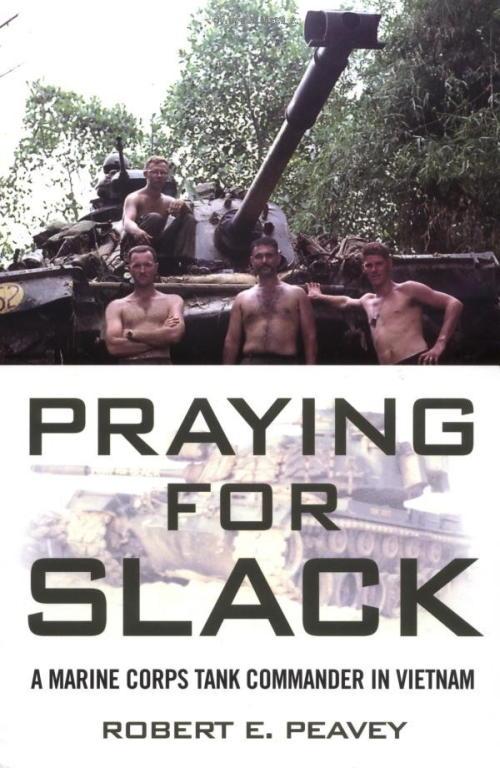
Two different wars were fought in Vietnam, the jungle-and-booby-trap one down south, and the WWII-like one up on the DMZ. “I was one of a handful whose Vietnam tour was evenly split between the First and Third Marine Divisions, and saw, firsthand, the difference 170 miles could make during the war’s bloodiest year.”
Corporal Robert Peavey was a tank commander in I Corps (Eye Corps) on the DMZ when LBJ ordered a bombing halt over the North. His compelling first-hand account chronicles operations just south of the ‘Z, operations that most Vietnam War histories have completely ignored. Peavey offers detailed, understandable explanations of combat strategy, strengths and shortcomings of standard-issue armament, and inter-service rivalries.
Marine veteran Peavey’s account is special for two other reasons. He served as an M48A3 Patton tank commander. Many readers will be surprised that there were quite a few tanks in Vietnam, the geography of which is characterized in the popular mind as being triple-canopy jungle and rice paddies.
In fact, much of Vietnam was “good tank country”, particularly northern I Corps along the DMZ, Marine Corps territory, and due to the Marines’ combined arms organization, with a tank company assigned to each infantry regiment, tanks were involved in every major engagement the Corps was involved in.