 fb2
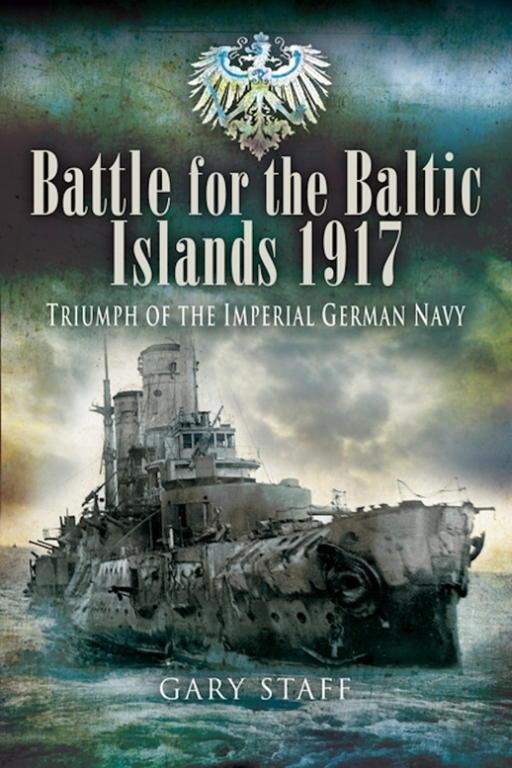
fb2In late 1917, the Russians, despite the revolution, were still willing to continue the war against Germany. This is an account of Operation Albion, the highly successful sea borne operation launched by the Germans to change their minds. The Baltic Islands were pivotal for the defense of the Finnish Gulf and St. Petersburg, so their capture was essential for any campaign towards the Russian capital. Only after the fall of the islands did Russia begin peace negotiations (freeing nearly half a million German soldiers for the Kaiser’s last gamble on the Western Front). This then was a campaign of great significance for the war on both Eastern and Western fronts.
A large part of the High Sea Fleet took part in the invasion of the Baltic islands, including the most modern dreadnought battleships. The Russians mounted a resolute defense despite being heavily outgunned and over a ten day period there were many naval clashes around the islands as well as the campaign ashore, all of which are described in detail with the use of both Russian and German first hand accounts.
This book shatters the myth that the Imperial German Navy spent the last two years of the war cowering in port.
[Contain tables.]

The human chain reaction that led to the atom bomb
On December 26, 1898, Marie Curie announced the discovery of radium and observed that “radioactivity seems to be an atomic property.” A mere 47 years later, “Little Boy"exploded over Hiroshima. Before the Fallout is the epic story of the intervening half century, during which an exhilarating quest to unravel the secrets of the material world revealed how to destroy it, and an open, international, scientific adventure transmuted overnight into a wartime sprint for the bomb.
Weaving together history, science, and biography, Diana Preston chronicles a human chain reaction of scientists and leaders whose discoveries and decisions forever changed our lives. The early decades of the 20th century brought Einstein’s relativity theory, Rutherford’s discovery of the atomic nucleus, and Heisenberg’s quantum mechanics, and scientists of many nations worked together to tease out the secrets of the atom. Only 12 years before Hiroshima, one leading physicist dismissed the idea of harnessing energy from atoms as “moonshine.” Then, on the eve of World War II, the power of atomic fission was revealed, alliances were broken, friendships sundered, and science co-opted by world events.
Preston interviewed the surviving scientists, and she offers new insight into the fateful wartime meeting between Heisenberg and Bohr, along with a fascinating conclusion examining what might have happened had any number of events occurred differently. She also provides a rare portrait of Hiroshima before the blast.
As Hiroshima’s 60th anniversary approaches, Before the Fallout compels us to consider the threats and moral dilemmas we face in our still dangerous world.
Chechnya Diary is a story about “the story” of the war in Chechnya, the “rogue republic” that attempted to secede from the Russian Federation at the time of the collapse of the Soviet Union in 1991. Specifically, it is the story of the Samashki Massacre, a symbol of the Russian brutality that was employed to crush Chechen resistance.
Thomas Goltz is a member of the exclusive journalistic cadre of compulsive, danger-addicted voyeurs who court death to get the story. But in addition to providing a tour through the convoluted Soviet and then post-Soviet nationalities policy that led to the bloodbath in Chechnya, Chechnya Diary is part of a larger exploration of the role (and impact) of the media in conflict areas. And at its heart, Chechnya Diary is the story of Hussein, the leader of the local resistance in the small town that bears the brunt of the massacre as it is drawn into war.
This is a deeply personal book, a first person narrative that reads like an adventure but addresses larger theoretical issues ranging from the history of ethnic/nationalities in the USSR and the Russian Federation to journalistic responsibility in crisis zones. Chechnya Diary is a crossover work that offers both the historical context and a ground-level view of a complex and brutal war.
Famed investigative journalist Eric Schlosser digs deep to uncover secrets about the management of America’s nuclear arsenal. A ground-breaking account of accidents, near-misses, extraordinary heroism, and technological breakthroughs, Command and Control explores the dilemma that has existed since the dawn of the nuclear age: how do you deploy weapons of mass destruction without being destroyed by them? That question has never been resolved — and Schlosser reveals how the combination of human fallibility and technological complexity still poses a grave risk to mankind.
Written with the vibrancy of a first-rate thriller, Command and Control interweaves the minute-by-minute story of an accident at a nuclear missile silo in rural Arkansas with a historical narrative that spans more than fifty years. It depicts the urgent effort by American scientists, policymakers, and military officers to ensure that nuclear weapons can’t be stolen, sabotaged, used without permission, or detonated inadvertently. Schlosser also looks at the Cold War from a new perspective, offering history from the ground up, telling the stories of bomber pilots, missile commanders, maintenance crews, and other ordinary servicemen who risked their lives to avert a nuclear holocaust. At the heart of the book lies the struggle, amid the rolling hills and small farms of Damascus, Arkansas, to prevent the explosion of a ballistic missile carrying the most powerful nuclear warhead ever built by the United States.
Drawing on recently declassified documents and interviews with men who designed and routinely handled nuclear weapons, Command and Control takes readers into a terrifying but fascinating world that, until now, has been largely hidden from view. Through the details of a single accident, Schlosser illustrates how an unlikely event can become unavoidable, how small risks can have terrible consequences, and how the most brilliant minds in the nation can only provide us with an illusion of control. Audacious, gripping, and unforgettable, Command and Control is a tour de force of investigative journalism, an eye-opening look at the dangers of America’s nuclear age.
http://www.youtube.com/watch?&v=h_ZvrSePzZY
http://www.youtube.com/watch?v=F2wR11pGsYk
Throughout history cities have been at the center of warfare, from sieges to street-fighting, from peace-keeping to coups de mains. Sun Tzu admonished his readers of The Art of War that the lowest realization of warfare was to attack a fortified city. Indeed, although strategists have advised against it across the millennia, armies and generals have been forced nonetheless to attack and defend cities, and victory has required that they do it well.
In Concrete Hell Louis DiMarco has provided a masterful study of the brutal realities of urban warfare, of what it means to seize and hold a city literally block by block. Such a study could not be more timely. We live in an increasingly urbanizing world, a military unprepared for urban operations is unprepared for tomorrow. Di Marco masterfully studies the successes and failures of past battles in order to provide lessons for today’s tacticians.
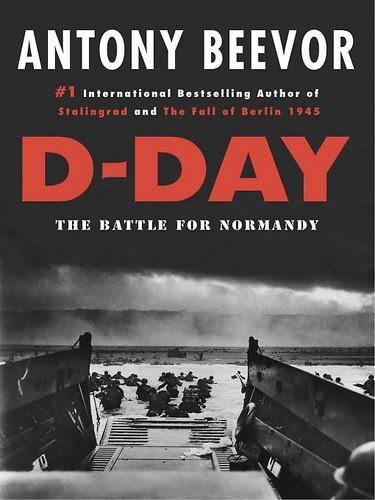
From critically acclaimed world historian, Antony Beevor, this is the first major account in more than twenty years to cover the whole invasion from June 6, 1944, right up to the liberation of Paris on August 25. It is the first book to describe not only the experiences of the American, British, Canadian, and German soldiers, but also the terrible suffering of the French caught up in the fighting. More French civilians were killed by Allied bombing and shelling than British civilians were by the Luftwaffe.
The Allied fleet attempted by far the largest amphibious assault ever, and what followed was a battle as savage as anything seen on the Eastern Front. Casualties mounted on both sides, as did the tensions between the principal commanders. Even the joys of liberation had their darker side. The war in northern France marked not just a generation, but the whole of the postwar world, profoundly influencing relations between America and Europe. Beevor draws upon his research in more than thirty archives in six countries, going back to original accounts, interviews conducted by combat historians just after the action, and many diaries and letters donated to museums and archives in recent years.
D-Day will surely be hailed as the consummate account of the Normandy invasion and the ferocious offensive that led to the liberation of Paris.
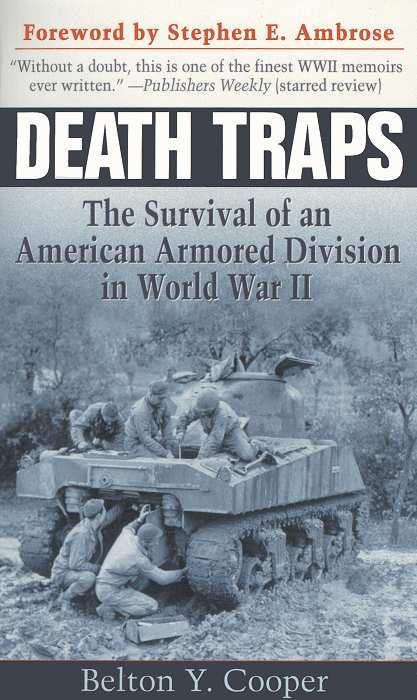
“In a down-to-earth style, Death Traps tells the compelling story of one man’s assignment to the famous 3rd Armored Division that spearheaded the American advance from Normandy into Germany. Cooper served as an ordnance officer with the forward elements and was responsible for coordinating the recovery and repair of damaged American tanks. This was a dangerous job that often required him to travel alone through enemy territory, and the author recalls his service with pride, downplaying his role in the vast effort that kept the American forces well equipped and supplied…. [Readers] will be left with an indelible impression of the importance of the support troops and how dependent combat forces were on them.”
—Library Journal
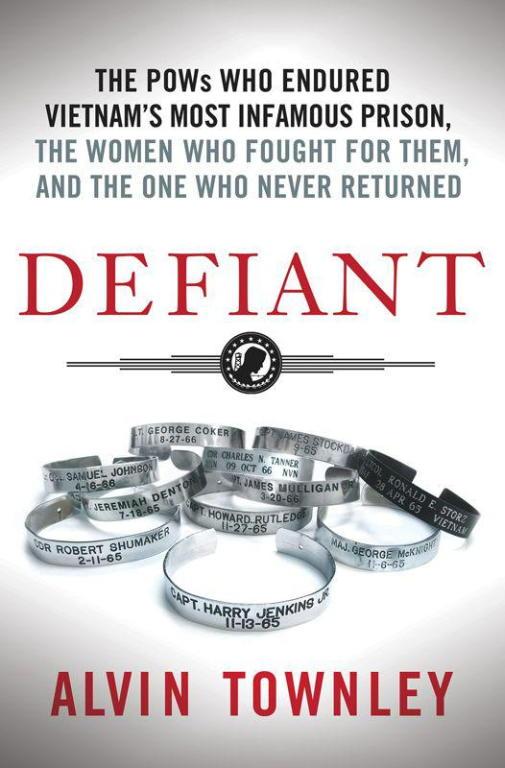
During the Vietnam War, hundreds of American prisoners-of-war faced years of brutal conditions and horrific torture at the hands of North Vietnamese guards and interrogators who ruthlessly plied them for military intelligence and propaganda. Determined to maintain their Code of Conduct, the POWs developed a powerful underground resistance. To quash it, their captors singled out its eleven leaders, Vietnam’s own “dirty dozen,” and banished them to an isolated jail that would become known as Alcatraz. None would leave its solitary cells and interrogation rooms unscathed; one would never return.
As these eleven men suffered in Hanoi, their wives at home launched an extraordinary campaign that would ultimately spark the nationwide POW/MIA movement. The members of these military families banded together and showed the courage not only to endure years of doubt about the fate of their husbands and fathers, but to bravely fight for their safe return. When the survivors of Alcatraz finally came home, one veteran would go on to receive the Medal of Honor, another would become a U.S. Senator, and a third still serves in the U.S. Congress.
A powerful story of survival and triumph, Alvin Townley’s Defiant will inspire anyone wondering how courage, faith, and brotherhood can endure even in the darkest of situations.
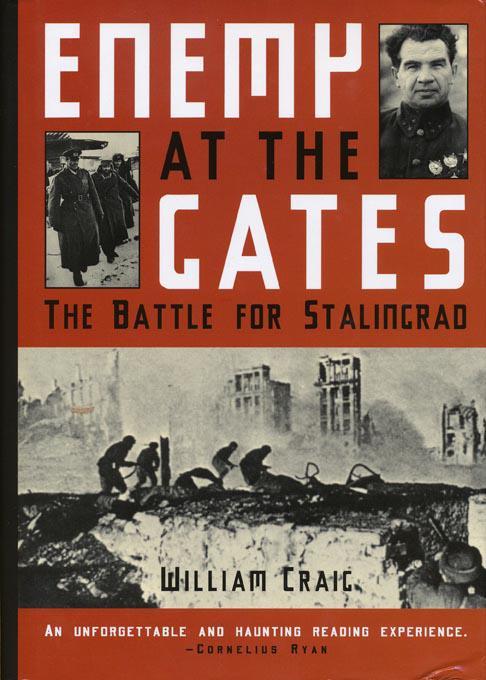
Two madmen, Hitler and Stalin, engaged in a death struggle that would determine the course of history at staggering cost of human life. Craig has written the definitive book on one of the most terrible battles ever fought. With 24 pages of photos.
The bloodiest battle in the history of warfare, Stalingrad was perhaps the single most important engagement of World War II. A major loss for the Axis powers, the battle for Stalingrad signaled the beginning of the end for the Third Reich of Adolf Hitler.
During the five years William Craig spent researching the battle for Stalingrad, he traveled extensively on three continents, studying documents and interviewing hundreds of survivors, both military and civilian. This unique account is their story, and the stories of the nearly two million men and women who lost their lives.
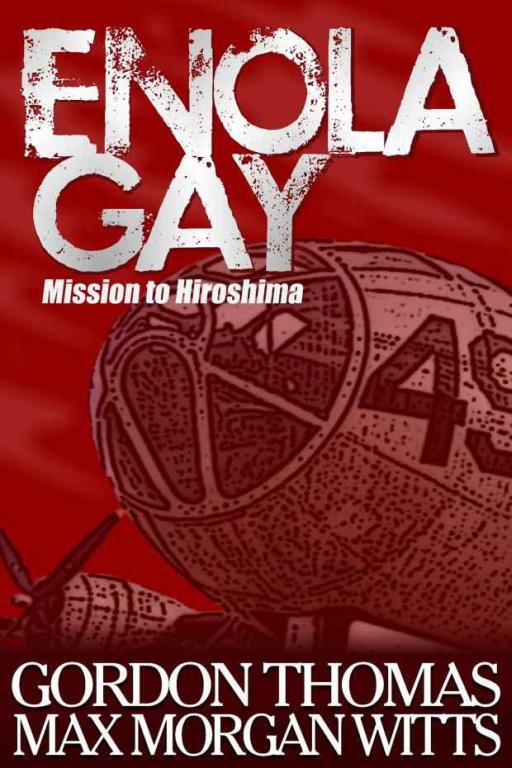
The most important event of World War Two. The bombing of Hiroshima is told for the first time from first-hand sources. Myth and reality are finally separated from the planning of the mission to that moment over Hiroshima when the atomic age was born.
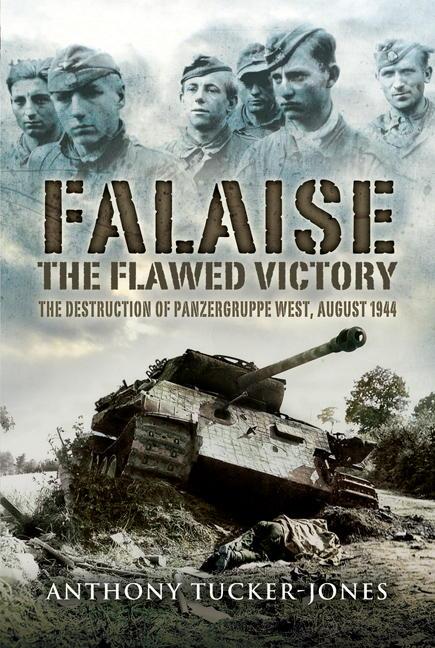
The destruction of the trapped German forces in the Falaise pocket in August 1944 is one of the most famous episodes of the Normandy campaign. But myths have grown up around accounts of the battle, and its impact on the course of the war is sometimes misunderstood. In this meticulously researched and perceptive study Anthony Tucker-Jones dispels misconceptions about the battle, describes the combat in graphic detail and reassesses the outcome in the context of the campaign to liberate Europe.
He takes a broad view of the sequence of operations that culminated in the battle at Falaise, tracing the course of the campaign mainly from the German viewpoint. For two bloody months the Germans held the Allies at bay following the D-Day landings, but then they were blocked in at Falaise and the area became a killing ground.
Some liken the event to Hitler’s defeat at Stalingrad, while others argue the victory was flawed because so many German troops escaped.
[Contain tables. Best viewed with CoolReader.]
Fallen Sentinel tells the story of Australian tanks in World War II, a dismal tale for both tankman and taxpayer. Against the backdrop of the sweeping conquest of Western Europe by Hitler's Panzers, the Australian Government, cash-strapped and resource poor, attempted to field its own tank force to do battle with the Axis forces. Three armoured divisions were created◦— and all three disbanded before they had seen action. In what became a prodigious waste of time, material, and human endeavour, sixty-six Australian cruiser tanks were produced◦— the Sentinel tank◦— none of which would ever take the field of battle. This is a book that portrays governments under pressure and the bureaucratic bungles that saw opportunities lost and precious resources squandered.
Fallen Sentinel presents a careful dissection of government process in the crucible of war, a rare gem in an age when most wartime histories focus on the front-line soldier. Peter Beale presents a damning indictment of the frailty of government under pressure, a bureaucracy in crisis and the extraordinary failure of government process at the highest level. Modern-day governments would do well to heed the lessons of this book.
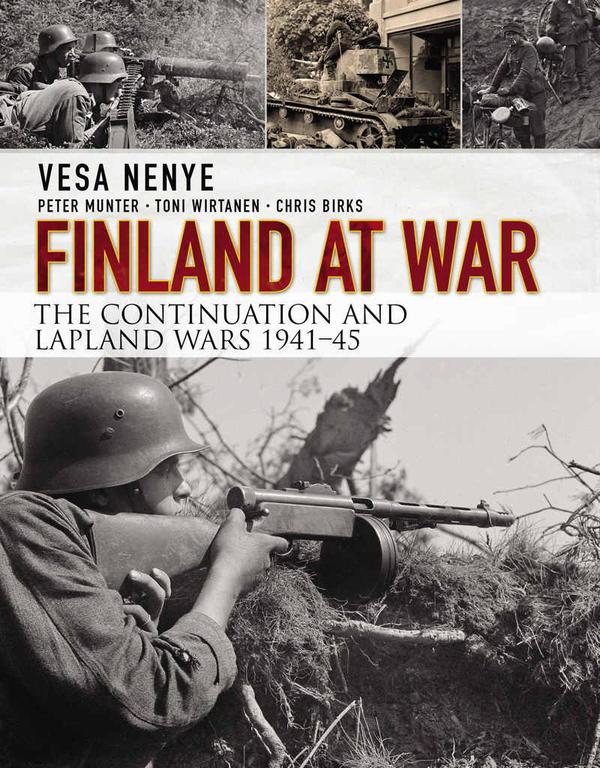
In the aftermath of the Winter War Finland found itself drawing ever closer to Nazi Germany and eventually took part in Operation Barbarossa in 1941. For the Finns this was a chance to right the wrongs of the Winter War, and having reached suitable defensive positions, the army was ordered to halt. Years of uneasy trench warfare followed, known as the Continuation War, during which Finland desperately sought a way out, German dreams of victory were dashed and the Soviet Union built the strongest army in the world. In the summer of 1944, the whole might of the Red Army was launched against the Finnish defences on the narrow Karelian Isthmus. Over several weeks of fierce fighting, the Finns managed to halt the Soviet assault. With Stalin forced to divert his armies to the race to Berlin an armistice agreement was reached, the harsh terms of which forced the Finns to take on their erstwhile German allies in Lapland. Featuring never-before-seen photographs and first-hand accounts, this second volume of a two-part study details the high price Finland had to pay to retain its independence and freedom.
Vesa Nenye spent summers in the wilderness of Lapland and Karelia where he uncovered many remnants from World War II and a passion for Finnish military history. Vesa went on to serve as a Tank Commander and an Arms & Munitions NCO and became a member of the Panssarikilta, Finland's armored core heritage society. He now works in the war gaming industry and international sales and is restoring an old Methodist chapel. He lives in Nottingham with his wife and their dog.
Peter Munter is a true veteran of historical- and strategy-games in Finland. He founded a play-by-mail business in the times before internet and worked extensively as writer and translator of roleplaying supplements in the late 80s. Peter has also won a Finnish Sci-Fi writing award. He currently works as a Managing Director in a games retail chain that he established with Vesa in 1997 and lives in Lahti, Finland with his three children.
Toni Wirtanen got involved with the many activities the army has to offer to volunteer civilians and reservists in Finland at a young age, which led him to serve in the Kymi Jäger Battalion/Karelian Brigade as an infantry anti-tank specialist. Toni is best known for his work as the singer/guitarist/songwriter in the Finnish rock band Apulanta.
While studying geology at the University of Bergen, Chris Birks also worked at building the Norwegian hobby scene for miniature strategy war-gaming. Chris now works as a teacher of mathematics and natural sciences.
A selection of the Military Book Club.
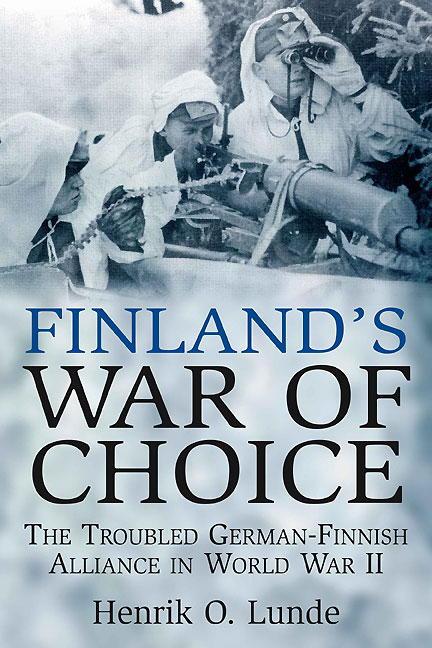
This book describes the odd coalition between Germany and Finland in World War II, and their joint military operations from 1941 to 1945. This is a topic often missing in English, though in stark contrast to the numerous books on the shorter and less bloody Winter War. That conflict represented a gallant fight of a democratic “David” against a totalitarian “Goliath” that caught the imagination of the world. The story of Finland fighting alongside a “Goliath” of its own has not brought pride to that nation and was a period many Finns would rather forget.
The prologue of this book brings the reader up to speed by briefly examining the difficult history of Finland, from its separation from the Soviet Union in 1917 to its isolation after being bludgeoned in 1939–40. It then examines both Finnish and German motives for forming a coalition against the USSR, and how—as logical as a common enemy would seem—the lack of true planning and preparation would doom the alliance.
This book posits that it was mind-boggling how the highly professional German General Staff allowed itself to accept the militarily unsound and shaky coalition that resulted. The war aims were not discussed or harmonized, there were no campaign plans with tasks and missions spelled out past the initial assault, no effective main effort established, inadequate force levels, and an unsound command structure with various headquarters. Practically every rule in the book was broken. The objective of linking up with the Finns in the Leningrad area was an important factor in Hitler opting for three main drives into the Soviet Union rather than an earlier OKH plan that called for only two.
After describing the operations during and after Barbarossa, this book describes how the Finnish theater became a blind ally for the Germans. Their strongest and best army was trapped both operationally and geographically in central and northern Finland, making virtually no contribution to the war effort. The Germans could not bring to bear enough forces to accomplish their objectives without substantial Finnish assistance, and that was not forthcoming.
The final chapters deal with the Soviet counteroffensive against the Finns in 1944. The Finns lost all their gains and quickly concluded a separate armistice. This left the German forces in Finland to simply vacate the territory, fighting between the Finns and Soviets alike as they tried to return to the main war. Jointly suffering 291,000 casualties, the only consolation was that the coalition had inflicted some 830,000 on the Soviets.
In this book, Henrik Lunde, a former US Special Operations colonel, and the renowned author of Hitler’s Pre-emptive War: The Battle for Norway, 1940, once again fills a profound gap in our understanding of World War II.
[This book contains a tables.]
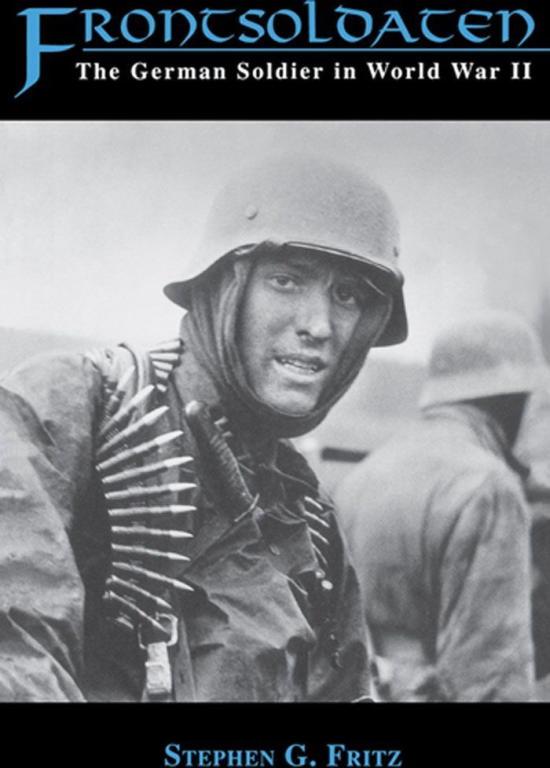
Alois Dwenger, writing from the front in May of 1942, complained that people forgot “the actions of simple soldiers…. I believe that true heroism lies in bearing this dreadful everyday life.”
In exploring the reality of the Landser, the average German soldier in World War II, through letters, diaries, memoirs, and oral histories, Stephen G. Fritz provides the definitive account of the everyday war of the German front soldier. The personal documents of these soldiers, most from the Russian front, where the majority of German infantrymen saw service, paint a richly textured portrait of the Landser that illustrates the complexity and paradox of his daily life.
Although clinging to a self-image as a decent fellow, the German soldier nonetheless committed terrible crimes in the name of National Socialism. When the war was finally over, and his country lay in ruins, the Landser faced a bitter truth: all his exertions and sacrifices had been in the name of a deplorable regime that had committed unprecedented crimes. With chapters on training, images of combat, living conditions, combat stress, the personal sensations of war, the bonds of comradeship, and ideology and motivation, Fritz offers a sense of immediacy and intimacy, revealing war through the eyes of these self-styled “little men.”
A fascinating look at the day-to-day life of German soldiers, this is a book not about war but about men. It will be vitally important for anyone interested in World War II, German history, or the experiences of common soldiers throughout the world.
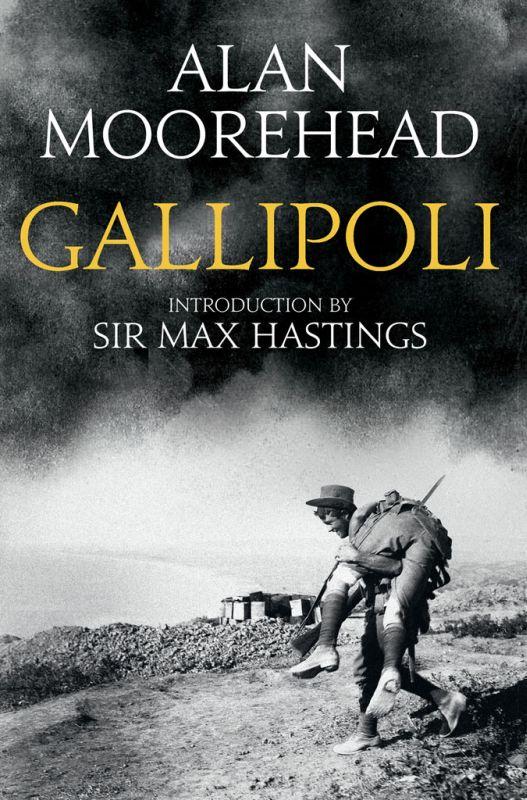
A century has now gone by, yet the Gallipoli campaign of 1915-16 is still infamous as arguably the most ill conceived, badly led and pointless campaign of the entire First World War. The brainchild of Winston Churchill, then First Lord of the Admiralty, following Turkey’s entry into the war on the German side, its ultimate objective was to capture the Gallipoli peninsula in western Turkey, thus allowing the Allies to take control of the eastern Mediterranean and increase pressure on the Central Powers to drain manpower from the vital Western Front.

The Russian civil war was one of the major events of the last century, leading to the establishment of the Soviet Union. After the First World War the British Government, with the full backing of Secretary of State for War Winston Churchill, sent British forces to help the White Russian armies end the Bolshevik Revolution. In 1918–1920 the RAF sent 221, 266 and 47 Squadron to fight alongside General Denekin in South Russia. The RAF launched attacks on Red Army troops, ships and aircraft, and dropped bombs on Grozney, Astrokhan and Tsaritsin (Stalingrad), which was captured by British tanks 23 years before Hitler’s army was destroyed there. Many of the RAF men were experienced and battle-hardened pilots, having fought on the Western Front against the German Air Force; the Red Air Force soon learned the quality of their opponents.
With the overall collapse of the White Forces in South Russia, the British were forced to make an honourable withdrawal in 1920. The contribution made by the RAF aircrews to the White Russian cause was nonetheless great, and out of all proportion to their numbers.
This is the first book focusing on the 1918–1920 RAF campaign in South Russia ever to be published, and presents a fascinating insight into an almost unknown period in RAF history.
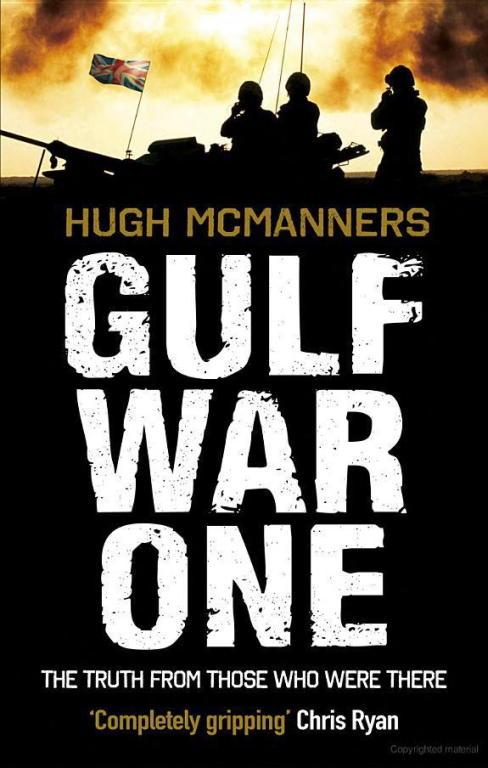
In 1988 Iraq was the region’s dominant military power and ambitious to become leader of the Arab world. Saddam Hussein’s war-experienced army were known to have used biological and chemical weapons in the past, and when 260,000 troops and 2,000 tanks crossed into Kuwait they met with little resistance. Yet Iraq’s defeat at the hands of the coalition forces was the most devastatingly efficient in military history.
It was the first war fought over a resource: oil. The UK committed 43,000 troops to this new ‘high tech’ war, and initially expected high casualties. Yet on the Iraqi side, uncounted thousands of soldiers were killed, many poorly trained conscripts. Returning coalition soldiers have since found themselves dogged by health problems, likely caused by the new technologies that proved so effective in battle. Iraqi power was diminished, but Saddam Hussein was allowed to remain in power, laying the scene for the protracted suffering of the Iraq invasion over a decade later.
Hugh McManners’ original interviews for Gulf War One provide a compelling picture and explode many myths of how this war was carried out, and why. From military planners and politicians to ordinary soldiers and Gulf War Syndrome sufferers, both those serving and those caught up in the war tell its history in their own words.
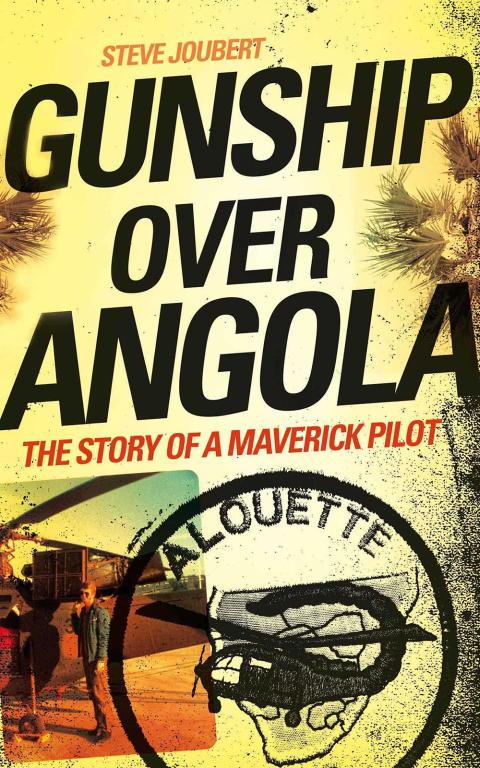
Growing up in suburban Pretoria, Steve Joubert dreamed of a career as a pilot. After undergoing SAAF pilot training, a freak injury put an end to his hopes of flying fighter jets. Instead he learned to fly the versatile Alouette helicopter.
He had barely qualified as a chopper pilot when he was sent to the Border, where he flew missions over Namibia and southern Angola to supply air cover to troops on the ground. As a gunship pilot, Steve saw some of the worst scenes of war, often arriving first on the scene after a contact or landmine attack.
He also recalls the lighter moments of military life, as well as the thrill of flying. A born maverick, his lack of respect for authority often got him into trouble with his superiors.
His experiences affected him deeply, and led him eventually to question his role in the war effort. As the Border War escalated, his disillusionment grew. This gripping memoir is a powerful plea for healing and understanding.
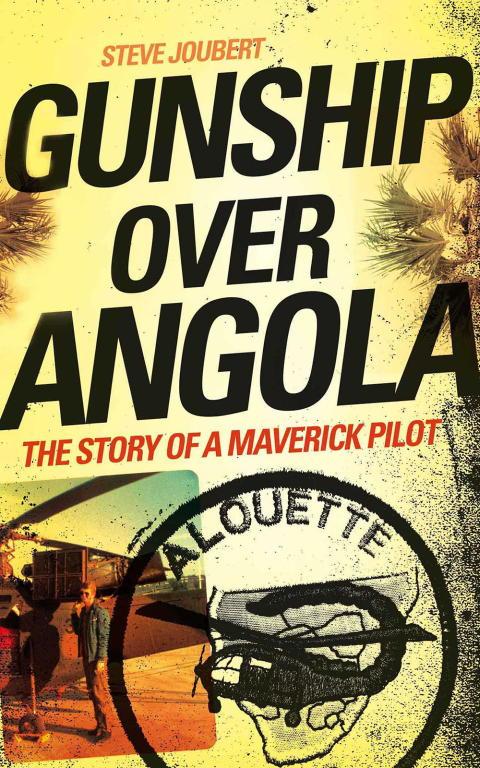
Growing up in suburban Pretoria, Steve Joubert dreamed of a career as a pilot. After undergoing SAAF pilot training, a freak injury put an end to his hopes of flying fighter jets. Instead he learned to fly the versatile Alouette helicopter.
He had barely qualified as a chopper pilot when he was sent to the Border, where he flew missions over Namibia and southern Angola to supply air cover to troops on the ground. As a gunship pilot, Steve saw some of the worst scenes of war, often arriving first on the scene after a contact or landmine attack.
He also recalls the lighter moments of military life, as well as the thrill of flying. A born maverick, his lack of respect for authority often got him into trouble with his superiors.
His experiences affected him deeply, and led him eventually to question his role in the war effort. As the Border War escalated, his disillusionment grew. This gripping memoir is a powerful plea for healing and understanding.