 fb2
fb2
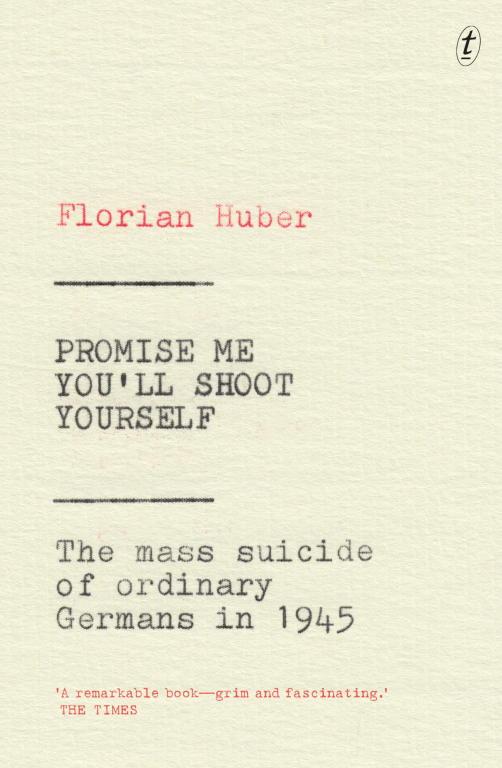
In 1945, as the army retreated, the German people were surrendered to the enemy with no means of defence. A wave of suicides rolled across the country as thousands chose death—for themselves and their children—rather than face the defeat of the Third Reich and what they feared might follow.
Drawing on eyewitness accounts, historian Florian Huber tells of the largest mass suicide in German history and its suppression by the survivors—a fascinating insight into the feelings of ordinary people caught in the tide of history who saw no other way out.
SHROUDED IN SECRECY due to the covert nature of their work, the legendary Recces have fascinated South Africans for years. Now one of these elite soldiers has written a tell-all book about the extraordinary missions he embarked on and the nail-biting action he experienced in the Border War.
Shortly after passing the infamously gruelling Special Forces selection course in the early 1980s, Koos Stadler joined the so-called Small Teams group at 5 Reconnaissance Regiment. This subunit was made up of two-man teams and was responsible for numerous secret and highly dangerous missions deep behind enemy lines. With only one team member, Stadler was sent to blow up railway lines and enemy fighter jets in the south of Angola. As he crawled in and out of enemy-infested territory, he stared death in the face many times.
A gripping, firsthand account that reveals the near superhuman physical and psychological powers these Special Forces operators have to display.
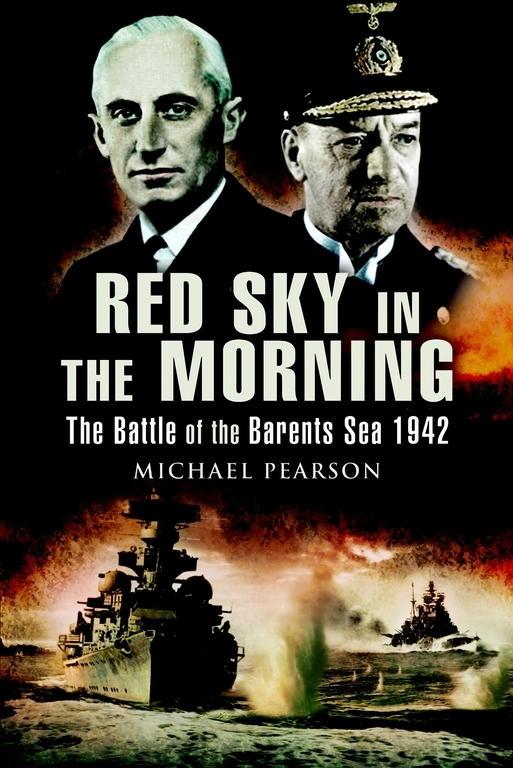
The Arctic convoys that sailed through the cold malevolent waters of the Barents Sea ran the gauntlet of German air and sea attacks as they struggled to transport vital supplies to Britain’s Russian allies. Convoy JW51B sailed in December 1942 with a small close escort of five destroyers, plus a reserve of two light cruisers, which shadowed the main convoy at a distance of seventy miles. The convoy was attacked on 31 December by a powerful German force that included the heavy cruiser Admiral Hipper, the pocket battleship Lützow and six destroyers. The ensuing engagement proved the worth of the British destroyers and the bravery of the men who sailed in them.
It was a naval engagement that had far-reaching consequences and resulted in many capital ships of the Kriegsmarine being decommissioned for the rest of World War II.
A gripping tale of the war at sea under the direst of conditions.
[Best viewed with CoolReader.]
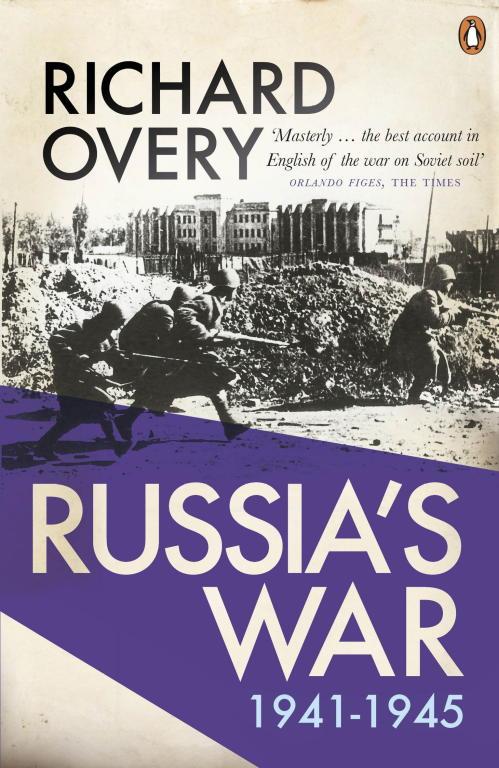
RUSSIA’S WAR is the epic account of the greatest military encounter in human history. In a vivid, often shocking narrative, Richard Overy describes the astounding events of 1941-45 in which the Soviet Union, after initial catastrophes, destroyed Hitler’s Third Reich and shaped European history for the next half Century.
[Contain tables. Best viewed with CoolReader.]
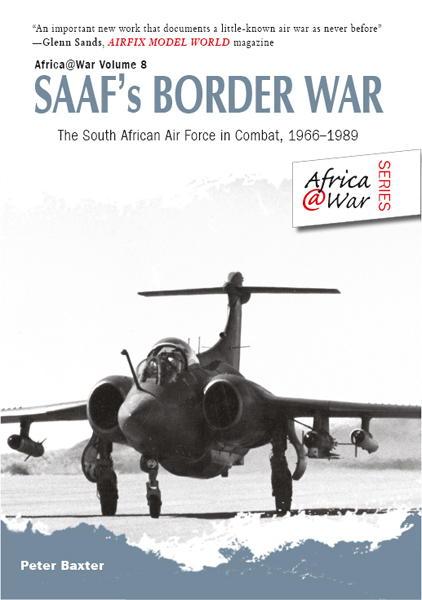
Set against the backdrop of the Cold War, the SAAF was South Africa’s first line of defence against Soviet expansionism in southern Africa. In this account, Peter Baxter examines and brings to life the squadrons and aviators that fought in both counter-insurgency and conventional warfare.
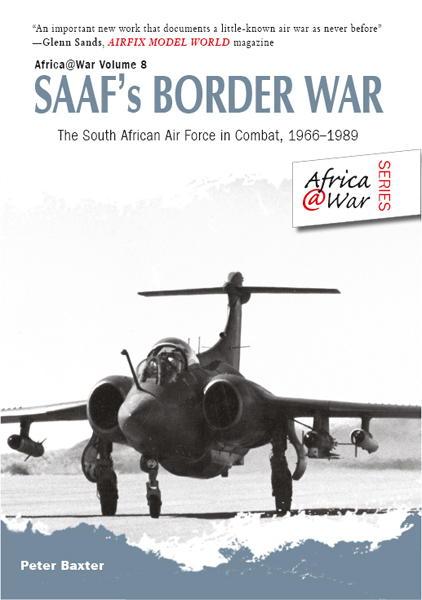
Set against the backdrop of the Cold War, the SAAF was South Africa’s first line of defence against Soviet expansionism in southern Africa. In this account, Peter Baxter examines and brings to life the squadrons and aviators that fought in both counter-insurgency and conventional warfare.
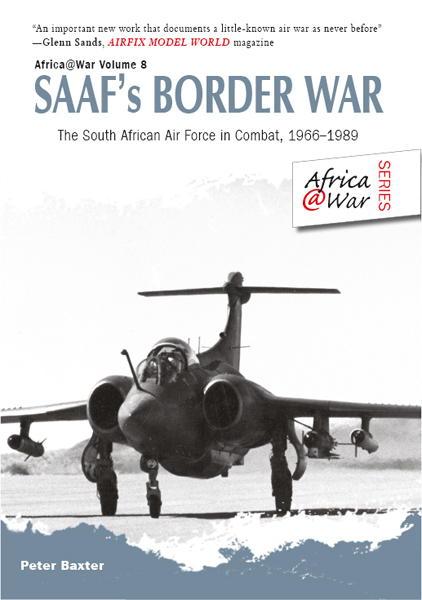
Set against the backdrop of the Cold War, the SAAF was South Africa’s first line of defence against Soviet expansionism in southern Africa. In this account, Peter Baxter examines and brings to life the squadrons and aviators that fought in both counter-insurgency and conventional warfare.
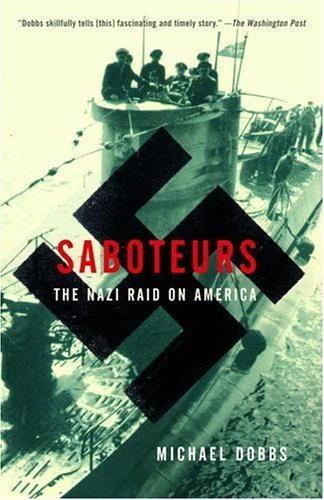
In 1942, Hitler’s Nazi regime trained eight operatives for a mission to infiltrate America and do devastating damage to its infrastructure. It was a plot that proved historically remarkable for two reasons: the surprising extent of its success and the astounding nature of its failure. Soon after two U-Boats packed with explosives arrived on America’s shores–one on Long Island, one in Florida—it became clear that the incompetence of the eight saboteurs was matched only by that of American authorities. In fact, had one of the saboteurs not tipped them off, the FBI might never have caught the plot’s perpetrators—though a dozen witnesses saw a submarine moored on Long Island.
As told by Michael Dobbs, the story of the botched mission and a subsequent trial by military tribunal, resulting in the swift execution of six saboteurs, offers great insight into the tenor of the country—and the state of American intelligence—during World War II and becomes what is perhaps a cautionary tale for our times.
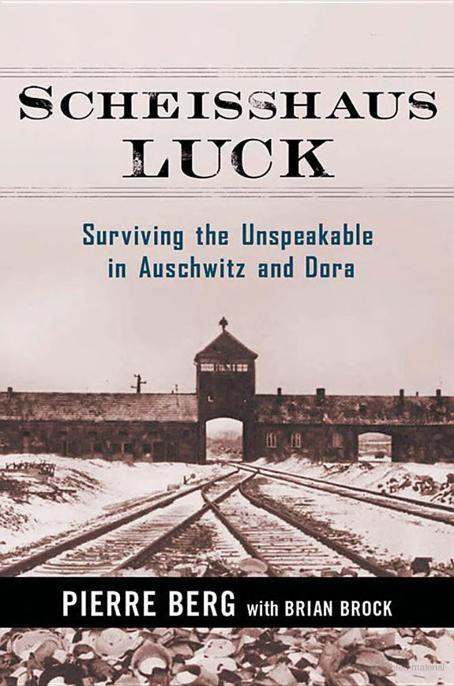
A searing, brutal account of a French teenager’s survival in Auschwitz… and a major addition to Holocaust literature.
In 1943, 18-year-old Pierre Berg picked the wrong time to visit a friend’s house—at the same time as the Gestapo. He was thrown into the infamous Auschwitz concentration camp. But through a mixture of savvy and chance, he managed to survive… and ultimately got out alive. “As far as I’m concerned,” says Berg, “it was all shithouse luck, which is to say—inelegantly—that I kept landing on the right side of the randomness of life.
“Such begins the first memoir of a French gentile Holocaust survivor published in the U.S. Originally penned shortly after the war when memories were still fresh, Scheisshaus Luck recounts Berg’s constant struggle in the camps, escaping death countless times while enduring inhumane conditions, exhaustive labor, and near starvation. The book takes readers through Berg’s time in Auschwitz, his hair’s breadth avoidance of Allied bombing raids, his harrowing “death march” out of Auschwitz to Dora, a slave labor camp (only to be placed in another forced labor camp manufacturing the Nazis’ V1 & V2 rockets), and his eventual daring escape in the middle of a pitched battle between Nazi and Red Army forces.Utterly frank and tinged with irony, irreverence and gallows humour, Scheisshaus Luck ranks in importance among the work of fellow survivors Elie Wiesel and Primo Levi. As we quickly approach the day when there will be no living eyewitnesses to the Nazi’s “Final Solution,” Berg’s memoir stands as a searing reminder of how the Holocaust affected us all.
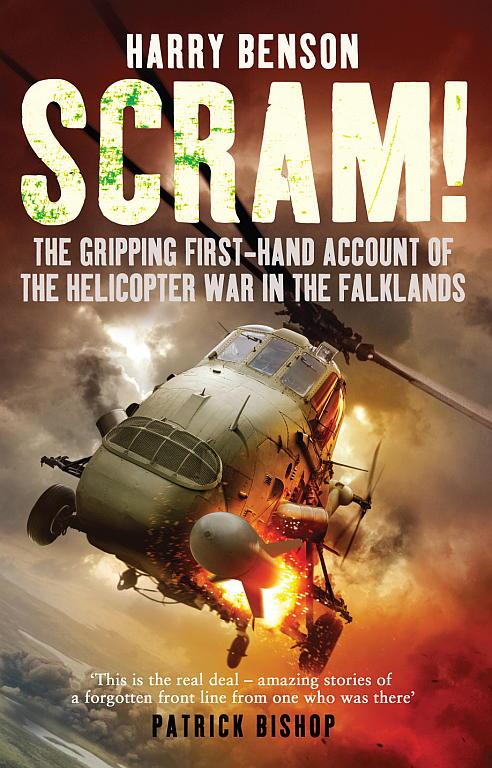
2 April 2012 marks the 30th anniversary of the invasion of the Falkland Islands. This is the thrilling untold story of the young helicopter pilots – most barely out of their teens – who risked their lives during this brief but ferocious war.
In April 1982 Harry Benson was a 21-year-old Royal Navy commando helicopter pilot, fresh out of training and one of the youngest helicopter pilots to serve in the Falklands War. These pilots, nicknamed ‘junglies’, flew most of the land-based missions in the Falklands in their Sea King and Wessex helicopters. Much of what happened in the war – the politics, task force ships, Sea Harriers, landings, Paras and Marines – is well-known and documented. But almost nothing is known of the young commando helicopter pilots and aircrewmen who made it all happen on land and sea. This is their ‘Boys Own’ story, told for the very first time.
Harry Benson has interviewed forty of his former colleagues for the book creating a tale of skill, initiative, resourcefulness, humour, luck, and adventure. This is a fast-paced, meticulously researched and compelling account written by someone who was there, in the cockpit of a Wessex helicopter.
Few of these pilots have spoken publicly about:
• The two helicopter crashes and eventual rescue following a failed SAS mission high up on an in hospitable glacier in South Georgia
• The harrowing story of the Exocet strike that sunk the transport ship Atlantic Conveyor
• The daring missile raid on the Argentine high command in Port Stanley
• The constant mortar fire faced while supporting troops and evacuating casualties
• The hair-raising head-on attacks by Argentine jets on British helicopters
• The extraordinarty courage shown during the evacuation of the bombed landing ship Sir Galahad
• The secret nighttime low-level missions to insert and resupply SAS and SBS using night vision goggles
If you liked Apache, Vulcan 607 and Chickenhawk, you’ll love Scram!
The word “Scram” was used to warn other junglies to go to ground or risk being shot down by their own side as Argentinean jets blasted through ‘bomb alley 014’.
Soon after the Argentine army invaded the Falklands in the early hours of 2 April 1982, it was the Royal Navy commando helicopter pilots, nicknamed junglies, who flew most of the land-based missions in the Falklands in their Sea King and Wessex helicopters. Facing both mortar fire and head-on attacks by Argentine jets, they inserted SAS patrols at night, rescued survivors of Exocet attacks and mounted daring missile raids, as well as supporting the British troops and evacuating casualties, often in appalling weather conditions.
Harry Benson was a twenty-one-year-old junglie Wessex pilot, fresh out of training, when war started. He has interviewed over forty of his former colleagues for this book, creating a fast-paced, meticulously researched and compelling account written by someone who was there, in the cockpit of a Wessex helicopter.
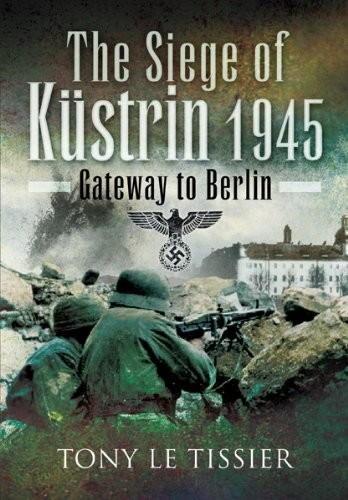
The unexpected arrival of Soviet troops at the end of January 1945 at the ancient fortress and garrison town of Küstrin came as a tremendous shock to the German High Command—the Soviets were now only 50 miles from Berlin itself. The Red Army needed the vital road and rail bridges passing through Küstrin for their forthcoming assault on the capital, but flooding and their own high command’s strategic blunders resulted in a sixty-day siege by two Soviet armies which totally destroyed the town. The delay in the Soviet advance also gave the Germans time to consolidate the defenses shielding Berlin west of the Oder River. Despite Hitler’s orders to fight on to the last bullet, the Küstrin garrison commander and 1,000 of the defenders managed a dramatic breakout to the German lines.
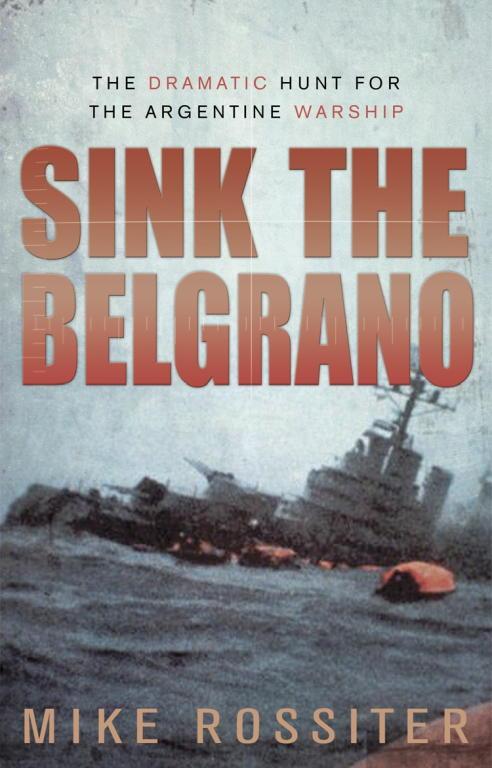
On the evening of 30 March 1982, Commander David Hall, chief engineer of the nuclear submarine HMS Conqueror, received a telephone call giving him the order to ‘store for war’. At first he didn’t believe it. In the early hours of 2 April, Argentine forces invaded the Falkland Islands.
On 4 April, HMS Conqueror sailed out of the Faslane naval base to begin her 8,000 mile journey to the South Atlantic. She was sailing towards war and towards one of the most iconic battles of the Falklands conflict, an encounter that would result in the torpedoing of the first warship since the end of the Second World War.
When the order was given to sink the Belgrano, the British nuclear submarine began a cat and mouse game with the Argentine warship. Conqueror stalked the Belgrano for two days, sometimes sailing as close as fifty yards to the warship’s stern, before the torpedoes were fired.
For the first time, we hear from sailors on both vessels as they tell their own stories of the events of that day. We witness the behind-the-scenes arguments and power-broking that would culminate in the launch of three torpedoes from the Conqueror, and a vivid picture of the terror, confusion and courage that marked an attack that left 340 of the Belgrano’s crew dead. Sink the Belgrano, written with all the pace and tension of a thriller, is the definitive retelling of those dramatic events.
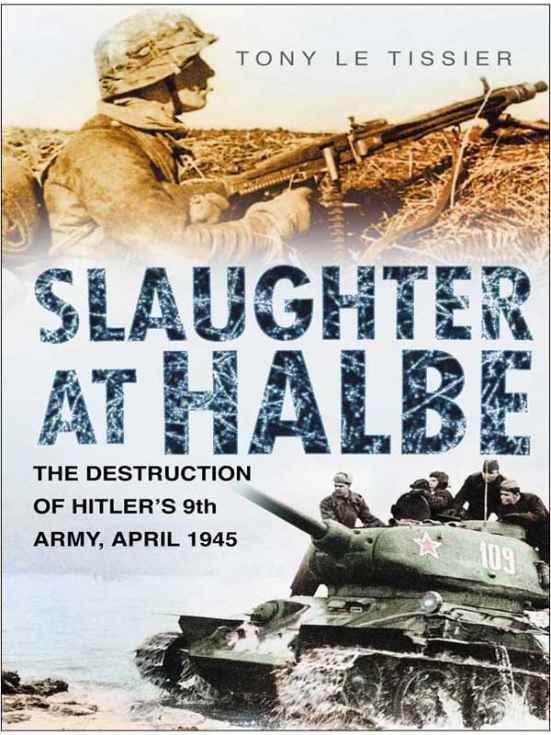
Operation Berlin, the Soviet offensive launched on 16 April, 1945, by Marshals Zhukov and Koniev, isolated the German Ninth Army and tens of thousands of refugees in the Spreewald ‘pocket’, south-east of Berlin. Stalin ordered its encirclement and destruction and his subordinates, eager to win the race to the Reichstag, pushed General Busse’s 9th Army into a tiny area east of the village of Halbe. To escape the Spreewald pocket, the remains of 9th Army had to pass through Halbe, where barricades constructed by both sides formed formidable obstacles and the converging Soviet forces subjected the area to heavy artillery fire. By the time 9th Army eventually escaped the Soviet pincers, it had suffered 40,000 killed and 60,000 taken prisoner. Teenaged refugees recount their experiences alongside Wehrmacht and Waffen-SS veterans attempting to maintain military discipline amid the chaos and carnage of headlong retreat. While army commanders strive to extricate their decimated units, demoralised soldiers change into civilian clothing and take to the woods.
Relating the story day by day, Tony Le Tissier shows the impact of total war upon soldier and civilian alike, illuminating the unfolding of great and terrible events with the recollections of participants.
[Contain tables.]
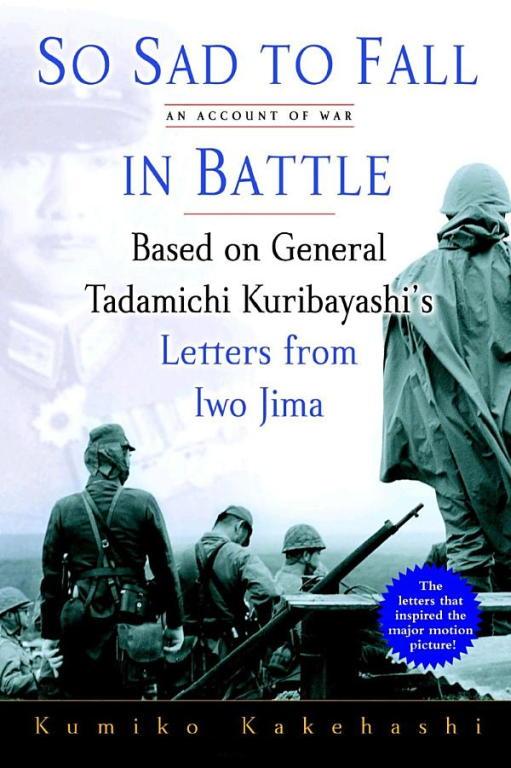
The Battle of Iwo Jima has been memorialized innumerable times as the subject of countless books and motion pictures, most recently Clint Eastwood’s films Flags of Our Fathers and Letters from Iwo Jima, and no wartime photo is more famous than Joe Rosenthal’s Pulitzer Prize-winning image of Marines raising the flag on Mount Suribachi. Yet most Americans know only one side of this pivotal and bloody battle. First published in Japan to great acclaim, becoming a bestseller and a prize-winner, So Sad to Fall in Battle shows us the struggle, through the eyes of Japanese commander Tadamichi Kuribayashi, one of the most fascinating and least-known figures of World War II.
As author Kumiko Kakehashi demonstrates, Kuribayashi was far from the stereotypical fanatic Japanese warrior. Unique among his country’s officers, he refused to risk his men’s lives in suicidal banzai attacks, instead creating a defensive, insurgent style of combat that eventually became the Japanese standard. On Iwo Jima, he eschewed the special treatment due to him as an officer, enduring the same difficult conditions as his men, and personally walked every inch of the island to plan the positions of thousands of underground bunkers and tunnels. The very flagpole used in the renowned photograph was a pipe from a complex water collection system the general himself engineered.
Exclusive interviews with survivors reveal that as the tide turned against him, Kuribayashi displayed his true mettle: Though offered a safer post on another island, he chose to stay with his men, fighting alongside them in a final, fearless, and ultimately hopeless three-hour siege.
After thirty-six cataclysmic days on Iwo Jima, Kurbiayashi’s troops were responsible for the deaths of a third of all U.S. Marines killed during the entire four-year Pacific conflict, making him, in the end, America’s most feared—and respected—foe. Ironically, it was Kuribayashi’s own memories of his military training in America in the 1920s, and his admiration for this country’s rich, gregarious, and self-reliant people, that made him fear ever facing them in combat—a feeling that some suspect prompted his superiors to send him to Iwo Jima, where he met his fate.
Along with the words of his son and daughter, which offer unique insight into the private man, Kuribayashi’s own letters cited extensively in this book paint a stirring portrait of the circumstances that shaped him. So Sad to Fall in Battle tells a fascinating, never-before-told story and introduces America, as if for the first time, to one of its most worthy adversaries.
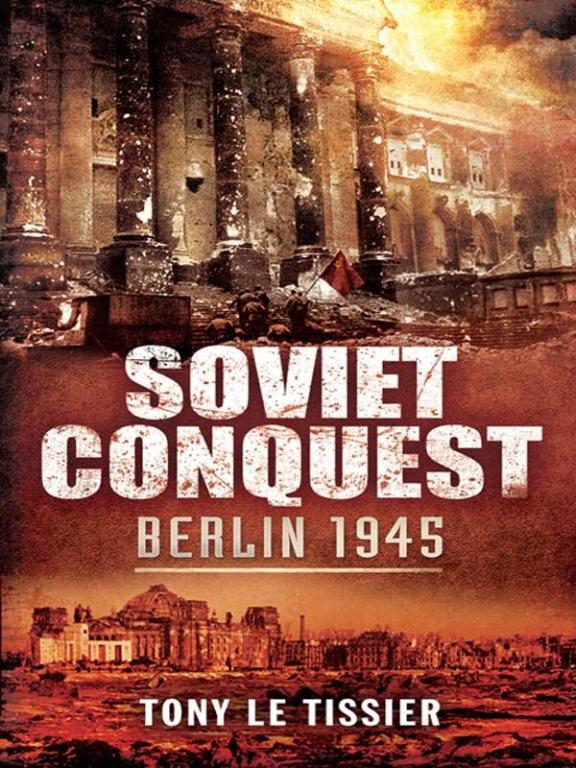
How did top Red Army commanders see the assault on Berlin in 1945 – what was their experience of the last, terrible battle of the Second World War in Europe? Personal accounts by the most famous generals involved – Zhukov, Koniev and Chuikov – have been published in English, but the recollections of their principal subordinates haven’t been available in the west before, and it is their role in the final Soviet offensive that is the focus of Tony Le Tissier’s fascinating book. These were the officers who were responsible for the execution of the Red Army’s plan for the assault, in immediate touch with the troops on the front line of the advance. They saw most clearly where the operation succeeded and where it failed. Their recollections, publication of which was long banned in the Soviet Union, throw a new light on the course of battle and on the inner workings of the Red Army command in the final phase of the conflict.
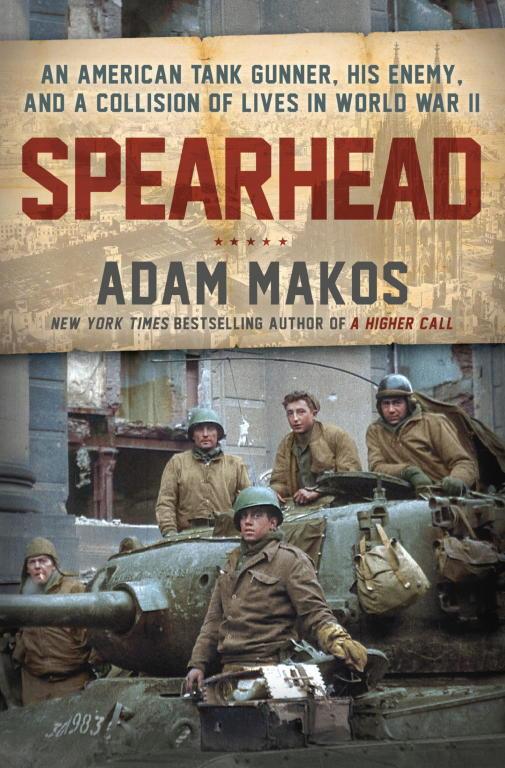
From the New York Times bestselling author of A Higher Call comes the riveting story of an American tank gunner’s journey into the heart of the Third Reich, where he will meet destiny in an iconic armor duel—and forge an enduring bond with his enemy.
When Clarence Smoyer is assigned to the gunner’s seat of his Sherman tank, his crewmates discover that the gentle giant from Pennsylvania has a hidden talent: He’s a natural born shooter.
At first, Clarence and his fellow crews in the legendary 3rd Armored Division—“Spearhead”—thought their tanks were invincible. Then they met the German Panther, with a gun so murderous it could shoot through one Sherman and into the next. Soon a pattern emerged: The lead tank always gets hit.
After Clarence sees his friends cut down breaching the West Wall and holding the line in the Battle of the Bulge, he and his crew are given a weapon with the power to avenge their fallen brothers: the Pershing, a state-of-the-art “super tank,” one of twenty in the European theater.
But with it came a harrowing new responsibility: Now they will spearhead every attack. That’s how Clarence, the corporal from coal country, finds himself leading the U.S. Army into its largest urban battle of the European war, the fight for Cologne, the “Fortress City” of Germany.
Battling through the ruins, Clarence will engage the fearsome Panther in a duel immortalized by an army cameraman. And he will square off with Gustav Schaefer, a teenager behind the trigger in a Panzer IV tank, whose crew has been sent on a suicide mission to stop the Americans.
As Clarence and Gustav trade fire down a long boulevard, they are taken by surprise by a tragic mistake of war. What happens next will haunt Clarence into modern day, drawing him back to Cologne to do the unthinkable: to face his enemy, one last time.
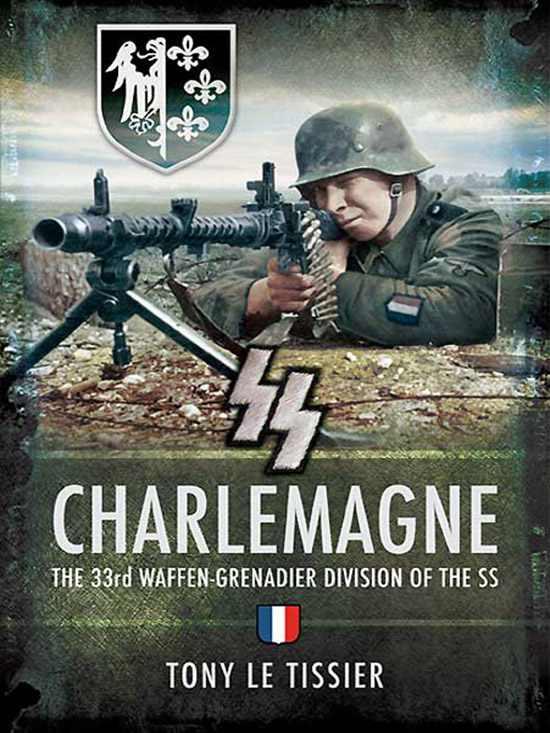
In May 1945, as the triumphant Red Army crushed the last pockets of German resistance in central Berlin, French soldiers fought back. They were the last surviving members of SS Charlemagne, the Waffen SS division made up of French volunteers. They were among the final defenders of the city and of Hitler’s bunker.
Their extraordinary story gives a compelling insight into the dreadful climax of the Battle for Berlin and into the conflicts of loyalty faced by the French in the Second World War. Yet, whatever their motivation, the performance of these soldiers as they confronted the Soviet onslaught was unwavering, and their fate after the German defeat was grim. Once captured, they were shot out of hand by their French compatriots or imprisoned.
SS Charlemagne is a gripping, fluently written study of one of the most revealing side stories of the war.
[Contain table.]
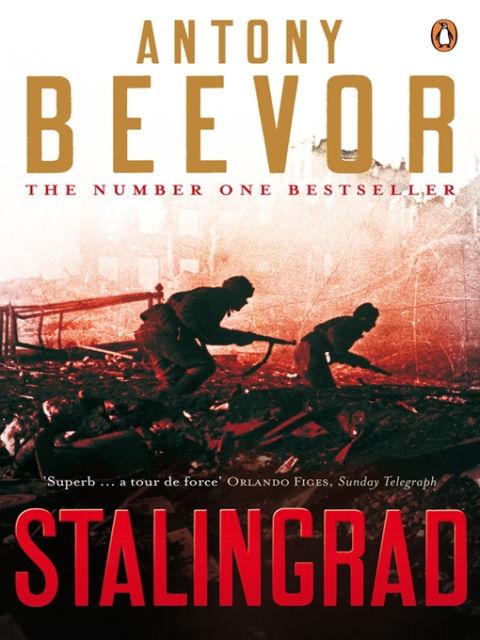
In October 1942, a panzer officer wrote ‘Stalingrad is no longer a town… Animals flee this hell; the hardest stones cannot bear it for long; only men endure’. The battle for Stalingrad became the focus of Hitler and Stalin’s determination to win the gruesome, vicious war on the eastern front. The citizens of Stalingrad endured unimaginable hardship; the battle, with fierce hand-to-hand fighting in each room of each building, was brutally destructive to both armies. But the eventual victory of the Red Army, and the failure of Hitler’s Operation Barbarossa, was the first defeat of Hitler's territorial ambitions in Europe, and the start of his decline. An extraordinary story of tactical genius, civilian bravery, obsession, carnage and the nature of war itself, Stalingrad will act as a testament to the vital role of the soviet war effort.
Hitler made two fundamental and crippling mistakes during the Second World War: The first was his whimsical belief that the United Kingdom would eventually become his ally, which delayed his decision to launch a major invasion of Britain, whose army was unprepared for the force of blitzkrieg warfare. The second was the ill-conceived Operation Barbarossa—an invasion of Russia that was supposed to take the German army to the gates of Moscow. Antony Beevor’s thoughtfully researched compendium recalls this epic struggle for Stalingrad. No one, least of all the Germans, could foretell the deep well of Soviet resolve that would become the foundation of the Red Army; Russia, the Germans believed, would fall as swiftly as France and Poland. The ill-prepared Nazi forces were trapped in a bloody war of attrition against the Russian behemoth, which held them in the pit of Stalingrad for nearly two years. Beevor points out that the Russians were by no means ready for the war either, making their stand even more remarkable; Soviet intelligence spent as much time spying on its own forces—in fear of desertion, treachery, and incompetence—as they did on the Nazis. Due attention is also given to the points of view of the soldiers and generals of both forces, from the sickening battles to life in the gulags.
Many believe Stalingrad to be the turning point of the war. The Nazi war machine proved to be fallible as it spread itself too thin for a cause that was born more from arrogance than practicality. The Germans never recovered, and its weakened defenses were no match for the Allied invasion of 1944. We know little of what took place in Stalingrad or its overall significance, leading Beevor to humbly admit that “[t]he Battle of Stalingrad remains such an ideologically charged and symbolically important subject that the last word will not be heard for many years.” This is true. But this gripping account should become the standard work against which all others should measure themselves.
This gripping account of Germany's notorious campaign combines sophisticated use of previously published firsthand accounts in German and Russian along with newly available Soviet archival sources and caches of letters from the front. For Beevor (Paris After the Liberation, 1944-1949), the 1942 German offensive was a gamble that reflected Hitler's growing ascendancy over his military subordinates. The wide-open mobile operations that took the 6th Army into Stalingrad were nevertheless so successful that Soviet authorities insisted they could be explained only by treason. (Over 13,000 Soviet soldiers were formally executed during the battle for Stalingrad alone.) Combat in Stalingrad, however, deprived the Germans of their principal force multipliers of initiative and flexibility. The close-gripped fighting brought men to the limits of endurance, then kept them there. Beevor juxtaposes the grotesque with the mundane, demonstrating the routines that men on both sides developed to cope with an environment that brought them to the edge of madness. The end began when German army commander Friedrich von Paulus refused to prepare for the counterattack everyone knew was coming. An encircled 6th Army could neither be supplied by air nor fight its way out of the pocket unsupported. Fewer than 10,000 of Stalingrad's survivors ever saw Germany again. For the Soviet Union, the victory became a symbol not of a government, but of a people. The men and women who died in the city's rubble could have had worse epitaphs than this sympathetic treatment. Agent: Andrew Nurnberg. History Book Club main selection; BOMC alternate selection; foreign sales to the U.K., Germany and Russia.
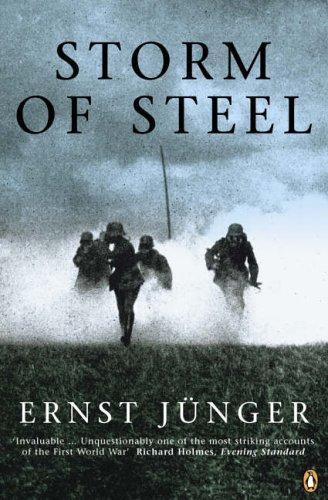
A memoir of astonishing power, savagery, and ashen lyricism, Storm of Steel illuminates not only the horrors but also the fascination of total war, seen through the eyes of an ordinary German soldier. Young, tough, patriotic, but also disturbingly self-aware, Jünger exulted in the Great War, which he saw not just as a great national conflict but—more importantly—as a unique personal struggle. Leading raiding parties, defending trenches against murderous British incursions, simply enduring as shells tore his comrades apart, Jünger kept testing himself, braced for the death that will mark his failure.
Published shortly after the war’s end, Storm of Steel was a worldwide bestseller and can now be rediscovered through Michael Hofmann’s brilliant new translation.
• First time in Penguin Classics
• Acclaimed new translation based on a new authoritative text
• Widely viewed as the best account ever written of fighting in World War I
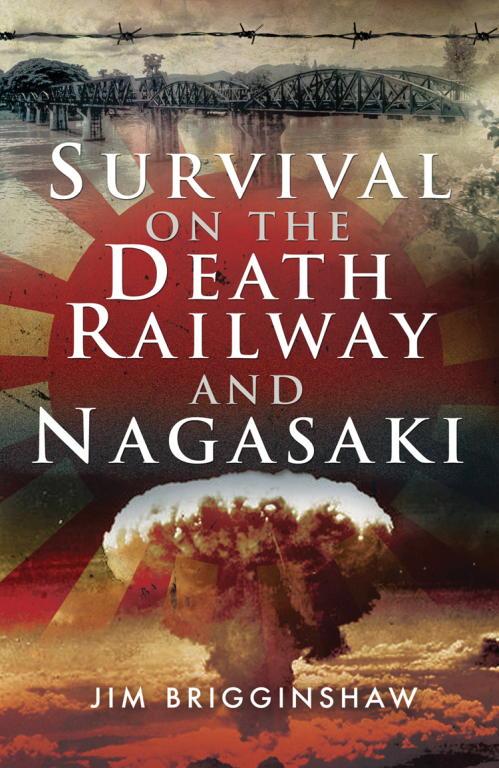
This is a remarkable and unique story of Jim Brigginshaw. Having been captured by the Japanese after the fall of Singapore in 1942, Jim was first sent to work in Burma, to build what has become known as the Death Railway. Unlike many of his comrades, Jim survived this ordeal, only to be transferred to Nagasaki, Japan, where he was sent to work in the mines of Sendryu.
Jim describes how the conditions in the ‘Hell pits of Sendryu’ were even worse than those experienced in Burma, but were ultimately the reason why he survived the war. On the 9th August 1945, the Americans, dropped the second nuclear bomb on Nagaski. Jim was fortunately underground at the time, but through this book re-lives the harrowing aftermath of the attack when the ground shook violently.