 fb2
fb2At a secret arms-design contest in Stalin’s Soviet Union, army technicians submitted a stubby rifle with a curved magazine. Dubbed the AK-47, it was selected as the Eastern Bloc’s standard arm. Scoffed at in the Pentagon as crude and unimpressive, it was in fact a breakthrough—a compact automatic that could be mastered by almost anyone, last decades in the field, and would rarely jam. Manufactured by tens of millions in planned economies, it became first an instrument of repression and then the most lethal weapon of the Cold War. Soon it was in the hands of terrorists.
In a searing examination of modern conflict and official folly, C. J. Chivers mixes meticulous historical research, investigative reporting, and battlefield reportage to illuminate the origins of the world’s most abundant firearm and the consequences of its spread. The result, a tour de force of history and storytelling, sweeps through the miniaturization and distribution of automatic firepower, and puts an iconic object in fuller context than ever before.
The Gun dismantles myths as it moves from the naÏve optimism of the Industrial Revolution through the treacherous milieu of the Soviet Union to the inside records of the Taliban. Chivers tells of the 19th-century inventor in Indianapolis who designs a Civil War killing machine, insisting that more-efficient slaughter will save lives. A German attaché who observes British machine guns killing Islamic warriors along the Nile advises his government to amass the weapons that would later flatten British ranks in World War I. In communist Hungary, a locksmith acquires an AK-47 to help wrest his country from the Kremlin’s yoke, beginning a journey to the gallows. The Pentagon suppresses the results of firing tests on severed human heads that might have prevented faulty rifles from being rushed to G.I.s in Vietnam. In Africa, a millennial madman arms abducted children and turns them on their neighbors, setting his country ablaze. Neither pro-gun nor anti-gun, The Gun builds to a terrifying sequence, in which a young man who confronts a trio of assassins is shattered by 23 bullets at close range. The man survives to ask questions that Chivers examines with rigor and flair.
Throughout, The Gun animates unforgettable characters—inventors, salesmen, heroes, megalomaniacs, racists, dictators, gunrunners, terrorists, child soldiers, government careerists, and fools. Drawing from years of research, interviews, and from declassified records revealed for the first time, he presents a richly human account of an evolution in the very experience of war.

The Khazars were one of the most important Turkic peoples in European history, dominating vast areas of southeastern Europe and the western reaches of the Central Asian steppes from the 4th to the 11th centuries AD. They were also unique in that their aristocratic and military elites converted to Judaism, creating what would be territorially the largest Jewish-ruled state in world history. They became significant allies of the Byzantine Empire, blocking the advance of Islam north of the Caucasus Mountains for several hundred years.
They also achieved a remarkable level of metal-working technology, and their military elite wore forms of iron plate armour that would not be seen in Western Europe until the 14th century. The Khazar state provided the foundations upon which medieval Russia and modern Ukraine were built. Fully illustrated with detailed colour plates, this is a fascinating study into the armies, organisation, armour, weapons and fortifications of the Khazars.
During the second half of 1943, after the failure at Kursk, Germany’s Army Group South fell back from Russia under repeated hammer blows from the Red Army. Under Erich von Manstein, however, the Germans were able to avoid serious defeats, while at the same time fending off Hitler’s insane orders to hold on to useless territory.
Then, in January 1944, a disaster happened. Six divisions of Army Group South became surrounded after sudden attacks by the 1st and 2nd Ukrainian Fronts under command of generals Nikolai Vatutin and Ivan Konev around the village of Korsun (near the larger town of Cherkassy on the Dnieper). The Germans’ greatest fear was the prospect of another Stalingrad, the catastrophe that had occurred precisely one year before.
This time, though, Manstein was in control from the start, and he immediately rearranged his Army Group to rescue his trapped divisions. A major panzer drive got underway, led by General der Panzertruppen Hans Hube, a survivor from Stalingrad pocket, which promptly ran up against several soviet tank armies. Leading the break-in was Franz Baeke with his Tiger and Panther-tanks. Due to both weather and ferocious resistance, the German drive stalled. Ju-52s still flew into Korsun’s airfield, delivering supplies and taking out wounded, but it soon became apparent that only one option remained for the beleaguered defenders: breakout.
Without consulting Hitler, on the night of February 16 Manstein ordered the breakout to begin. Led by the strongest formation within the pocket, SS Wiking, the trapped forces surged out and soon rejoined the surrounding panzer divisions who had been fully engaged in weakening the ring.
When dawn broke, the Soviets realized their prey was escaping. Although the Germans within the pocket lost nearly all of their heavy weapons and left many wounded behind, their escape was effected. Stalin, having anticipated another Stalingrad, was left with little but an empty bag, as Army Group South—this time—had pulled off a rescue.
In The Korsun Pocket, Niklas Zetterling, a researcher at the Swedish Defense College since 1995 and Anders Frankson, have provided a highly detailed and often breathtaking account of one of the most dramatic battles of World War II. From grand strategy to soldiers’ voices on the ground, including expert statistical analysis, the action, and the stakes, of the battle at Korsun are made vividly clear.
May 1945. Hitler is dead, and the Third Reich little more than smoking rubble. No GI wants to be the last man killed in action against the Nazis. But for cigar-chewing, rough-talking, hard-drinking, hard-charging Captain Jack Lee and his men, there is one more mission: rescue fourteen prominent French prisoners held in an SS-guarded castle high in the Austrian Alps. It’s a dangerous mission, but Lee has help from a decorated German Wehrmacht officer and his men, who voluntarily join the fight.
Based on personal memoirs, author interviews, and official American, German, and French histories, The Last Battle is the nearly unbelievable story of the most improbable battle of World War II—a tale of unlikely allies, bravery, cowardice, and desperate combat between implacable enemies.
The classic account of the final offensive against Hitler’s Third Reich—newly in print for the 50th anniversary of VE Day.
The Battle for Berlin was the culminating struggle of World War II in the European theater, the last offensive against Hitler’s Third Reich, which devastated one of Europe’s historic capitals and brought the Nazi leviathan to its downfall. It was also one of the war’s bloodiest and most pivotal moments, whose outcome would play a part in determining the complexion of international politics for decades to come.
The Last Battle is Cornelius Ryan’s compelling account of this final battle, a story of brutal extremes, of stunning military triumph alongside the stark conditions that the civilians of Berlin experienced in the face of the Allied assault. As always, Ryan delves beneath the military and political forces that were dictating events to explore the more immediate imperatives of survival, where, as the author describes it, “to eat had become more important than to love, to burrow more dignified than to fight, to exist more militarily correct than to win.”
The Last Battle is the story of ordinary people, both soldiers and civilians, caught up in the despair, frustration, and terror of defeat. It is history at its best, a masterful illumination of the effects of war on the lives of individuals, and one of the enduring works on World War II.
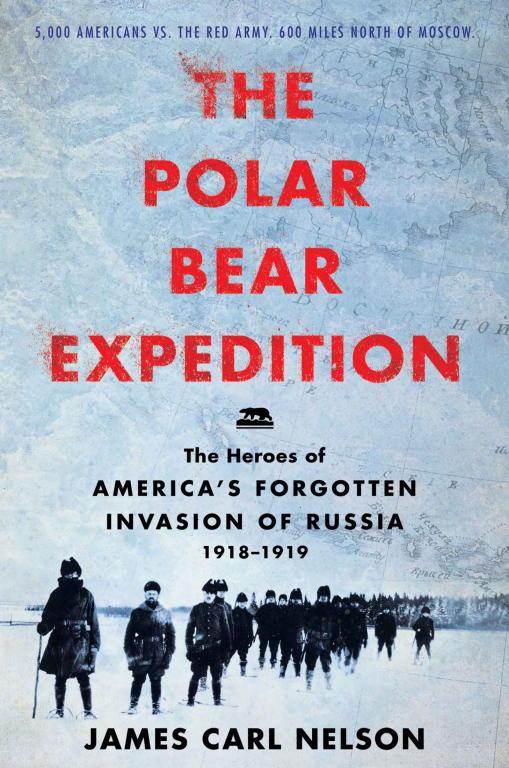
THE EXTRAORDINARY LOST STORY OF AMERICA’S INVASION OF RUSSIA 100 YEARS AGO
In the brutally cold winter of 1919, 5,000 Americans battled the Red Army 600 miles north of Moscow. We have forgotten. Russia has not.
An unforgettable human drama deep with contemporary resonance, award-winning historian James Carl Nelson’s The Polar Bear Expedition draws on an untapped trove of firsthand accounts to deliver a vivid, soldier’s-eye view of an extraordinary lost chapter of American history—the Invasion of Russia one hundred years ago during the last days of the Great War.
In the winter of 1919, 5,000 U.S. soldiers, nicknamed “The Polar Bears,” found themselves hundreds of miles north of Moscow in desperate, bloody combat against the newly formed Soviet Union’s Red Army. Temperatures plummeted to sixty below zero. Their guns and their flesh froze. The Bolsheviks, camouflaged in white, advanced in waves across the snow like ghosts.
The Polar Bears, hailing largely from Michigan, heroically waged a courageous campaign in the brutal, frigid subarctic of northern Russia for almost a year. And yet they are all but unknown today. Indeed, during the Cold War, two U.S. presidents, Ronald Reagan and Richard Nixon, would assert that the American and the Russian people had never directly fought each other. They were spectacularly wrong, and so too is the nation’s collective memory.
It began in August 1918, during the last months of the First World War: the U.S. Army’s 339th Infantry Regiment crossed the Arctic Circle; instead of the Western Front, these troops were sailing en route to Archangel, Russia, on the White Sea, to intervene in the Russian Civil War. The American Expeditionary Force, North Russia, had been sent to fight the Soviet Red Army and aid anti-Bolshevik forces in hopes of reopening the Eastern Front against Germany. And yet even after the Great War officially ended in November 1918, American troops continued to battle the Red Army and another, equally formiddable enemy, “General Winter,” which had destroyed Napoleon’s Grand Armee a century earlier and would do the same to Hitler’s once invincible Wehrmacht.
More than two hundred Polar Bears perished before their withdrawal in July 1919. But their story does not end there. Ten years after they left, a contingent of veterans returned to Russia to recover the remains of more than a hundred of their fallen brothers and lay them to rest in Michigan, where a monument honoring their service still stands.
In the century since, America has forgotten the Polar Bears’ harrowing campaign. Russia, notably, has not, and as Nelson reveals, the episode continues to color Russian attitudes toward the United States. At once epic and intimate, The Polar Bear Expedition masterfully recovers this remarkable tale at a time of new relevance.
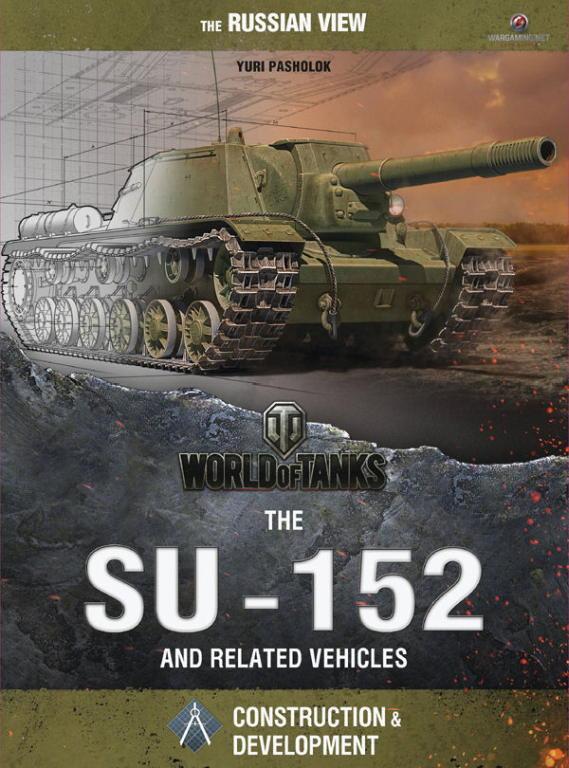
In 2012, the company that created World of Tanks, the phenominal world-wide massive, multi-player online game, started publishing a series of books in Russian that utilized Soviet documents and archival materials that had never before been seen by outsiders or published in any language about the design, procurement, development, manufacturing, and combat employment of Soviet armored fighting vehicles (AFVs) during World War Two (the Great Patriotic War to Russians). Now these remarkable books are being published in English with the obvious aphorism The Russian View. Hundreds of photos, illustrations, tables, and diagrams tell the story about the development of the SU-152 tank-killer.
BONUS: Every SU-152 printed book contains a unique code that provides 7 days of Premium, 1000 Gold, 100,000 credits, and a SU-85I (Soviet tank destroyer) worth about $15 in World of Tanks.
[Contain tables.]
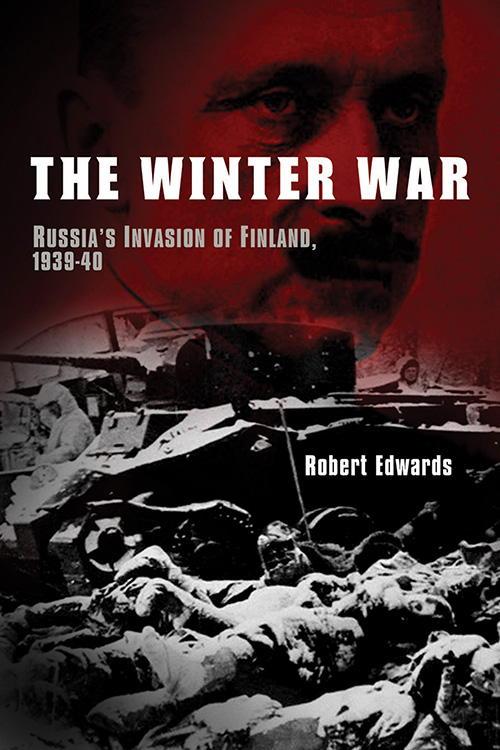
On November 30, 1939, the Soviet Union's Red Army invaded the young nation-state of Finland, in the full expectation of routing the small, ill-equipped Finnish army and annexing the former Russian territory by the end of the year. But Finland held out for 105 bitterly cold, fiercely combative days, until March 15, 1940, when a peace agreement ended the short, savage Winter War.
At the stirring center of the story lie the resourcefulness and resolve of the Finnish people, who against all military odds-in want of ammunition, food, sleep, and troops-fought a blundering, ineptly commanded Red Army to a standstill. On March 15, they ceded to the Soviet 11 percent of their territory and 30 percent of their economic assets, but none of their national pride.
The Russians meanwhile had markedly damaged their international standing and effectively ruined their military reputation-to such an extent, as this probing chapter in World War II history demonstrates, that Germany, with proud-blooded Finland as an ally, dared to launch its 1940 invasion of Russia. At the same time, though, the fiasco of the Winter War forced Stalin to acknowledge the shortcomings of the Red Army and to reform it: Germany would fall at Stalingrad in 1941.
With authority, this skillfully narrated military history unfolds its story of the four-month Soviet-Finnish war and explores its consequences from London to Moscow, from Helsinki to Paris, to Washington, DC.
Robert Edwards is a regular contributor to the Daily Telegraph in London, where he lives.

This is the untold story of the small group of men who have devised the plans and shaped the policies on how to use the Bomb. The book (first published in 1983) explores the secret world of these strategists of the nuclear age and brings to light a chapter in American political and military history never before revealed.

When Germany invades Poland, Luftwaffe bombers devastate Warsaw and the city’s zoo along with it. With most of their animals killed, or stolen away to Berlin, zookeepers Jan and Antonina Żabiński begin smuggling Jews into the empty cages. More “guests” hide inside the Żabińskis’s villa, emerging after dark for dinner, socializing and, on rare occasions of calm, piano concerts. They call this refuge from the Nazi occupation “The House Under a Crazy Star”. As the war escalates Jan becomes increasingly involved in the anti-Nazi resistance. Ammunition is buried in the elephant enclosure and explosives stored in the animal hospital. Plans are prepared for what will become the Warsaw uprising. Through the ever-present fear of discovery, Antonina must keep her unusual household afloat, caring for both its human and animal inhabitants—otters, a badger, hyena pups, lynxes—as Europe crumbles around them.
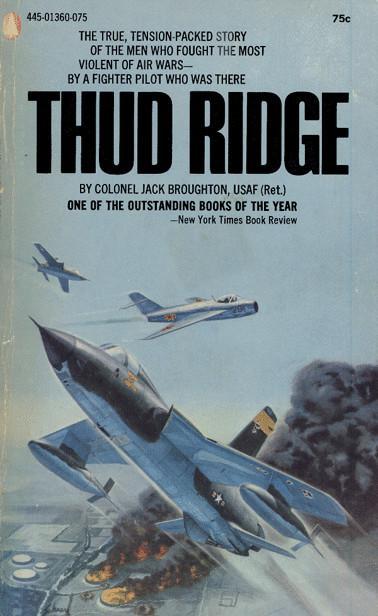
This is the story of a special breed of warrior, the fighter-bomber pilot; the story of valiant men who flew the F-105 Thunderchief ‘Thud’ Fighter-Bomber over the hostile skies of North Vietnam.
The book is based on Broughton’s tour of duty between September 1966 and June 1967 as Vice Commander of the 355th Tactical Fighter Wing, based at Takhli Royal Thai Air Force Base, Thailand. The narrative is anecdotal in nature, a commentary of his observations of persons, aircraft, and events during his tour, more or less chronologically, but without dated references. Few individuals are identified by other than first or nicknames, but Broughton develops most as characters through descriptions of their career backgrounds. Broughton’s accounts of missions “up north” were enhanced in both accuracy and verisimilitude by verbatim transcriptions of radio transmissions he recorded using a small tape recorder mounted in the cockpit of his aircraft.
In Thud Ridge Broughton is highly critical of the U.S. command structure directing air operations against North Vietnam. He blames micromanagement by the highest levels in Washington down to the Thirteenth Air Force, a command echelon based in the Philippines, for losses of men and aircraft that he characterizes as “astronomical” and “worthless”. He is particularly critical, however, of the “bomber mentality” management by generals who came up through the Strategic Air Command and then occupied key command slots in the war, which was being fought by pilots of the Tactical Air Command.
The book came about when, at the completion of his tour of duty, Broughton and two of his pilots were court martialed by the USAF for allegedly conspiring to violate the rules of engagement regarding U.S. air operations. Although acquitted of the most serious charges, Broughton, who had been personally relieved of duty by Pacific Air Forcescommander Gen. John D. Ryan, was subsequently transferred to an obscure post in the Pentagon, allegedly as a vendetta because his punishment was so slight. Required by office protocol to work only two or three days a month, he used both his extra time and his bitterness at the Air Force to compose Thud Ridge while he awaited approval of an application to appeal of his conviction to the Air Force Board for Correction of Military Records.
After his conviction was overturned and expunged from his record because of “undue command influence”, Broughton retired from the Air Force in August 1968 and had the memoir published by J.B. Lippincott. The book appeared soon after as a Bantam paperback, with reprint editions in 1985, 2002, and 2006.

The Second World War began with the lightning German Blitzkrieg as their Wehrmacht raced across Europe, spearheaded by the most dreaded weapon of the 20th century: The tank or in German ‘Panzer.’ No German tank better represented Germany’s engineering ability than the infamous Tiger tank. This thundering tank with its 88mm gun made a harrowing sight to the allies when it first appeared on the battlefield.
Tiger Heat follows the harrowing story of a Tiger tank crew on the Eastern Front during WWII, were both the elements and the enemy conspired against the mighty German Army, eventually pushing it back to Berlin. Not even the mighty Tiger Tank could halt the numerically superior Red Army with its own legendary T-34, KV-1 and IS tanks.
Chil Rajchman, a Polish Jew, was arrested with his younger sister in 1942 and sent to Treblinka, a death camp where more than 750,000 were murdered before it was abandoned by German soldiers. His sister was sent to the gas chambers, but Rajchman escaped execution, working for ten months under incessant threats and beatings as a barber, a clothes-sorter, a corpse-carrier, a puller of teeth from those same bodies. In August 1943, there was an uprising at the camp, and Rajchman was among the handful of men who managed to escape. In 1945, he set down this account, a plain, unembellished and exact record of the raw horror he endured every day. This unique testimony, which has remained in the sole possession of his family ever since, has never before been published in English. For its description of unspeakably cruelty, Treblinka is a memoir that will not be superseded.
In addition to Rajchman’s account, this volume will include the complete text of Vasily Grossman’s “The Hell of Treblinka”, one of the first descriptions of a Nazi extermination camp; a powerful and harrowing piece of journalism written only weeks after the camp was dissolved.
U.S.S. Seawolf: Submarine Raider of the Pacific is the famous first-hand account of the legendary U.S. Navy submarine Seawolf a.k.a. the Wolf which patrolled the Pacific during World War 2 and had over a dozen confirmed enemy sinkings. Shoving off the day of the Pearl Harbor attack, Chief Radioman J. (Joseph) M. (Melvin) Eckberg gives the reader a tense and dramatic account of his initial 24-month stint aboard the Seawolf and beyond.
It was to be one of the most ambitious operations since 617 Squadron bounced their revolutionary bombs into the dams of the Ruhr Valley in 1943…
April 1982. Argentine forces had invaded the Falkland Islands. Britain needed an answer. And fast.
The idea was simple: to destroy the vital landing strip at Port Stanley. The reality was more complicated. The only aircraft that could possibly do the job was three months from being scrapped, and the distance it had to travel was four thousand miles beyond its maximum range. It would take fifteen Victor tankers and seventeen separate in-flight refuellings to get one Avro Vulcan B2 over the target, and give its crew any chance of coming back alive.
Yet less than a month later, a formation of elderly British jets launched from a remote island airbase to carry out the longest-range air attack in history. At its head was a single aircraft, six men, and twenty-one thousand-pound bombs, facing the hornet’s nest of modern weaponry defending the Argentine forces on the Falkland Islands. There would be no second chances…
“I died in Vietnam, but I didn’t even know it,” said a young Vietnam vet on the Today Show one morning in 1978, shocking viewers across the country. Waiting for an Army to Die: The Tragedy of Agent Orange—the first book ever written on the effects of Agent Orange—tells this young vet’s story and that of hundreds of thousands of other former American servicemen. During the war, the US sprayed an estimated 12 million gallons of Agent Orange on Vietnam, in order to defoliate close to 5 million acres of its land. “Had anyone predicted that millions of human beings exposed to Agent Orange/dioxin would get sick and die,” scholar Fred A. Wilcox writes in the new introduction to his seminal book, “their warnings would have been dismissed as sci-fi fantasy or apocalyptic nonsense.” Told in a gripping and compassionate narrative style that travels from the war in Vietnam to the war at home, and through portraits of many of the affected survivors, their families, and the doctors and scientists whose clinical experience and research gave the lie to the government whitewash, Waiting for an Army to Die tells a story that, thirty years later, continues to create new twists and turns for Americans still waiting for justice and an honest account of what happened to them. Vietnam has chosen August 10—the day that the US began spraying Agent Orange on Vietnam—as Agent Orange Day, to commemorate all its citizens who were affected by the deadly chemical. The new second edition of Waiting for an Army to Die will be released upon the third anniversary of this day, in honor of all those whose families have suffered, and continue to suffer, from this tragedy.
[This book contains tables. Best viewed with CoolReader.]
In April 1992, a handful of young physicians, not one of them a surgeon, was trapped along with 50,000 men, women, and children in the embattled enclave of Srebrenica, Bosnia-Herzegovina. There the doctors faced the most intense professional, ethical, and personal predicaments of their lives.
Drawing on extensive interviews, documents, and recorded materials she collected over four and a half years, doctor and journalist Sheri Fink tells the harrowing—and ultimately enlightening—story of these physicians and the three who try to help them: an idealistic internist from Doctors without Borders, who hopes that interposition of international aid workers will help prevent a massacre; an aspiring Bosnian surgeon willing to walk through minefields to reach the civilian wounded; and a Serb doctor on the opposite side of the front line with the army that is intent on destroying his former colleagues.
With limited resources and a makeshift hospital overflowing with patients, how can these doctors decide who to save and who to let die? Will their duty to treat patients come into conflict with their own struggle to survive? And are there times when medical and humanitarian aid ironically prolong war and human suffering rather than helping to relieve it?
In April 1992, a handful of young physicians, not one of them a surgeon, was trapped along with 50,000 men, women, and children in the embattled enclave of Srebrenica, Bosnia-Herzegovina. There the doctors faced the most intense professional, ethical, and personal predicaments of their lives.
Drawing on extensive interviews, documents, and recorded materials she collected over four and a half years, doctor and journalist Sheri Fink tells the harrowing—and ultimately enlightening—story of these physicians and the three who try to help them: an idealistic internist from Doctors without Borders, who hopes that interposition of international aid workers will help prevent a massacre; an aspiring Bosnian surgeon willing to walk through minefields to reach the civilian wounded; and a Serb doctor on the opposite side of the front line with the army that is intent on destroying his former colleagues.
With limited resources and a makeshift hospital overflowing with patients, how can these doctors decide who to save and who to let die? Will their duty to treat patients come into conflict with their own struggle to survive? And are there times when medical and humanitarian aid ironically prolong war and human suffering rather than helping to relieve it?
The German invasion of Russia in 1941 – Operation Barbarossa – was shrouded in the utmost secrecy. Using German sources, the author has investigated an important aspect of the pre-attack deception, the degree to which the German public and armed forces were themselves caught unawares.
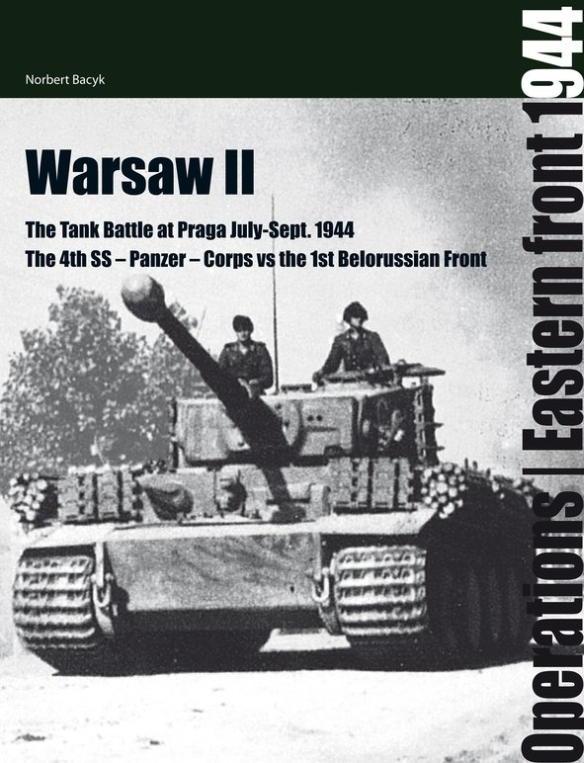
It is a common misunderstanding that the Red Army, on Stalin’s order, halted outside Warsaw in August 1944 to let the German troops suppress the Polish uprising in the capital. Joseph Stalin of course didn’t want to let a pro-British Polish government get a foothold in Warsaw. The fact is that on the last day of July (the night before the start of the uprising) the Red Army was on its way into Praga (the east part of Warsaw on the east bank of Vistula) when the German troops mounted a violent counter attack. This started the bitter fight that came to be called “The Battle for Praga” and was to continue until the end of September when the Red Army finally conquered Praga. By then it was too late for the Polish resistance inside the city. The fighting was among the toughest and most brutal on the Eastern Front during the war. Never before has this battle been described in the Swedish language and very seldom has it been mentioned in English literature. Furthermore we have managed to include unique pictures; photos that are vary rare and original colour illustrations by our internationally acknowledged illustrators; Maarten Swarts, Samuel Sward and Oliver Missing.