 fb2
fb2В сборник вошли избранные стихотворения в прозе и верлибры, написанные в 2018-2021 годах. Некоторые тексты и отрывки публиковались в блогах автора, но большая часть представлена впервые.
The Ballad of the White Horse is one of the last great epic poems in the English language. On the one hand it describes King Alfred’s battle against the Danes in 878. On the other hand it is a timeless allegory about the ongoing battle between Christianity and the forces of nihilistic heathenism. Filled with colorful characters, thrilling battles and mystical visions, it is as lively as it is profound. Chesterton incorporates brilliant imagination, atmosphere, moral concern, chronological continuity, wisdom and fancy. He makes his stanzas reverberate with sound, and hurries his readers into the heart of the battle.
In this rare volume of poetry, Aldous Huxley is characteristically, uncompromisingly erudite; yet surprisingly forceful, passionate, and erotic.

The gauze of James Pate’s nightmare, critical & cinematic beauty keeps rising & falling on a “crimson couch,” “a scarlet curtain” & a “crisp red light”—like Homer’s rosy-fingered dawn. & like Homer the language is measured, simple & deliberate. Noble. But detonates in “torturous rampaging music”—in the “the lemon of the pig. The glory and run-off of the pig.” The nightmare is inside. & the nightmare is outside. & the critic is a man. & the critic is a woman. & the Fassbinder film just keeps on playing—“in a haze of pink dust.”
— Rauan Klassnik, author of The Moon’s Jaw
Raised in the urban ruins of Memphis Tennessee, in the wake of riots and assassinations, James Pate’s fantasies and visions draws on the occult atmosphere of devil-blues, underground trash and gothic pageantry. His work inhabits a saturated zone of violence and artifice, hate and love. For the past 15 years he has been one of my favorite writers and closest collaborators.
— Johannes Goransson, author of Haute Surveillance
James Pate draws the veins together with this pulpy ode to Fassbinder. It’s burnt with shades of Klassnik & Kitchell, Evenson & Glenum, but it’s also its own night raid — these poems read like the transcript of a documentary about two sexless artists as they run loops of long-dead film stock through a haunted Arriflex, dying to record blood-slicked mannequins lit by meat locker fluorescents. Pate gets it.
— Ken Baumann, author of Solip


«The thing, he said, would come in the night at three
From the old churchyard on the hill below;
But crouching by an oak fire's wholesome glow,
I tried to tell myself it could not be…»
The Phoenix and Turtle is Shakespeare's allegorical poem on the mystical nature of love.
The poem tells of the funeral of two lovers the phoenix, a mythological bird associated with immortality, and the turtledove (usually called "turtle" in Elizabethan English), a symbol of fidelity. The two birds have burned themselves to death in order to be forever joined in love. The allegory celebrates an ideal of love in which an absolute spiritual union of the lovers, defying rationality and common sense is chastely achieved through death, the ultimate refection of the world.
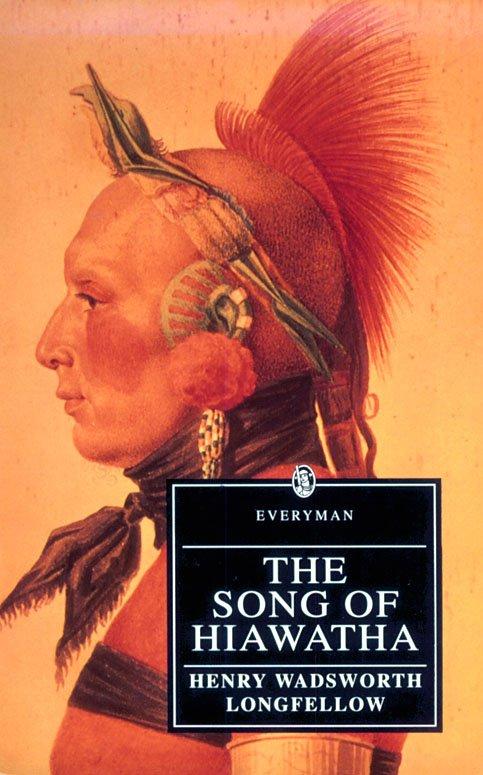
The Song of Hiawatha is based on the legends and stories of many North American Indian tribes, but especially those of the Ojibway Indians of northern Michigan, Wisconsin, and Minnesota. They were collected by Henry Rowe Schoolcraft, the reknowned historian, pioneer explorer, and geologist. He was superintendent of Indian affairs for Michigan from 1836 to 1841.
Schoolcraft married Jane, O-bah-bahm-wawa-ge-zhe-go-qua (The Woman of the Sound Which the Stars Make Rushing Through the Sky), Johnston. Jane was a daughter of John Johnston, an early Irish fur trader, and O-shau-gus-coday-way-qua (The Woman of the Green Prairie), who was a daughter of Waub-o-jeeg (The White Fisher), who was Chief of the Ojibway tribe at La Pointe, Wisconsin.
Jane and her mother are credited with having researched, authenticated, and compiled much of the material Schoolcraft included in his Algic Researches (1839) and a revision published in 1856 as The Myth of Hiawatha. It was this latter revision that Longfellow used as the basis for The Song of Hiawatha.
Longfellow began Hiawatha on June 25, 1854, he completed it on March 29, 1855, and it was published November 10, 1855. As soon as the poem was published its popularity was assured. However, it also was severely criticized as a plagiary of the Finnish epic poem Kalevala. Longfellow made no secret of the fact that he had used the meter of the Kalevala; but as for the legends, he openly gave credit to Schoolcraft in his notes to the poem.
I would add a personal note here. My father's roots include Ojibway Indians: his mother, Margaret Caroline Davenport, was a daughter of Susan des Carreaux, O-gee-em-a-qua (The Chief Woman), Davenport whose mother was a daughter of Chief Waub-o-jeeg. Finally, my mother used to rock me to sleep reading portions of Hiawatha to me, especially:
Woodrow W. Morris
April 1, 1991
Поэма Генри Лонгфелло "Песнь о Гайавате" с иллюстрациями Ремингтона
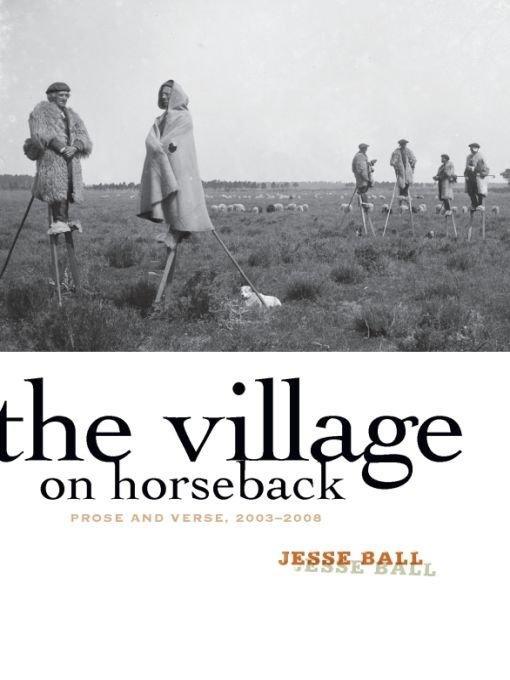
The Village on Horseback features mesmerizing new work from the author of Samedi the Deafness and The Way Through Doors, one of the New Yorker’s Best Books of 2009. This collection of new pieces by experimental writer Jesse Ball is a philosophical recasting of myth and legend. Unearthing parables from the compost heap of oral tradition, folklore, literature, and popular culture, The Village on Horseback can be read as a sort of fabulist’s compendium by an author who has been called charming, lyrical, fanciful, and "disturbingly original."
Join Ursula K. Le Guin as she explores a broad array of subjects, ranging from Tolstoy, Twain, and Tolkien to women’s shoes, beauty, and family life. With her customary wit, intelligence, and literary craftsmanship, she offers a diverse and highly engaging set of readings.
The Wave in the Mind includes some of Le Guin’s finest literary criticism, rare autobiographical writings, performance art pieces, and, most centrally, her reflections on the arts of writing and reading.
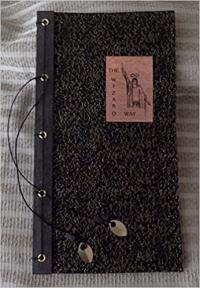

«They cut it down, and where the pitch-black aisles
Of forest night had hid eternal things,
They scaled the sky with towers and marble piles
To make a city for their revellings…»


Torquato Tasso ist ein Schauspiel in fünf Aufzügen von Johann Wolfgang von Goethe, das als Protagonisten den Dichter Torquato Tasso in den Mittelpunkt der Handlung stellt. Zwischen dem 30. März 1780 und dem 31. Juli 1789 entstanden, lag das Werk im Februar 1790 im Druck vor und wurde am 16. Februar 1807 in Weimar uraufgeführt.