 fb2
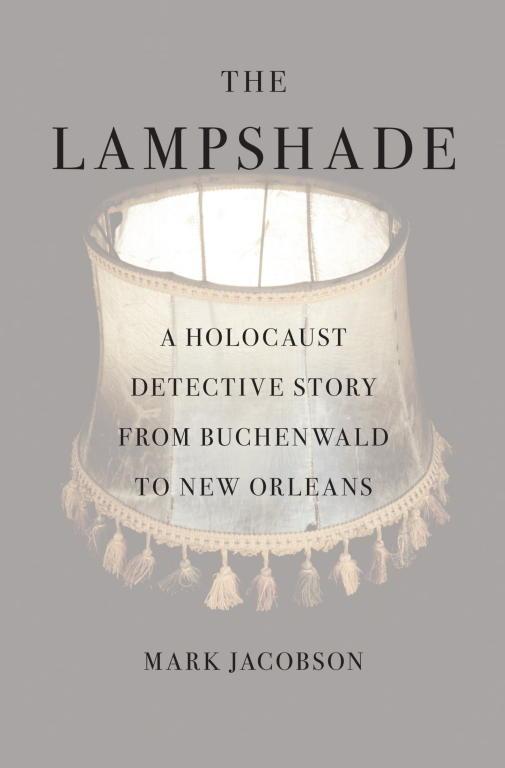
fb2Few growing up in the aftermath of World War II will ever forget the horrifying reports that Nazi concentration camp doctors had removed the skin of prisoners to makes common, everyday lampshades. In The Lampshade, bestselling journalist Mark Jacobson tells the story of how he came into possession of one of these awful objects, and of his search to establish the origin, and larger meaning, of what can only be described as an icon of terror.
Jacobson’s mind-bending historical, moral, and philosophical journey into the recent past and his own soul begins in Hurricane Katrina–ravaged New Orleans. It is only months after the storm, with America’s most romantic city still in tatters, when Skip Henderson, an old friend of Jacobson’s, purchases an item at a rummage sale: a very strange looking and oddly textured lampshade. When he asks what it’s made of, the seller, a man covered with jailhouse tattoos, replies, “That’s made from the skin of Jews.” The price: $35. A few days later, Henderson sends the lampshade to Jacobson, saying, “You’re the journalist, you find out what it is.” The lampshade couldn’t possibly be real, could it? But it is. DNA analysis proves it.
This revelation sends Jacobson halfway around the world, to Yad Vashem in Jerusalem and to the Buchenwald concentration camp in Germany, where the lampshades were supposedly made on the order of the infamous “Bitch of Buchenwald,” Ilse Koch. From the time he grew up in Queens, New York, in the 1950s, Jacobson has heard stories about the human skin lampshade and knew it to be the ultimate symbol of Nazi cruelty. Now he has one of these things in his house with a DNA report to prove it, and almost everything he finds out about it is contradictory, mysterious, shot through with legend and specious information.
Through interviews with forensic experts, famous Holocaust scholars (and deniers), Buchenwald survivors and liberators, and New Orleans thieves and cops, Jacobson gradually comes to see the lampshade as a ghostly illuminator of his own existential status as a Jew, and to understand exactly what that means in the context of human responsibility.
One question looms as his search goes on: what to do with the lampshade—this unsettling thing that used to be someone? It is a difficult dilemma to be sure, but far from the last one, since once a lampshade of human skin enters your life, it is very, very hard to forget.
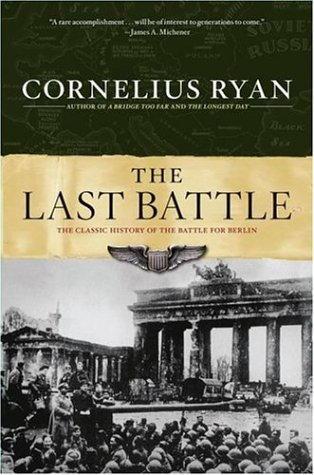
The classic account of the final offensive against Hitler’s Third Reich—newly in print for the 50th anniversary of VE Day.
The Battle for Berlin was the culminating struggle of World War II in the European theater, the last offensive against Hitler’s Third Reich, which devastated one of Europe’s historic capitals and brought the Nazi leviathan to its downfall. It was also one of the war’s bloodiest and most pivotal moments, whose outcome would play a part in determining the complexion of international politics for decades to come.
The Last Battle is Cornelius Ryan’s compelling account of this final battle, a story of brutal extremes, of stunning military triumph alongside the stark conditions that the civilians of Berlin experienced in the face of the Allied assault. As always, Ryan delves beneath the military and political forces that were dictating events to explore the more immediate imperatives of survival, where, as the author describes it, “to eat had become more important than to love, to burrow more dignified than to fight, to exist more militarily correct than to win.”
The Last Battle is the story of ordinary people, both soldiers and civilians, caught up in the despair, frustration, and terror of defeat. It is history at its best, a masterful illumination of the effects of war on the lives of individuals, and one of the enduring works on World War II.
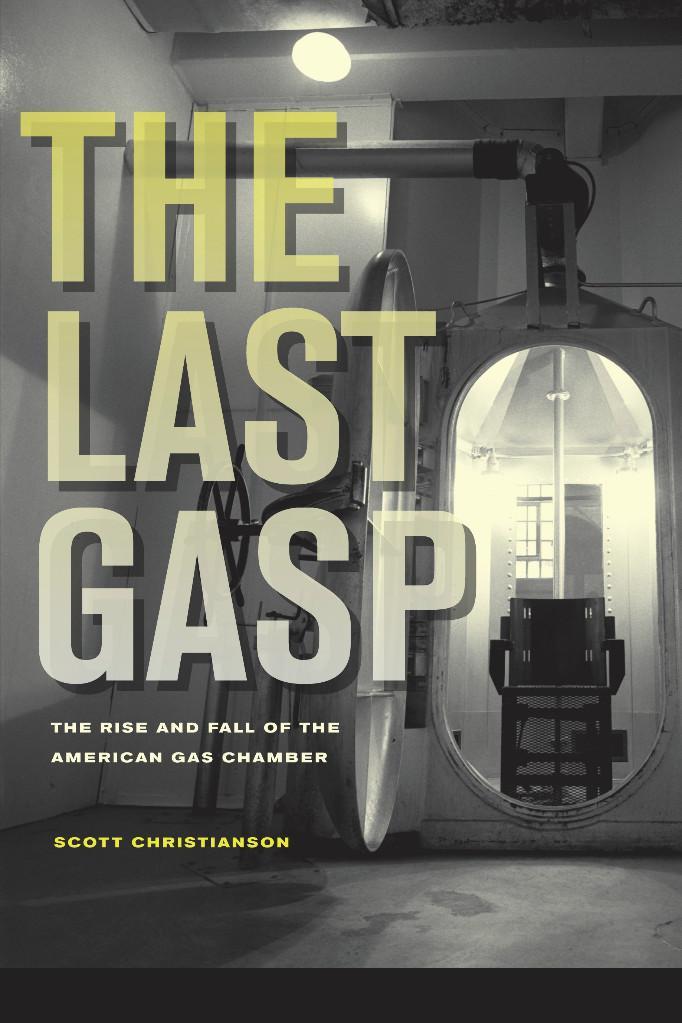
The Last Gasp takes us to the dark side of human history in the first full chronicle of the gas chamber in the United States. In page-turning detail, award-winning writer Scott Christianson tells a dreadful story that is full of surprising and provocative new findings.
First constructed in Nevada in 1924, the gas chamber, a method of killing sealed off and removed from the sight and hearing of witnesses, was originally touted as a “humane” method of execution. Delving into science, war, industry, medicine, law, and politics, Christianson overturns this mythology for good. He exposes the sinister links between corporations looking for profit, the military, and the first uses of the gas chamber after World War I. He explores little-known connections between the gas chamber and the eugenics movement. Perhaps most controversially, he has unearthed new evidence about American and German collaboration in the production and lethal use of hydrogen cyanide and about Hitler’s adoption of gas chamber technology developed in the United States.
More than a book about the death penalty, this compelling history ultimately reveals much about America’s values and power structures in the twentieth century.
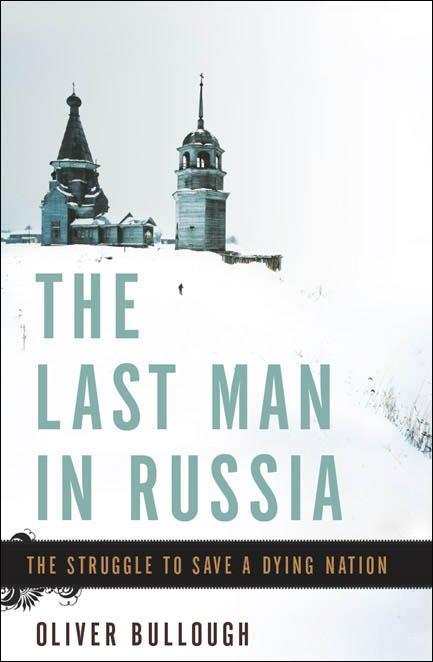
Russia is dying from within. Oligarchs and oil barons may still dominate international news coverage, but their prosperity masks a deep-rooted demographic tragedy. Faced with staggering population decline—and near-certain economic collapse—driven by toxic levels of alcohol abuse, Russia is also battling a deeper sickness: a spiritual one, born out of the country’s long totalitarian experiment.
In The Last Man in Russia, award-winning journalist Oliver Bullough uses the tale of a lone priest to give life to this national crisis. Father Dmitry Dudko, a dissident Orthodox Christian, was thrown into a Stalinist labor camp for writing poetry. Undaunted, on his release in the mid-1950s he began to preach to congregations across Russia with little concern for his own safety. At a time when the Soviet government denied its subjects the prospect of advancement, and turned friend against friend and brother against brother, Dudko urged his followers to cling to hope. He maintained a circle of sacred trust at the heart of one of history’s most deceitful systems. But as Bullough reveals, this courageous group of believers was eventually shattered by a terrible act of betrayal—one that exposes the full extent of the Communist tragedy. Still, Dudko’s dream endures. Although most Russians have forgotten the man himself, the embers of hope that survived the darkness are once more beginning to burn.
Leading readers from a churchyard in Moscow to the snow-blanketed ghost towns of rural Russia, and from the forgotten graves of Stalin’s victims to a rock festival in an old gulag camp, The Last Man in Russia is at once a travelogue, a sociological study, a biography, and a cri de coeur for a dying nation—one that, Bullough shows, might yet be saved.
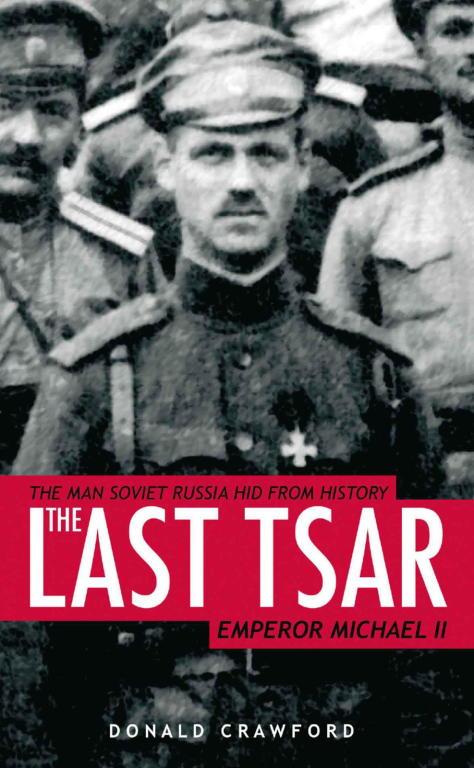
An historical biography of the last Tsar of Russia — not Nicholas II, but his brother Michael — Emperor Michael II — who succeeded to the throne when Nicholas abdicated in March 1917. Michael, married to a double divorcée, Natasha, the daughter of a Moscow lawyer, was the first Romanov murdered by the Bolsheviks, five weeks before the other mass killings, and because he was the Romanov who posed the greatest threat to them. However, they never admitted responsibility for his murder, pretending instead that he had escaped.
This book, based chiefly on original contemporary sources in Russia, tells you what the Soviet Union intended that you should never know. Does that matter now? Very much so, for unlike his brother Nicholas, Michael can serve as the bridge between today’s Russia and Tsarist Russia, a gap which has yet to be closed. As Viktor Yevtukhov, appointed deputy Russian Minister of Justice in February 2011, has said: ‘We should know more about this man and remember him, because this memory can give our society the ethical foundation we need’.
This book will tell you why, after almost a century, that should be so. From the tragedy of the past, a hope for the future…
www.lasttsar.com

Orwell’s moving reflections on the English character and his passionate belief in the need for political change. The Lion and the Unicorn was written in London during the worst period of the blitz. It is vintage Orwell, a dynamic outline of his belief in socialism, patriotism and an English revolution. His fullest political statement, it has been described as ‘one of the most moving and incisive portraits of the English character’ and is as relevant now as it ever has been.

Winner of the Pulitzer Prize, the National Book Award, and the National Book Critics Circle Award
TWENTY-FIVE YEARS after its initial publication, The Making of the Atomic Bomb remains the seminal and complete story of how the bomb was developed, from the turn-of-the-century discovery of the vast energy locked inside the atom to the dropping of the first bombs on Japan.
Few great discoveries have evolved so swiftly—or have been so misunderstood. From the theoretical discussions of nuclear energy to the bright glare of Trinity, there was a span of hardly more than twenty-five years. What began as merely an interesting speculative problem in physics grew into the Manhattan Project, and then into the bomb, with frightening rapidity, while scientists known only to their peers—Szilard, Teller, Oppenheimer, Bohr, Meitner, Fermi, Lawrence, and von Neumann—stepped from their ivory towers into the limelight.
Richard Rhodes gives the definitive story of man’s most awesome discovery and invention. Told in rich human, political, and scientific detail, The Making of the Atomic Bomb is a narrative tour de force and a document with literary power commensurate with its subject.
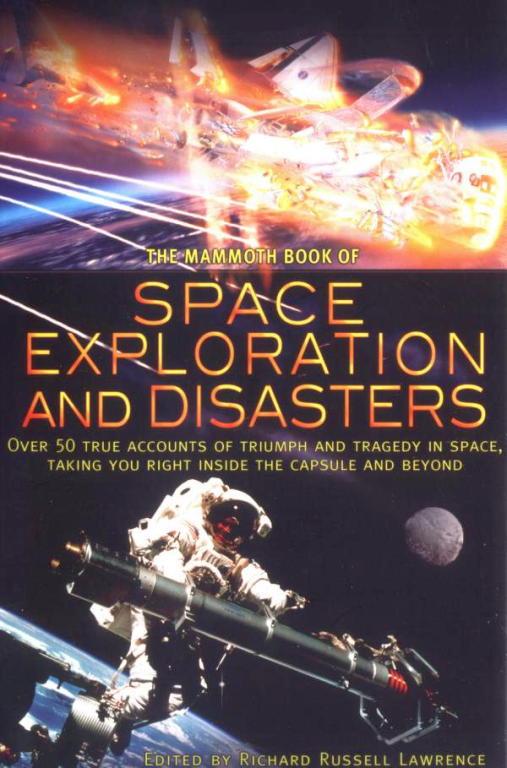
In the words of those who trod the void and those at mission control, here are over 50 of the greatest true stories of suborbital, orbital and deep-space exploration. From Apollo 8’s first view of a fractured, tortured landscape of craters on the ‘dark side’ of the Moon to the series of cliff-hanger crises aboard space station Mir, they include moments of extraordinary heroic achievement as well as episodes of terrible human cost. Among the astronauts and cosmonauts featured are John Glenn, Pavel Beyayev, Jim Lovell, Neil Armstrong, Buzz Aldrin, Valery Korzun, Vasily Tsibliyev and Michael Foale.
• First walk in space by Sergei Leonov and his traumatic return to Earth
• Apollo 13’s problem — the classic, nail-biting account of abandoning ship on the way to the Moon
• Docking with the frozen, empty Salyut 7 space station that had drifted without power for eight months
• Progress crashes into Mir — the astronauts survive death by a hair’s breadth
• Jerry Linenger’s panic attack during a space walk, ‘just out there dangling’.
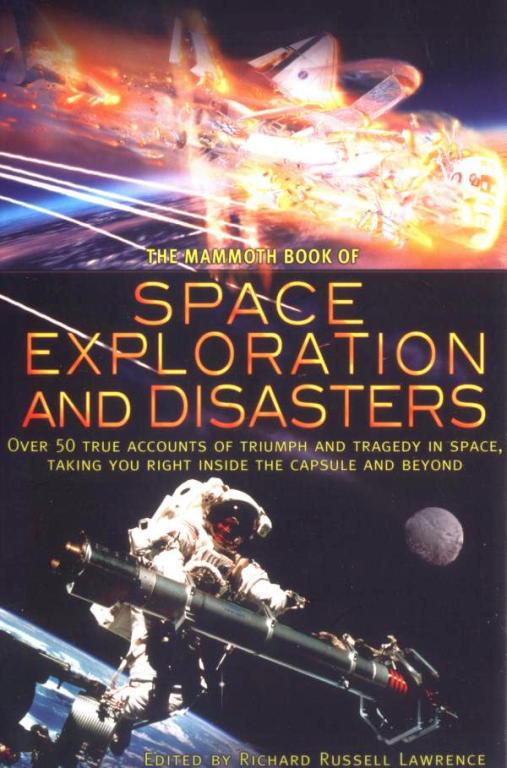
In the words of those who trod the void and those at mission control, here are over 50 of the greatest true stories of suborbital, orbital and deep-space exploration. From Apollo 8’s first view of a fractured, tortured landscape of craters on the ‘dark side’ of the Moon to the series of cliff-hanger crises aboard space station Mir, they include moments of extraordinary heroic achievement as well as episodes of terrible human cost. Among the astronauts and cosmonauts featured are John Glenn, Pavel Beyayev, Jim Lovell, Neil Armstrong, Buzz Aldrin, Valery Korzun, Vasily Tsibliyev and Michael Foale.
• First walk in space by Sergei Leonov and his traumatic return to Earth
• Apollo 13’s problem — the classic, nail-biting account of abandoning ship on the way to the Moon
• Docking with the frozen, empty Salyut 7 space station that had drifted without power for eight months
• Progress crashes into Mir — the astronauts survive death by a hair’s breadth
• Jerry Linenger’s panic attack during a space walk, ‘just out there dangling’.
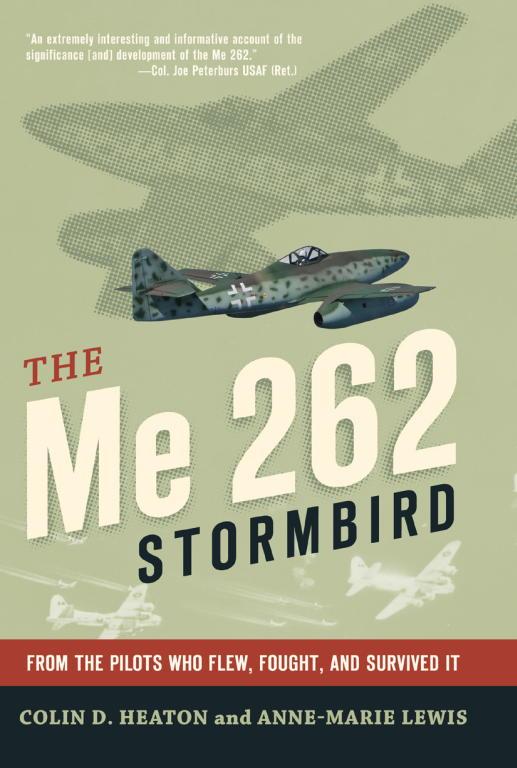
The Me 262 was the first of its kind, the first jet-powered aircraft. Although conceived before the war, with the initial plans being drawn in April 1939, the Stormbird was beset with technological (particularly the revolutionary engines) and political difficulties, resulting in it not entering combat until August 1944, with claims of nineteen downed Allied aircraft. The performance of the Me 262 so far exceeded that of Allied aircraft that on 1 Sepember 1944, USAAF General Carl Spaatz remarked that if greater numbers of German jets appeared, they could inflict losses heavy enough to force cancellation of the Allied daylight bombing offensive.
The story of how the Stormbird came to be is fascinating history, and it comes to life in the hands of noted historian Colin Heaton. Told largely in the words of the German aces who flew it, The Me 262 Stormbird provides the complete history of this remarkable airplane from the drawing boards to combat in the skies over the Third Reich. Features two forewords, one by Jorg Czypionka, Me 262 night fighter pilot, and another by historian and author Barrett Tillman.
The introduction of the Me 262 Stormbird jet fighter was a potential game changer for the Germans in World War II, but production delays and a shortage of pilots minimized its impact on the war. Nevertheless, jet engines were the way of the future, and the Stormbird loomed large in the experiences of the World War II pilots who flew and fought the first jet fighter.
In The Me 262 Stormbird, Colin D. Heaton (The German Aces Speak) covers the iconic fighter in detail, often in the words of the men who flew it or fought it. From Willi Messerschmitt’s original designs, through the early technical difficulties and flight tests, and eventual introduction of the aircraft into the war, Heaton covers the Stormbird’s history in detail alongside fascinating anecdotes from many of Germany’s top aces—and the Allied airmen who went head to head with the futuristic jet while flying their prop-driven planes.
Heaton also covers the political machinations involved in getting approval for the jet—Hitler was personally involved—as well as the infighting among the Luftwaffe’s senior officers, some of whom wanted the aircraft designed as a fighter and others who wanted it designed as a bomber.
The first Me 262 squadron, ultimately designated as JG-7, and Adolf Galland’s squadron, JV-44, are covered extensively, along with the two-seater Me 262 night fighter. Heaton rounds out his narrative with the American perspective of Allied airmen who faced the 262, as well as an analysis of the Stormbird program and its post-war impact. The Me 262 Stormbird is a definitive account of this state-of-the-art aircraft.
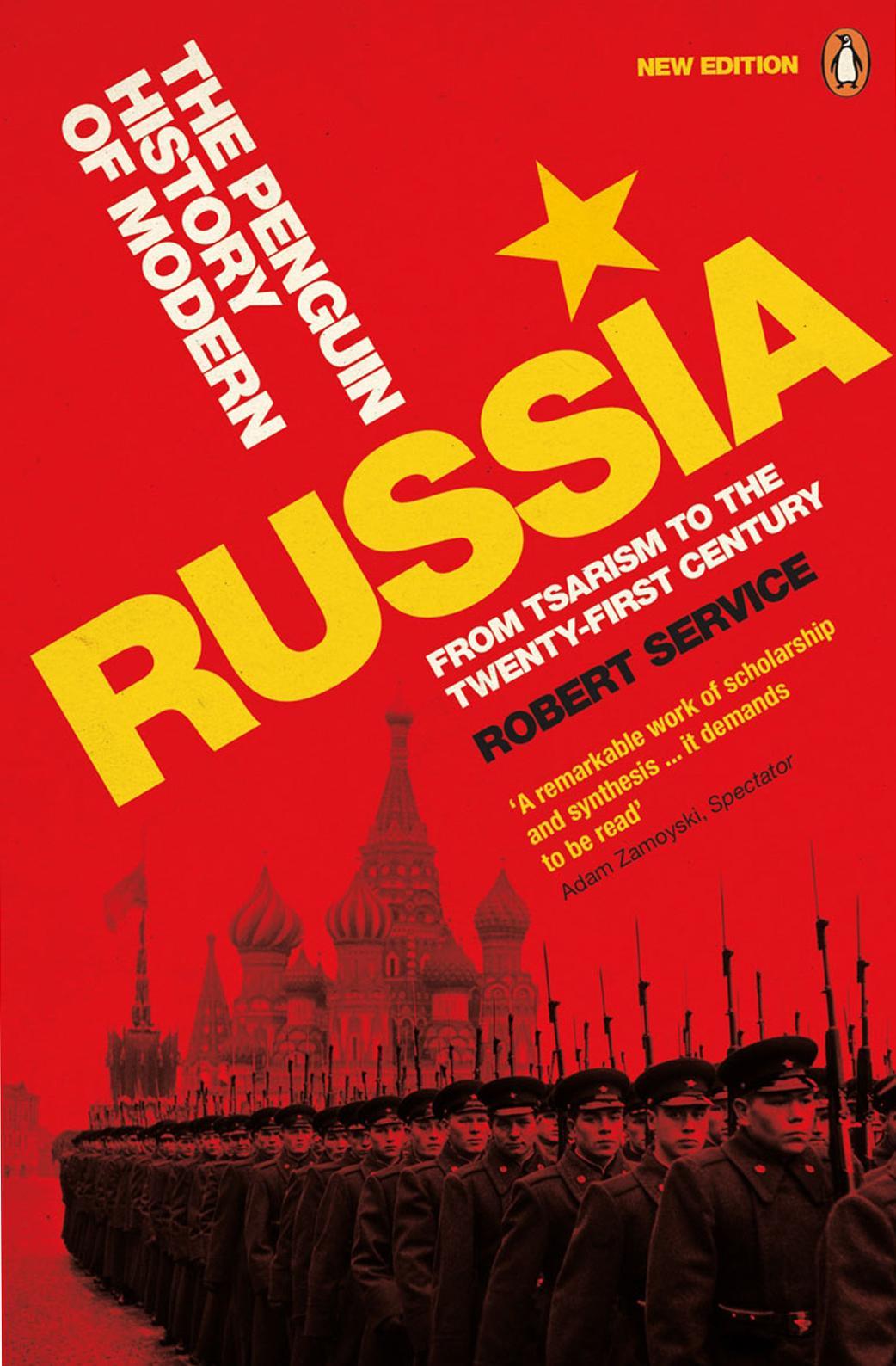
Russia’s recent past has encompassed revolution, civil war, mass terror and two world wars, and the country is still undergoing huge change.
In his acclaimed history, now updated to 2009, Robert Service provides a superb panoramic viewpoint on Russia, exploring the complex, changing interaction between rulers and ruled from Nicholas II, Lenin and Stalin through to Gorbachev, Yeltsin, Putin and beyond.
This new edition also discusses Russia’s unresolved economic and social difficulties and its determination to regain its leading role on the world stage and explains how, despite the recent years of de-communization, the seven decades of communist rule which penetrated every aspect of life still continue to influence Russia today.
During the Soviet years, Russian science was touted as one of the greatest successes of the regime. Russian science was considered to be equal, if not superior, to that of the wealthy western nations. The Perversion of Knowledge, a history of Soviet science that focuses on its control by the KGB and the Communist Party, reveals the dark side of this glittering achievement.
Based on the author’s firsthand experience as a Soviet scientist, and drawing on extensive Russian language sources not easily available to the Western reader, the book includes shocking new information on biomedical experimentation on humans as well as an examination of the pernicious effects of Trofim Lysenko’s pseudo-biology. Also included are many poignant case histories of those who collaborated and those who managed to resist, focusing on the moral choices and consequences. The text is accompanied by the author’s own translations of key archival materials, making this work an essential resource for all those with a serious interest in Russian history.
[Contain tables.]
During the Soviet years, Russian science was touted as one of the greatest successes of the regime. Russian science was considered to be equal, if not superior, to that of the wealthy western nations. The Perversion of Knowledge, a history of Soviet science that focuses on its control by the KGB and the Communist Party, reveals the dark side of this glittering achievement.
Based on the author’s firsthand experience as a Soviet scientist, and drawing on extensive Russian language sources not easily available to the Western reader, the book includes shocking new information on biomedical experimentation on humans as well as an examination of the pernicious effects of Trofim Lysenko’s pseudo-biology. Also included are many poignant case histories of those who collaborated and those who managed to resist, focusing on the moral choices and consequences. The text is accompanied by the author’s own translations of key archival materials, making this work an essential resource for all those with a serious interest in Russian history.
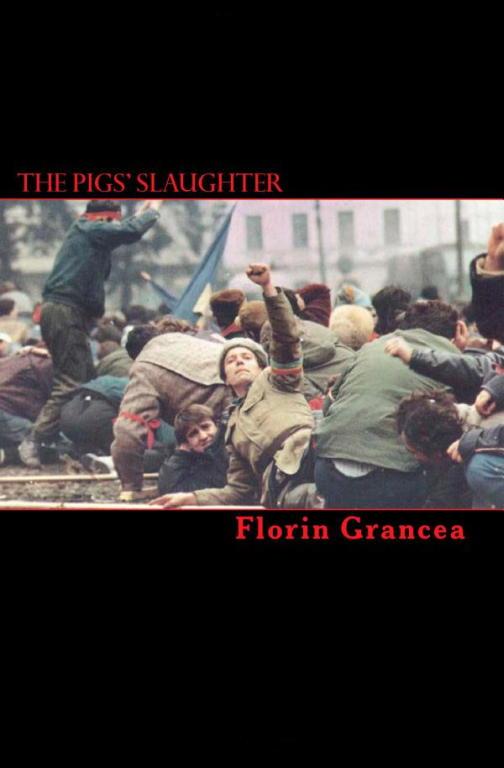
Undoubtedly, “The Revolution WILL be televised” was the main players’ motto. Most Romanians only saw their revolution on their small black and white televisions while others were the actors, willing and uninformed…. The Revolution ruthlessly took more than it gave — beautiful bodies, healthy food, cultivated culture, tested tradition. In the end, communism’s empty materialism was simply traded for western society’s empty materialism, which happily did away with what the Eastern Block years had inefficiently leftover. The hungry people of before 1989 have been transformed into obese people. Instead of queuing for meagrely rationed bread they now queue to buy imported foods in overpriced hypermarkets. It’s time the world heard this true story of Romania’s Revolution, because most Romanians took only a couple of years to realize how little western culture had to offer.
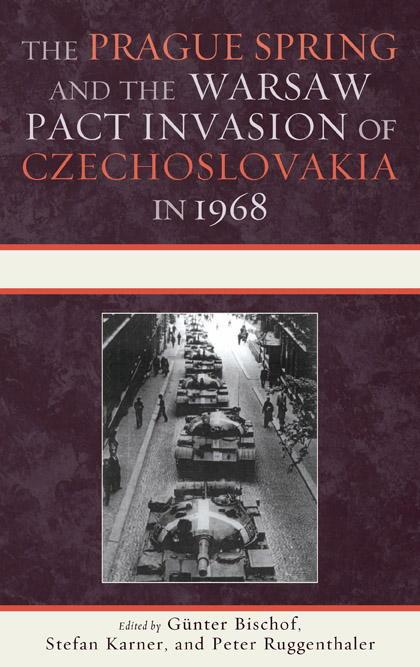
On August 20, 1968, tens of thousands of Soviet and East European ground and air forces moved into Czechoslovakia and occupied the country in an attempt to end the “Prague Spring” reforms and restore an orthodox Communist regime. The leader of the Soviet Communist Party, Leonid Brezhnev, was initially reluctant to use military force and tried to pressure his counterpart in Czechoslovakia, Alexander Dubcek, to crack down. But during the summer of 1968, after several months of careful deliberations, the Soviet Politburo finally decided that military force was the only option left. A large invading force of Soviet, Polish, Hungarian, and Bulgarian troops received final orders to move into Czechoslovakia; within 24 hours they had established complete military control of Czechoslovakia, bringing an end to hopes for “socialism with a human face.”
Dubcek and most of the other Czechoslovak reformers were temporarily restored to power, but their role from late August 1968 through April 1969 was to reverse many of the reforms that had been adopted. In April 1969, Dubchek was forced to step down for good, bringing a final end to the Prague Spring. Soviet leaders justified the invasion of Czechoslovakia by claiming that “the fate of any socialist country is the common affair of all socialist countries” and that the Soviet Union had both a “right” and a “sacred duty” to “defend socialism” in Czechoslovakia. The invasion caused some divisions within the Communist world, but overall the use of large-scale force proved remarkably successful in achieving Soviet goals. The United States and its NATO allies protested but refrained from direct military action and covert operations to counter the Soviet-led incursion into Czechoslovakia.
The essays of a dozen leading European and American Cold War historians analyze this turning point in the Cold War in light of new documentary evidence from the archives of two dozen countries and explain what happened behind the scenes. They also reassess the weak response of the United States and consider whether Washington might have given a “green light,” if only inadvertently, to the Soviet Union prior to the invasion.
How psilocybin mushrooms facilitate a direct link to the wisdom of Nature and the meaning of life
• Examines the neurochemistry underlying the visionary psilocybin experience
• Explains how sacred mushrooms help restore our connection to the natural intelligence of Nature
• Reviews the research on psilocybin’s ability to dispel anxiety in the terminally ill and its helpful effects on obsessive-compulsive disorder
It has been more than 50 years since sacred mushrooms were plucked from the shamanic backwaters of Mexico and presented to the modern world by R. Gordon Wasson. After sparking the psychedelic era of the 1960s, however, the divine mushroom returned underground from whence it mysteriously originated. Yet today, the mushroom’s extraordinary influence is once again being felt by large numbers of people, due to the discovery of hundreds of wild psilocybin species growing across the globe.
In The Psilocybin Solution, Simon G. Powell traces the history of the sacred psilocybin mushroom and discusses the shamanic visionary effects it can induce. Detailing how psilocybin acts as a profound enhancer of consciousness and reviewing the research performed by the Multidisciplinary Association for Psychedelic Studies (MAPS), Johns Hopkins University, and the Heffter Research Institute on psilocybin’s ability to dispel anxiety in the terminally ill and its helpful effects on obsessive-compulsive disorder, he examines the neurochemistry, psychology, and spirituality underlying the visionary psilocybin experience, revealing the interface where physical brain and conscious mind meet. Showing that the existence of life and the functioning of mind are the result of a naturally intelligent, self-organizing Universe, he explains how sacred mushrooms provide a direct link to the wisdom of Nature and the meaning of life.
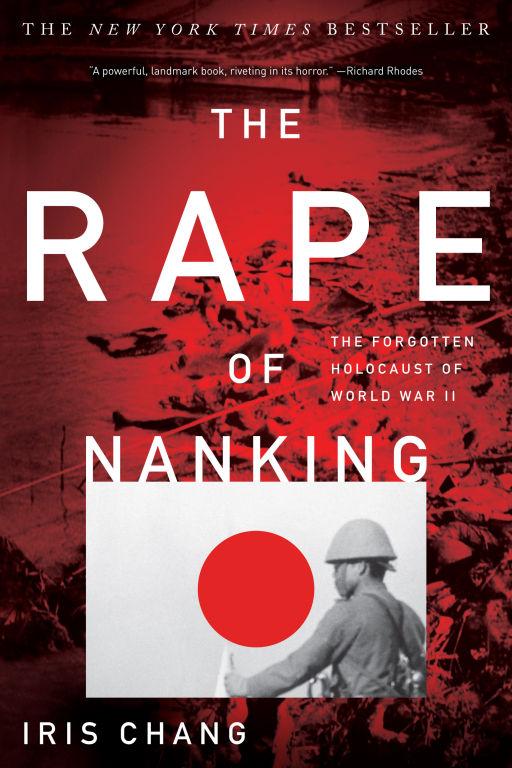
In December 1937, in what was then the capital of China, one of the most brutal massacres in the long annals of wartime barbarity occurred. The Japanese army swept into the ancient city of Nanking (Nanjing) and within weeks not only looted and burned the defenseless city but systematically raped, tortured, and murdered more than 300,000 Chinese civilians. Amazingly, the story of this atrocity—one of the worst in world history—continues to be denied by the Japanese government.
Based on extensive interviews with survivors and newly discovered documents in four different languages (many never before published), Iris Chang, whose own grandparents barely escaped the massacre, has written what will surely be the definitive, English-language history of this horrifying episode—one that the Japanese have tried for years to erase from public consciousness.
The Rape of Nanking tells the story from three perspectives: that of the Japanese soldiers who performed it; of the Chinese civilians who endured it; and finally of a group of Europeans and Americans who refused to abandon the city and were able to create a safety zone that saved almost 300,000 Chinese. It was Chang who discovered the diaries of the German leader of this rescue effort, John Rabe, whom she calls the “Oskar Schindler of China.” A loyal supporter of Adolf Hitler but far from the terror planned in his Nazi-controlled homeland, he worked tirelessly to save the innocent from slaughter.
But this book does more than just narrate details of an orgy of violence; it attempts to analyze the degree to which the Japanese imperial government and its militaristic culture fostered in the Japanese soldier a total disregard for human life.
Finally, it tells one more shocking story: Despite the fact that the death toll at Nanking exceeded the immediate deaths from the atomic blasts at Hiroshima and Nagasaki combined (and even the total wartime casualty count of entire European countries), the Cold War led to a concerted effort on the part of the West and even the Chinese to court the loyalty of Japan and stifle open discussion of this atrocity. Indeed, Chang characterized this conspiracy of silence, which persists to this day, as “a second rape.”
Contains a table! Best viewed with CoolReader.
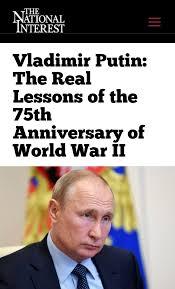
The Russian president offers a comprehensive assessment of the legacy of World War II, arguing that “Today, European politicians, and Polish leaders in particular, wish to sweep the Munich Betrayal under the carpet. The Munich Betrayal showed to the Soviet Union that the Western countries would deal with security issues without taking its interests into account.”
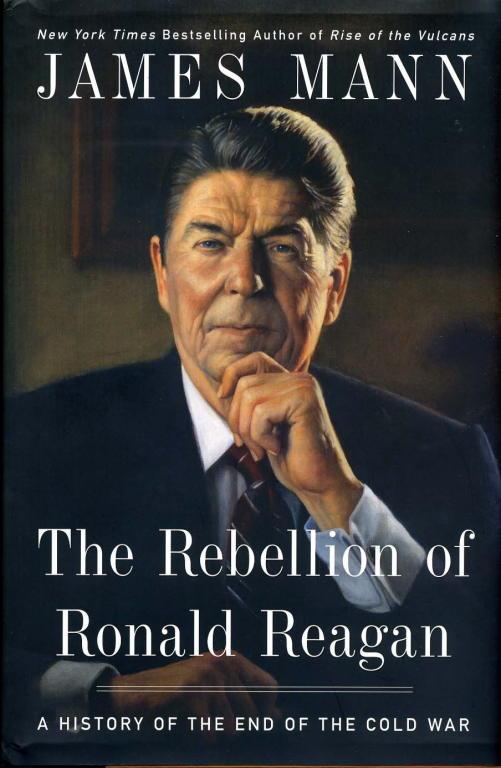
A controversial look at Reagan’s role in ending the Cold War—from the author of The New York Times bestseller Rise of the Vulcans
In “The Rebellion of Ronald Reagan”, “New York Times” bestselling author James Mann directs his keen analysis to Ronald Reagan’s role in ending the Cold War. Drawing on new interviews and previously unavailable documents, Mann offers a fresh and compelling narrative—a new history assessing what Reagan did, and did not do, to help bring America’s four-decade conflict with the Soviet Union to a close.
As he did so masterfully in “Rise of the Vulcans”, Mann sheds new light on the hidden aspects of American foreign policy. He reveals previously undisclosed secret messages between Reagan and Moscow; internal White House intrigues; and battles with leading figures such as Nixon and Kissinger, who repeatedly questioned Reagan’s unfolding diplomacy with Mikhail Gorbachev. He details the background and fierce debate over Reagan’s famous Berlin Wall speech and shows how it fitted into Reagan’s policies.
This book finally answers the troubling questions about Reagan’s actual role in the crumbling of Soviet power; and concludes that by recognising the significance of Gorbachev, Reagan helped bring the Cold War to a close.