 fb2
fb2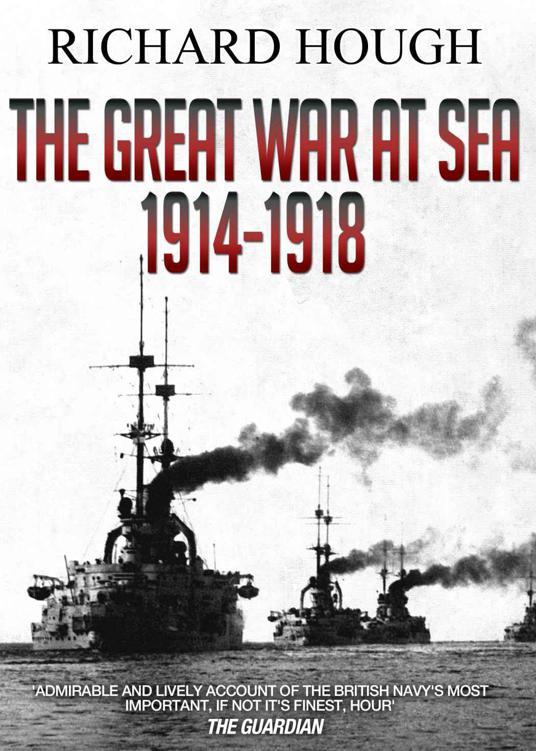
The history of the First World War is dominated by the monumental battles of Northern France
But the Great War was fought at sea as well as on land.
And it witnessed the greatest naval battle of all time.
In ‘The Great War At Sea: 1914-1918’, the historian Richard Hough tells the story of those naval battles and how they shaped the eventual outcome of the war.
It is a history as much of men as of ships; men like Sir John Jellicoe, ‘Jacky’ Fisher, and Winston Churchill, who together succeeded in jolting the Royal Navy out of its nineteenth-century complacency.
The narrative follows the race to war, including the construction of the Dreadnought, the biggest, fastest, most heavily gunned battleship in the world; and against the backdrop of feuds, scheming, and personality clashes at the Admiralty, examines the triumphs and tragedies of the great battles and campaigns.
Could the appalling losses have been avoided during the Dardanelles?
Was there ‘something wrong with our bloody ships’ as David Beatty said at Jutland?
Why was the Battle of Jutland inconclusive?
Richard Alexander Hough was a British author and historian specializing in maritime history.
Endeavour Press is the UK’s leading independent digital publisher.
Volume 1 of the gripping epic masterpiece, Solzhenitsyn’s chilling report of his arrest and interrogation, which exposed to the world the vast bureaucracy of secret police that haunted Soviet society
“Best Nonfiction Book of the Twentieth Century” (Time magazine )
Alexander Sutherland (1852–1902) was a Scottish-Australian educator, writer and philosopher. Sutherland did a large amount of literary work. He was responsible for the first volume only of Victoria and its Metropolis, published in 1888, an interesting history of the first 50 years of the state of Victoria. In 1890 he published Thirty Short Poems, the cultured verse of an experienced literary man, but his most important book was The Origin and Growth of the Moral Instinct, which appeared in 1898 in two volumes.
George Sutherland (1855–1905), a writer, was born in Scotland. He was taken to Australia in 1864 and graduated from the University of Melbourne. After teaching for some time he took up journalism and worked for the South Australian Register from 1881 to 1902, after which he joined the Melbourne Age. His works include: Tales of the Goldfields (1880), Australia; or, England in the South (1886), The South Australian Company (1898) and Twentieth Century Inventions (1901). With his brother, Alexander Sutherland, he wrote The History of Australia and New Zealand from 1606 to 1890 (1894), which attained a sale of 120,000 copies.
The History of Rome by Theodor Mommsen, translated by William Purdie Dickson
The History of Rome by Theodor Mommsen, translated by William Purdie Dickson

The History of Rome by Theodor Mommsen, translated by William Purdie Dickson
The History of Rome by Theodor Mommsen, translated by William Purdie Dickson
The History of Rome by Theodor Mommsen, translated by William Purdie Dickson
The History of Rome by Theodor Mommsen, translated by William Purdie Dickson
The History of Rome by Theodor Mommsen, translated by William Purdie Dickson
The History of Rome by Theodor Mommsen, translated by William Purdie Dickson
The History of Rome by Theodor Mommsen, translated by William Purdie Dickson
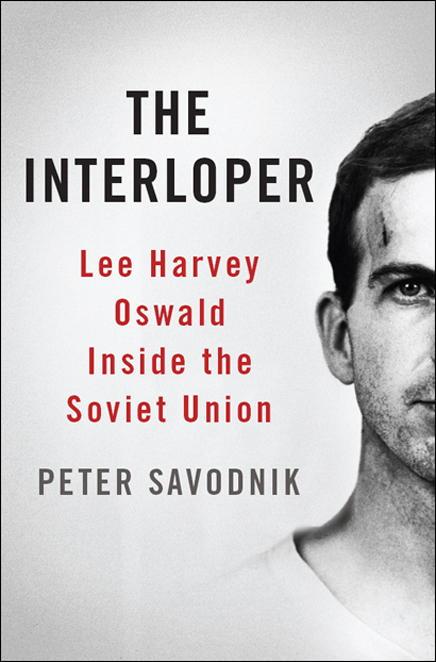
Lee Harvey Oswald’s assassination of President Kennedy in 1963 remains one of the most horrifying and hotly debated crimes in American history. Just as perplexing as the assassination is the assassin himself; the 24-year-old Oswald’s hazy background and motivations—and his subsequent murder at the hands of Jack Ruby—make him an intriguing yet frustratingly enigmatic figure. Because Oswald briefly defected to the Soviet Union, some historians allege he was a Soviet agent. But as Peter Savodnik shows in The Interloper, Oswald’s time in the U.S.S.R. reveals a stranger, more chilling story.
Oswald ventured to Russia at the age of 19, after a failed stint in the U.S. Marine Corps and a childhood spent shuffling from address to address with his unstable, needy mother. Like many of his generation, Oswald struggled for a sense of belonging in postwar American society, which could be materialistic, atomized, and alienating. The Soviet Union, with its promise of collectivism and camaraderie, seemed to offer an alternative. While traveling in Europe, Oswald slipped across the Soviet border, soon settling in Minsk where he worked at a radio and television factory. But Oswald quickly became just as disillusioned with his adopted country as he had been with the United States. He spoke very little Russian, had difficulty adapting to the culture of his new home, and found few trustworthy friends; indeed most, it became clear, were informing on him to the KGB. After nearly three years, Oswald returned to America feeling utterly defeated and more alone than ever—and as Savodnik shows, he began to look for an outlet for his frustration and rage.
Drawing on groundbreaking research, including interviews with Oswald’s friends and acquaintances in Russia and the United States, The Interloper brilliantly evokes the shattered psyche not just of Oswald himself, but also of the era he so tragically defined.
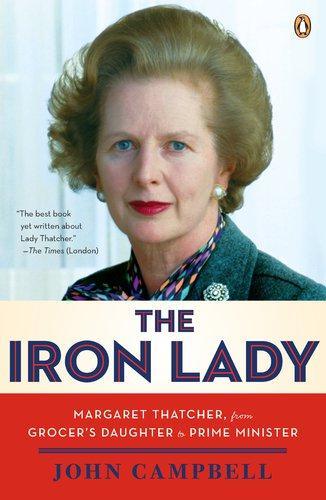
The Iron Lady, the definitive Margaret Thatcher biography, is available just in time for the movie starring Meryl Streep as one of the most infamous figures in postwar politics.
Whether you love her or hate her, Margaret Thatcher’s impact on twentieth-century history is undeniable. From her humble, small-town upbringing to her rise to power as the United Kingdom’s first female prime minister, to her dramatic fall from grace after more than three decades of service, celebrated biographer John Campbell delves into the story of this fascinating woman’s life as no one has before. The result of more than nine years of meticulous research, The Iron Lady is the only balanced, unvarnished portrait of Margaret Thatcher, one of the most vital and controversial political figures of our time.
The Khazars were one of the most important Turkic peoples in European history, dominating vast areas of southeastern Europe and the western reaches of the Central Asian steppes from the 4th to the 11th centuries AD. They were also unique in that their aristocratic and military elites converted to Judaism, creating what would be territorially the largest Jewish-ruled state in world history. They became significant allies of the Byzantine Empire, blocking the advance of Islam north of the Caucasus Mountains for several hundred years.
They also achieved a remarkable level of metal-working technology, and their military elite wore forms of iron plate armour that would not be seen in Western Europe until the 14th century. The Khazar state provided the foundations upon which medieval Russia and modern Ukraine were built. Fully illustrated with detailed colour plates, this is a fascinating study into the armies, organisation, armour, weapons and fortifications of the Khazars.
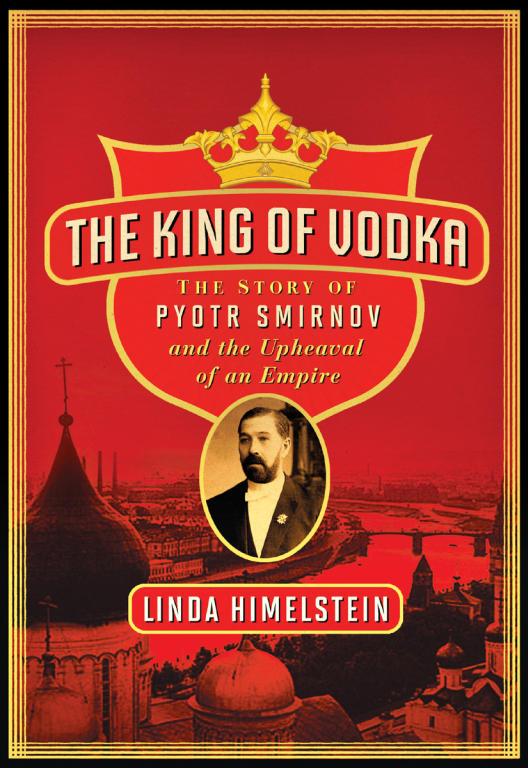
From Vanderbilt and Rockefeller to Bill Gates and Steve Jobs, America’s captains of industry are paragons of entrepreneurial success, and books about business history, from The First Tycoon to The Big Short, show exemplars of capitalistic cunning and tenacity… but just as American cocktail connoisseurs can mistake Absolut, Skyy, Grey Goose, or Ketel One for the quintessential clear spirit, so too has America’s vision of business history remained naïve to a truth long recognized in Eastern Europe: since the time of Tsar Nicholas, both vodka and commercial success have been synonymous in Russia with one name—Smirnoff.
Linda Himelstein’s critically acclaimed biography of Russian vodka scion Pyotr Smirnov—a finalist for the James Beard Award, winner of the IACP and Saroyan Awards, and a BusinessWeek Best Business Book of 2009—is the sweeping story of entrepreneurship, empire, and epicurean triumph unlike anything the world has ever seen before.
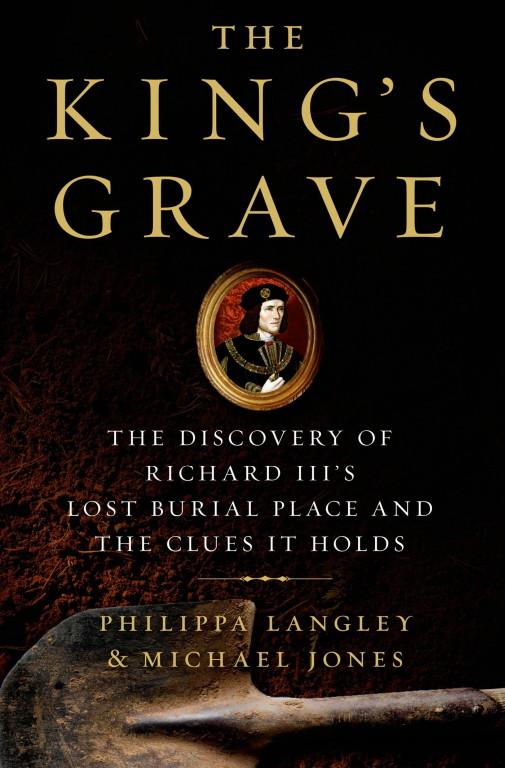
The first full-length book about the discover of Richard III’s remains by the person who led the archeology team and the historian whose book spurred her on
The mystery of who Richard III really was has fascinated historians, readers and audiences familiar with Shakespeare’s dastardly portrait of a hunchback monster of royalty for centuries. Earlier this year, the remains of a man with a curving spine, who possible was killed in battle, were discovered underneath the paving of a parking lot in Leicester, England. Phillipa Langley, head of The Richard III Society, spurred on by the work of the historian Michael Jones, led the team of who uncovered the remains, certain that she had found the bones of the monarch. When DNA verification later confirmed that the skeleton was, indeed, that of King Richard III, the discovery ranks among the great stories of passionate intuition and perseverance against the odds.
The news of the discovery of Richard’s remains has been widely reported by the British as well as worldwide and was front page news for both the New York Times and The Washington Post. Many believe that now, with King Richard III’s skeleton in hand, historians will finally begin to understand what happened to him following the Battle of Bosworth Field (twenty miles or so from Leicester) and, ultimately, to know whether he was the hateful, unscrupulous monarch of Shakespeare’s drama or a much more benevolent king interested in the common man.
Written in alternating chapters, with Richard’s 15th century life told by historian Michael Jones (author of the critically acclaimed Bosworth – 1485) contrasting with the 21st century eyewitness account of the search and discovery of the body by Philippa Langley, The King’s Grave will be both an extraordinary portrait of the last Plantagenet monarch and the inspiring story of the archaeological dig that finally brings the real King Richard III into the light of day.
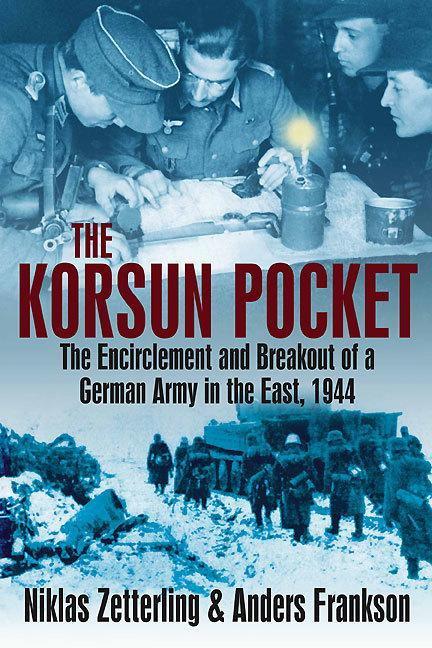
During the second half of 1943, after the failure at Kursk, Germany’s Army Group South fell back from Russia under repeated hammer blows from the Red Army. Under Erich von Manstein, however, the Germans were able to avoid serious defeats, while at the same time fending off Hitler’s insane orders to hold on to useless territory.
Then, in January 1944, a disaster happened. Six divisions of Army Group South became surrounded after sudden attacks by the 1st and 2nd Ukrainian Fronts under command of generals Nikolai Vatutin and Ivan Konev around the village of Korsun (near the larger town of Cherkassy on the Dnieper). The Germans’ greatest fear was the prospect of another Stalingrad, the catastrophe that had occurred precisely one year before.
This time, though, Manstein was in control from the start, and he immediately rearranged his Army Group to rescue his trapped divisions. A major panzer drive got underway, led by General der Panzertruppen Hans Hube, a survivor from Stalingrad pocket, which promptly ran up against several soviet tank armies. Leading the break-in was Franz Baeke with his Tiger and Panther-tanks. Due to both weather and ferocious resistance, the German drive stalled. Ju-52s still flew into Korsun’s airfield, delivering supplies and taking out wounded, but it soon became apparent that only one option remained for the beleaguered defenders: breakout.
Without consulting Hitler, on the night of February 16 Manstein ordered the breakout to begin. Led by the strongest formation within the pocket, SS Wiking, the trapped forces surged out and soon rejoined the surrounding panzer divisions who had been fully engaged in weakening the ring.
When dawn broke, the Soviets realized their prey was escaping. Although the Germans within the pocket lost nearly all of their heavy weapons and left many wounded behind, their escape was effected. Stalin, having anticipated another Stalingrad, was left with little but an empty bag, as Army Group South—this time—had pulled off a rescue.
In The Korsun Pocket, Niklas Zetterling, a researcher at the Swedish Defense College since 1995 and Anders Frankson, have provided a highly detailed and often breathtaking account of one of the most dramatic battles of World War II. From grand strategy to soldiers’ voices on the ground, including expert statistical analysis, the action, and the stakes, of the battle at Korsun are made vividly clear.