 fb2
fb2Зачем государству атомная бомба?
Зачем нам оружие, которым мы не можем воспользоваться? И к тому же это оружие, которым мы не пользуемся, стоит не просто дорого, оно стоит невообразимо, баснословно дорого. И ведь куча стран и стран отнюдь не богатых, идёт на это, и не просто идёт, а готово на любые жертвы только чтобы эту головную боль заполучить и истратить на это столь необходимые в хозяйстве денежки. Поэтому должна быть причина не просто рациональная, а рациональная в высшей степени, серьёзная настолько, насколько может быть серьёзна проблема, требующая для своего решения напряжения всех сил государственного организма...
Сколько государств в мире обладают ядерным оружием и зачем?
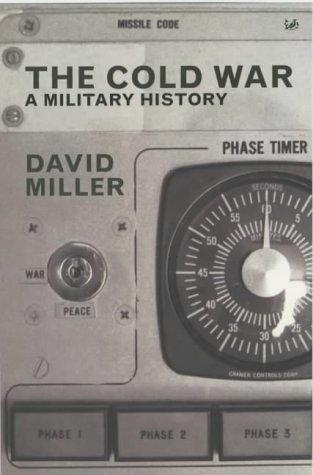
From 1949 to 1991 the world was overshadowed by the Cold War. Repeatedly it seemed that in days, even hours, global nuclear conflict would sweep away much of the United States, the Soviet Union and Europe. They would be obliterated in what President Carter described as ‘one long, final and very bleak afternoon’. When the Cold War ended, the Warsaw Pact was wound up and the vast military forces which had flourished for over forty years were disbanded. As with all wars, however, it was only then that the realities of what had been involved began to emerge; indeed, much has remained hidden until now.
In The Cold War, David Miller discloses not only the vast scope of the military resources involved, but also how nearly threat came to terrible reality. Most chillingly of all, he reveals that while the menace of nuclear war predominated, it was actually little understood even by the experts. The book examines each military area in turn, covering the formation of the two great alliances, and the strategies and major weapons in the rival navies, armies and air forces. That the Cold War ended without a conflict was due to professionalism on both sides. The result, Miller suggests, would have impressed the Chinese military strategist, Sun Tsu, who, writing in the fifth century BC, said that ‘to subdue the enemy without fighting is the acme of skill’.
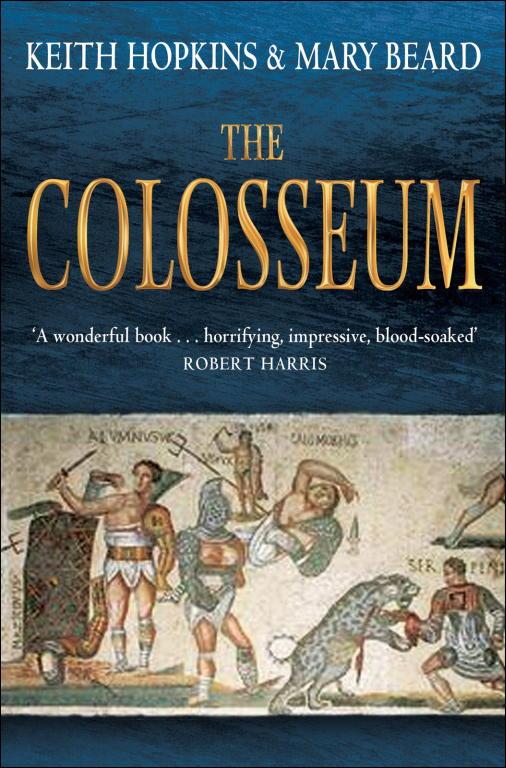
This is the story of Rome’s greatest arena – how it was built, the gladiatorial and other games that were held there, the training of the gladiators, the audiences who revelled in the games, the emperors who staged them and the critics, and the strange after-life.
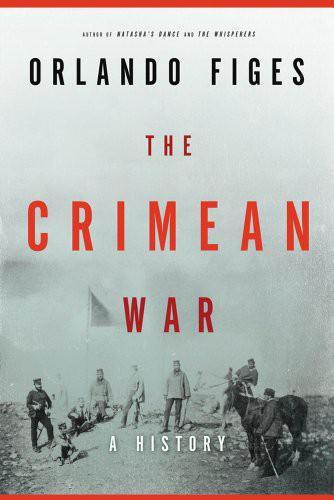
From “the great storyteller of modern Russian historians,” (Financial Times) the definitive account of the forgotten war that shaped the modern age
The Charge of the Light Brigade, Florence Nightingale—these are the enduring icons of the Crimean War. Less well-known is that this savage war (1853–1856) killed almost a million soldiers and countless civilians; that it enmeshed four great empires—the British, French, Turkish, and Russian—in a battle over religion as well as territory; that it fixed the fault lines between Russia and the West; that it set in motion the conflicts that would dominate the century to come.
In this masterly history, Orlando Figes reconstructs the first full conflagration of modernity, a global industrialized struggle fought with unusual ferocity and incompetence. Drawing on untapped Russian and Ottoman as well as European sources, Figes vividly depicts the world at war, from the palaces of St. Petersburg to the holy sites of Jerusalem; from the young Tolstoy reporting in Sevastopol to Tsar Nicolas, haunted by dreams of religious salvation; from the ordinary soldiers and nurses on the battlefields to the women and children in towns under siege.
Original, magisterial, alive with voices of the time, The Crimean War is a historical tour de force whose depiction of ethnic cleansing and the West’s relations with the Muslim world resonates with contemporary overtones. At once a rigorous, original study and a sweeping, panoramic narrative, The Crimean War is the definitive account of the war that mapped the terrain for today’s world.
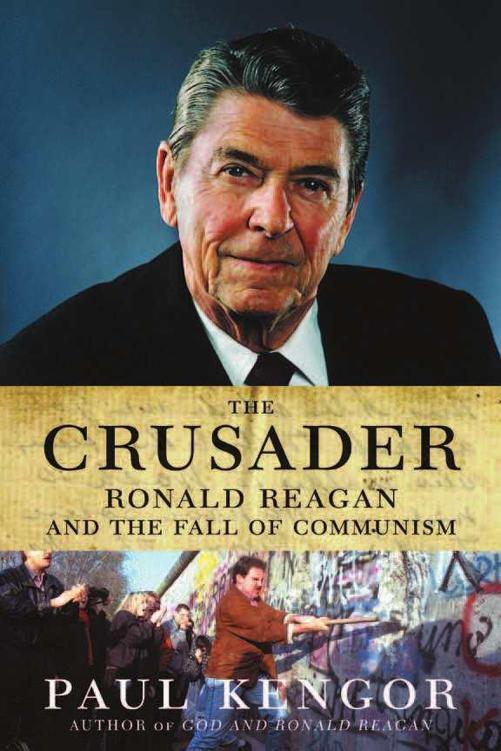
Based on extraordinary research: a major reassessment of Ronald Reagan’s lifelong crusade to dismantle the Soviet Empire–including shocking revelations about the liberal American politician who tried to collude with USSR to counter Reagan’s efforts
Paul Kengor’s God and Ronald Reagan made presidential historian Paul Kengor’s name as one of the premier chroniclers of the life and career of the 40th president. Now, with The Crusader, Kengor returns with the one book about Reagan that has not been written: The story of his lifelong crusade against communism, and of his dogged–and ultimately triumphant–effort to overthrow the Soviet Union.
Drawing upon reams of newly declassified presidential papers, as well as untapped Soviet media archives and new interviews with key players, Kengor traces Reagan’s efforts to target the Soviet Union from his days as governor of California to the fall of the Berlin Wall and the collapse of what he famously dubbed the “Evil Empire.” The result is a major revision and enhancement of what historians are only beginning to realize: That Reagan not only wished for the collapse of communism, but had a deep and specific understanding of what it would take—and effected dozens of policy shifts that brought the USSR to its heels within a decade of his presidency.
The Crusader makes use of key sources from behind the Iron Curtain, including one key memo that implicates a major American liberal politician–still in office today–in a scheme to enlist Soviet premier Yuri Andropov to help defeat Reagan’s 1984 reelection bid. Such new finds make The Crusader not just a work of extraordinary history, but a work of explosive revelation that will be debated as hotly in 2006 as Reagan’s policies were in the 1980s.
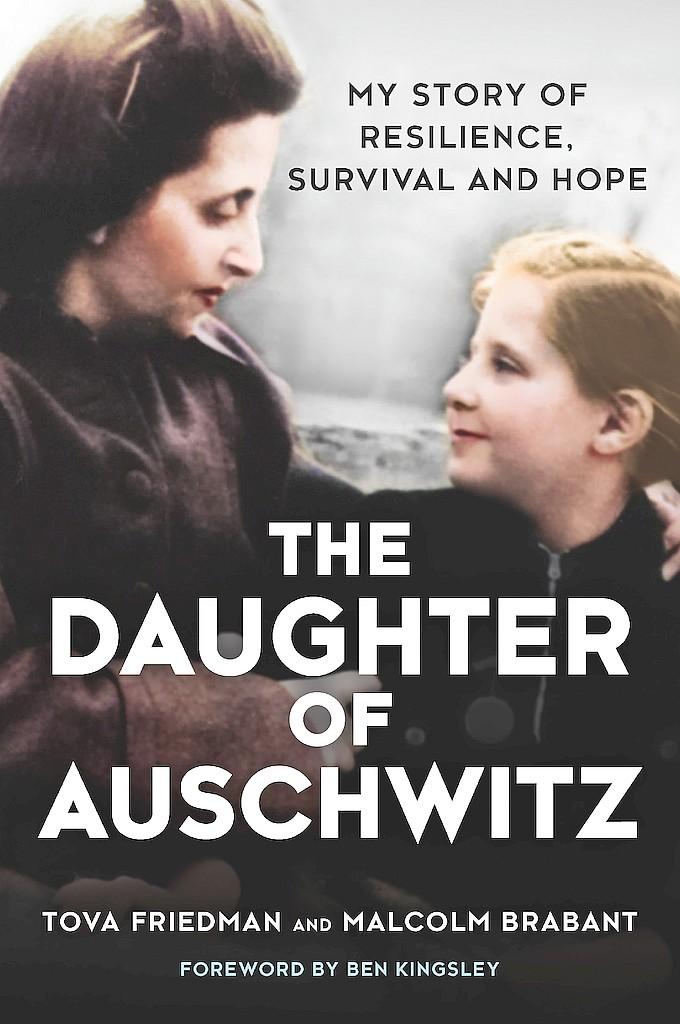
A powerful memoir by one of the youngest ever survivors of Auschwitz, Tova Friedman, following her childhood growing up during the Holocaust and surviving a string of near-death experiences in a Jewish ghetto, a Nazi labor camp, and Auschwitz.
Tova Friedman was only four years old when she was sent to a Nazi labor camp at the start of World War II. While friends and family were murdered in front of her eyes, the only weapon that Tova and her parents possessed was the primal instinct to survive at all costs. Fate intervened when, at the age of six, Tova was sent to a gas chamber, but walked out alive, saved by German bureaucracy. Not long afterwards, she cuddled a warm corpse to hide from Nazis rounding up prisoners for the Death March to Germany.
In this heartrending, lyrical account of a young girl's survival during the Holocaust, Tova Friedman, together with Malcolm Brabant, chronicles the atrocities she witnessed while at Auschwitz, a family secret that sheds light on the unpalatable choices Jews were forced to make to survive, and ultimately, the sources of hope and courage she and her family found to persist against all odds.
Marie Antoinette. Napoleon. Louis XVI. Robespierre, Danton, Mirabeau, Marat. Madame Roland's salon. A passionate throng of Parisian artisans storming the Bastille. A tide of ebullient social change through wars, riots, beheadings, betrayal, conspiracy, and murder.
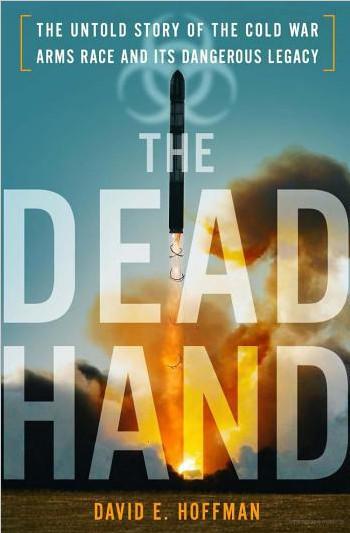
WINNER OF THE PULITZER PRIZE
The first full account of how the Cold War arms race finally came to a close, this riveting narrative history sheds new light on the people who struggled to end this era of massive overkill, and examines the legacy of the nuclear, chemical, and biological weapons that remain a threat today.
Drawing on memoirs, interviews in both Russia and the US, and classified documents from deep inside the Kremlin, David E. Hoffman examines the inner motives and secret decisions of each side and details the deadly stockpiles that remained unsecured as the Soviet Union collapsed. This is the fascinating story of how Reagan, Gorbachev, and a previously unheralded collection of scientists, soldiers, diplomats, and spies changed the course of history.
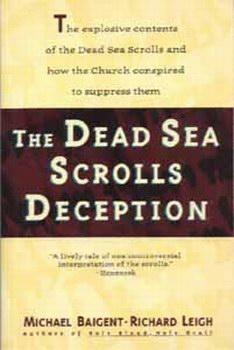
The oldest Biblical manuscripts in existence, the Dead Sea Scrolls were found in caves near Jerusalem in 1947, only to be kept a tightly held secret for nearly fifty more years, until the Huntington Library unleashed a storm of controversy in 1991 by releasing copies of the Scrolls. In this gripping investigation authors Baigent and Leigh set out to discover how a small coterie of orthodox biblical scholars gained control over the Scrolls, allowing access to no outsiders and issuing a strict “consensus” interpretation. The authors’ questions begin in Israel, then lead them to the corridors of the Vatican and into the offices of the Inquisition. With the help of independent scholars, historical research, and careful analysis of available texts, the authors reveal what was at stake for these orthodox guardians: The Scrolls present startling insights into early Christianity—insights that challenge the Church’s version of the “facts.” More than just a dramatic expose of the intrigues surrounding these priceless documents, The Dead Sea Scrolls Deception presents nothing less than a new, highly significant perspective on Christianity.
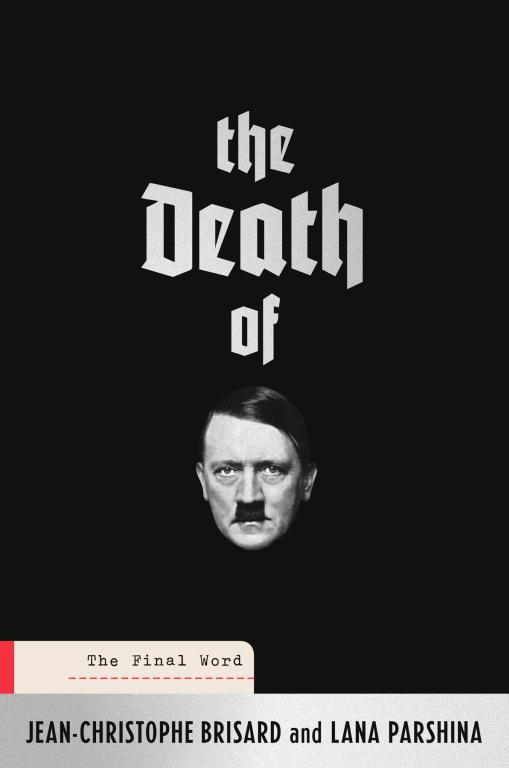
On April 30, 1945, Hitler committed suicide in his bunker as the Red Army closed in on Berlin. Within four days the Soviets had recovered his body. But the truth about what the Russian secret services found was hidden from history, when, three months later, Stalin officially declared to Truman and Churchill that Hitler was still alive and had escaped abroad. Reckless rumors about what really happened to Hitler began to spread like wildfire and, even today, they have not been put to rest. Until now.
In 2017, after two years of painstaking negotiations with the Russian authorities, award-winning investigative journalists Jean-Christophe Brisard and Lana Parshina gained access to confidential Soviet files that finally revealed the truth behind the incredible hunt for Hitler’s body.
Their investigation includes new eyewitness accounts of Hitler’s final days, exclusive photographic evidence and interrogation records, and exhaustive research into the power struggle that ensued between Soviet, British, and American intelligence services. And for the first time since the end of World War II, official, cutting-edge forensic tests have been completed on the human remains recovered from the bunker graves--a piece of skull with traces of a lethal bullet, a fragment of bone, and teeth.
In The Death of Hitler—written as thrillingly as any spy novel—Brisard and Parshina debunk all previous conspiracy theories about the death of the Führer. With breathtaking precision and immediacy they penetrate one of the most powerful and controversial secret services to take readers inside Hitler’s bunker in its last hours—and solve the most notorious cold case in history.
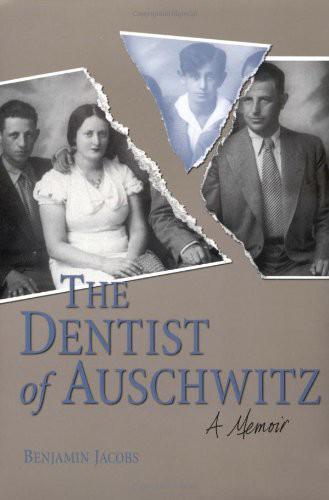
In 1941 Berek Jakubowicz (now Benjamin Jacobs) was deported from his Polish village and remained a prisoner of the Reich until the final days of the war. His possession of a few dental tools and rudimentary skills saved his life. Jacobs helped assemble V1 and V2 rockets in Buchenwald and Dora-Mittelbau; spent a year and a half in Auschwitz, where he was forced to remove gold teeth from corpses; and survived the RAF attack on three ocean liners turned prison camps in the Bay of Lubeck. This is his story.
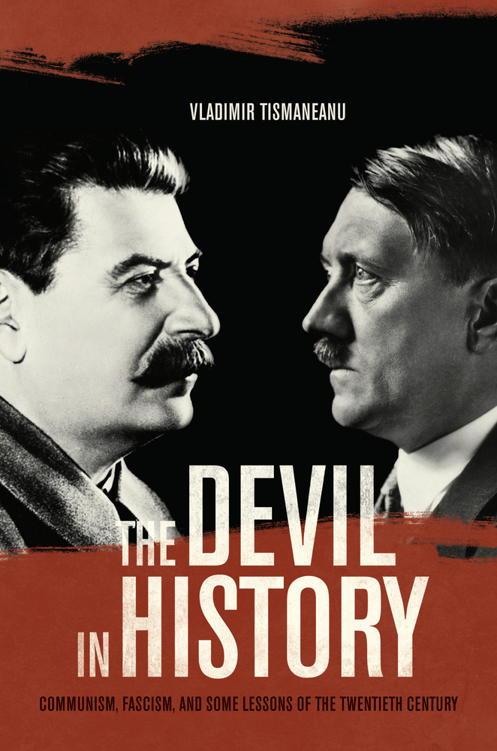
The Devil in History is a provocative analysis of the relationship between communism and fascism. Reflecting the author’s personal experiences within communist totalitarianism, this is a book about political passions, radicalism, utopian ideals, and their catastrophic consequences in the twentieth century’s experiments in social engineering. Vladimir Tismaneanu brilliantly compares communism and fascism as competing, sometimes overlapping, and occasionally strikingly similar systems of political totalitarianism. He examines the inherent ideological appeal of these radical, revolutionary political movements, the visions of salvation and revolution they pursued, the value and types of charisma of leaders within these political movements, the place of violence within these systems, and their legacies in contemporary politics.
The author discusses thinkers who have shaped contemporary understanding of totalitarian movements—people such as Hannah Arendt, Raymond Aron, Isaiah Berlin, Albert Camus, François Furet, Tony Judt, Ian Kershaw, Leszek Kolakowski, Richard Pipes, and Robert C. Tucker. As much a theoretical analysis of the practical philosophies of Marxism-Leninism and Fascism as it is a political biography of particular figures, this book deals with the incarnation of diabolically nihilistic principles of human subjugation and conditioning in the name of presumably pure and purifying goals. Ultimately, the author claims that no ideological commitment, no matter how absorbing, should ever prevail over the sanctity of human life. He comes to the conclusion that no party, movement, or leader holds the right to dictate to the followers to renounce their critical faculties and to embrace a pseudo-miraculous, a mystically self-centered, delusional vision of mandatory happiness.
Aldous Huxley’s acclaimed and gripping account of one of the strangest occurrences in history
In 1643 an entire convent in the small French village of Loudun was apparently possessed by the devil. After a sensational and celebrated trial, the convent’s charismatic priest Urban Grandier—accused of spiritually and sexually seducing the nuns in his charge—was convicted of being in league with Satan. Then he was burned at the stake for witchcraft.
In this classic work by the legendary Aldous Huxley—a remarkable true story of religious and sexual obsession considered by many to be his nonfiction masterpiece—a compelling historical event is clarified and brought to vivid life.
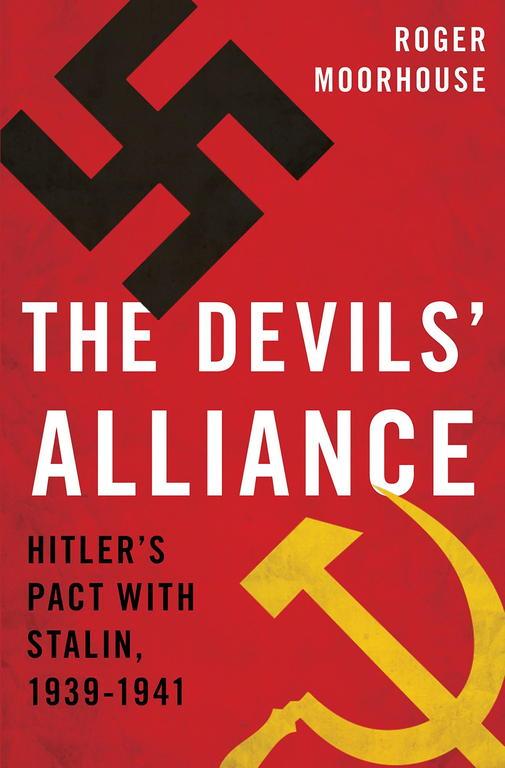
History remembers the Soviets and the Nazis as bitter enemies and ideological rivals, the two mammoth and opposing totalitarian regimes of World War II whose conflict would be the defining and deciding clash of the war. Yet for nearly a third of the conflict’s entire timespan, Hitler and Stalin stood side by side as allies. In The Devils’ Alliance, acclaimed historian Roger Moorhouse explores the causes and implications of the tenuous Nazi-Soviet pact, an unholy covenant whose creation and dissolution were crucial turning points in World War II. Indeed, this riveting chapter of World War II is the key to understanding why the conflict evolved—and ended—the way it did.
Nazism and Bolshevism made unlikely bedfellows, but the brutally efficient joint Nazi-Soviet invasion of Poland in 1939 illustrated the powerful incentives that existed for both sides to set aside their differences. Forged by vain and pompous German foreign minister Joachim von Ribbentrop and his Russian counterpart, the inscrutable and stubborn Vyacheslav Molotov, the Nazi-Soviet pact in August of 1939 briefly unified the two powers. Together, the Germans and Soviets quickly conquered and divvied up central and eastern Europe—Poland, the Baltic States, Finland, and Bessarabia—aiding one another through exchanges of information, blueprints, and prisoners. The human cost was staggering: in Poland alone, the Soviets deported 1.5 million people in 1940, 400,000 of whom would never return. Tens of thousands were also deported from the Baltic States, including almost all of the members of the Estonian parliament. Of the 100,000 civilians deported to Siberia from Bessarabia, barely a third survived.
Nazi and Soviet leaders hoped that a similar quid-pro-quo agreement would also characterize their economic relationship. The Soviet Union would export much-needed raw materials to Germany, while the Germans would provide weapons and technological innovations to their communist counterparts. In reality, however, economic negotiations were fraught from the start, not least because the Soviets, mindful that the Germans were in dire need of raw materials to offset a British blockade, made impossible demands of their ally. Although German-Soviet trade still grew impressively through 1940, it was not enough to convince Hitler that he could rely on the partnership with Moscow, which on the whole was increasingly turbulent and unpredictable.
Fortunately for the Allies, the pact—which seemed to negate any chances of an Allied victory in Europe—was short-lived. Delving into the motivations and forces at work, Moorhouse explores how the partnership soured, ultimately resulting in the surprise June 1941 German invasion of the Soviet Union. With the final dissolution of the pact, the Soviets sided with the Western democracies, a development that changed the course of the war—and which, upon Germany’s defeat, allowed the Soviets to solidify the inroads they had made into Eastern Europe during their ill-starred alliance. Reviled by contemporaries, the Nazi-Soviet Pact would have a similarly baleful afterlife. Though it was torn up by the Nazis and denied or excused as a strategic necessity by the Soviets, its effects and political ramifications proved remarkably persistent. The boundaries of modern eastern and central Europe adhere closely to the hasty divisions made by Ribbentrop and Molotov. Even more importantly, the pact laid the groundwork for Soviet control of Eastern Europe, a power grab that would define the post-war order.
Drawing on memoirs, diaries, and official records from newly opened Soviet archives, The Devils’ Alliance is the authoritative work on one of the seminal episodes of World War II. In his characteristically rich and detailed prose, Moorhouse paints a vivid picture of the pact’s origins and its enduring influence as a crucial turning point, in both the war and in modern history.
From the preeminent Hitler biographer, a fascinating and original exploration of how the Third Reich was willing and able to fight to the bitter end of World War II.
Countless books have been written about why Nazi Germany lost World War II, yet remarkably little attention has been paid to the equally vital question of how and why it was able to hold out as long as it did. The Third Reich did not surrender until Germany had been left in ruins and almost completely occupied. Even in the near-apocalyptic final months, when the war was plainly lost, the Nazis refused to sue for peace. Historically, this is extremely rare.
Drawing on original testimony from ordinary Germans and arch-Nazis alike, award-winning historian Ian Kershaw explores this fascinating question in a gripping and focused narrative that begins with the failed bomb plot in July 1944 and ends with the German capitulation in May 1945. Hitler, desperate to avoid a repeat of the “disgraceful” German surrender in 1918, was of course critical to the Third Reich’s fanatical determination, but his power was sustained only because those below him were unable, or unwilling, to challenge it. Even as the military situation grew increasingly hopeless, Wehrmacht generals fought on, their orders largely obeyed, and the regime continued its ruthless persecution of Jews, prisoners, and foreign workers. Beneath the hail of allied bombing, German society maintained some semblance of normalcy in the very last months of the war. The Berlin Philharmonic even performed on April 12, 1945, less than three weeks before Hitler’s suicide.
As Kershaw shows, the structure of Hitler’s “charismatic rule” created a powerful negative bond between him and the Nazi leadership- they had no future without him, and so their fates were inextricably tied. Terror also helped the Third Reich maintain its grip on power as the regime began to wage war not only on its ideologically defined enemies but also on the German people themselves. Yet even as each month brought fresh horrors for civilians, popular support for the regime remained linked to a patriotic support of Germany and a terrible fear of the enemy closing in.
Based on prodigious new research, Kershaw’s The End is a harrowing yet enthralling portrait of the Third Reich in its last desperate gasps.
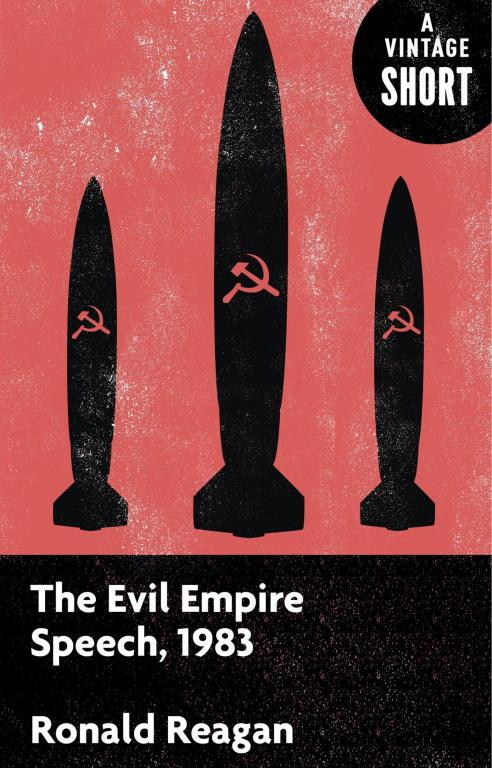
Crucially relevant over thirty years after its delivery, President Ronald Reagan’s Evil Empire speech to the National Association of Evangelicals is a classic of the American rhetorical tradition.
In 1983, when he delivered this address, Reagan outlined the principles of freedom and liberty that defined the foundation of American democracy, the faith and religiosity that underpins those principles, and the importance of diligently keeping the growing threats of dictatorship in the Soviet Union, now Russia, in check and triumphing over them.
A Vintage Shorts Selection. An ebook short.
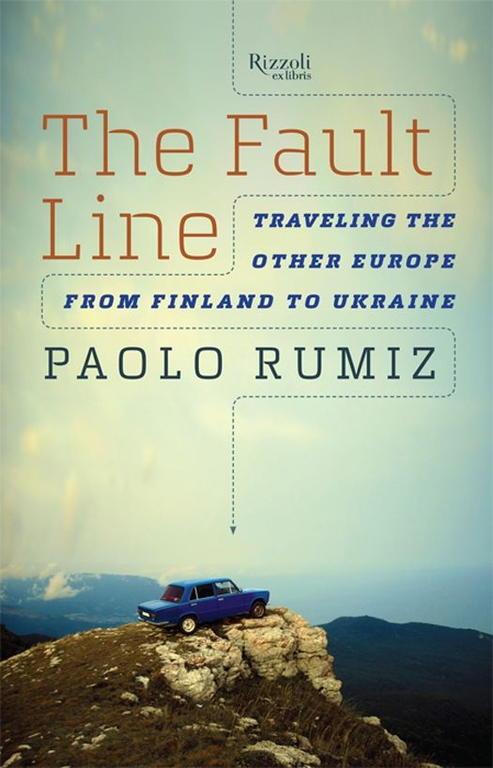
An award-winning writer travels the eastern front of Europe, where the push/pull between old empires and new possibilities has never been more evident. Paolo Rumiz traces the path that has twice cut Europe in two—first by the Iron Curtain and then by the artificial scaffolding of the EU—moving through vibrant cities and abandoned villages, some places still gloomy under the ghost of these imposing borders, some that have sought to erase all memory of it and jump with both feet into the West (if only the West would have them).
In The Fault Line, he is a sublime and lively guide through these unfamiliar landscapes, piecing together an atlas that has been erased by modern states, delighting in the discovery of communities that were once engulfed by geopolitics then all but forgotten, until now.The farther south he goes, the more he feels he is traveling not along some abandoned Eastern frontier, but right in the middle of things: Mitteleuropa wasn’t to be found in Viennese cafés but much farther east, beyond even Budapest and Warsaw. As in Ukraine, these remain places in flux, where the political and cultural values of the East and West have stared each other down for centuries.
Rumiz gives a human face not just to what the Cold War left behind but to the ancient ties of empire and ethnicity that are still at the root of modern politics in flash-point areas such as this.
Paolo Rumiz has been a correspondent for Italy’s La Repubblica since 1986, focusing on the Balkans and Eastern Europe. He was a frontline correspondent during the wars in the former Yugoslavia, Bosnia/Herzegovina, and Afghanistan, and has won many prizes for his journalism and nonfiction.
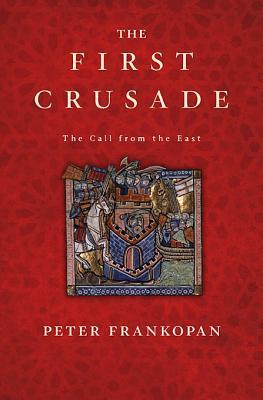
According to tradition, the First Crusade began at the instigation of Pope Urban II and culminated in July 1099, when thousands of western European knights liberated Jerusalem from the rising menace of Islam. But what if the First Crusade s real catalyst lay far to the east of Rome? In this groundbreaking book, countering nearly a millennium of scholarship, Peter Frankopan reveals the untold history of the First Crusade.
Nearly all historians of the First Crusade focus on the papacy and its willing warriors in the West, along with innumerable popular tales of bravery, tragedy, and resilience. In sharp contrast, Frankopan examines events from the East, in particular from Constantinople, seat of the Christian Byzantine Empire. The result is revelatory. The true instigator of the First Crusade, we see, was the Emperor Alexios I Komnenos, who in 1095, with his realm under siege from the Turks and on the point of collapse, begged the pope for military support.
Basing his account on long-ignored eastern sources, Frankopan also gives a provocative and highly original explanation of the world-changing events that followed the First Crusade. The Vatican s victory cemented papal power, while Constantinople, the heart of the still-vital Byzantine Empire, never recovered. As a result, both Alexios and Byzantium were consigned to the margins of history. From Frankopan s revolutionary work, we gain a more faithful understanding of the way the taking of Jerusalem set the stage for western Europe s dominance up to the present day and shaped the modern world."
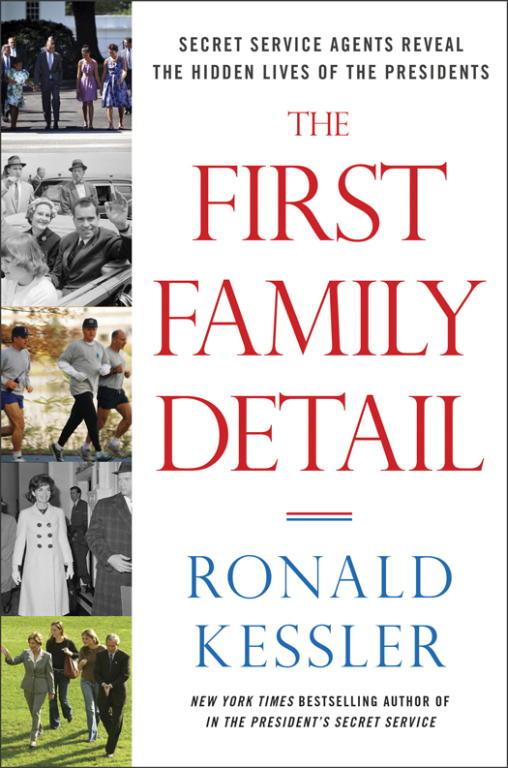
As in a play, presidents, vice presidents, and presidential candidates perform on stage for the public and the media. What the nation’s leaders are really like and what goes on behind the scenes remains hidden. Secret Service agents have a front row seat on their private lives and those of their wives and children.
Crammed with new, headline-making revelations, THE FIRST FAMILY DETAIL: Secret Service Agents Reveal the Hidden Lives of the Presidents by Ronald Kessler tells that eye-opening, uncensored story.
Since publication of his New York Times bestselling book In the President’s Secret Service, award-winning investigative reporter Ronald Kessler has continued to penetrate the wall of secrecy that surrounds the U.S. Secret Service, breaking the story that Secret Service agents who were to protect President Obama hired prostitutes in Cartagena, Colombia and revealing that the Secret Service allowed a third uninvited guest to crash a White House state dinner.
Now in this new book, Kessler presents far bigger and more consequential stories about our nation’s leaders and the agency sworn to protect them. Kessler widens his scope to include presidential candidates and former presidents after they leave the White House. In particular, he focuses on first ladies and their children and their relationships with the presidents.
From observing Vice President Joe Biden’s reckless behavior that jeopardizes the country’s safety, to escorting Bill Clinton’s blond mistress at Chappaqua, to overhearing First Lady Michelle Obama’s admonitions to the president, to witnessing President Nixon’s friends bring him a nude stripper, to seeing their own agency take risks that could result in an assassination, Secret Service agents know a secret world that Ronald Kessler exposes in breathtaking detail.
THE FIRST FAMILY DETAIL reveals:
• Vice President Joe Biden regularly orders the Secret Service to keep his military aide with the nuclear football a mile behind his motorcade, potentially leaving the country unable to retaliate in the event of a nuclear attack.
• Secret Service agents discovered that former president Bill Clinton has a blond mistress who lives near the Clintons’ home in Chappaqua, New York. Within minutes of Hillary Clinton’s leaving, the woman—codenamed Energizer by agents—shows up to be with Bill and stays every day while the likely future presidential candidate is away.
• The Secret Service covered up the fact that President Ronald Reagan’s White House staff overruled the Secret Service to let unscreened spectators get close to Reagan as he left the Washington Hilton, allowing John W. Hinckley Jr. to shoot the president.
• Secret Service agents have been dismayed to overhear Michelle Obama push her husband to be more aggressive in attacking Republicans and to side with blacks in racial controversies.
• Secret Service Director Mark Sullivan diverted agents from protecting President Obama and his family at the White House and ordered them instead to protect his assistant at her home and illegally retrieve confidential law enforcement records as a favor to her.
• Because Hillary Clinton is so nasty to agents, being assigned to her protective detail is considered a form of punishment and the worst assignment in the Secret Service.
• Secret Service agents were ordered to ignore security rules and allow the SUV carrying actor Bradley Cooper to drive unscreened into a secure restricted area when President Obama was about to deliver his speech at the White House Correspondents Dinner.
• Vice President Joe Biden has racked up costs to taxpayers of a million dollars to fly to and from his home in Delaware on Air Force Two. His office tried to cover up the costs of the personal trips.
• Because the Secret Service refused to provide enough magnetometers at his campaign events, Mitt Romney regularly left himself open to assassination by giving speeches to crowds that had not been screened.
• Vice President Joe Biden swims nude at the vice president’s residence in Washington and at his home in Delaware, offending female Secret Service agents.